

Lemon Grove Employment Law Attorneys
Employment Litigation in Lemon Grove, California
Lemon Grove is a small but vibrant community nestled between San Diego and La Mesa. Known for its sunny climate, welcoming neighborhoods, and the famous giant lemon that greets visitors downtown, the city combines suburban comfort with deep historical roots. With a population of about 27,000 residents, Lemon Grove retains a sense of close community while participating in the broader economic life of San Diego County.
Lemon Grove’s history stretches back to the late 1800s, when it was established as an agricultural settlement surrounded by citrus groves and farmland. The city officially incorporated in 1977, making it one of the county’s younger municipalities. Though its agricultural past is still reflected in its name and symbols, today Lemon Grove is home to a diverse economy that includes education, healthcare, construction, retail, and local government.
Akopyan Law Firm, A.P.C. represents employees and employers in Lemon Grove in all types of employment disputes. Our attorneys are experienced litigators who practice exclusively in the field of employment law, providing skilled representation in court and at every stage of the litigation process.
Employment Law in Lemon Grove
Employment relationships in Lemon Grove are subject to the same complex set of California labor and employment laws that govern workplaces throughout the state. These laws regulate everything from termination and compensation to workplace conduct, discrimination, harassment, and retaliation. When conflicts arise, they often require skilled legal advocacy to reach a resolution.
Akopyan Law Firm handles employment litigation across Lemon Grove and the surrounding region. Our attorneys represent clients in wrongful termination, discrimination, harassment, retaliation, and wage-and-hour cases. Each matter is approached with careful preparation and a strategic focus on achieving meaningful results through negotiation, arbitration, or trial.
Representation for Lemon Grove Employees
Employees form the backbone of Lemon Grove’s local economy, from teachers and healthcare workers to small-business staff and public employees. When workplace rights are violated, those workers deserve capable legal representation to help them pursue justice under the law.
Akopyan Law Firm stands with employees in Lemon Grove who have experienced wrongful termination, harassment, discrimination, retaliation, or wage violations. We understand how much is at stake in these cases — reputations, livelihoods, and futures — and we fight to protect our clients’ rights with professionalism and determination.
Litigation for Lemon Grove Employers
Lemon Grove’s business community includes small family enterprises, service providers, contractors, and regional employers. Regardless of size or industry, any business can face employment litigation. Lawsuits involving wrongful termination, discrimination, or wage disputes can be disruptive and costly, requiring experienced attorneys to navigate the process effectively.
Akopyan Law Firm represents employers in Lemon Grove who are defending against employment-related claims. Our attorneys have the trial experience and legal knowledge necessary to manage litigation efficiently and strategically, protecting our clients’ interests while pursuing favorable resolutions.
Lemon Grove’s Community and Workforce
Lemon Grove’s appeal lies in its balance — it’s small enough to retain a friendly, local character but large enough to sustain a diverse economy. Its central location in East County makes it both a residential haven and a workplace for many who commute to nearby cities. The mix of local businesses, schools, and public agencies creates a dynamic employment environment where legal disputes can arise in many forms.
Akopyan Law Firm understands this community and its workforce. Our litigation practice is built on advocating for individuals and businesses across all sectors, providing strong representation rooted in real-world experience and a deep understanding of California employment law.
Contact Akopyan Law Firm, A.P.C.
If you are involved in an employment dispute in Lemon Grove, Akopyan Law Firm can help. Our attorneys devote their practice entirely to employment litigation and have extensive experience representing both employees and employers in courts throughout Southern California.
To discuss your situation or schedule a confidential consultation, contact Akopyan Law Firm, A.P.C. today. Our team is dedicated to delivering skilled advocacy and effective results in every employment law matter we handle.
We Can Help Lemon Grove Residents With Cases Involving:
Featured Article:

Constructive Discharge and Retaliation: What “Pressure to Quit” May Look Like in California Workplaces
📌 Key Takeaways Pressure to resign can sometimes align with legal concepts such as constructive discharge or retaliation, particularly when workplace conditions deteriorate after a worker engages in protected activity (like complaining about discrimination, harassment, wage issues, or safety concerns) or requests help related to a disability or qualifying medical condition. Pressure without a formal termination may show up as reduced shifts, heightened scrutiny, or constant criticism that gradually makes continued employment feel untenable. Discipline that follows protected activity—such as sudden write-ups, performance improvement plans, reduced hours, or loss of preferred routes after a complaint—may raise questions about retaliatory motivation. Punitive work assignments—such as being assigned to the hottest area, the dirtiest tasks, or constant heavy lifting soon after a complaint—may be cited as part of a pattern intended to push a worker out. Pressure tied to disability or a medical condition may include silence after a reasonable accommodation request, delayed responses, or scheduling/assignment changes that conflict with documented restrictions. Hostility and selective enforcement—including exclusion, targeted jokes, public criticism, or rule enforcement applied only to the worker who complained—may strengthen concerns that the conduct is not ordinary supervision. These patterns do not automatically mean the law was violated. They can, however, be meaningful “sequence and timing” facts that an employment lawyer may evaluate in context. ~ ~ ~ ~ ~ ~ ~ ~ ~ ~ ~ ~ ~ ~ ~ ~ ~ ~ In many workplaces, an employer does not announce a termination. Instead, an employer may change schedules, increase discipline, or allow hostility to build until a worker feels they have no realistic choice but to resign. That dynamic can be especially destabilizing when a worker is trying to maintain rent payments, manage medical expenses, or support family members while also facing reduced income or escalating pressure at work. The legal significance often turns on what changed, when it changed, and why it changed—especially after protected activity or after a request tied to disability or a qualifying medical condition. Constructive Discharge and Retaliation Constructive discharge Constructive discharge is a legal concept used when an employer’s conduct effectively forces a resignation. While the precise standard is fact-specific, the core idea is that working conditions may become so intolerable that a reasonable person would feel compelled to resign—and the worker resigns because of those conditions. A constructive discharge theory is often analyzed alongside other claims, such as discrimination, harassment, or unlawful retaliation, because the same conduct that makes conditions intolerable may also reflect an unlawful motive. Retaliation Retaliation generally refers to adverse treatment that follows protected activity, such as: complaining about discrimination or harassment, reporting wage issues, raising workplace safety concerns, making a whistleblower report, or requesting reasonable accommodation related to a disability or qualifying medical condition. In retaliation analysis, timing alone is rarely the whole story. But when protected activity is followed by adverse actions—like write-ups, reduced hours, or undesirable assignments—those sequences may become important in evaluating whether the employer’s stated reasons are credible. Workplace Patterns That May Look... Read more

What “Intolerable Working Conditions” Mean for Constructive Discharge Under California Employment Law
📌 Key Takeaways Working conditions are typically considered “intolerable” for constructive discharge purposes only when they become so severe or pervasive, and so sustained, that a reasonable employee in the same position would feel compelled to resign. Objective and subjective lens: The analysis commonly asks both whether a reasonable person would feel forced to quit (objective) and whether the employee actually resigned because of the conditions (subjective). High threshold: Ordinary workplace friction—unfair criticism, inconvenient schedules, or personality conflicts—often does not meet the legal standard by itself. Patterns matter: Duration, escalation, and whether management knew (or should have known) about the problem—and how management responded—often matter more than a single incident. Concrete examples help show severity: Repeatedly assigning work that conflicts with documented medical restrictions, mocking an employee’s injury, or escalating dangerous assignments after a safety complaint may support an argument that conditions became intolerable, depending on the full context. Overlap is common: The same facts may also implicate disability discrimination, failure to reasonably accommodate, failures in the interactive process, harassment, or retaliation. Constructive discharge analysis generally focuses on extreme workplace conditions, not ordinary dissatisfaction. ~ ~ ~ ~ ~ ~ ~ ~ ~ ~ ~ ~ ~ ~ ~ ~ ~ ~ Many employees resign because work feels unbearable. Under California employment law, a resignation may be treated like a termination in certain circumstances if the employee can show constructive discharge—meaning the employer created, allowed, or failed to correct working conditions that became intolerable under the legal standard. In plain terms, “intolerable working conditions” generally means conditions that are so serious and sustained that a reasonable employee in the same situation would conclude resignation is the only realistic option. Constructive Discharge: A Plain-Language Overview of the Legal Concept constructive discharge or constructive termination is considered to have happened when: Working conditions became intolerable under an objective “reasonable employee” standard, The employee resigned because of those conditions, The intolerable conditions are tied to what the employer did, allowed, or failed to address (for example, management actions, supervisor conduct, or management’s failure to correct known problems). A key takeaway for readers is that the doctrine is not meant to convert every difficult workplace into a termination claim. It is typically reserved for situations where the working conditions are beyond ordinary workplace stress and instead reflect sustained, serious harm. Examples That May Contribute to an Intolerable Environment The following hypotheticals illustrate the type of facts that may support a constructive discharge analysis, depending on severity, duration, documentation, and the employer’s response: Ignoring documented medical restrictions and escalating pressure: An employee provides medical documentation limiting heavy lifting. A supervisor repeatedly assigns heavy-lifting tasks anyway, threatens discipline if the employee refuses, and mocks the injury in front of coworkers. If management knows this is happening and does not intervene, the employee may argue the employer allowed the workplace to become intolerable. Punishing a safety complaint with dangerous work and harassment: An employee reports serious workplace safety hazard. After the report, the supervisor assigns the... Read more
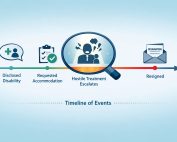
Constructive Discharge vs. Wrongful Termination in California: How Employment Ended vs. Why It Ended
📌 Key Takeaways Constructive discharge is typically alleged when an employee resigns because working conditions became so intolerable that a reasonable person would feel compelled to resign. Wrongful termination generally refers to an employer ending employment for a reason that is alleged to violate the law, such as discrimination, retaliation, or a violation of public policy. How employment ended matters: Constructive discharge focuses on a resignation that the employee alleges was compelled by objectively intolerable working conditions, usually based on more than a single dispute. Why employment ended matters: Wrongful termination focuses on the employer’s stated reason or motivation and whether that reason is alleged to be unlawful. Form versus substance: A dispute may involve an employer’s records reflecting a “resignation,” while the worker alleges the employer’s conduct effectively forced the resignation. Overlap is common: Alleged hostility after a disability disclosure, a request for reasonable accommodation, participation in the interactive process, or job-protected medical leave (FMLA/CFRA) may support both theories depending on the facts. Facts control the labels: Timelines, workplace communications, and the seriousness and duration of conditions typically drive how attorneys and the trier of fact evaluate the dispute. ~ ~ ~ ~ ~ ~ ~ ~ ~ ~ ~ ~ ~ ~ ~ ~ ~ ~ When a job ends in California, two terms often appear in employment disputes: constructive termination and wrongful termination. These terms address different questions. Constructive discharge usually addresses how employment ended—through a resignation that the employee alleges was compelled by intolerable conditions. Wrongful termination usually addresses why employment ended—because the employer’s reason for ending employment is alleged to violate legal protections, such as anti-discrimination or anti-retaliation laws or public policy. Constructive Discharge in California: Alleged Forced Resignation Under Intolerable Conditions Constructive discharge (sometimes called constructive termination) is commonly alleged when the employer’s records reflect that the worker “resigned,” but the worker contends the work environment became intolerable under the legal standard. The phrase “resignation in form, termination in substance” is often used as shorthand; the central legal question is whether the conditions were objectively severe enough that a reasonable person would have felt compelled to resign. In many cases, trier of fact evaluates factors such as: the severity of the conditions, the duration or escalation over time, whether the employer was aware of the conditions and had an opportunity to address them, and whether the conditions involved more than ordinary workplace conflict or a single unpleasant event. Constructive discharge allegations often arise after events such as disability disclosure, a request for reasonable accommodation, participation in the interactive process, or taking job-protected medical leave. Examples of Fact Patterns Often Alleged in Constructive Discharge Disputes (Illustrations Only) An employer sharply reduces duties or assigns demeaning work after an employee requests a reasonable accommodation for a disability. A supervisor escalates harassment or hostility after protected activity, such as requesting accommodation, participating in the interactive process, or taking job-protected medical leave. An employer imposes drastic negative changes—such as severe schedule disruption, reduced hours, or removal of... Read more








Millions of Dollars Recovered For Our Clients
Check Out Our Case Results