


Eagle Rock Employment Attorneys
The trial attorneys of the Akopyan Law Firm A.P.C. stand ready to fight for the rights of the residents of Eagle Rock, regardless of whether they are employees or employers. If your cause is just and involves employment law, give us a call to see how we can help.
 Eagle Rock, California
Eagle Rock is a neighborhood in northeast Los Angeles. It spans a little over four square miles but is home to almost 35,000 residents. The zip codes encompassed by Eagle Rock are 90041, 90042, and 90065. The neighborhood is named after Eagle Rock, a large boulder whose shadow resembles an eagle. Although Eagle Rock, which is geographically located between the cities of Pasadena and Glendale, was once incorporated as a city in 1911, its need for an adequate water supply and a high school resulted in its annexation by Los Angeles in 1923. Beginning in the 2000s, the area attracted young hip professionals. As a result, housing prices have dramatically risen and a new wave of restaurants, coffee shops, bars, and art galleries have appeared over the last decade. The neighborhood is inhabited by a wide variety of ethnic and socioeconomic groups and the creative class.
The Akopyan Law Firm A.P.C. is headquartered in Los Angeles which is minutes away from Eagle Rock. Our employment lawyers stand ready to provide legal services to both employees and employers in Eagle Rock.
Finding The Best Employment Lawyer in Eagle Rock
Eagle Rock, a thriving and close-knit community, offers its residents a diverse array of legal professionals to choose from. With the prevalence of online searches for “Eagle Rock employment lawyer” or “wrongful termination attorney in Eagle Rock,” it’s common to encounter a barrage of paid advertisements from employment lawyers operating from various locations.
Choosing the right attorney, one with the necessary expertise and experience, can indeed pose a challenge when the decision is primarily based on a paid internet advertisement. For individuals seeking legal guidance, it can be a daunting task to evaluate whether a particular attorney truly excels in this field and possesses the requisite experience to effectively handle employment trials and litigation, especially when all they have to rely on is an advertisement.
This is where the Akopyan Law Firm, A.P.C. sets itself apart. Each of our attorneys brings nearly two decades of invaluable experience to the table, reinforced by a distinguished track record of success in representing both employees and employers. Our firm’s guiding principle centers on quality, emphasizing personalized attention and outstanding representation for every client.
With offices located just minutes away from Eagle Rock, we are strategically situated to provide residents with top-tier legal representation. We take great pride in our work and extend an invitation for you to explore our online reviews or request client references to witness our track record firsthand.
When you choose the Akopyan Law Firm, A.P.C., you’re not merely selecting legal expertise; you’re embracing a commitment to delivering the highest standards of service. Your legal needs are our priority, and we’re here to be your trusted advocates. If you seek legal representation that prioritizes quality and experience, we encourage you to reach out to us today for exceptional counsel and support. Your path to effective legal resolution begins right here in Eagle Rock.
Eagle Rock Residents Can Call Us For All Sorts Of Employment Law Disputes, Including Those Involving:
Featured Article:
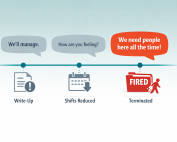
Comments from Supervisors About Family Medical Leave That May Support Concerns About Unlawful Retaliation
📌 Key Takeaways Supervisor remarks that frame an employee’s use of job-protected leave as a workplace problem, particularly when followed by discipline or termination, may be relevant when evaluating whether an adverse employment action was lawful. Comments Reframing “Reliability”: Statements that the workplace needs people “here all the time” may recharacterize job-protected leave-related absences as an “attendance” issue and may later be used to justify discipline or termination. Job Security Threats: Statements that a job may not be there after leave, or that management wants “more available” workers, can link job-protected leave to job loss and may support an inference that leave was viewed negatively. Pressure on Medical Time: Questions about treatment that shift into pressure to move appointments, return early, or limit time away, including comments that trivialize medical care, may discourage the use of job-protected leave. Comments and Job Actions: When new criticism, write-ups, or shift cuts appear soon after a request for job-protected leave and similarly situated coworkers who did not take leave are treated differently, the sequence may warrant review. Viewed together, what a supervisor in Southern California says about job-protected leave, and when those comments occur, can change how later discipline or termination is understood. ~ ~ ~ ~ ~ ~ ~ ~ ~ ~ ~ ~ ~ ~ ~ ~ ~ ~ Supervisor comments about family medical leave can help show whether an employer views job-protected leave as a protected workplace right or as a burden. When those remarks appear close in time to write-ups, schedule cuts, demotion, or termination, they may support concerns about retaliation or interference with protected leave rights, rather than a purely business-related decision. Why Supervisor Comments About Family Medical Leave Matter for Job Security For many hourly workers, the first warning sign about job security is a shift in how a supervisor talks about time away from work. When California Family Rights Act (CFRA) and/or the federal Family and Medical Leave Act (FMLA) or related laws apply, employers are prohibited from retaliating against employees for requesting or using job-protected leave. That is why patterns in how supervisors discuss leave can become significant when later job decisions are described as “attendance” or “performance” issues. Workers Most Affected by Problematic Leave-Related Comments These concerns may arise for workers across many roles in Southern California communities such as Los Angeles, Bakersfield, Costa Mesa, and San Diego. Construction laborers, warehouse staff, production workers, retail associates, food service workers, landscaping crews, and delivery drivers may request job-protected leave for serious health conditions or caregiving needs and then face new scrutiny, reduced hours, or termination. Comment Patterns That May Signal Retaliation for Job-Protected Family Medical Leave Certain recurring ways of talking about job-protected leave can raise concerns, especially when the comments appear alongside discipline, demotion, schedule cuts, or termination after an employee requests or uses job-protected leave. Comments Linking Family Medical Leave to “Reliability” or “Commitment” Supervisors may say the workplace needs people who are “here all the time,” or that medical visits make... Read more









Millions of Dollars Recovered For Our Clients
Check Out Our Case Results