


Downey Employment Attorneys
The trial attorneys of the Akopyan Law Firm A.P.C. stand ready to fight for both employers and employees in Downey, California.
 Downey, California
Downey is a city located in southeast Los Angeles. Downey is home to more than 110,000 residents. It covers approximately thirteen square miles, and encompasses the following zip codes: 90240, 90241, 90242. In the 1800’s, Downey was one of many towns to spring up along the thousands of miles of trails to the west. The city derived its name from John Gately Downey, an Irish immigrant who had come to California during the Gold Rush, and succeeded to Governor of California. He helped build the economic foundation of Southern California, effecting a transition from open cattle range to an agricultural district of small farms. In November 1859, Downey and his former drugstore partner, James McFarland, bought the 17,602 acre Rancho Santa Gertrudes for a mere $60,000. In 1873, a 96-acre parcel of the plot became the central district of a community called “Downey City,” an area with a favorable climate, fertile soil and abundant water sources. In April of 1874, the people of Downey City heard the first whistle of a Southern Pacific train lumbering into town. The extension of the Southern Pacific Railroad through Downey played a pivotal role in bringing people throughout the country to the city to reap the potential business and agricultural benefits of the land.
At the beginning of the twentieth century, many Downey pioneers had achieved success in business and politics within the city and the surrounding Los Angeles County. The downtown Downey area contained a Sunkist packing plant, a department store, banks, restaurants and mercantile shops. Downey remained largely agrarian until the development of the local aircraft industry during the post-World War II years, with light industry and tract homes replacing orange groves. The city was one of the first suburban “planned communities” with quality homes, schools and retail centers. Today, Downey is an ideal home base from which to take advantage of the business resources and cultural activities offered in Southern California. With offices in Los Angeles, Bakersfield, Oxnard, Temecula, Rancho Cucamonga, Costa Mesa, Culver City, and San Diego the Akopyan Law Firm A.P.C. is just minutes away from Downey. Our employment lawyers stand ready to provide world-class services and top-notch representation to the residents of Downey.
Do You Need The Best Employment Lawyers in Downey?
Situated advantageously, Downey offers its residents a multitude of choices when it comes to legal counsel. The city boasts an abundance of lawyers and law firms, all extending their services to the local community. Some are so eager to attract clients that they might as well knock on your door and invite themselves into your living room to make their pitch. For both employers and employees in Downey grappling with substantial legal issues, particularly those rooted in employment law, the challenge lies in identifying the right lawyer for their specific needs. This task becomes all the more daunting in the face of the ceaseless wave of attention-grabbing radio advertisements and the presence of eye-catching posters on billboards, buses, and street benches throughout the city. While most individuals turn to online searches for solutions, seeking phrases like “Downey employment lawyer” or “wrongful termination attorney in Downey” can often yield search results packed with paid advertisements from billboard lawyers. While billboard lawyers may excel in specific cases, there are scenarios where the complexity of the matter necessitates the involvement of seasoned, high-caliber legal counsel. At the Akopyan Law Firm, A.P.C., each of our attorneys boasts nearly two decades of invaluable experience, supported by a distinguished track record of success representing both employers and employees. Our firm’s hallmark lies in our unwavering commitment to quality over quantity. Our attorneys prefer to invest their time in the courtroom, vigorously advocating for our clients’ rights, rather than in a recording studio crafting catchy radio ads. We take great pride in our work and welcome your request for client references or encourage you to explore our online reviews to witness our track record firsthand. With offices located just minutes away from Downey, we are poised and prepared to provide residents with legal representation of the utmost excellence. When you choose the Akopyan Law Firm, A.P.C., you’re not only selecting legal expertise; you’re embracing a dedication to delivering the highest standards of service. Your legal needs are our priority, and we’re here to be your trusted advocates. If you seek legal representation that prioritizes quality and experience, we urge you to reach out to us today for exceptional counsel and support.
We Can Help Downey Residents With Cases Involving:
Featured Article:
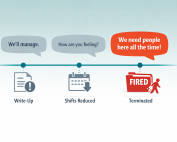
Comments from Supervisors About Family Medical Leave That May Support Concerns About Unlawful Retaliation
📌 Key Takeaways Supervisor remarks that frame an employee’s use of job-protected leave as a workplace problem, particularly when followed by discipline or termination, may be relevant when evaluating whether an adverse employment action was lawful. Comments Reframing “Reliability”: Statements that the workplace needs people “here all the time” may recharacterize job-protected leave-related absences as an “attendance” issue and may later be used to justify discipline or termination. Job Security Threats: Statements that a job may not be there after leave, or that management wants “more available” workers, can link job-protected leave to job loss and may support an inference that leave was viewed negatively. Pressure on Medical Time: Questions about treatment that shift into pressure to move appointments, return early, or limit time away, including comments that trivialize medical care, may discourage the use of job-protected leave. Comments and Job Actions: When new criticism, write-ups, or shift cuts appear soon after a request for job-protected leave and similarly situated coworkers who did not take leave are treated differently, the sequence may warrant review. Viewed together, what a supervisor in Southern California says about job-protected leave, and when those comments occur, can change how later discipline or termination is understood. ~ ~ ~ ~ ~ ~ ~ ~ ~ ~ ~ ~ ~ ~ ~ ~ ~ ~ Supervisor comments about family medical leave can help show whether an employer views job-protected leave as a protected workplace right or as a burden. When those remarks appear close in time to write-ups, schedule cuts, demotion, or termination, they may support concerns about retaliation or interference with protected leave rights, rather than a purely business-related decision. Why Supervisor Comments About Family Medical Leave Matter for Job Security For many hourly workers, the first warning sign about job security is a shift in how a supervisor talks about time away from work. When California Family Rights Act (CFRA) and/or the federal Family and Medical Leave Act (FMLA) or related laws apply, employers are prohibited from retaliating against employees for requesting or using job-protected leave. That is why patterns in how supervisors discuss leave can become significant when later job decisions are described as “attendance” or “performance” issues. Workers Most Affected by Problematic Leave-Related Comments These concerns may arise for workers across many roles in Southern California communities such as Los Angeles, Bakersfield, Costa Mesa, and San Diego. Construction laborers, warehouse staff, production workers, retail associates, food service workers, landscaping crews, and delivery drivers may request job-protected leave for serious health conditions or caregiving needs and then face new scrutiny, reduced hours, or termination. Comment Patterns That May Signal Retaliation for Job-Protected Family Medical Leave Certain recurring ways of talking about job-protected leave can raise concerns, especially when the comments appear alongside discipline, demotion, schedule cuts, or termination after an employee requests or uses job-protected leave. Comments Linking Family Medical Leave to “Reliability” or “Commitment” Supervisors may say the workplace needs people who are “here all the time,” or that medical visits make... Read more









Millions of Dollars Recovered For Our Clients
Check Out Our Case Results