
📌 Key Takeaways
Removing a pregnant restaurant employee from customer-facing duties, where gratuity is earned, may constitute pregnancy discrimination under California’s Fair Employment and Housing Act (FEHA) when the employer relies on pregnancy-related stereotypes.
Under the Fair Employment and Housing Act (California Government Code section 12926), these discrimination and accommodation protections generally apply to California employers with five or more regular employees. Under California law, an unlawful “adverse employment action” is not limited to termination or a cut in base hourly pay; it includes any reassignment that materially affects an employee’s compensation, terms, conditions, or privileges of employment.
- Reassignment May Constitute Discrimination: FEHA protects employees of covered employers against pregnancy-based discrimination affecting job assignments and working conditions, even when employment continues.
- Pregnancy Stereotypes May Influence Assignments: Management decisions based on assumptions about a pregnant employee’s appearance, physical capabilities, or reliability may indicate discriminatory motivation.
- Unchanged Wages May Conceal Losses: Losing regular serving or bartending assignments may reduce tipping opportunities, scheduled hours, or earnings despite an unchanged hourly pay rate.
- Individual Accommodation Needs Matter: Reasonable accommodation for pregnancy addresses an employee’s individual medical needs, unlike reassignments based solely on generalized pregnancy-related assumptions.
- Retaliation Requires a Relevant Connection: Unfavorable reassignment following protected pregnancy-related activity may raise retaliation concerns when the employer’s conduct is connected to that activity.
For restaurant employees working in Encino who experience pregnancy-related changes to customary duties, an employment attorney can assess the employer’s motivation and resulting employment consequences.
The significance of a pregnancy-related reassignment depends on why the employer made the decision and how it affected the employee’s work.
Removing a pregnant restaurant employee from customer-facing duties, which result in tipping income, may constitute pregnancy discrimination when an employer bases the decision on pregnancy-related stereotypes rather than legitimate workplace considerations. California’s Fair Employment and Housing Act (FEHA) prohibits covered employers from discriminating against employees because of pregnancy in job assignments, compensation, and other terms and conditions of employment.
For restaurant employees working in Encino, a neighborhood in Los Angeles’s San Fernando Valley, these statewide protections may apply when management changes customary responsibilities because of pregnancy. A server, host, bartender, or cashier may experience unfavorable employment treatment without losing their job.
When an Employer Removes a Pregnant Employee from Customer-Facing Restaurant Duties
A restaurant employee’s regular responsibilities often determine the nature of their work. Servers handle dining-room tables, hosts welcome customers and coordinate seating, and bartenders serve guests directly.
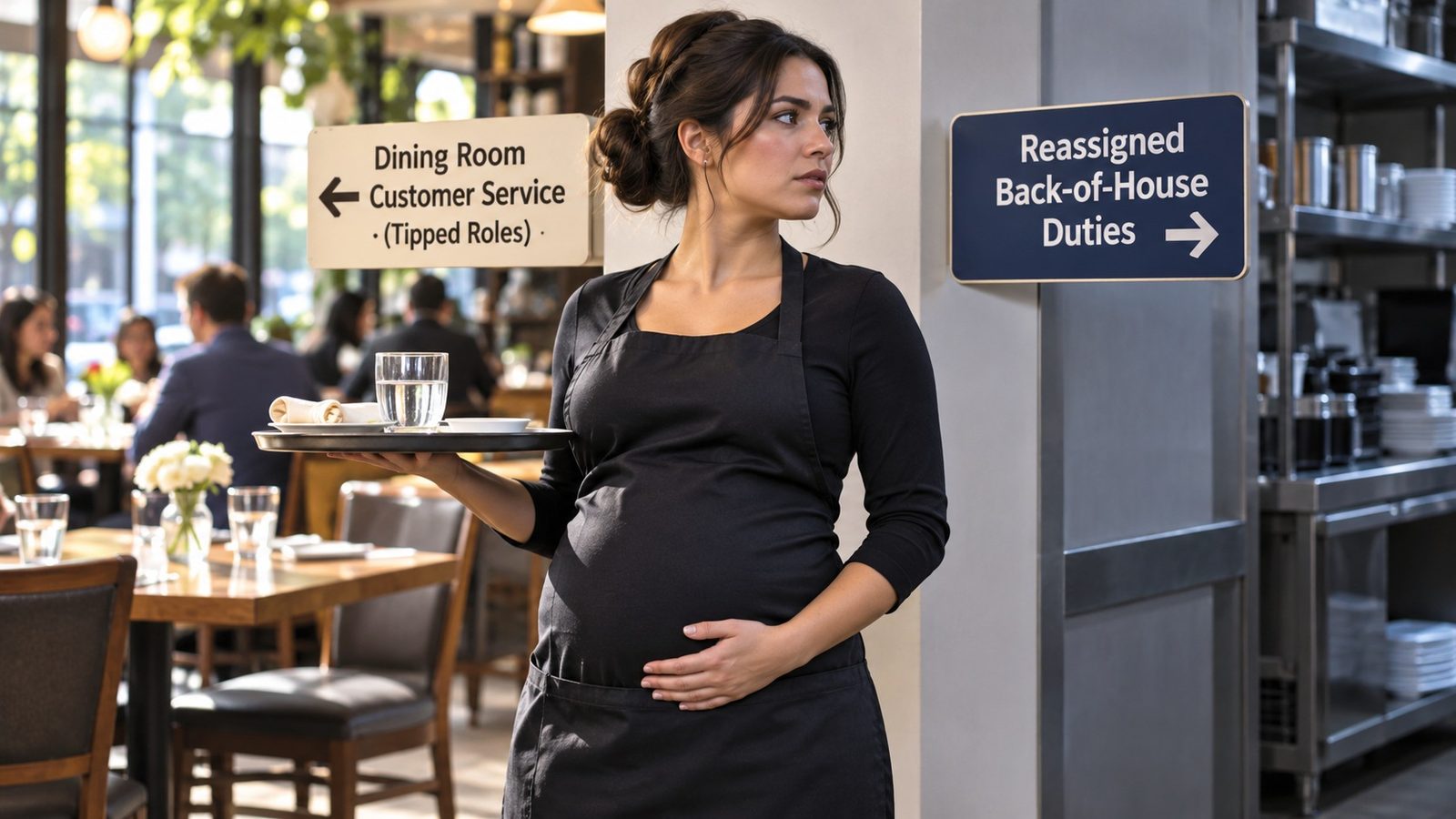
Consider a server who has consistently handled dining-room tables. After learning of her pregnancy, a supervisor transfers her to back-of-house duties, stating that pregnant employees should no longer interact directly with customers.
The employee remains employed, but the supervisor has substantially altered her customary responsibilities, which may impact on her tipping income. The statement also suggests that pregnancy may have influenced the reassignment.
FEHA protections may apply to discriminatory employment decisions affecting working conditions, even when an employee retains the same position or title. However, routine operational changes unrelated to pregnancy do not automatically constitute unlawful discrimination.
Pregnancy-Related Stereotypes That May Influence Restaurant Job Assignments
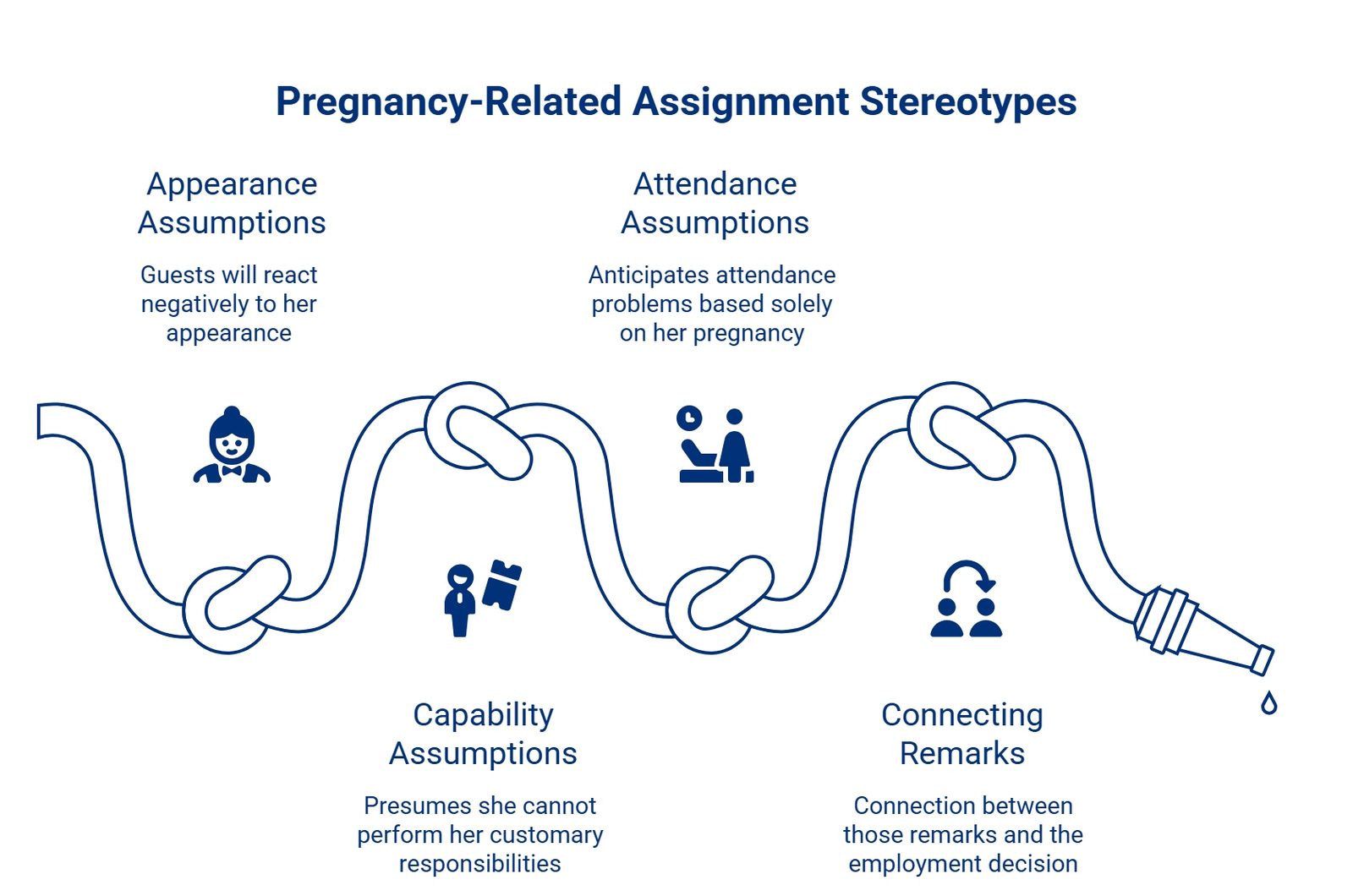
Pregnancy-related stereotyping may affect restaurant assignments when managers rely on generalized assumptions about an employee’s appearance, physical capabilities, reliability, or suitability for customer-facing work.
Such assumptions may influence decisions in several ways:
- A restaurant manager may remove a pregnant host from greeting customers because the manager assumes guests will react negatively to her appearance.
- A supervisor may transfer a pregnant bartender to less desirable assignments because the supervisor presumes she cannot perform her customary responsibilities.
- An employer may reduce a cashier’s regular shifts because management anticipates attendance problems based solely on her pregnancy.
These examples illustrate potentially discriminatory reasoning, not established legal violations.
Pregnancy-related remarks may be relevant when an employer subsequently changes an employee’s assignments. The connection between those remarks and the employment decision may help explain whether pregnancy-related bias influenced management’s actions.
Why Losing Serving, Hosting, or Bartending Duties May Affect Hourly Earnings
An unfavorable reassignment can affect a restaurant employee’s earning opportunities even when the employer maintains the same hourly pay rate.
Customer-facing positions may differ in scheduled hours, responsibilities, and opportunities to receive tips. These differences depend on the restaurant’s actual staffing and compensation arrangements.
Because California Labor Code section 351 prohibits employers from using tips as a credit toward the minimum wage, front-of-house restaurant workers rely on customer gratuities on top of their base hourly rate for a substantial share of their take-home pay. Moving a server or bartender to a non-tipped back-of-house role can therefore cause a direct, measurable drop in total compensation even when the hourly wage on the pay stub stays exactly the same.
For example, a bartender who regularly works customer-facing evening shifts may experience reduced earnings after management transfers her to duties offering fewer opportunities to receive tips.
Similarly, a server assigned fewer dining-room tables may lose opportunities to earn income associated with regular customer service.
The financial significance of a reassignment therefore depends on its practical consequences. Reduced working hours, diminished customer assignments, or lost tipping opportunities may reflect meaningful changes in employment conditions, regardless of whether the employee’s official title changes.
Distinguishing Pregnancy Discrimination from Reasonable Accommodation for Pregnancy
Reasonable accommodation for pregnancy involves workplace adjustments connected to an employee’s individual pregnancy-related medical needs. An employer-initiated reassignment based on generalized assumptions raises different considerations.
California’s FEHA provides reasonable accommodation in applicable pregnancy-related circumstances. Depending on the employee’s particular needs, an appropriate adjustment may involve modifications to customary responsibilities.
When a pregnant employee does request a workplace modification supported by her health care provider, FEHA requires the employer to engage in a timely, good-faith interactive process with the employee to identify an effective accommodation rather than unilaterally imposing an unrequested transfer or cutting shifts.
By contrast, a restaurant manager who removes a pregnant host from regular guest-facing duties solely because of assumptions about her appearance may be acting on a stereotype rather than an individualized accommodation need.
Describing an unwanted transfer as protective does not automatically establish that the employer’s decision satisfies California employment law.
Pregnancy-related medical disclosures may also have employment consequences. Their significance depends on the circumstances, including the nature of the employee’s individual needs and the employer’s response.
When Pregnancy-Related Reassignment Accompanies Other Unfavorable Treatment
A reassignment may raise additional discrimination concerns when an employer also reduces an employee’s hours, changes established schedules or subjects the employee to heightened scrutiny.
Consider a restaurant server who informs management of her pregnancy. Shortly afterward, her supervisor removes her from regular dining-room assignments, reduces her weekly shifts, and repeatedly questions her expected availability.
These developments may suggest a connection between pregnancy and the employee’s changed working conditions.
The timing of employment decisions, pregnancy-related comments, and the employer’s explanations may provide relevant context. However, the sequence alone does not establish discriminatory motivation, particularly when legitimate reasons may explain the changes.
Pregnancy-Related Retaliation and Unfavorable Restaurant Reassignments
California’s FEHA also prohibits retaliation against employees for engaging in legally protected activity.
Pregnancy-related retaliation concerns may arise when an employee opposes pregnancy discrimination or makes a protected request and subsequently experiences unfavorable treatment.
For example, an employee raises concerns about pregnancy-related discrimination. Her supervisor later removes her from customary customer-facing assignments and makes negative remarks about those concerns.
The sequence may raise questions about whether the reassignment was connected to the employee’s protected activity. An ordinary workplace disagreement, however, does not necessarily qualify as protected activity.
Because escalating concerns while remaining employed may carry professional and financial consequences, consultation with qualified employment counsel can provide an individualized assessment before potentially consequential action.
Pregnancy Disability Leave and Changes to Restaurant Responsibilities
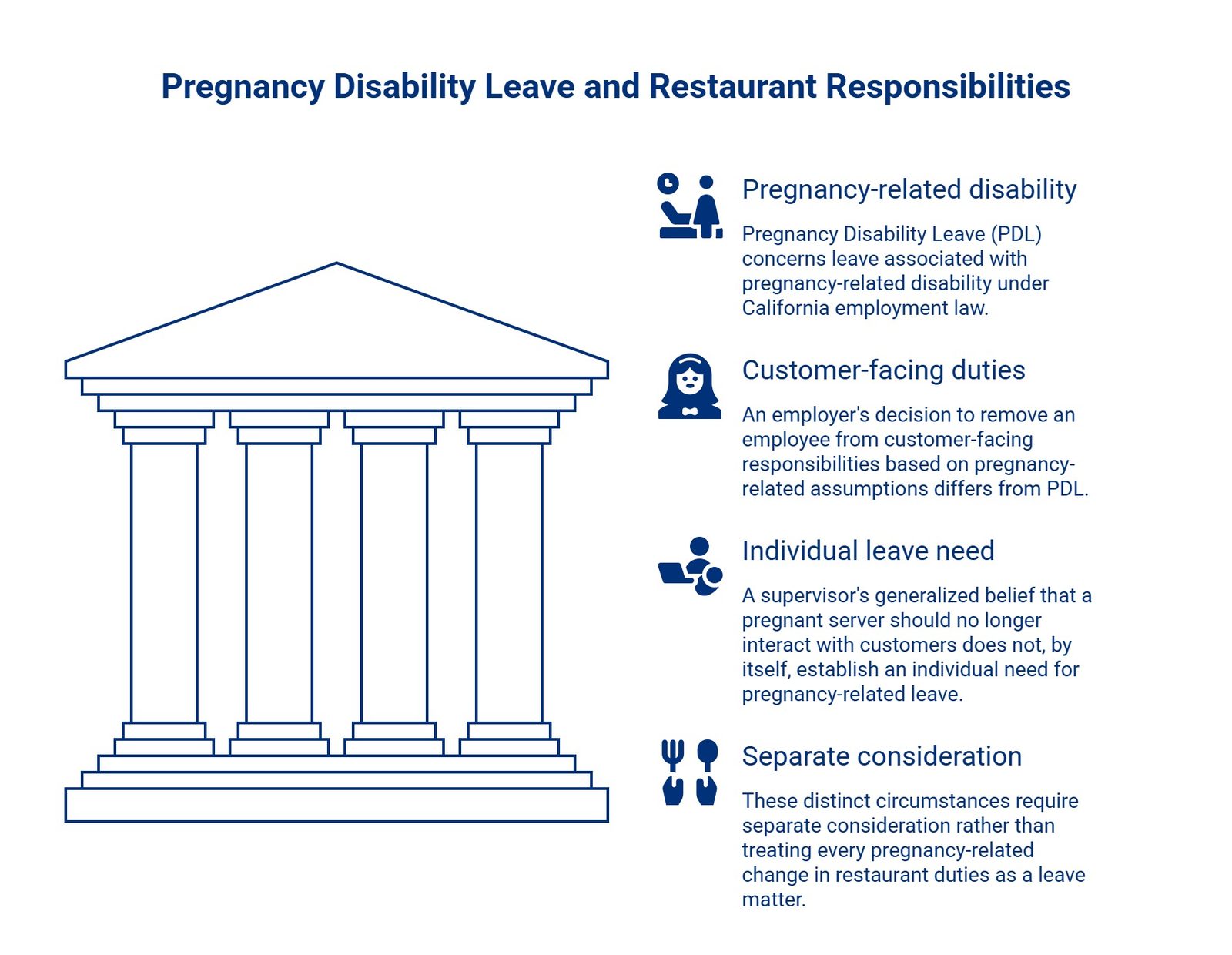
Pregnancy Disability Leave (PDL) concerns leave associated with pregnancy-related disability under California employment law.
PDL differs from an employer’s decision to remove an employee from customer-facing responsibilities based on pregnancy-related assumptions.
A supervisor’s generalized belief that a pregnant server should no longer interact with customers does not, by itself, establish an individual need for pregnancy-related leave.
These distinct circumstances require separate consideration rather than treating every pregnancy-related change in restaurant duties as a leave matter.
When Pregnancy-Related Reassignment May Warrant Employment Attorney Consultation
Determining whether an unfavorable reassignment amounts to unlawful pregnancy discrimination requires examining the employer’s motivation, the employee’s circumstances, and the effects on customary employment responsibilities.
In evaluating a potential restaurant reassignment claim under FEHA, an employment attorney typically examines objective workplace records alongside the timeline of events, including pre- and post-disclosure shift schedules, point-of-sale (POS) tip and table-assignment reports, written communications or text messages with supervisors, and whether similarly situated non-pregnant staff experienced comparable duty changes. Because administrative complaints with the California Civil Rights Department (CRD) generally must be filed within three years of the alleged unlawful practice, timely evaluation helps preserve available legal options.
Disclaimer:
This content is for informational purposes only. Laws, definitions, and deadlines change. Verify current requirements through official California sources. This content is not legal advice. No attorney-client relationship is formed through this content. Please consult a qualified attorney in your jurisdiction for legal advice specific to your situation.
Protect Your Business | The Akopyan Law Firm, A.P.C. | Top Gun Employment Lawyers
Have you been wrongfully terminated from your job? Have you suffered discrimination, harassment, or retaliation in the workplace? Has your employer violated wage and hour laws? If so, we can help. The Akopyan Law Firm, A.P.C. is dedicated to protecting and enforcing employees’ rights throughout Southern California. With a 97% success rate and millions recovered for our clients, our team of experienced and talented employment lawyers can fight to secure the justice you deserve.
Take the First Step Towards Securing Justice: Call us today to speak with one of our experienced employment lawyers. We offer case evaluations free of charge.
Contact Us Today:
- Phone: (818) 509-9975
- Office Locations in California: Los Angeles, Culver City, Costa Mesa, Rancho Cucamonga, San Diego, Oxnard, Temecula, and Bakersfield.