
📌 Key Takeaways
Changes in restaurant employees’ working conditions after pregnancy becomes known may raise discrimination concerns when pregnancy-related bias influences an employer’s decisions under California’s Fair Employment and Housing Act (FEHA).
For restaurant workers in Encino, California, the following distinctions highlight how pregnancy-related treatment may affect employment opportunities and raise legal concerns.
- Pregnancy Bias May Constitute Discrimination: Covered California employers may violate FEHA when pregnancy-related bias influences adverse employment actions involving working hours, pay, or other employment conditions.
- Reduced Shifts May Signal Discrimination: Substantial reductions in scheduled hours or opportunities to earn gratuities may raise concerns when supervisors connect scheduling decisions to pregnancy-related assumptions.
- Pregnancy Stereotypes May Influence Assignments: Employers who reassign pregnant restaurant employees based on assumptions about reliability, stamina, or availability may engage in potentially discriminatory treatment.
- Sudden Discipline May Reflect Bias: Unusual disciplinary write-ups, heightened scrutiny, or inconsistent enforcement of workplace rules may raise concerns when accompanied by pregnancy-related remarks.
- Protected Pregnancy Activities Carry Additional Protections: Unfavorable treatment connected to legally protected pregnancy-related accommodation requests or Pregnancy Disability Leave may implicate distinct protections, including pregnancy-related retaliation.
The central distinction is whether pregnancy influenced an unfavorable employment decision not simply whether the decision followed pregnancy disclosure.
A restaurant employee who suddenly receives fewer shifts, loses customary assignments, or faces unexpected disciplinary criticism after an employer learns of the employee’s pregnancy may have concerns about pregnancy discrimination. Under California’s Fair Employment and Housing Act (FEHA), covered employers are prohibited from making discriminatory employment decisions because of pregnancy, childbirth, or related protected conditions.
For restaurant workers in Encino, California, pregnancy-related bias may affect working hours, earning opportunities, job responsibilities, and other conditions of employment without necessarily resulting in termination.
When An Employer Treats an Employee Differently After Learning of Her Pregnancy, There May be a Discrimination Claim
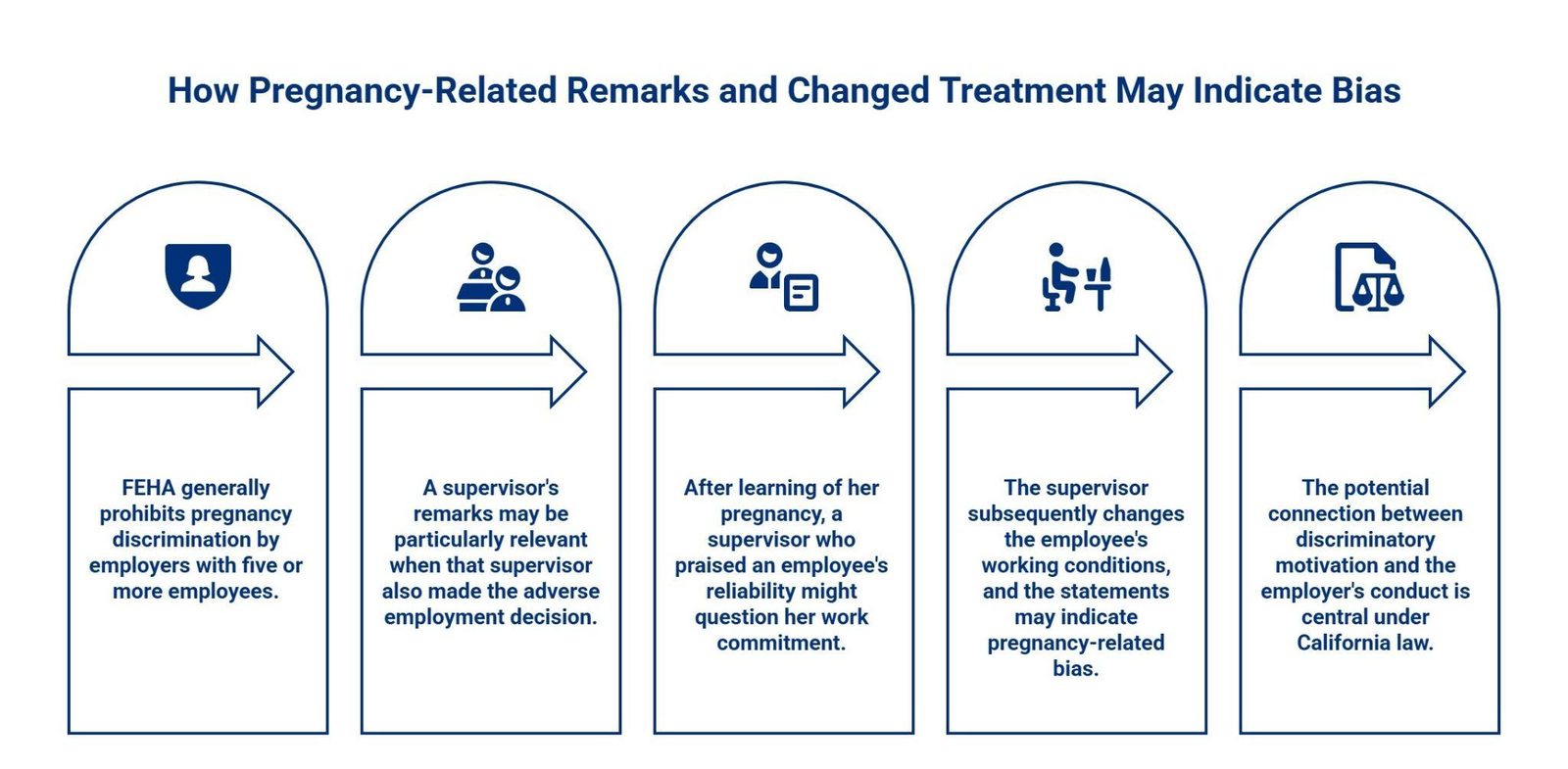
FEHA generally prohibits pregnancy discrimination by employers with five or more employees. These protections apply to covered employment relationships and prohibit adverse employment actions motivated by pregnancy.
A supervisor’s pregnancy-related remarks may be particularly relevant when that supervisor also made the adverse employment decision.
For example, a supervisor who previously praised an employee’s reliability might begin to question that employee’s work commitment after learning of her pregnancy. If the supervisor subsequently changes the employee’s working conditions, the statements may indicate pregnancy-related bias.
The potential connection between discriminatory motivation and the employer’s conduct is central to understanding whether the treatment raises concerns under California law.
Reduced Working Hours and Less Desirable Assignments Following Pregnancy Disclosure
Restaurant employees often depend on scheduled shifts for consistent earnings. Servers and bartenders may also receive different gratuity opportunities depending on their assigned hours and responsibilities.
Consider a hypothetical server who regularly works busy evening shifts. After learning of the employee’s pregnancy, the supervisor substantially reduces those shifts and remarks that pregnant employees cannot be relied upon during demanding service periods.
The supervisor’s statement suggests that assumptions about pregnancy may have influenced the scheduling decision. The reduced hours could also affect the server’s compensation.
Other illustrative circumstances include:
- A restaurant employee loses regularly scheduled working hours after management expresses concerns about the employee’s pregnancy.
- A server is removed from customary customer-facing shifts, reducing opportunities to earn gratuities.
- A bartender receives less desirable assignments after a supervisor questions the employee’s availability because of pregnancy.
When an employer relies on pregnancy-related assumptions to make unfavorable scheduling decisions, those decisions may implicate California’s pregnancy discrimination protections.
How Pregnancy-Related Assumptions May Influence Restaurant Job Assignments
Pregnancy-related stereotyping occurs when an employer makes assumptions about an employee’s reliability, stamina, availability, or suitability for particular duties because of pregnancy.
Consider a hypothetical restaurant host whose manager removes the employee from regular customer-facing responsibilities. The manager explains that pregnant employees are unsuitable for demanding shifts, despite identifying no deterioration in the host’s work performance.
The manager’s comments suggest that pregnancy-related stereotypes influenced the reassignment rather than concerns about the employee’s actual performance.
When such assumptions lead to diminished responsibilities resulting adversely to the material terms of employment, the resulting treatment may constitute an adverse employment action under applicable California law.
When Sudden Discipline or Increased Scrutiny May Reflect Pregnancy-Related Bias
An employer’s disciplinary decisions may raise concerns when a supervisor begins applying workplace standards inconsistently after learning of an employee’s pregnancy.
Consider a hypothetical restaurant cashier with a previously satisfactory work history. After discovering the pregnancy, the supervisor begins issuing unusual disciplinary write-ups and repeatedly questions whether the cashier will remain dependable.
The supervisor’s remarks may indicate that pregnancy-related assumptions influenced the heightened scrutiny.
Changes in disciplinary practices may also be relevant when management begins criticizing previously acceptable performance or enforcing workplace rules differently against a pregnant employee.
The potential legal concern is whether pregnancy-related bias contributed to unfavorable disciplinary treatment, not merely whether the employee disagrees with the supervisor’s criticism.
When Pregnancy-Related Accommodation or Leave Concerns Coincide with Unfavorable Treatment
California law recognizes distinct protections concerning reasonable accommodation for pregnancy and Pregnancy Disability Leave for qualifying employees in covered employment relationships.
Pregnancy discrimination concerns unfavorable treatment because of pregnancy. Reasonable accommodation protections address qualifying pregnancy-related workplace adjustments, while Pregnancy Disability Leave protects qualifying absences associated with pregnancy-related disability.
In a restaurant setting, reasonable accommodations often include practical adjustments such as providing a stool at a host stand or cashier station, allowing more frequent restroom or water breaks, excusing a server or busser from lifting heavy ice buckets or bus tubs, or adjusting shift times to accommodate severe morning sickness or prenatal medical appointments. When an employee requests an adjustment backed by a healthcare provider’s recommendation, covered California employers must engage in a timely, good-faith interactive process to identify effective accommodations rather than unilaterally cutting the employee’s shifts or forcing the employee onto leave. Where a pregnancy-related condition temporarily prevents an employee from performing essential duties even with accommodations, California’s Pregnancy Disability Leave (PDL) law generally allows eligible employees to take up to four months of job-protected leave per pregnancy while retaining the right to return to the same or a comparable position.
Pregnancy-related retaliation may arise when an employer takes adverse action because an employee engaged in legally protected pregnancy-related activity.
Unfavorable treatment following a protected accommodation request or protected leave may therefore implicate additional employment protections.
Reporting or escalating retaliation concerns and disclosing a qualifying disability or medical condition can have legal consequences. Employment counsel can provide guidance before employees make consequential decisions involving those matters.
Why Changes in Workplace Treatment Do Not Automatically Establish Pregnancy Discrimination
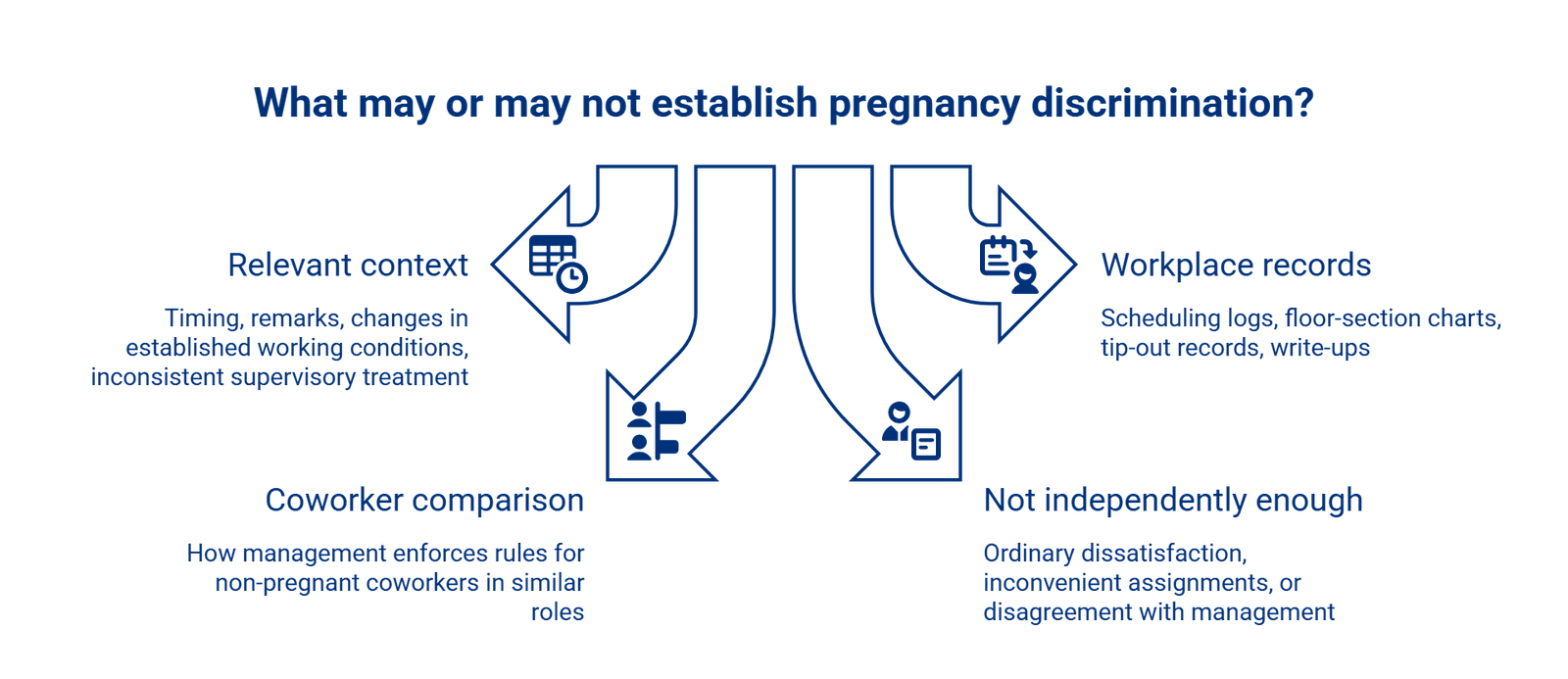
An unfavorable employment decision occurring after an employer learns of an employee’s pregnancy does not necessarily establish that pregnancy motivated the decision.
California pregnancy discrimination protections concern employment decisions influenced by a prohibited reason. Timing, pregnancy-related remarks, changes in established working conditions, and inconsistent supervisory treatment may provide relevant context.
In hospitality workplaces, that context often appears in scheduling and personnel records such as digital shift-scheduling logs (for example, HotSchedules or 7shifts histories) showing a sudden drop in assigned prime shifts, floor-section charts reassigning a server to low-traffic tables, tip-out records reflecting reduced earnings, or a sudden cluster of write-ups following months or years of clean performance reviews. Comparing how management enforces attendance or side-work rules for non-pregnant coworkers in similar roles can also help clarify whether scrutiny was applied unevenly.
An adverse employment action must be evaluated under the applicable legal standards and circumstances. Ordinary workplace dissatisfaction, inconvenient assignments, or disagreement with management does not independently establish unlawful discrimination.
Understanding Pregnancy Discrimination Concerns Among Restaurant Workers in Encino
Frontline restaurant employees in Encino may work as servers, hosts, bussers, food runners, cooks, dishwashers, bartenders, or cashiers. Their employment opportunities often depend on assigned responsibilities, scheduled working hours, and supervisory decisions.
For these workers, unfavorable changes associated with pregnancy-related bias may affect earnings or customary duties even when employment continues.
FEHA protections may apply to covered restaurant employment relationships in Encino, subject to the applicable statutory requirements.
The Role of Employee-Side Employment Counsel in Addressing Pregnancy Discrimination Concerns
An employee-side California employment attorney can assess whether pregnancy-related remarks, unfavorable employment decisions, and surrounding circumstances implicate FEHA or related pregnancy protections.
Professional evaluation can also distinguish pregnancy discrimination from reasonable accommodation issues, protected leave concerns, and pregnancy-related retaliation.
Because pursuing a civil claim under FEHA generally requires first filing an administrative complaint with the California Civil Rights Department (CRD) and obtaining a Right-to-Sue notice within strict statutory deadlines, early legal evaluation helps ensure that procedural requirements are met and relevant workplace records are properly assessed.
Frequently Asked Questions
Can a Reduction in Restaurant Shifts After Pregnancy Disclosure Raise Discrimination Concerns?
Yes. Reduced working hours may raise concerns when an employer’s pregnancy-related assumptions influence scheduling decisions and adversely affect employment opportunities.
Can Pregnancy-Related Comments from a Restaurant Manager Be Relevant to Discrimination Concerns?
Yes. A manager’s pregnancy-related remarks may indicate discriminatory motivation when connected to unfavorable employment decisions. The remarks alone do not necessarily establish unlawful discrimination.
Can Reassigning a Pregnant Restaurant Employee from Customer-Facing Duties Constitute Discrimination?
Potentially. A reassignment motivated by pregnancy-related stereotypes may constitute discrimination when it adversely affects the employee’s employment conditions or opportunities.
Can Pregnancy Discrimination Occur Without Termination?
Yes. Pregnancy discrimination may involve reduced hours, unfavorable assignments, disciplinary measures, or other adverse employment actions while employment continues.
Can Unfavorable Treatment Related to Pregnancy Accommodation Requests Raise Additional Employment-Law Concerns?
Yes. Adverse treatment connected to a legally protected pregnancy-related accommodation request may implicate accommodation protections or pregnancy-related retaliation, depending on the circumstances.
Disclaimer:
This content is for informational purposes only. Laws, definitions, and deadlines change. Verify current requirements through official California sources. This content is not legal advice. No attorney-client relationship is formed through this content. Please consult a qualified attorney in your jurisdiction for legal advice specific to your situation.
Protect Your Business | The Akopyan Law Firm, A.P.C. | Top Gun Employment Lawyers
Have you been wrongfully terminated from your job? Have you suffered discrimination, harassment, or retaliation in the workplace? Has your employer violated wage and hour laws? If so, we can help. The Akopyan Law Firm, A.P.C. is dedicated to protecting and enforcing employees’ rights throughout Southern California. With a 97% success rate and millions recovered for our clients, our team of experienced and talented employment lawyers can fight to secure the justice you deserve.
Take the First Step Towards Securing Justice: Call us today to speak with one of our experienced employment lawyers. We offer case evaluations free of charge.
Contact Us Today:
- Phone: (818) 509-9975
- Office Locations in California: Los Angeles, Culver City, Costa Mesa, Rancho Cucamonga, San Diego, Oxnard, Temecula, and Bakersfield.