📌 Key Takeaways
For California dental practice owners, a termination after a workplace complaint may quickly become a dispute about timing, records, credibility, and pretext.
- Timing Drives Exposure: When termination follows a workplace complaint, timing may support causation or pretext allegations in wrongful termination litigation.
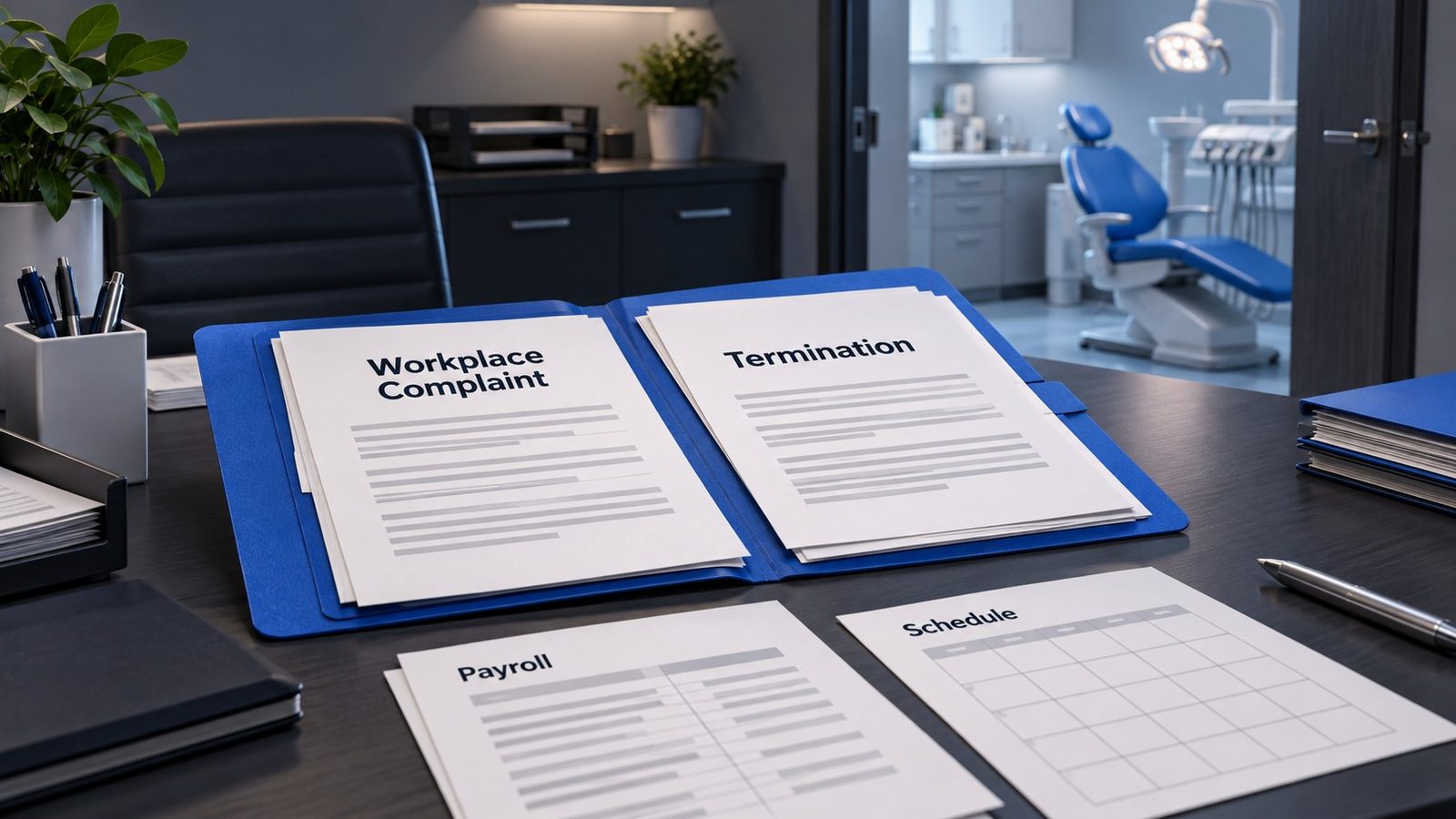
- Dental Teams Matter: Compact dental teams often make owners, managers, schedules, payroll records, and daily messages central to the disputed narrative.
- Records Shape Credibility: Payroll data, schedules, emails, supervisor notes, and disciplinary records may shape whether the stated reason appears consistent.
- One Claim Can Expand: A single employee separation may trigger retaliation, discrimination, wage-and-hour, leave-related, accommodation, or interactive process allegations.
- Defense Requires Context: Employer-side review often turns on how dental-office facts connect to protected activity, documentation, policy consistency, and disputed testimony.
Workplace complaints do not decide liability, but they may change how a dental practice termination is evaluated.
A California dental practice may view an employee separation as a staffing, attendance, performance, scheduling, or operational decision. A former employee may later frame the same decision as wrongful termination, retaliation, discrimination, wage-and-hour retaliation, leave-related retaliation, or another employment claim tied to a prior workplace complaint.
For dental practice owners, that shift matters because the dispute may no longer focus only on why employment ended. The dispute may focus on timing, motive, credibility, records, communications, and whether the stated reason for termination appears consistent with the surrounding facts. When a termination closely follows a workplace complaint, the proximity between the complaint and the termination may become part of a causation or pretext theory.
Why Workplace Complaints Can Change the Litigation Narrative
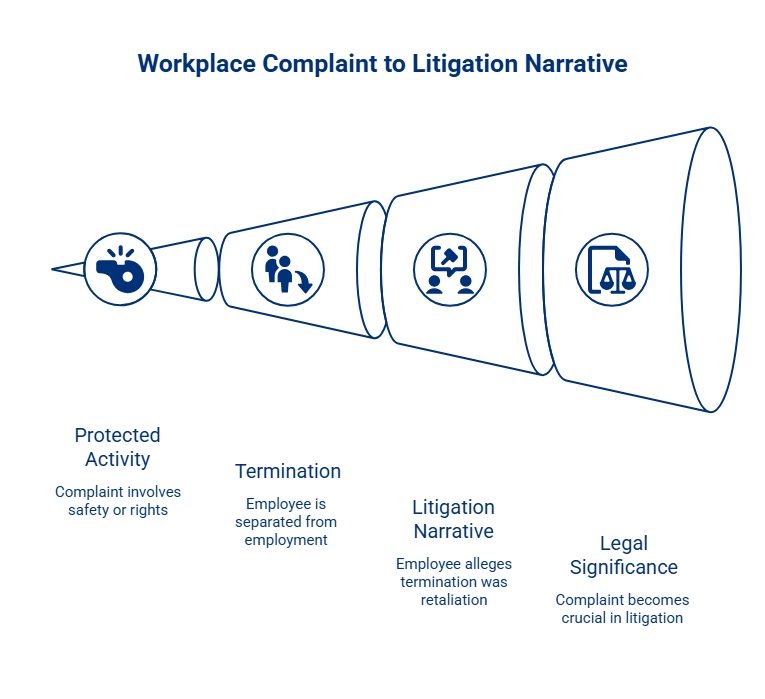
Under California law, a workplace complaint may become significant when an employee later alleges that the complaint was protected activity and the termination was an adverse employment action connected to that activity. In employment litigation, a plaintiff may point to the sequence of events and argue that the termination was not simply an operational decision.
For a dental practice, a workplace complaint may involve wages, missed breaks, overtime, harassment, discrimination, medical leave, or disability accommodation. In a clinical setting, protected activity frequently involves patient and employee safety. For example, an employee raising concerns about inadequate personal protective equipment (PPE), improper sterilization protocols, or non-compliance with Cal/OSHA radiation safety standards is engaging in legally protected activity. A workplace complaint may be legally significant without being assumed valid or dispositive of liability.
This potential exposure exists even when the practice has a legitimate business reason for the separation. At-will employment may not end the analysis when a former employee connects the termination to protected activity, protected status, or a statutory right. In that setting, wrongful termination claims may turn on how the employment decision appears in the context of the whole record.
Why Dental Office Operations Create Distinct Pressure
Dental practices often operate with compact teams and overlapping responsibilities. A dentist-owner may supervise patient care, oversee staff coverage, approve payroll decisions, respond to employee concerns, and participate in termination decisions. A practice administrator may handle scheduling, billing workflows, front-office communication, and employee complaints within the same week.
Those overlapping roles can make employment litigation more disruptive than a generic business dispute. The same individuals who keep treatment rooms moving may become witnesses. The same schedules that explain hygienist coverage may be examined for timing and consistency. The same text messages used to manage daily operations may later appear in civil litigation as part of a disputed narrative.
A dental practice still has to see patients, coordinate assistants, manage hygiene schedules, handle billing, answer phones, and preserve patient trust while the claim is pending. That operational reality gives employee lawsuits against dental practices a practical intensity that may not appear on the face of the complaint.
Why Records, Timing, and Management Credibility Matter in Wrongful Termination Litigation
When a termination follows a workplace complaint, the plaintiff may argue that timing supports an inference of retaliation. The practice may point to attendance problems, performance issues, scheduling needs, interpersonal conflict, business restructuring, or other legitimate business reasons for the decision. The dispute may then focus on whether the stated reason appears consistent across records and witnesses.
In a dental practice dispute, relevant categories may include, among other things:
- Plaintiff’s counsel, defense counsel, an agency, or a trier of fact may examine payroll data and timekeeping records when the employee raised wage, overtime, meal period, or rest period concerns.
- The parties may review patient schedules and shift schedules when the practice cites coverage needs or attendance issues.
- Emails, text messages, and supervisor notes may matter when the parties dispute timing, tone, or decision-maker knowledge.
- Leave communications and accommodation communications may become relevant when the employee connects the termination to medical leave, pregnancy-related leave, or a disability-related allegation.
- Disciplinary records and internal complaint records may affect how the stated reason for termination is evaluated.
These records rarely speak for themselves in a vacuum. Their meaning may depend on context, authorship, timing, consistency, and the testimony of the people involved. Contemporaneous documentation, consistent application of established policies, and early involvement of HR or employment counsel may affect whether the employment decision appears defensible in litigation. Inconsistent disciplinary notes, deviation from stated policy, or close proximity between protected activity and termination may become focal points in a pretext dispute. To mitigate these risks, management typically relies on objective, contemporaneous documentation before a termination occurs. Standard practices include maintaining accurate attendance logs, conducting regular written performance evaluations, and ensuring that any disciplinary actions align strictly with the procedures outlined in the office’s employee handbook.
How One Termination Can Expand into Multiple Claims
A single employee separation may create several overlapping allegations. A former dental assistant, hygienist, billing coordinator, treatment coordinator, receptionist, or front-office employee may allege that the termination followed a protected complaint or legally significant workplace event.
Depending on the size of the workforce, wrongful termination allegations under California law may overlap with retaliation allegations, FEHA discrimination allegations (which generally apply to employers with five or more employees), or harassment (applicable to employers of any size), disability accommodation issues, interactive process allegations, leave-related retaliation, or wage-and-hour disputes. Federal concepts under Title VII and the ADA (which generally require 15 or more employees), the FLSA, or the FMLA (which requires 50 or more employees) may also appear where jurisdictional thresholds are met alongside California employment claims.
Each legal theory may draw attention to a different part of the practice’s operations. Different complaints trigger different scrutiny: wage disputes highlight payroll records, disability allegations spotlight accommodation efforts, and leave-related claims draw attention to return-to-work communications. A harassment allegation may broaden the dispute beyond the termination decision itself.
Illustrative Example: Termination After a Scheduling and Wage Complaint
A dental hygienist may complain to an office manager about missed rest breaks and inconsistent scheduling. The practice may later terminate the hygienist after several appointment-coverage conflicts. The former employee may allege that the termination was retaliation for raising wage-and-hour concerns, while the practice may view the separation as a staffing and patient-scheduling decision.
This scenario illustrates how timing, payroll records, hygiene schedules, text messages, policy consistency, and decision-maker testimony could become disputed issues. The example does not establish that the claim is valid or that the employer has a defense. It shows how a dental-practice employment decision may be evaluated through a litigation lens after a workplace complaint.
Why Small and Closely Held Dental Practices Experience Litigation Disruption Quickly
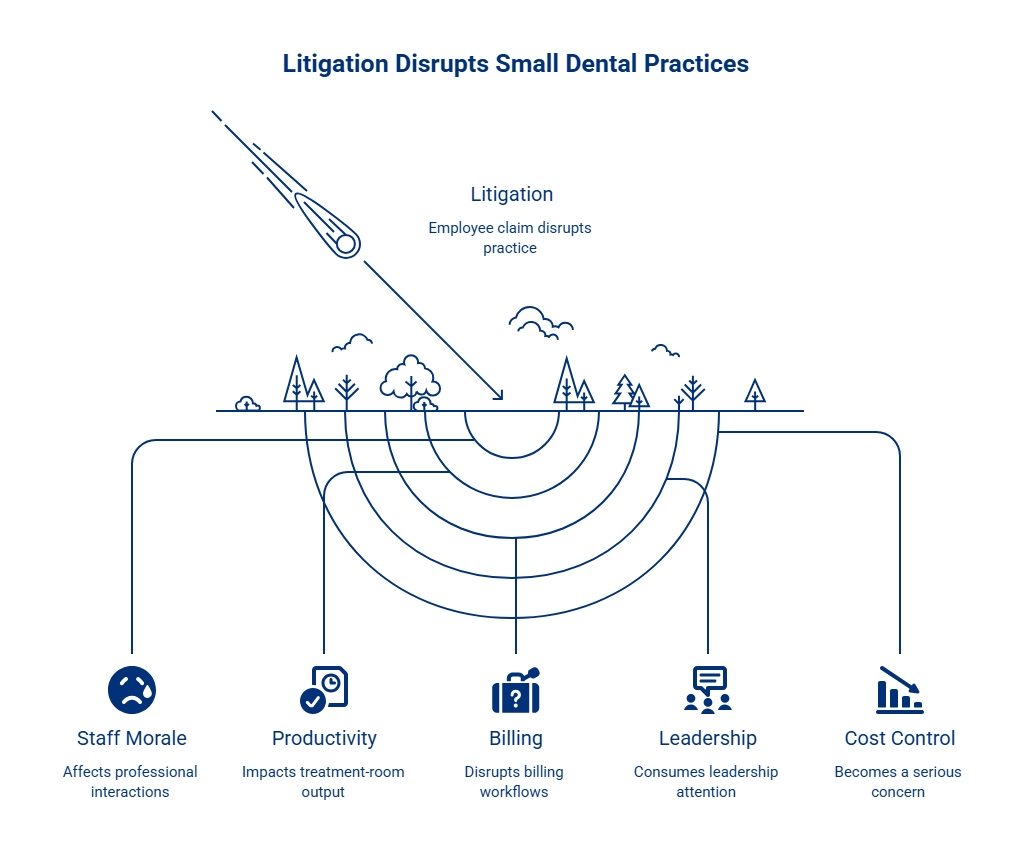
Small and closely held dental practices often have limited internal legal infrastructure. Owners and managers may carry the weight of patient care, payroll oversight, employee relations, vendor issues, and litigation demands at the same time. That concentration of responsibility can place direct pressure on ownership.
The pressure is not limited to attorney involvement or court filings. A pending employee claim may affect staff morale, professional interactions with patients, treatment-room productivity, billing workflows, and the owner’s ability to focus on the business. A dispute that begins with one former employee may consume attention from the leadership structure of a one-location or two-location practice.
Cost control also becomes a serious business concern. Many dental practice owners worry that an employment dispute will become overstaffed, overworked, or disconnected from the practical realities of a small practice. Employer-side representation in this setting often involves proportional judgment, litigation experience, and an understanding of how dental-office facts translate into employment-law allegations.
The Role of an Employer-Side Employment Defense Attorney
Wrongful termination allegations after workplace complaints may involve sensitive communications, witness credibility, payroll and scheduling records, overlapping legal theories, and procedural issues that may affect how the dispute proceeds.
An employment defense attorney often evaluate these disputes in relation to the practice’s records, operations, and potential exposure.
Trial-ready representation does not mean every case will be tried. It means the dispute is evaluated with attention to evidence, credibility, procedural posture, and the way a trier of fact, agency, or opposing party may view the contested facts. For a Southern California dental practice, that perspective can matter when the business must keep treating patients while defending against serious employment allegations.
Active wrongful termination allegations after workplace complaints typically involve fact-specific review by an employer-side employment litigation attorney, particularly when the disputed record includes payroll data, scheduling decisions, internal complaints, medical leave issues, accommodation communications, policy consistency issues, or conflicting accounts of the termination decision.
Disclaimer:
This content is for informational purposes only. Laws, definitions, and deadlines change. Verify current requirements through official California sources. This content is not legal advice. No attorney-client relationship is formed through this content. Please consult a qualified attorney in your jurisdiction for legal advice specific to your situation.
Protect Your Business | The Akopyan Law Firm, A.P.C. | Top Gun Employment Lawyers
Have you been sued by an employee? Are you overwhelmed by the complexities of employment law? If so, give us a call. The Akopyan Law Firm, A.P.C. assists small business owners throughout Southern California. Our seasoned employment defense lawyers stand ready to help employers quickly and efficiently resolve employment disputes. We are ready to aggressively and skillfully defend against any employment case, but understand that in most situations avoiding the expense of litigation is in the client’s best interest.
Take the First Step Protecting Your Future: Call us today to speak with one of our experienced employment defense lawyers.
Contact Us Today:
- Phone: (818) 509-9975
- Office Locations in California: Los Angeles, Bakersfield, Costa Mesa, Temecula, Rancho Cucamonga, Oxnard, Culver City, and San Diego.