

Disclaimer:
This content is for informational purposes only. Laws, definitions, and deadlines change. Verify current requirements through official California sources. This content is not legal advice. No attorney-client relationship is formed through this content. Please consult a qualified attorney in your jurisdiction for legal advice specific to your situation.
Protect Your Business | The Akopyan Law Firm, A.P.C. | Top Gun Employment Lawyers
Have you been sued by an employee? Are you overwhelmed by the complexities of employment law? If so, give us a call. The Akopyan Law Firm, A.P.C. assists small business owners throughout Southern California. Our seasoned employment defense lawyers stand ready to help employers quickly and efficiently resolve employment disputes. We are ready to aggressively and skillfully defend against any employment case, but understand that in most situations avoiding the expense of litigation is in the client’s best interest.
Take the First Step Protecting Your Future: Call us today to speak with one of our experienced employment defense lawyers.
Contact Us Today:
- Phone: (818) 509-9975
- Office Locations in California: Los Angeles, Bakersfield, Costa Mesa, Temecula, Rancho Cucamonga, Oxnard, Culver City, and San Diego.
[/fusion_text][/fusion_builder_column][/fusion_builder_row][/fusion_builder_container]
- The employee may claim that termination followed concerns about wages, overtime, off-the-clock work, meal periods, rest periods, timekeeping, or payroll practices.
- The employee may assert that termination followed complaints involving illegal harassment, or discrimination.
- The employee may allege that termination followed medical leave, pregnancy-related issues, reasonable accommodation discussions, interactive process communications, or communications involving an employee with a disability.
- The employee may claim that termination followed regulatory concerns, workplace safety concerns, or alleged whistleblower retaliation.
These allegations may overlap with unlawful workplace retaliation, wage and hour claims, leave-related claims, reasonable accommodation disputes, or harassment allegations. The overlap can increase potential exposure because one termination may become the basis for broader employment litigation.
Illustrative Example: Pay Complaint Followed by Attendance-Based Termination
A family-owned service business receives an employee complaint alleging unpaid overtime. Later, the business terminates the employee and records attendance problems as the stated reason. In later litigation, the plaintiff may argue that the timing supports a retaliation theory, while the business may maintain that the decision was based on legitimate attendance concerns.
This scenario illustrates how the plaintiff’s allegations and the employer’s stated reason may create a disputed issue about timing and motive. The example also shows why proximity, consistency of explanation, and the surrounding employment record may matter in a disputed retaliation theory. Similar facts may be evaluated differently depending on the complete record, the decision-makers involved, the nature of the complaint, the stated basis for termination, and the claims asserted.
Why Family-Owned Businesses Face Distinctive Pressure
Family-owned small businesses with approximately 5 to 30 employees often operate through direct communication and owner involvement. Those realities are not unlawful by themselves. They may, however, become significant once a plaintiff challenges the reason for termination.
In an owner-operated company, the same person may handle customer issues, payroll questions, scheduling changes, discipline, and termination decisions. A relative may supervise the employee. A general manager may communicate through text messages rather than formal memoranda. An office manager may maintain payroll and personnel records while also helping with daily operations.
Once litigation begins, informal business realities may become part of the evidentiary record. Text messages may show tone, timing, or decision-making context. Schedules may show reduced hours. Payroll records may connect the dispute to alleged wage issues. Supervisor notes may support or undermine the stated reason for termination. Witnesses may remember the same events differently.
The practical pressure may be substantial, particularly when litigation affects management time, staff morale, customer-facing operations, and reputation. For an owner-operated company, defending the case can compete with running the business.
Records, Communications, and Credibility May Shape the Case
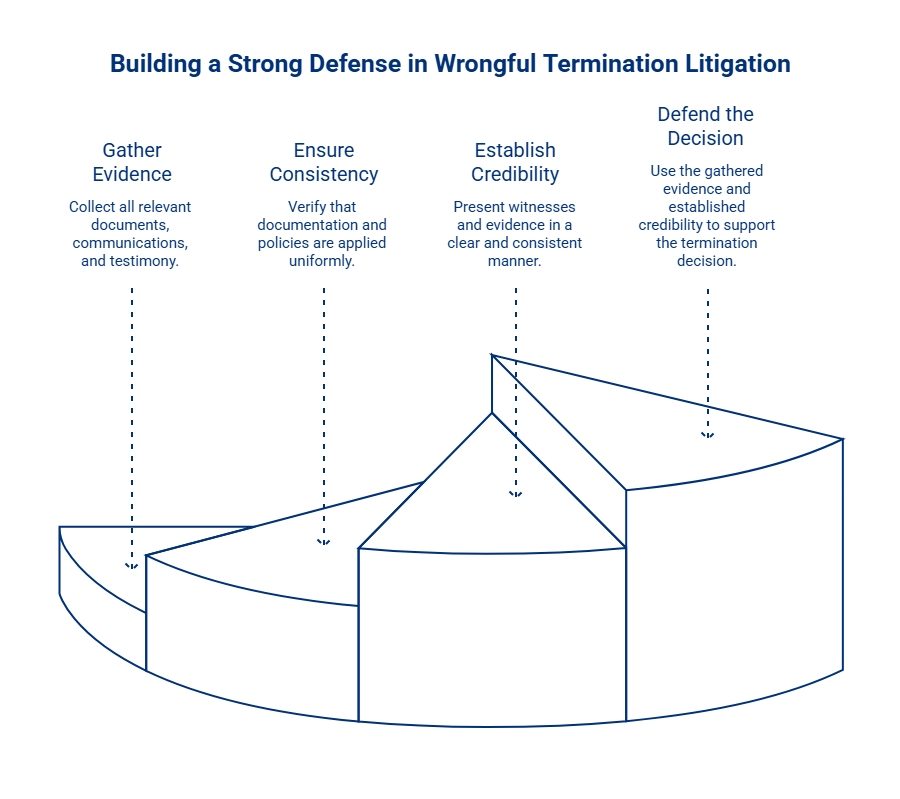
Wrongful termination litigation often examines the employment relationship beyond the final separation decision. Relevant materials may include personnel records, emails, text messages, handwritten notes, schedules, payroll entries, and complaint records. Leave communications, accommodation-related communications, social media evidence, and witness testimony may also become part of the evidentiary record.
In litigation, contemporaneous and consistent documentation may affect whether the stated reason for termination appears coherent across the record. Uniform application of established policies may also become relevant when a plaintiff compares the termination decision to how similarly situated employees were treated. These issues often shape whether an employment decision appears defensible under scrutiny.
Credibility may become a major issue. If owners, family members, supervisors, or managers participated in the complaint, discipline, schedule change, or termination decision, their testimony may become important. Litigation may examine whether explanations are consistent, whether witnesses recall events clearly, and whether communications align with the stated business reason.
Why the Claim May Expand Beyond the Termination Decision
A wrongful termination lawsuit may begin with one employment decision but later reach earlier events. The plaintiff may challenge discipline, performance reviews, attendance records, reduced hours, complaint handling, payroll practices, leave communications, accommodation discussions, or alleged differences in how similarly situated employees were treated.
That expansion may transform a narrow termination dispute into a broader review of workplace history, management communications, and business operations. For family-owned employers, owners and managers may become central witnesses in the litigation narrative.
Employment Litigation Defense for Family-Owned Businesses in Southern California
A family-owned small business facing a wrongful termination claim after a workplace complaint may be dealing with more than a single employment decision. The dispute may involve chronology, alleged motive, records, witness testimony, workplace history, and the practical strain of defending an active employment claim. Employment counsel may be particularly important when a dispute involves alleged protected activity, disputed motive, overlapping claims, or active litigation filings.
Akopyan Law Firm, A.P.C. represents Southern California employers in employment litigation, including wrongful termination, retaliation, discrimination, harassment, leave, accommodation, and wage-and-hour disputes. The firm’s employer-side employment litigation defense work focuses on the realities facing small and closely held businesses in Southern California, including Los Angeles, Bakersfield, Costa Mesa, Temecula, Rancho Cucamonga, Oxnard, Culver City, and San Diego.
Disclaimer:
This content is for informational purposes only. Laws, definitions, and deadlines change. Verify current requirements through official California sources. This content is not legal advice. No attorney-client relationship is formed through this content. Please consult a qualified attorney in your jurisdiction for legal advice specific to your situation.
Protect Your Business | The Akopyan Law Firm, A.P.C. | Top Gun Employment Lawyers
Have you been sued by an employee? Are you overwhelmed by the complexities of employment law? If so, give us a call. The Akopyan Law Firm, A.P.C. assists small business owners throughout Southern California. Our seasoned employment defense lawyers stand ready to help employers quickly and efficiently resolve employment disputes. We are ready to aggressively and skillfully defend against any employment case, but understand that in most situations avoiding the expense of litigation is in the client’s best interest.
Take the First Step Protecting Your Future: Call us today to speak with one of our experienced employment defense lawyers.
Contact Us Today:
- Phone: (818) 509-9975
- Office Locations in California: Los Angeles, Bakersfield, Costa Mesa, Temecula, Rancho Cucamonga, Oxnard, Culver City, and San Diego.
[/fusion_text][/fusion_builder_column][/fusion_builder_row][/fusion_builder_container]
📌 Key Takeaways
Wrongful termination claims after workplace complaints may put timing, motive, records, and witness credibility at the center of litigation for family-owned California employers.
- Timing Drives Scrutiny: When termination follows alleged protected activity, proximity may become part of a plaintiff's causation theory.
- Motive Shapes Exposure: A legitimate, nondiscriminatory reason may still face scrutiny if the evidentiary record appears inconsistent or incomplete.
- Records Carry Weight: Personnel records, messages, schedules, payroll entries, and complaint records may shape how the termination decision is evaluated.
- Small Teams Matter: Direct owner involvement and informal communication may make owners, managers, and supervisors central witnesses in the litigation narrative.
- Claims Can Expand: One termination dispute may broaden into retaliation, wage and hour, accommodation, leave, harassment, or whistleblower-related allegations.
For family-owned California employers, defensibility often depends on whether timing, motive, documentation, and credibility hold together under scrutiny.
When a family-owned Southern California business faces a wrongful termination claim after an employee complaint, the dispute often turns on more than the final termination decision. The employee may assert that termination followed protected activity, while the business may maintain that the decision reflected attendance, performance, misconduct, restructuring, or legitimate operational needs. Once litigation begins, timing, motive, the evidentiary record, and witness credibility may become central.
Why Timing Becomes a Litigation Issue After a Workplace Complaint
In many wrongful termination disputes, the plaintiff focuses on chronology. A workplace complaint may be followed by discipline, reduced hours, or termination. That sequence does not, by itself, establish liability. It may, however, become part of an allegation that a causal connection existed between protected activity and a later employment decision.
For a family-owned small business, routine operational timing may be scrutinized when an employment decision follows a workplace complaint. An owner may adjust staffing because customer demand changed. A supervisor may discipline an employee because attendance affected coverage. A general manager may terminate employment after repeated performance concerns. If those decisions occur close in time to alleged protected activity, proximity may become part of a retaliation theory.
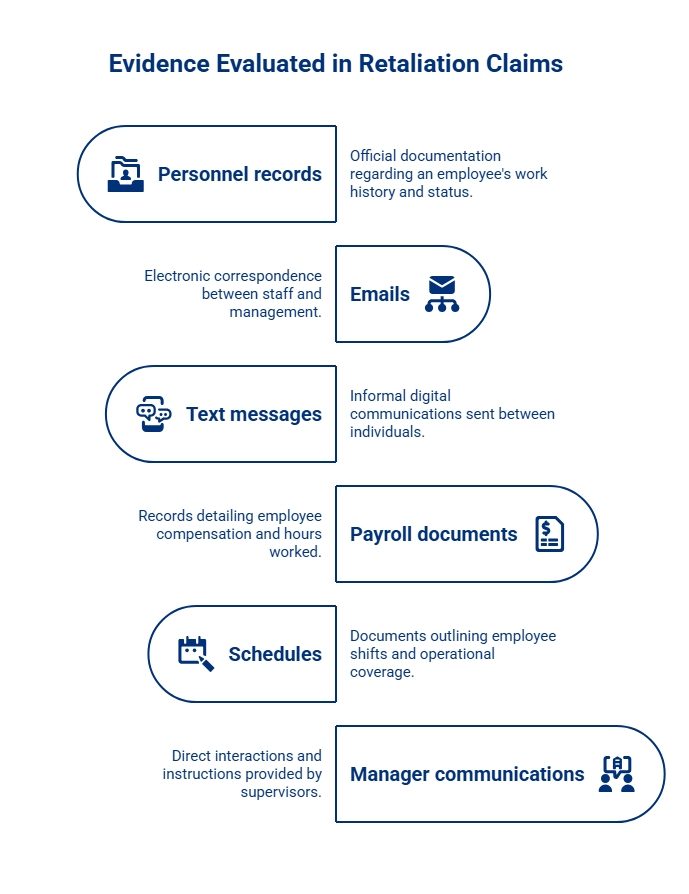
Under California law, generally, at-will employment principles may apply to many employment relationships. At-will employment, however, does not eliminate claims based on an allegedly unlawful motive. For instance, under the California Fair Employment and Housing Act (FEHA) and Labor Code Section 1102.5, employers are strictly prohibited from retaliating against employees who report reasonably suspected violations of the law. Consequently, 'at-will' status offers no defense against these specific statutory protections. A trier of fact, whether a judge, jury, or agency, may evaluate whether the employer's explanation remains consistent across personnel records, emails, text messages, payroll documents, schedules, and manager communications.
Why Motive Is Often Disputed
Motive becomes central because the plaintiff may claim that the employer's stated reason was pretextual. The business may view the termination as a straightforward employment decision. The complaint may frame the same decision as connected to protected activity.
That difference can reshape the case. Litigation may examine whether the employer asserted a legitimate, nondiscriminatory reason, whether that reason remained consistent, and whether the surrounding facts support or undermine the stated explanation. In practice, a 'legitimate' reason is often one that can be objectively proven such as timecard logs showing consecutive tardiness, prior written performance warnings acknowledged by the employee, or documented financial metrics necessitating a reduction in force. The perceived defensibility of the termination decision may depend on whether the stated reason remains coherent across the evidentiary record.
For closely held businesses, this inquiry may involve owners, relatives, office managers, payroll personnel, scheduling managers, and supervisors who all worked closely with the employee. Direct involvement can make witness testimony more detailed, more personal, and more heavily contested.
Workplace Complaints That May Become Part of the Termination Narrative
Wrongful termination claims against family-owned businesses often expand when the employee connects termination to a broader workplace concern. Depending on the specific laws and allegations involved, workplace complaints that qualify as protected activity can include:
- The employee may claim that termination followed concerns about wages, overtime, off-the-clock work, meal periods, rest periods, timekeeping, or payroll practices.
- The employee may assert that termination followed complaints involving illegal harassment, or discrimination.
- The employee may allege that termination followed medical leave, pregnancy-related issues, reasonable accommodation discussions, interactive process communications, or communications involving an employee with a disability.
- The employee may claim that termination followed regulatory concerns, workplace safety concerns, or alleged whistleblower retaliation.
These allegations may overlap with unlawful workplace retaliation, wage and hour claims, leave-related claims, reasonable accommodation disputes, or harassment allegations. The overlap can increase potential exposure because one termination may become the basis for broader employment litigation.
Illustrative Example: Pay Complaint Followed by Attendance-Based Termination
A family-owned service business receives an employee complaint alleging unpaid overtime. Later, the business terminates the employee and records attendance problems as the stated reason. In later litigation, the plaintiff may argue that the timing supports a retaliation theory, while the business may maintain that the decision was based on legitimate attendance concerns.
This scenario illustrates how the plaintiff's allegations and the employer's stated reason may create a disputed issue about timing and motive. The example also shows why proximity, consistency of explanation, and the surrounding employment record may matter in a disputed retaliation theory. Similar facts may be evaluated differently depending on the complete record, the decision-makers involved, the nature of the complaint, the stated basis for termination, and the claims asserted.
Why Family-Owned Businesses Face Distinctive Pressure
Family-owned small businesses with approximately 5 to 30 employees often operate through direct communication and owner involvement. Those realities are not unlawful by themselves. They may, however, become significant once a plaintiff challenges the reason for termination.
In an owner-operated company, the same person may handle customer issues, payroll questions, scheduling changes, discipline, and termination decisions. A relative may supervise the employee. A general manager may communicate through text messages rather than formal memoranda. An office manager may maintain payroll and personnel records while also helping with daily operations.
Once litigation begins, informal business realities may become part of the evidentiary record. Text messages may show tone, timing, or decision-making context. Schedules may show reduced hours. Payroll records may connect the dispute to alleged wage issues. Supervisor notes may support or undermine the stated reason for termination. Witnesses may remember the same events differently.
The practical pressure may be substantial, particularly when litigation affects management time, staff morale, customer-facing operations, and reputation. For an owner-operated company, defending the case can compete with running the business.
Records, Communications, and Credibility May Shape the Case
Wrongful termination litigation often examines the employment relationship beyond the final separation decision. Relevant materials may include personnel records, emails, text messages, handwritten notes, schedules, payroll entries, and complaint records. Leave communications, accommodation-related communications, social media evidence, and witness testimony may also become part of the evidentiary record.
In litigation, contemporaneous and consistent documentation may affect whether the stated reason for termination appears coherent across the record. Uniform application of established policies may also become relevant when a plaintiff compares the termination decision to how similarly situated employees were treated. These issues often shape whether an employment decision appears defensible under scrutiny.
Credibility may become a major issue. If owners, family members, supervisors, or managers participated in the complaint, discipline, schedule change, or termination decision, their testimony may become important. Litigation may examine whether explanations are consistent, whether witnesses recall events clearly, and whether communications align with the stated business reason.
Why the Claim May Expand Beyond the Termination Decision
A wrongful termination lawsuit may begin with one employment decision but later reach earlier events. The plaintiff may challenge discipline, performance reviews, attendance records, reduced hours, complaint handling, payroll practices, leave communications, accommodation discussions, or alleged differences in how similarly situated employees were treated.
That expansion may transform a narrow termination dispute into a broader review of workplace history, management communications, and business operations. For family-owned employers, owners and managers may become central witnesses in the litigation narrative.
Employment Litigation Defense for Family-Owned Businesses in Southern California
A family-owned small business facing a wrongful termination claim after a workplace complaint may be dealing with more than a single employment decision. The dispute may involve chronology, alleged motive, records, witness testimony, workplace history, and the practical strain of defending an active employment claim. Employment counsel may be particularly important when a dispute involves alleged protected activity, disputed motive, overlapping claims, or active litigation filings.
Akopyan Law Firm, A.P.C. represents Southern California employers in employment litigation, including wrongful termination, retaliation, discrimination, harassment, leave, accommodation, and wage-and-hour disputes. The firm's employer-side employment litigation defense work focuses on the realities facing small and closely held businesses in Southern California, including Los Angeles, Bakersfield, Costa Mesa, Temecula, Rancho Cucamonga, Oxnard, Culver City, and San Diego.
Disclaimer:
This content is for informational purposes only. Laws, definitions, and deadlines change. Verify current requirements through official California sources. This content is not legal advice. No attorney-client relationship is formed through this content. Please consult a qualified attorney in your jurisdiction for legal advice specific to your situation.
Protect Your Business | The Akopyan Law Firm, A.P.C. | Top Gun Employment Lawyers
Have you been sued by an employee? Are you overwhelmed by the complexities of employment law? If so, give us a call. The Akopyan Law Firm, A.P.C. assists small business owners throughout Southern California. Our seasoned employment defense lawyers stand ready to help employers quickly and efficiently resolve employment disputes. We are ready to aggressively and skillfully defend against any employment case, but understand that in most situations avoiding the expense of litigation is in the client's best interest.
Take the First Step Protecting Your Future: Call us today to speak with one of our experienced employment defense lawyers.
Contact Us Today:
- Phone: (818) 509-9975
- Office Locations in California: Los Angeles, Bakersfield, Costa Mesa, Temecula, Rancho Cucamonga, Oxnard, Culver City, and San Diego.