

For Southern California family-owned businesses, an active wrongful termination lawsuit may disrupt ordinary operations by drawing time, people, records, and financial resources into the dispute.
- Management Time Gets Divided: Owners, managers, and supervisors may spend working time on litigation-related demands instead of customers, administration, revenue-generating work, or strategic decisions.
- Lean Teams Feel More: Businesses with few people handling key operating functions may experience greater disruption when those same individuals possess relevant knowledge about the employment dispute.
- Workplace Records Gain Relevance: Personnel records, payroll information, schedules, emails, text messages, supervisor notes, and internal communications may become relevant depending on the lawsuit’s facts.
- Employee Involvement Affects Operations: Supervisors and employees with factual knowledge may face competing demands when litigation-related involvement overlaps with customer-facing, administrative, or other regular responsibilities.
- Business Effects Can Vary: Litigation-related demands may fluctuate as the lawsuit develops, while defense costs and publicly visible disputes may create additional operational or reputational concerns.
For family-owned employers already facing wrongful termination litigation, the dispute may reach well beyond the termination decision into the company’s everyday operating capacity.
Once a wrongful termination lawsuit has been filed, the dispute may affect more than the challenged termination. For a Southern California family-owned business, litigation-related demands can compete with ordinary operations for the time of owners, managers, supervisors, and employees. Workplace information and financial resources may also become involved while the company continues serving customers and handling its regular responsibilities. The extent of that disruption depends on the business structure and the circumstances of the dispute.
Lean Management Structures Can Make Litigation Demands More Noticeable
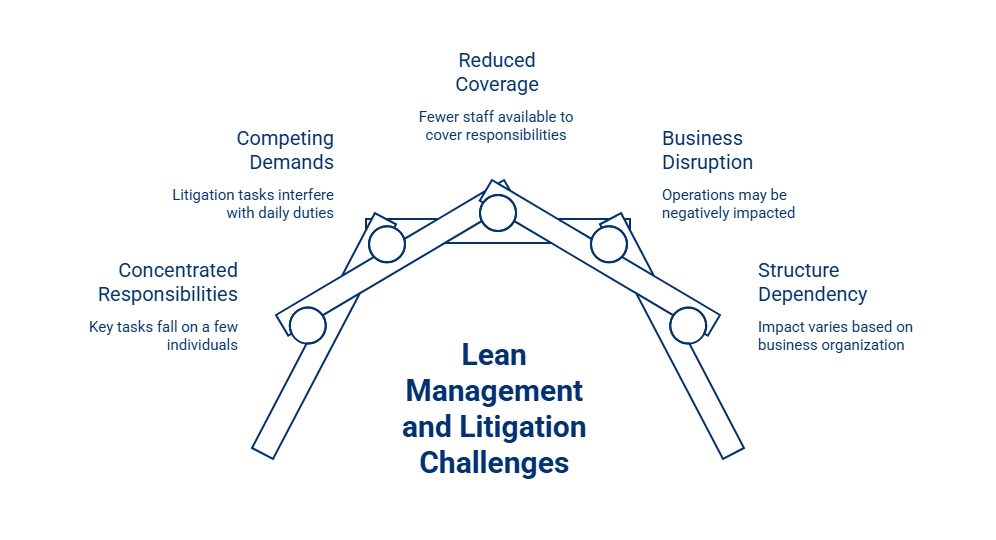
In a family-owned business with a lean management structure, significant operating responsibilities may be concentrated among a small number of owners, managers, or supervisors. An owner may direct daily operations, while a manager or supervisor may handle customer service, administration, or employee oversight.
When those individuals also possess firsthand knowledge relevant to the disputed employment relationship, litigation-related demands may compete with their ordinary responsibilities. A business with only a few people performing key operating functions may have fewer people available to cover those responsibilities when an owner, manager, or supervisor is occupied by matters connected to the lawsuit.
This depends on the structure of the particular business rather than on family ownership alone.
Litigation Demands Can Reduce Management Time Available for Ordinary Operations
Owners, managers, and supervisors may spend working time communicating with litigation counsel, reviewing factual matters, attending meetings, or participating in other litigation-related activities.
When an owner-operator also has firsthand knowledge of events surrounding the employment relationship or termination, the same person may carry substantial operational and litigation-related responsibilities. Time devoted to the dispute may therefore reduce the time available for customers, administration, revenue-generating activity, or strategic business decisions.
Workplace Records and Communications May Become Relevant to the Dispute
Wrongful termination litigation may draw attention to information created during the employment relationship. Depending on the facts, relevant materials can include personnel records, payroll information, scheduling records, emails, text messages, supervisor notes, and internal communications.
These materials may contain contemporaneous information about employment events, communications, or management involvement connected to the disputed termination. When owners, managers, supervisors, or employees must spend working time addressing information relevant to the lawsuit, less of their time may remain available for ordinary operating responsibilities.
The significance of any particular record or communication depends on the facts of the dispute.
Employee and Supervisor Involvement May Affect Ongoing Business Responsibilities
Current employees and supervisors may possess factual knowledge while continuing to perform their regular jobs. A supervisor responsible for customer service, daily operations, or administrative work may therefore face competing demands when participation in the lawsuit requires attention during working time.
Employee awareness of an unresolved employment dispute may also create distraction or uncertainty. These workplace distractions occur regardless of whether the employee’s allegations are true.
Illustrative Example: A Supervisor with Customer and Operational Responsibilities
A former frontline employee files a wrongful termination lawsuit against a family-owned service business. The owner participated in the termination decision, and a working supervisor has firsthand knowledge of the employee’s work history and events surrounding the separation. The supervisor also coordinates daily service activity and responds to customer issues.
As litigation-related demands require attention from the owner and supervisor, less of their working time may remain available for those operational responsibilities. The scenario illustrates how an employment dispute can affect business capacity without implying fault, credibility, liability, or a particular outcome.
Litigation-Related Demands May Fluctuate as the Lawsuit Develops
A lawsuit does not necessarily require the same level of business involvement at every point. The amount of working time and business resources devoted to the dispute may rise or fall as the matter develops.
Periods requiring greater involvement from owners, managers, employees with relevant knowledge, or workplace information may coincide with customer obligations, administrative responsibilities, and revenue-generating work. The resulting business effect concerns changing demands on operational resources, not the mechanics of litigation.
Defense Costs May Compete with Ordinary Business Expenses
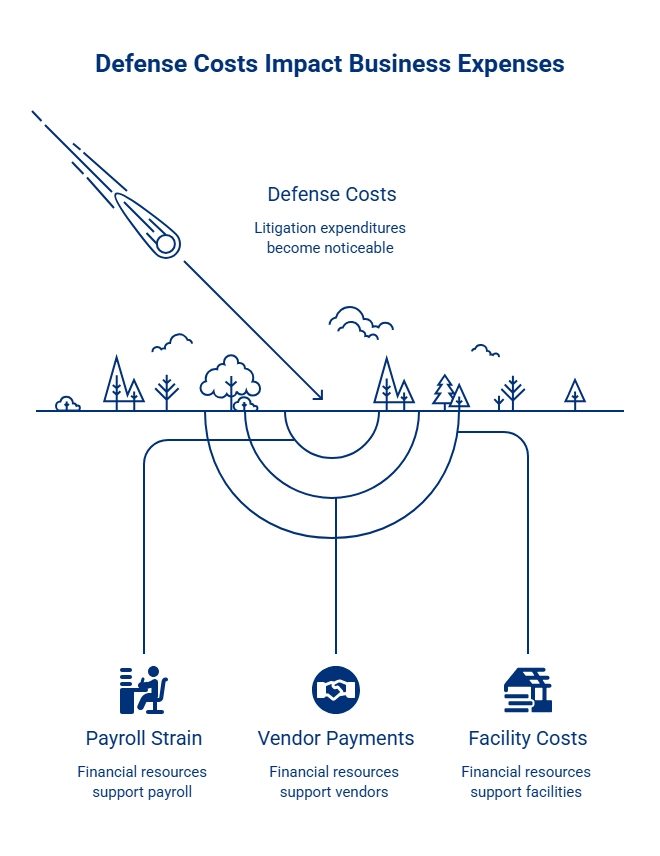
Defense costs may compete with the ordinary expenses a business continues to incur while the lawsuit remains active. For a closely held or self-funded company, litigation expenditures may become particularly noticeable when the same financial resources also support payroll, vendors, facilities, and other continuing business commitments.
The financial effect varies from case to case. No single cost pattern applies to every wrongful termination lawsuit.
Publicly Visible Litigation May Create Customer and Reputation Concerns
For a family-owned business that depends significantly on long-standing customer or community relationships, a publicly visible employment dispute may create reputational concerns.
A separate operational effect may arise even when customers know little about the lawsuit. When owners or managers have less time available for customer-facing responsibilities, ordinary customer matters may receive less management attention.
Communications and Earlier Employment Events May Also Become Relevant
The lawsuit may involve communications, employment records, management involvement, and workplace events that preceded or surrounded the disputed termination. Those matters can broaden the factual context without establishing a separate claim or determining the merits of either party’s position.
A former employee may assert legal rights, while the employer may dispute the allegations or their legal significance. Neither position becomes established merely because it has been asserted.
Employer-Side Litigation Counsel Focuses on the Wrongful Termination Dispute
Employer-side wrongful termination lawyers represents businesses in disputes involving claims such as wrongful termination. That representation focuses on the legal dispute while owners and managers continue addressing the company’s operating responsibilities.
Disclaimer:
This content is for informational purposes only. Laws, definitions, and deadlines change. Verify current requirements through official California sources. This content is not legal advice. No attorney-client relationship is formed through this content. Please consult a qualified attorney in your jurisdiction for legal advice specific to your situation.
Protect Your Business | The Akopyan Law Firm, A.P.C. | Top Gun Employment Lawyers
Have you been sued by an employee? Are you overwhelmed by the complexities of employment law? If so, give us a call. The Akopyan Law Firm, A.P.C. assists small business owners throughout Southern California. Our seasoned employment defense lawyers stand ready to help employers quickly and efficiently resolve employment disputes. We are ready to aggressively and skillfully defend against any employment case, but understand that in most situations avoiding the expense of litigation is in the client’s best interest.
Take the First Step Protecting Your Future: Call us today to speak with one of our experienced employment defense lawyers.
Contact Us Today:
- Phone: (818) 509-9975
- Office Locations in California: Los Angeles, Bakersfield, Costa Mesa, Temecula, Rancho Cucamonga, Oxnard, Culver City, and San Diego.