
📌 Key Takeaways
Unfair disciplinary treatment after pregnancy disclosure may indicate pregnancy discrimination under California law when an employer’s decisions reflect pregnancy-related bias rather than legitimate performance concerns.
- Sudden Write-Ups May Signal Discrimination: Formal warnings for mistakes previously handled informally may suggest pregnancy-related bias when comparable coworkers receive less severe discipline.
- Heightened Scrutiny May Reveal Bias: Unusually close supervision or harsher performance evaluations may indicate unequal treatment when pregnancy-related assumptions influence a supervisor’s decisions.
- Unequal Rule Enforcement Matters: Disciplining pregnant restaurant employees more severely than similarly situated coworkers for comparable violations may raise concerns under California pregnancy-discrimination law.
- Pregnancy-Related Comments Provide Context: A supervisor’s remarks questioning a pregnant employee’s reliability, stamina, or performance may help explain subsequent unfavorable disciplinary decisions.
- Protected Accommodation Requests Matter: Adverse discipline connected to a qualifying pregnancy-related accommodation request may raise separate concerns involving reasonable accommodation protections or unlawful retaliation.
For frontline restaurant workers in Encino, California, disciplinary changes that affect working hours, scheduled shifts, or assignments may warrant individualized evaluation by an employee-side employment attorney.
The significance of workplace discipline depends not simply on when it occurs, but on whether pregnancy or protected activity influenced the employer’s actions.
Sudden disciplinary write-ups, unusually strict supervision, or unequal enforcement of workplace rules may raise pregnancy discrimination concerns when an employer begins treating an employee differently after learning about the employee’s pregnancy. California’s Fair Employment and Housing Act (FEHA) prohibits employment discrimination based on pregnancy, childbirth, and related medical conditions.
For restaurant workers in Encino, distinguishing legitimate performance management from discriminatory discipline can be challenging. Busy service periods, changing assignments, and immediate supervisory feedback are routine. The concern arises when pregnancy-related bias appears to influence an employer’s disciplinary decisions rather than the consistent application of workplace standards.
Why Sudden Disciplinary Write-Ups After Pregnancy Disclosure May Raise Concerns
A shift from routine performance feedback to formal disciplinary warnings can reveal a meaningful change in an employer’s treatment of a pregnant employee.
For example, a server who previously received only verbal counseling for an occasional service mistake, may suddenly receive written warnings (coworkers continue receiving informal feedback), after her supervisor learns about her pregnancy.
Formal write-ups may affect an employee’s future promotion, bonus, and influence subsequent decisions about assignments or continued employment. A new warning does not establish discrimination by itself; employers may legitimately discipline employees for misconduct or performance deficiencies. The relevant distinction is whether the employer applies harsher consequences because of pregnancy.
How Heightened Supervisory Scrutiny May Affect Pregnant Restaurant Workers
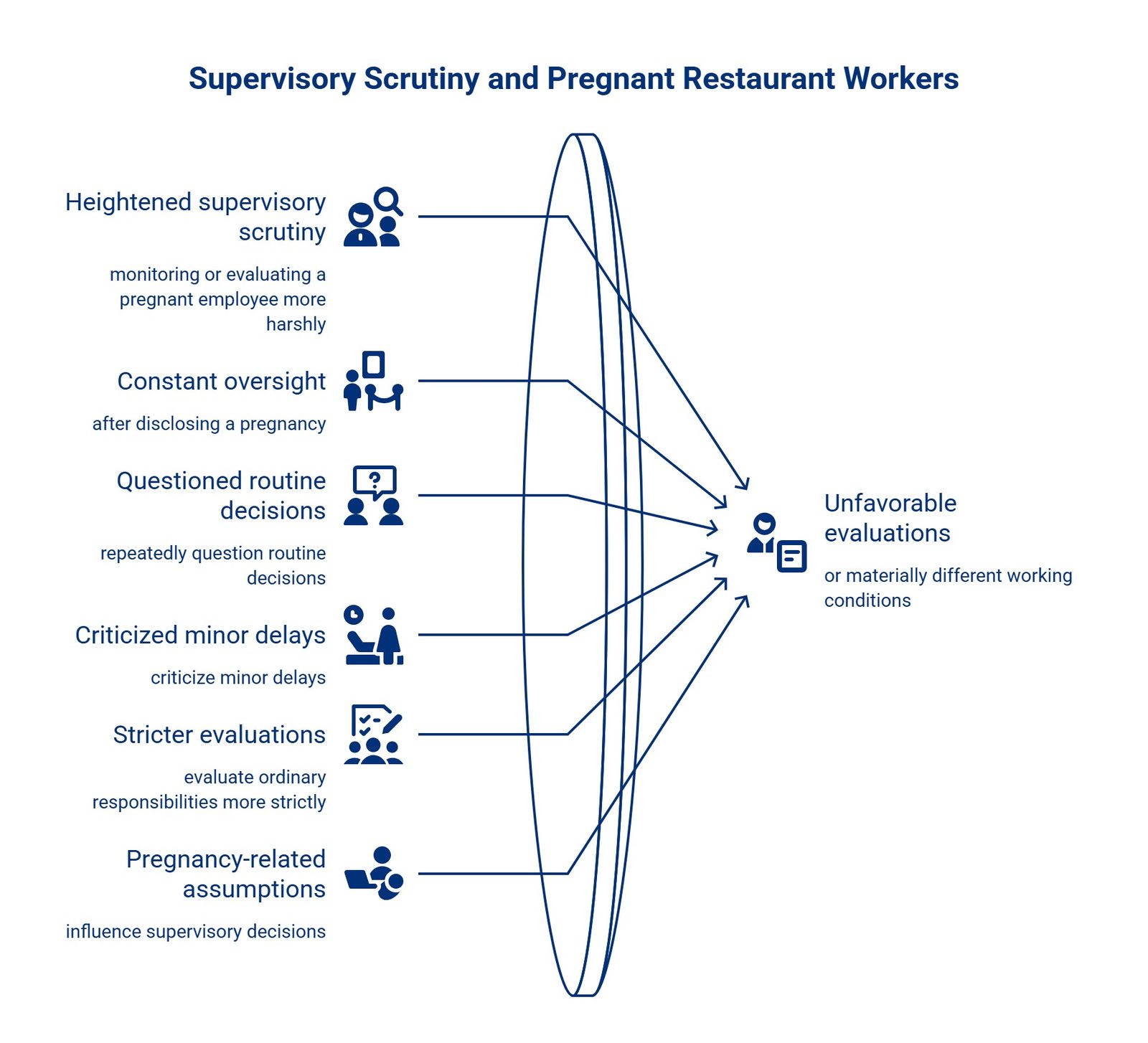
Heightened supervisory scrutiny may provide relevant context when a supervisor begins monitoring or evaluating a pregnant employee more harshly than comparable coworkers.
For example, a restaurant host who previously managed reservations and seating arrangements independently might experience constant oversight after disclosing a pregnancy. The supervisor may repeatedly question routine decisions, criticize minor delays, or evaluate ordinary responsibilities more strictly.
Restaurant supervisors routinely monitor service quality and employee performance. However, when pregnancy-related assumptions appear to influence supervisory decisions, closer monitoring may contribute to unfavorable performance evaluations or materially different working conditions.
When Restaurant Workplace Rules Are Enforced Differently After Pregnancy Disclosure
Inconsistent enforcement of workplace policies may reveal unequal treatment when an employer imposes different disciplinary consequences on similarly situated employees for comparable conduct.
Restaurant employers commonly enforce attendance expectations, customer-service standards, kitchen procedures, and employee conduct policies.
For example, an employer may be engaged in unlawful pregnancy discrimination if it issues a pregnant cook a written warning for violation of kitchen practices, whereas other non-pregnant cooks engaged in the same conduct only receive verbal corrections for equivalent violations.
The consistency of disciplinary treatment may depend on several factors:
- Job responsibilities: Employees performing substantially similar duties provide a more meaningful comparison.
- Comparable conduct: Similar policy violations may reveal differences in disciplinary enforcement.
- Disciplinary history: Previous warnings or repeated misconduct may explain differences in an employer’s response.
These distinctions help establish whether different disciplinary consequences reflect legitimate workplace considerations or potentially discriminatory enforcement.
Why Pregnancy-Related Comments May Matter When Accompanied by Disciplinary Action
Pregnancy-related remarks may provide evidence of discriminatory motivation when they accompany unfavorable employment decisions.
A supervisor might question whether a pregnant server can manage a busy dining room or suggest that a pregnant cook will become unreliable. Such statements may reflect assumptions about an employee’s stamina, attendance, or ability to perform regular duties.
For example, a supervisor may repeatedly question an employee’s reliability because of pregnancy cashier, and thereafter issue a formal warning for a minor mistake that ordinarily receives verbal correction.
The supervisor’s remarks may suggest that pregnancy-related stereotypes influenced the disciplinary decision. Their significance depends on the statements’ content, the supervisor’s decision-making authority, and their connection to the warning.
When Pregnancy-Related Workplace Needs Become Connected to Disciplinary Treatment
Disciplinary action connected to pregnancy-related workplace needs may involve California’s reasonable accommodation for pregnancy protections.
Under applicable circumstances, FEHA requires covered employers to provide reasonable accommodations for qualifying pregnancy-related medical needs upon the advice of an employee’s health care provider.
For example, a dishwasher may request a pregnancy-related accommodation involving physically demanding duties. Thereafter, the supervisor may begin issuing warnings that appear connected to the employee’s accommodation needs rather than independently documented performance deficiencies.
Discipline imposed because of pregnancy and adverse treatment associated with a protected accommodation request can involve distinct legal concerns.
California also recognizes separate Pregnancy Disability Leave protections. Disciplinary treatment associated with protected pregnancy-related leave may raise additional employment-law issues.
Disclosure of pregnancy-related medical information can involve significant privacy and employment considerations that may warrant individualized legal guidance.
When Unfair Disciplinary Treatment May Also Raise Pregnancy-Related Retaliation Concerns
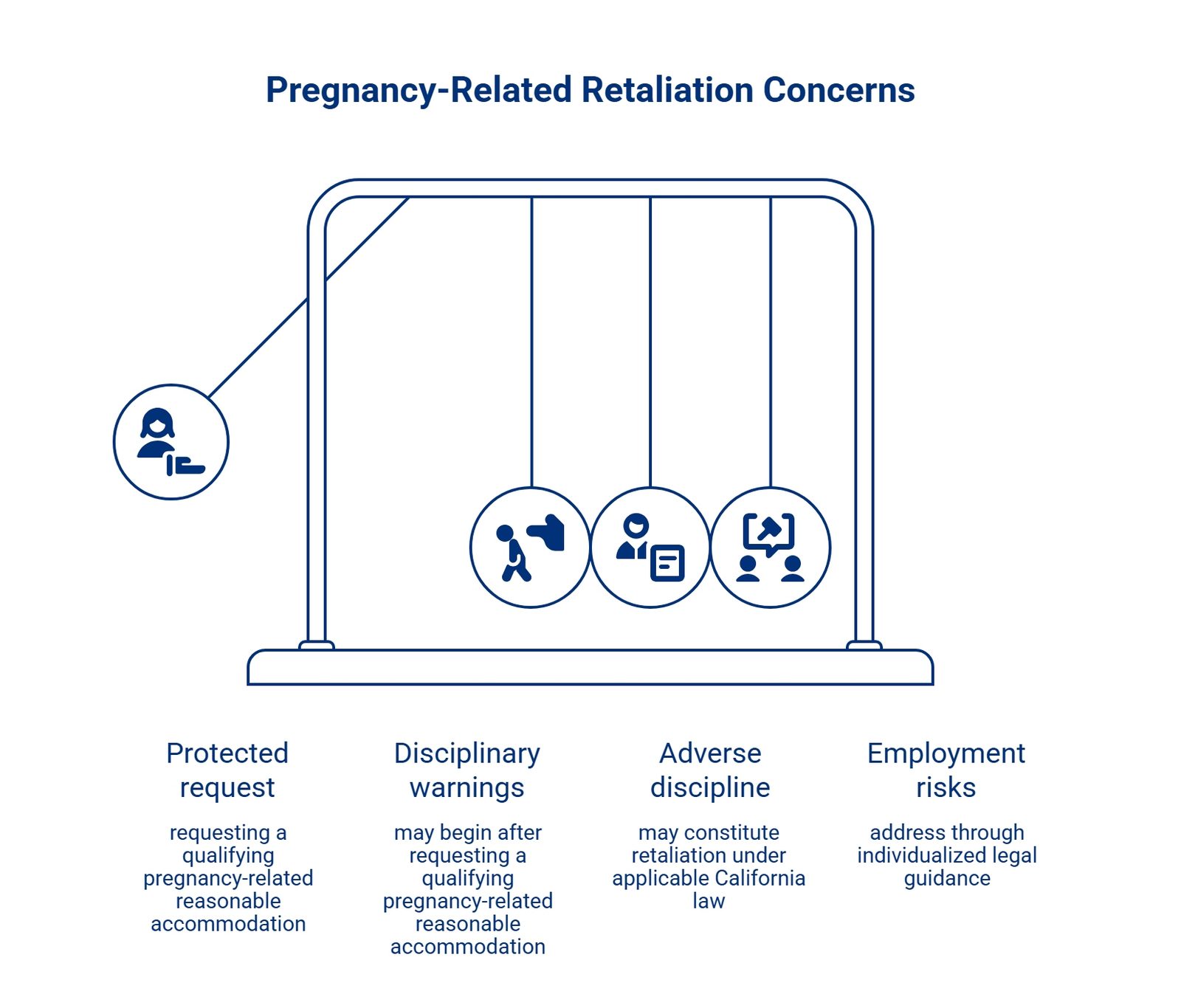
Pregnancy discrimination concerns unfavorable employment treatment based on pregnancy. Unlawful retaliation concerns adverse employment action taken because an employee engaged in legally protected activity.
For example, a restaurant employee may begin receiving disciplinary warnings after requesting a qualifying pregnancy-related reasonable accommodation. If the employer imposes adverse discipline because of that protected request, the conduct may constitute retaliation under applicable California law.
Pregnancy disclosure itself does not automatically constitute protected opposition activity. The connection between the protected request and the employer’s response remains central to the distinction.
For employees concerned about further disciplinary consequences, consultation with qualified employee-side employment counsel before reporting or escalating a potentially retaliatory situation offers an opportunity to address employment-related risks through individualized legal guidance.
Why Pregnancy-Related Disciplinary Treatment May Warrant Individualized Legal Attention
For hourly and tipped restaurant workers, disciplinary measures may have immediate financial consequences when employers reduce scheduled shifts, decrease working hours, or change regular assignments.
The legal significance of these actions depends on the employer’s reasons, the surrounding workplace circumstances, and the relationship between pregnancy or protected activity and the disciplinary decision.
An employee-side employment attorney can evaluate those circumstances under applicable California law.
Disclaimer:
This content is for informational purposes only. Laws, definitions, and deadlines change. Verify current requirements through official California sources. This content is not legal advice. No attorney-client relationship is formed through this content. Please consult a qualified attorney in your jurisdiction for legal advice specific to your situation.
Protect Your Business | The Akopyan Law Firm, A.P.C. | Top Gun Employment Lawyers
Have you been wrongfully terminated from your job? Have you suffered discrimination, harassment, or retaliation in the workplace? Has your employer violated wage and hour laws? If so, we can help. The Akopyan Law Firm, A.P.C. is dedicated to protecting and enforcing employees’ rights throughout Southern California. With a 97% success rate and millions recovered for our clients, our team of experienced and talented employment lawyers can fight to secure the justice you deserve.
Take the First Step Towards Securing Justice: Call us today to speak with one of our experienced employment lawyers. We offer case evaluations free of charge.
Contact Us Today:
- Phone: (818) 509-9975
- Office Locations in California: Los Angeles, Culver City, Costa Mesa, Rancho Cucamonga, San Diego, Oxnard, Temecula, and Bakersfield.