
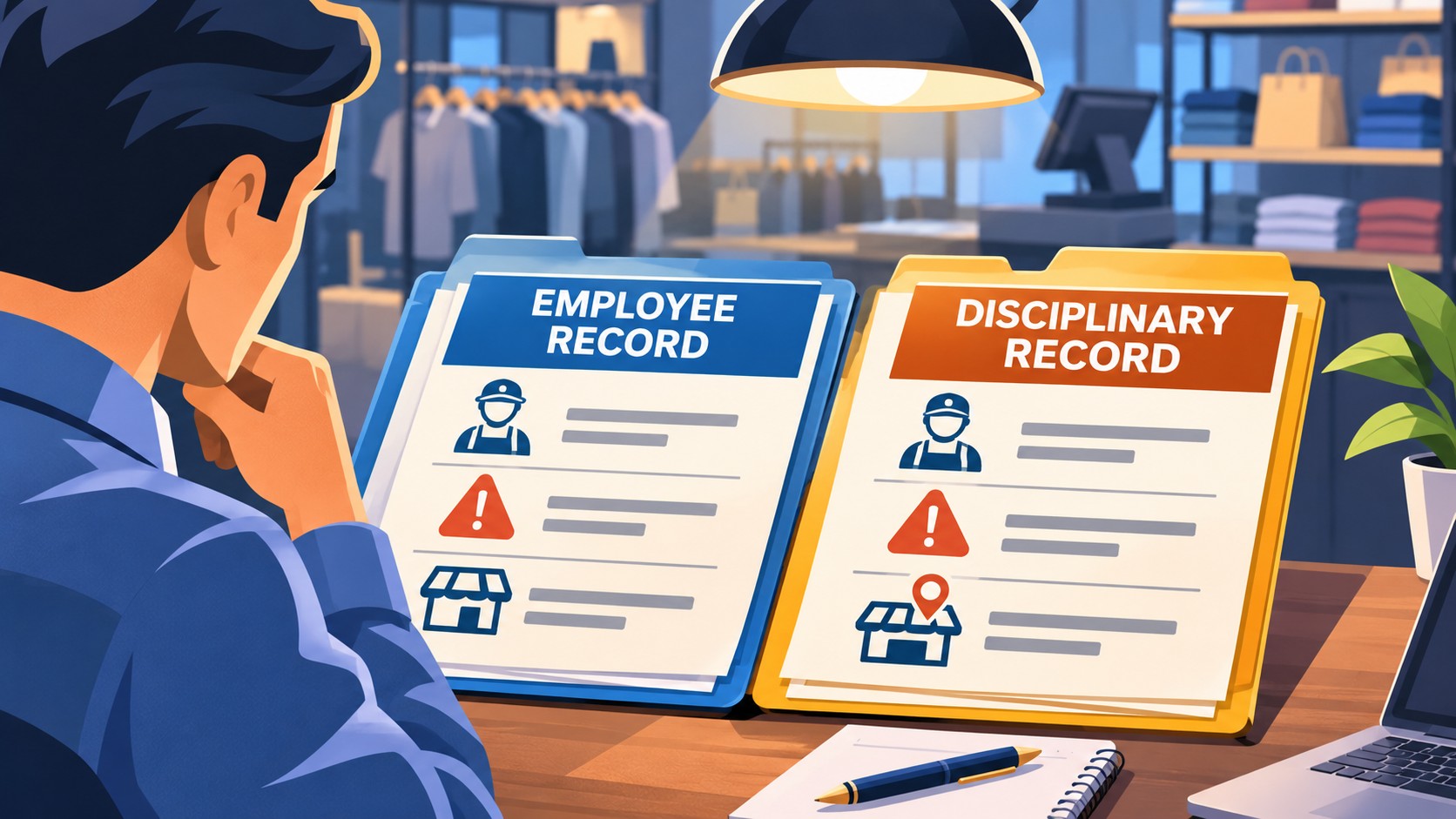
For Los Angeles retail employers, five considerations explain how alleged inconsistent disciplinary treatment may complicate a wrongful discharge claim without independently establishing liability.
- Differences Do Not Decide Liability: Different disciplinary outcomes may matter, but liability depends on the claims asserted, applicable law, and evidence concerning the termination.
- Comparisons Require Factual Context: Employee comparisons may be disputed when responsibilities, conduct, surrounding circumstances, available information, decisionmakers, or operating conditions differ.
- Management Accounts Affect Complexity: Differing accounts may raise questions about who decided the termination, what information that person possessed, and whether explanations aligned with records.
- Formal Claims May Expand: A demand letter, administrative complaint, or lawsuit may encompass earlier disciplinary incidents, communications, employment records, and decisions involving multiple managers.
- Litigation Can Strain Operations: Small retailers may face demands on management time, employee relationships, defense funding, staffing, customer service, inventory, and daily store operations.
Context, not a disciplinary difference alone, shapes the complexity of a wrongful discharge dispute.
~ ~ ~ ~ ~ ~ ~ ~ ~ ~ ~ ~ ~ ~ ~ ~ ~ ~
Alleged inconsistent disciplinary treatment can make a wrongful discharge claim more factually complex, but different disciplinary outcomes do not independently establish liability. A former employee may allege that coworkers engaged in comparable conduct and received less severe discipline. The employer may respond that differences in responsibilities, conduct, surrounding circumstances, or decisionmakers affected the disciplinary outcomes.
For a small Los Angeles retailer, the dispute may encompass earlier disciplinary decisions, the managers who made them, and the records concerning each incident. The significance of those facts depends on the claims asserted, the applicable California law, and the evidence concerning the termination.
Why Alleged Inconsistent Disciplinary Treatment May Matter
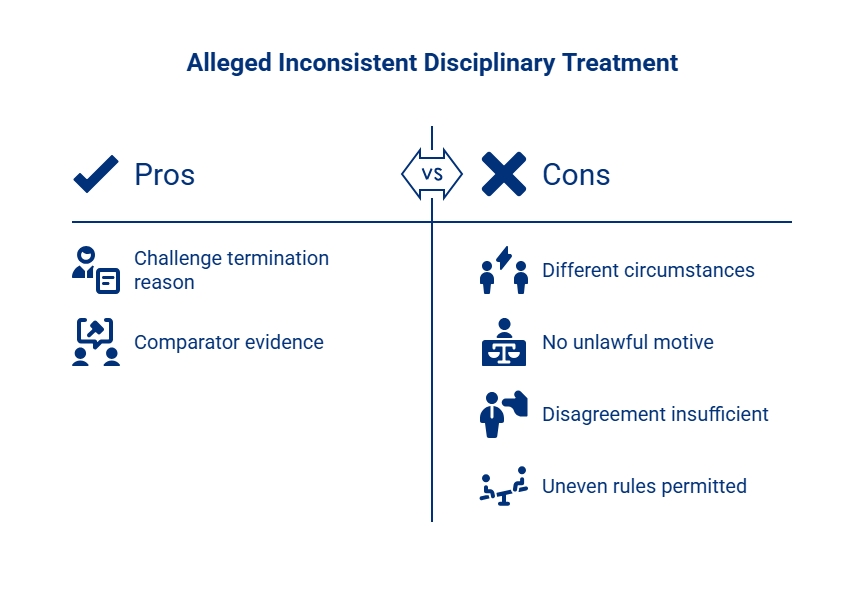
A former employee may cite alleged inconsistent disciplinary treatment to challenge the employer’s stated reason for termination. The employee may contend that the explanation does not align with the employer’s treatment of other workers accused of similar conduct.
The employer may dispute that contention. Differences in responsibilities, conduct, or surrounding circumstances may produce different disciplinary outcomes without establishing an unlawful motive. An employee’s disagreement with termination also does not, by itself, establish that the employer violated legal protection.
In California, where employment is generally presumed to be at-will, an employer does not violate the law merely by applying workplace rules unevenly or making a mistaken disciplinary call. Instead, former employees typically introduce comparator evidence to argue pretext claiming that the employer’s stated reason for firing was a cover for an unlawful motive, such as discrimination under the Fair Employment and Housing Act (FEHA) or retaliation under the California Labor Code.
Why Comparisons Between Retail Employees May Be Contested
The parties may disagree about whether the employees identified for comparison were similarly situated in relevant respects. Similar job titles do not necessarily establish comparable responsibilities, conduct, or circumstances.
A sales associate, shift lead, and assistant store manager may work at the same location but hold different responsibilities that affect the comparison. Separate disciplinary incidents may also involve different conduct, available information, operating conditions, or management personnel.
For example, a single cash-handling error by a newly hired seasonal cashier under progressive discipline may present a different factual record than repeated register shortages by a key-holding shift lead responsible for closing the store. Courts and administrative agencies generally look at whether the compared employees answered to the same supervisor, operated under the same workplace standards, and engaged in conduct of comparable seriousness without differentiating or mitigating circumstances.
A former employee may characterize two events as comparable because both involved the same general workplace rule. The employer may identify factual distinctions that affected each disciplinary decision. The significance of those distinctions depends on the evidence and its relationship to the particular wrongful discharge claim.
How Differing Management Accounts Can Affect the Dispute
A termination may involve information from a store manager, assistant manager, shift lead, supervisor, or business owner. Each person may have observed a different part of the events or participated in a different stage of the decision.
Management personnel may later provide differing accounts of earlier disciplinary incidents or the circumstances surrounding the termination. Existing employment records and management communications may provide additional context, although the parties may dispute what those materials demonstrate.
Differing accounts do not automatically establish that the employer acted unlawfully. They may nevertheless create questions about who made the termination decision, what information that decisionmaker possessed, and whether the stated explanation aligned with the records, communications, and accounts concerning the termination.
How Allegations May Become Part of a Formal Claim
A contested termination may result in a demand letter, an administrative complaint, or a civil lawsuit. Although certain statutory claims, such as those under California’s Fair Employment and Housing Act, require an employee to file an administrative complaint and obtain a right-to-sue notice before filing a civil lawsuit, not every employment dispute follows the same sequence of stages.
A former employee may allege that the employer’s stated reason conflicts with its treatment of other retail employees. The employer may deny that the incidents were comparable or that an unlawful reason affected the discharge.
The claims asserted and the applicable law determine which earlier disciplinary incidents, communications, and employment records may be relevant. A dispute involving several employees may therefore extend beyond the final termination decision and encompass earlier events involving different managers.
Litigation Can Affect Daily Retail Operations
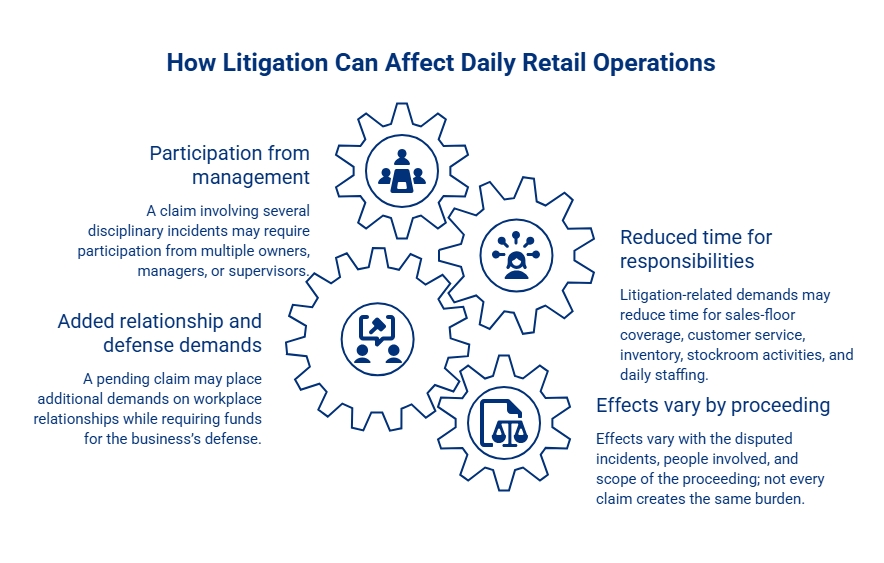
A wrongful discharge claim involving several disciplinary incidents may require participation from multiple owners, managers, or supervisors. Those individuals may also remain responsible for operating the store.
Small retailers often rely on a limited management team to oversee sales-floor coverage, customer service, inventory, stockroom activities, and daily staffing. Litigation-related demands may reduce the time available for those responsibilities. A pending claim may also place additional demands on relationships among owners, managers, and employees while requiring the business to devote funds to its defense.
The extent of these effects varies with the number of disputed incidents, the people involved, and the scope of the proceeding. Not every claim creates the same operational or financial burden.
The Role of California Employment Defense Counsel
An assessment of alleged inconsistent disciplinary treatment may involve the employees being compared, the conduct attributed to each employee, the management personnel involved, and the asserted legal basis for the termination.
An attorney experienced in California wrongful termination defense may assess how those matters relate to an existing claim. Counsel may examine how the employee comparisons, differing management accounts, and asserted claims relate to one another within the applicable California law.
Employment law representation for employers may be relevant when an owner-operated retailer must address those disputed issues while continuing daily business operations.
Disciplinary Differences Do Not Resolve Liability by Themselves
Alleged inconsistent disciplinary treatment may increase the factual complexity of a wrongful discharge dispute without determining its outcome. The parties may contest whether employees were similarly situated, whether management accounts were consistent, and whether the alleged differences relate to an unlawful motive. Liability depends on the claims asserted, the applicable law, and the evidence.
Retail employers facing wrongful discharge lawsuits, demand letters, or administrative proceedings involving allegations of inconsistent disciplinary treatment can discuss their circumstances with experienced California employment defense attorney.
Disclaimer:
This content is for informational purposes only. Laws, definitions, and deadlines change. Verify current requirements through official California sources. This content is not legal advice. No attorney-client relationship is formed through this content. Please consult a qualified attorney in your jurisdiction for legal advice specific to your situation.
Protect Your Business | The Akopyan Law Firm, A.P.C. | Top Gun Employment Defense Lawyers
Have you been sued by an employee? Are you overwhelmed by the complexities of employment law? If so, give us a call. The Akopyan Law Firm, A.P.C. assists small business owners throughout Southern California. Our seasoned employment defense lawyers stand ready to help employers quickly and efficiently resolve employment disputes. We are ready to aggressively and skillfully defend against any employment case, but understand that in most situations avoiding the expense of litigation is in the client’s best interest.
Take the First Step Protecting Your Future: Call us today to speak with one of our experienced employment lawyers.
Contact Us Today:
- Phone: (818) 509-9975
- Office Locations in California: Los Angeles, Bakersfield, Costa Mesa, Temecula, Rancho Cucamonga, Oxnard, Culver City, and San Diego.