
Termination-related employment litigation can place operational demands on the same people and systems that small Los Angeles retailers rely on every day.
- Limited Management Depth Matters: When owners or managers also handle staffing, supervision, inventory, and customer service, litigation may reduce available operational bandwidth.
- The Dispute May Broaden: Depending on the allegations, schedules, payroll records, workplace communications, workplace complaints, and other routine business information may become relevant to the factual dispute.
- Staffing Effects Can Spread: Manager or employee involvement in litigation may affect shift coverage, sales-floor operations, inventory handling, and other customer-facing functions.
- Costs Extend Beyond Fees: Legal expense may coincide with reduced owner bandwidth, interrupted business priorities, cash-flow pressure, and uncertainty affecting operational planning.
- Reputation May Also Matter: For locally recognized retailers, an active employment dispute may create internal or external reputation concerns even when litigation never becomes public.
For small Los Angeles retail employers, the practical significance lies in understanding how termination-related employment litigation can intersect with daily business operations as the dispute progresses.
Employment litigation can become a business-operations issue long before the underlying allegations are resolved.
~ ~ ~ ~ ~ ~ ~ ~ ~ ~ ~ ~ ~ ~ ~ ~ ~ ~
Termination-related employment litigation can affect far more than the termination decision itself. For a small Los Angeles retailer, a dispute may involve the same owners, managers, employees, records, and financial resources that support daily store operations. Limited management depth can make that overlap especially significant. The people responsible for staffing, payroll administration, inventory, customer service, and store supervision may also possess information relevant to the dispute. Termination-related employment litigation can therefore place competing demands on the people and systems that keep the business operating.
Why Limited Management Depth Can Affect Daily Store Operations
A small retail business may rely on one owner, general manager, or operations manager to perform several operational and administrative functions. That individual may supervise employees, coordinate schedules, address customer concerns, monitor inventory, and make routine business decisions.
When the same decision-maker becomes involved in termination-related employment litigation, less management time may remain available for ordinary store responsibilities. Litigation-related demands may compete with scheduling, supervision, inventory coordination, customer service, and other functions that require continuing attention.
For a retailer with one or two locations, even modest demands on a key manager may affect staffing, supervision, customer service, or other daily functions because the business may have limited management redundancy.
Termination-Related Employment Litigation May Extend Beyond the Termination Decision
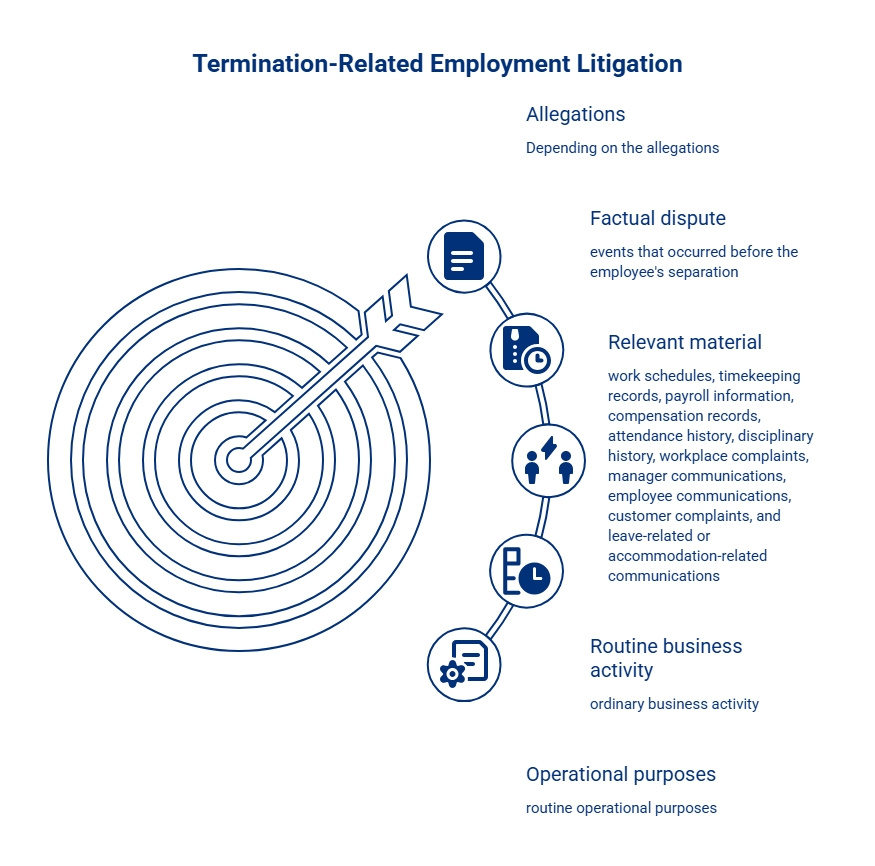
Depending on the allegations, the factual dispute may involve events that occurred before the employee’s separation.
Relevant factual material may include work schedules, timekeeping records, payroll information, compensation records, attendance history, disciplinary history, workplace complaints, manager communications, employee communications, customer complaints, and leave-related or accommodation-related communications.
For a retailer, these materials generally originate in ordinary business activity. A schedule may have been created to cover a weekend shift. A text message may have addressed a routine staffing change. Payroll information may have been generated through normal administration.
If those materials relate to the allegations, they may become relevant to the factual dispute even though they were originally created for routine operational purposes. Employers facing termination-related claims may find additional information about wrongful termination defense for employers in Los Angeles.
Management Involvement May Reduce Available Operational Bandwidth
Within a small retail operation, management time may directly affect staffing, supervision, inventory coordination, customer service, and other commercial functions.
A manager with knowledge of disputed employment events may also be responsible for opening or closing the store, coordinating deliveries, resolving scheduling problems, or handling customer issues. When termination-related employment litigation requires that manager’s attention, those demands may compete with responsibilities that ordinarily require immediate attention.
The operational effect does not depend on a particular litigation outcome. Competing demands alone may reduce the time available for ordinary supervisory and operational functions.
Employee and Manager Involvement May Affect Workplace Dynamics
Termination-related employment litigation may involve individuals who continue to perform important functions within the business. Depending on the facts, those individuals may include store managers, assistant managers, shift leads, sales associates, cashiers, stockroom employees, inventory staff, or employees involved in payroll or scheduling.
In a small workforce, several employees may have knowledge of the events surrounding the termination while also performing essential operational roles. Their involvement may contribute to distraction, uncertainty, or strain within a closely connected team.
The existence of a dispute does not establish that an employee’s allegations are valid or invalid. It does mean that workplace relationships, communications, and prior events may receive closer factual scrutiny while the business continues operating.
Staffing Demands May Affect Customer-Facing Operations
For the retail businesses addressed here, daily operations can depend heavily on reliable staffing and shift coverage. Opening and closing shifts, weekend or holiday staffing, sales-floor coverage, inventory deliveries, customer service, stockroom work, fulfillment activity, and e-commerce functions may continue while litigation remains active.
If litigation reduces a manager’s available time or affects the availability of employees involved in the dispute, the retailer may have fewer people available to cover supervisory or operational functions.
For a small retailer, those limitations may affect customer service, sales-floor coverage, inventory handling, or other functions that depend on coordinated staffing.
Routine Business Information May Become Relevant to the Factual Dispute
Within this business profile, owners and managers may communicate directly with employees through ordinary workplace channels such as email or text. Shift schedules, time records, payroll data, commission or bonus information, and workplace communications may become relevant when they relate to the allegations.
The significance of any particular record depends on its connection to the factual dispute. A document or communication does not become important merely because it exists.
For a small retailer, information created for routine operational purposes may later become relevant to termination-related employment litigation without changing the original business purpose for which it was created.
Employment Litigation May Create Financial Effects Beyond Legal Expense
The financial effect of an employment dispute may extend beyond legal fees. Management time, interruptions to ordinary business priorities, reduced owner bandwidth, and uncertainty concerning the duration or demands of the dispute may also affect business planning.
For a self-funded small retailer, those demands may affect cash flow, forecasting, and the allocation of management resources. The dispute may therefore create both legal exposure and operational demands on the business before the merits of the allegations are resolved.
Active Employment Disputes May Create Reputation Concerns
Independent retailers may depend on repeat customers, local relationships, vendors, and a recognizable business identity. An employment dispute may therefore create concern about how the business is perceived internally or externally.
That concern should not be overstated. Litigation does not necessarily become public, and an employment claim does not necessarily damage a retailer’s reputation.
For a locally recognized retailer, however, the possibility of reputational effects may become another business concern competing for management attention during the dispute.
How an Employment Dispute May Progress
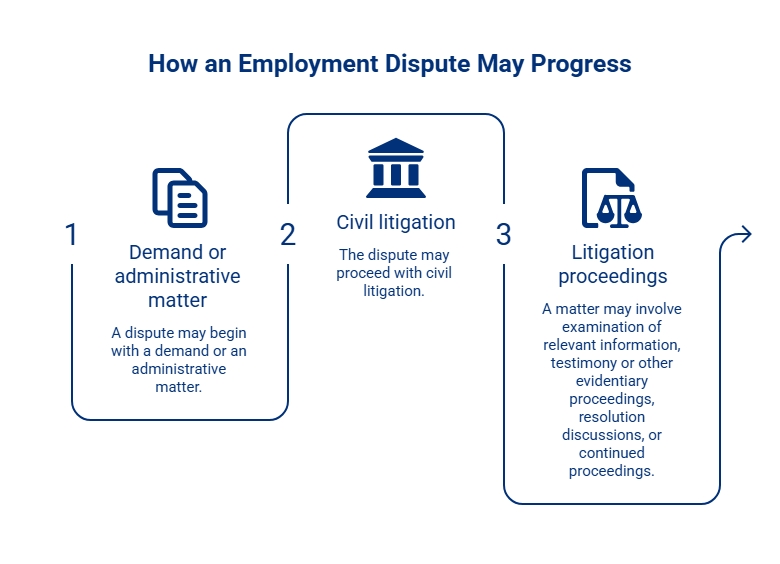
An employment dispute may begin with an asserted claim, a demand, or an administrative matter before proceeding with civil litigation.
The course of litigation depends on the allegations and procedural posture. A matter may involve examination of relevant information, testimony or other evidentiary proceedings, resolution discussions, or continued proceedings.
Strict deadlines may apply at different stages. The legal significance of any particular event depends on the facts, claims, procedural posture, and applicable law.
The Role of Employer-Side Counsel During Ongoing Business Operations
Termination-related employment litigation can involve overlapping factual, procedural, personnel, and business considerations. An experienced employer-side employment attorney can address the legal dispute while remaining attentive to its effects on management time, staffing, cash flow, customer-facing responsibilities, and continuing business operations.
Disclaimer:
This content is for informational purposes only. Laws, definitions, and deadlines change. Verify current requirements through official California sources. This content is not legal advice. No attorney-client relationship is formed through this content. Please consult a qualified attorney in your jurisdiction for legal advice specific to your situation.
Protect Your Business | The Akopyan Law Firm, A.P.C. | Top Gun Employment Defense Lawyers
Have you been sued by an employee? Are you overwhelmed by the complexities of employment law? If so, give us a call. The Akopyan Law Firm, A.P.C. assists small business owners throughout Southern California. Our seasoned employment defense lawyers stand ready to help employers quickly and efficiently resolve employment disputes. We are ready to aggressively and skillfully defend against any employment case, but understand that in most situations avoiding the expense of litigation is in the client’s best interest.
Take the First Step Protecting Your Future: Call us today to speak with one of our experienced employment lawyers.
Contact Us Today:
- Phone: (818) 509-9975
- Office Locations in California: Los Angeles, Bakersfield, Costa Mesa, Temecula, Rancho Cucamonga, Oxnard, Culver City, and San Diego.