
For small family-owned Southern California businesses facing a wrongful termination dispute, a long employment history may broaden the factual record and increase operational demands.
- Long Tenure Broadens Context: Years of employment may connect a termination dispute to earlier communications, management decisions, workplace events, and changing responsibilities.
- More People May Matter: Long-serving employees may have worked with multiple owners, supervisors, coworkers, and former employees who possess knowledge about different periods.
- Operations Can Feel Pressure: Owners and managers with relevant knowledge may also oversee staffing, customers, schedules, supervision, and other revenue-producing business activities.
- Historical Communications Gain Relevance: Emails, text messages, performance records, and workplace communications from different periods may become part of competing factual accounts.
- Defense Demands Business Resources: A wrongful termination dispute may consume management attention, employee availability, and financial resources while the business continues ordinary operations.
Long tenure does not itself establish wrongdoing; its practical significance may lie in how much history, knowledge, and operational involvement surrounds the dispute.
A wrongful termination claim involving a long-term employee can extend well beyond the circumstances immediately surrounding the employee’s separation. Years of employment may connect the dispute to a broad factual record involving workplace communications, management decisions, changes in responsibilities, prior events, and people who possess knowledge about different periods of the employment relationship.
For a small family-owned business, that factual record may overlap with daily operations. An owner who knows the employee’s history may also manage staff, serve customers, approve schedules, or oversee revenue-producing work. A supervisor with relevant knowledge may simultaneously be responsible for keeping current operations running.
The resulting disruption does not arise from family ownership itself. It may become more significant when a small number of owners and managers must divide their attention between the dispute and the ordinary work required to operate the business.
What a Wrongful Termination Dispute May Place Under Scrutiny
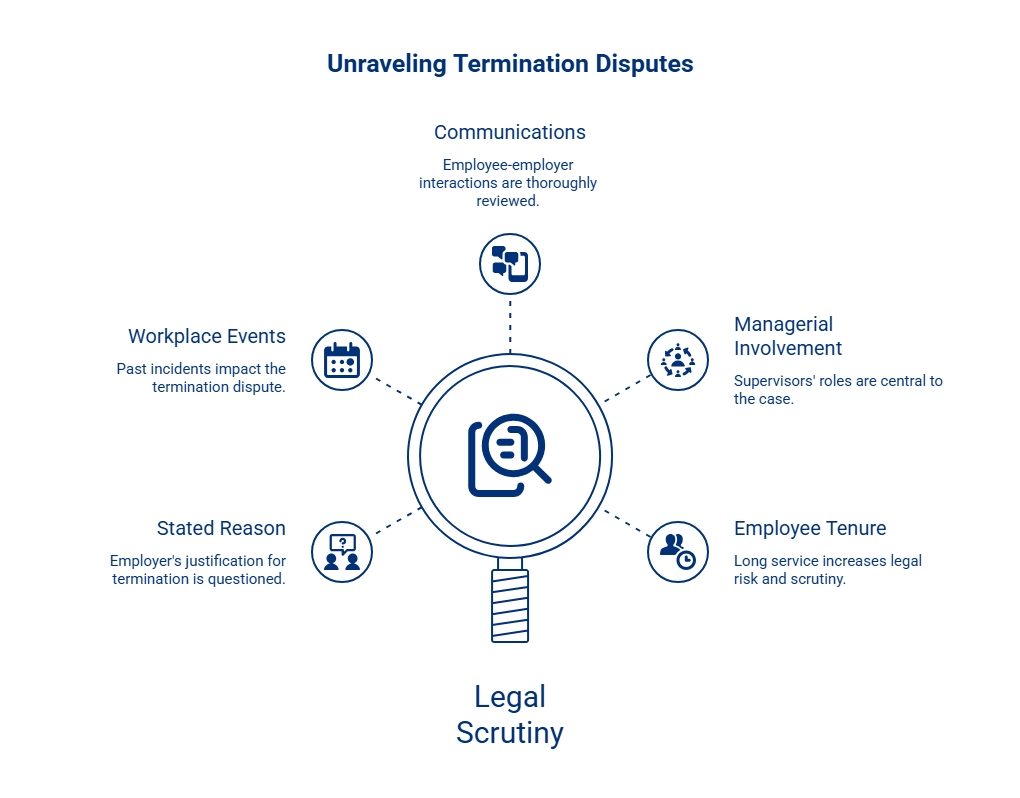
In California wrongful termination disputes involving employers, the factual record may extend beyond the final termination decision. The employer’s stated reason for the separation, relevant workplace events, communications, and the involvement of particular managers or supervisors may become part of competing accounts concerning whether the employment decision violated applicable law.
A long-serving employee may have worked under several supervisors, performed different responsibilities, experienced changes in scheduling or reporting relationships, and communicated with different owners or managers over time. Those circumstances may broaden the factual record associated with the disputed termination.
While long tenure does not by itself make a termination unlawful, it can carry significant substantive legal risk: California courts often look to an employee’s longevity—combined with promotions, favorable reviews, and employer policies—as evidence of satisfactory performance, which places the employer’s stated reason for termination under greater scrutiny. Additionally, a longer tenure’s practical significance also arises from the sheer amount of employment history connected to the dispute.
A Longer Employment History Can Involve More People and Events
An employee who worked for a business for many years may have interacted with people who occupied different roles at different times. Some may still work for the company, while others may have left long before the dispute arose.
The factual record may therefore include:
- Employment-related emails, text messages, and other communications created during different periods of the employee’s tenure.
- Performance or disciplinary records connected to events that later become disputed.
- Changes in supervisors, responsibilities, schedules, or working arrangements.
- Earlier workplace events that become relevant to the parties’ competing factual accounts.
- Current and former employees who may possess knowledge about events that occurred during different periods of the employee’s tenure.
A larger factual record does not establish liability or defense. It may, however, increase the number of events, communications, and knowledgeable individuals associated with the dispute.
How Employee-Witness Involvement Can Affect Daily Business Operations
Operational pressure can increase when employees or managers with relevant knowledge also perform important daily functions.
An owner may possess first-hand knowledge about the employee’s history while continuing to handle staffing decisions and important customer relationships. A supervisor may know about earlier workplace events while overseeing shifts, workflow, or service delivery. Current employees may possess relevant information while remaining responsible for their normal work.
Participation in the dispute can therefore compete with ordinary business responsibilities for the attention of a relatively small group of people. The effect may be more noticeable where another manager or employee cannot readily assume those responsibilities.
Illustrative Example: A Long-Serving Restaurant Employee
A long-serving front-of-house employee brings a wrongful termination claim against a family-owned restaurant. The employee worked with the owners, several managers, and current staff members over many years. One manager with knowledge of earlier employment events also supervises shifts and handles customer-service issues.
The owners’ and manager’s knowledge of different periods of the employee’s tenure may become relevant to disputed facts concerning the termination. Their involvement in the matter may also pull attention away from shift supervision and customer-facing operations. Those circumstances do not establish that either side is correct about the underlying claim.
Historical Communications May Reflect Different Periods of the Employment Relationship
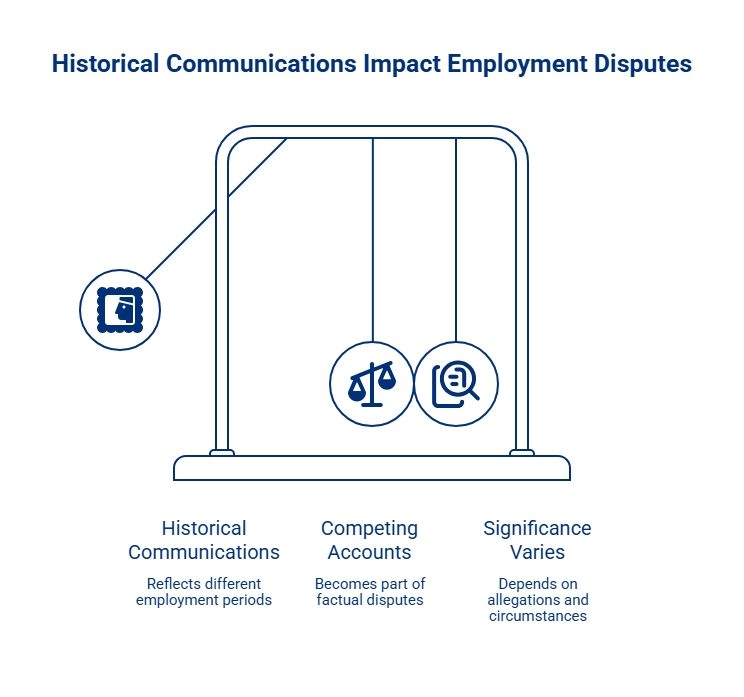
Communications created during a lengthy employment relationship may reflect different supervisors, responsibilities, business practices, and workplace circumstances.
An email from an earlier manager may concern events that predate later changes in the employee’s role. Text messages may reflect ordinary scheduling discussions from another period. Performance-related communications may have been created by supervisors who no longer work for the business. Current and former employees may also remember earlier events differently.
These materials may become part of competing factual accounts concerning the termination. Their significance depends on the particular allegations and circumstances rather than on the mere fact that communications exist.
Illustrative Example: A Local Service Business with Changing Management
A long-serving administrative employee brings a termination claim against a small family-owned service business after working through changes in supervisors, responsibilities, and ordinary workplace practices. Different current and former personnel possess knowledge about separate periods of the employee’s tenure.
The owners also possess historical knowledge relevant to the dispute while continuing to manage customer accounts, scheduling, and daily administrative decisions. Communications and recollections from different stages of the employment relationship may therefore become part of the factual record while the same owners remain responsible for keeping the business operating.
How a Long-Term Employee Dispute Can Compete with Management Time and Business Resources
As a wrongful termination dispute develops, owners, managers, supervisors, and employees with relevant knowledge may need to devote increasing attention to matters connected to the claim.
For a business with a small management team, time devoted to the dispute may reduce the time available for supervising employees, serving customers, managing schedules, or performing other revenue-producing work. Legal expenses may also compete with ordinary business expenditures while the company continues operating.
The practical burden is therefore not limited to the ultimate resolution of the claim. The dispute itself may affect management bandwidth, employee availability, and financial resources while ordinary business activity continues.
Employer-Side Representation in a Long-Term Employee Dispute
A wrongful termination dispute involving a long-term employee may present a different operational picture from a dispute involving a much shorter employment relationship. Years of employment can connect the matter to historical communications, different supervisors, former employees, changing responsibilities, and owners or managers who possess knowledge about separate periods of the employee’s tenure.
Employer-side employment defense attorney may evaluate that factual record in the context of both the disputed employment decision and the business functions performed by the people involved.
Disclaimer:
This content is for informational purposes only. Laws, definitions, and deadlines change. Verify current requirements through official California sources. This content is not legal advice. No attorney-client relationship is formed through this content. Please consult a qualified attorney in your jurisdiction for legal advice specific to your situation.
Protect Your Business | The Akopyan Law Firm, A.P.C. | Top Gun Employment Lawyers
Have you been sued by an employee? Are you overwhelmed by the complexities of employment law? If so, give us a call. The Akopyan Law Firm, A.P.C. assists small business owners throughout Southern California. Our seasoned employment defense lawyers stand ready to help employers quickly and efficiently resolve employment disputes. We are ready to aggressively and skillfully defend against any employment case, but understand that in most situations avoiding the expense of litigation is in the client’s best interest.
Take the First Step Protecting Your Future: Call us today to speak with one of our experienced employment defense lawyers.
Contact Us Today:
- Phone: (818) 509-9975
- Office Locations in California: Los Angeles, Bakersfield, Costa Mesa, Temecula, Rancho Cucamonga, Oxnard, Culver City, and San Diego.