📌 Key Takeaways
For California dental practice owners, termination disputes after discipline or scheduling changes may turn routine operational decisions into contested employment litigation.
- Timing Shapes Exposure: When termination follows protected activity, wage complaints, accommodation requests, or job-protected medical leave, timing may drive the litigation narrative.
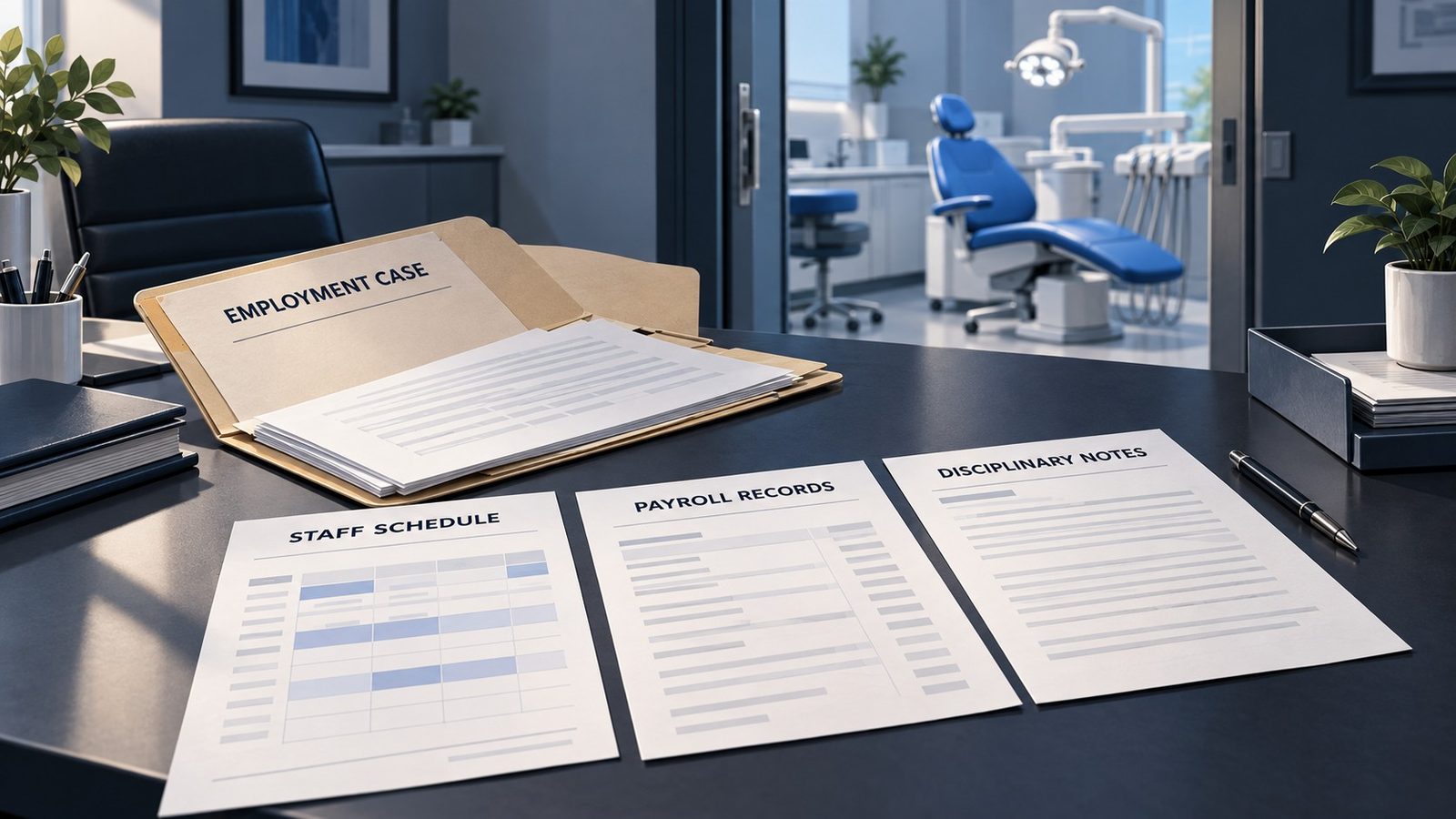
- Records Tell Context: Schedules, time entries, payroll records, texts, emails, and disciplinary notes may shape how decision-making is portrayed.
- Scheduling Can Matter: Reduced hours or unfavorable assignments may be characterized as retaliation when they follow a protected complaint.
- Claims May Expand: A wrongful termination claim may grow into wage-and-hour, discrimination, reasonable accommodation, pregnancy disability leave, or retaliation allegations.
- Defense Requires Context: Employer-side defense often turns on pleadings, stated business reasons, contemporaneous records, witness issues, and business impact.
Operational choices become litigation issues when timing, documentation, and protected activity intersect.
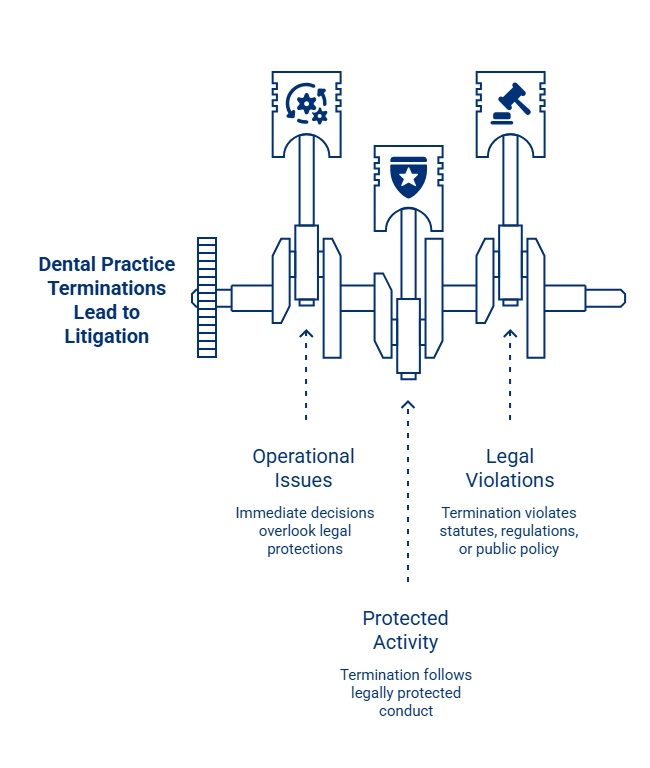
Wrongful termination claims against California dental practices often become more complicated when termination follows discipline, reduced hours, schedule changes, or workplace complaints. A dental practice may view the decision as a staffing or performance issue. A former employee may describe the same decision as retaliation, discrimination, wage-related punishment, or termination in violation of public policy.
Why Dental Practice Terminations Can Become Litigation Events
A small dental practice runs on tight coordination. A delayed hygienist schedule can affect patient appointments. A missing dental assistant can interrupt chairside support. A front-office staffing issue can affect billing, calls, insurance verification, and patient flow. Because these roles connect directly to daily operations, discipline and scheduling decisions often feel immediate and practical.
In litigation, however, the dispute may move beyond the operational reason for the employment decision. A former dental assistant, hygienist, receptionist, billing coordinator, treatment coordinator, or office manager may allege that termination followed protected activity, a wage complaint, a disability-related accommodation issue, pregnancy-related concerns, job-protected medical leave, harassment complaints, discrimination allegations, or other legally protected conduct.
Under California law generally, wrongful termination claims may arise when an employee alleges that termination violated a statute, regulation, or public policy. In that setting, the stated reason for separation may become one part of a broader litigation narrative involving business explanations, employee-protection laws, and disputed accounts of what occurred before separation.
How Discipline Records May Become Disputed
Dental-office discipline may involve attendance, patient complaints, charting issues, interpersonal conflict, scheduling reliability, conduct during treatment hours, or refusal to follow workplace expectations. After separation, those same issues may be examined for timing, consistency, and connection to prior complaints.
A plaintiff may attempt to show a causal connection between protected activity and termination. The dental practice may identify a legitimate business reason or legitimate, nondiscriminatory reason for the employment decision. The dispute may then focus on pretext, credibility, similarly situated employees, communications, and whether the available records align with the explanation for the decision.
In termination litigation, defensible decision-making is often evaluated through timing, consistency, contemporaneous documentation, witness testimony, and the stated business reason for the employment decision.
To mitigate these risks, dental practices should establish standard documentation habits before a conflict arises. Proactive record-keeping demonstrates that employment decisions are based on objective business needs rather than retaliatory motives. Best practices include:
- Standardizing performance reviews: Ensure all staff, from hygienists to front-office personnel, receive regular, documented feedback.
- Contemporaneous write-ups: Document attendance failures, patient complaints, or charting errors on the day they occur, rather than compiling them only when termination is imminent.
- Clear scheduling policies: Require written acknowledgment for any changes in availability, meal period waivers, or schedule reductions.
Inconsistent documentation, deviation from established practice, or close proximity between protected activity and termination may affect how the employment decision is characterized.
Materials that may become relevant include, but are not limited to, the following:
- Staff schedules, time entries, payroll records, and appointment coverage records may become relevant to the disputed timeline.
- Emails, text messages, disciplinary notes, and management communications may affect how the decision-making process is portrayed.
- Leave-related communications, accommodation discussions, and agency or court documents may connect the termination claim to other employment-law allegations.
- Statements by supervising dentists, practice administrators, office managers, current employees, or former employees may become part of witness credibility disputes.
Those materials may help a plaintiff challenge the stated reason for termination, or they may help a dental practice explain the timing and basis for the employment decision. They do not automatically establish liability or defeat a claim.
Why Scheduling Conflicts Carry Added Risk in Dental Practices
Scheduling disputes in dental practices may involve more than preferences over shifts. A schedule change may affect room turnover, sterilization tasks, doctor availability, hygiene production, patient wait times, and front-office coverage. A former employee may later allege that a reduced schedule, unfavorable assignment, or removal from certain shifts followed a protected complaint.
Depending on the allegations, the dispute may involve retaliation theories, wage-and-hour complaints, or discrimination allegations. It may also involve disability accommodation issues, pregnancy-related restrictions, or job-protected medical leave.
California employment laws may recognize retaliation theories when an employee alleges that an employment decision followed protected activity. When reduced hours or unfavorable scheduling closely follows a wage complaint, leave request, accommodation discussion, or discrimination complaint, the timing may create litigation exposure even if the dental practice identifies an operational reason for the change.
Illustrative Example: Schedule Change After a Payroll Complaint
A former hygienist alleges that the dental practice reduced her hours after she complained about unpaid time connected to late-running procedures and end-of-day charting. The practice asserts that the schedule changed because patient demand shifted and coverage needs changed.
This scenario may illustrate how a former employee could allege a causal connection between a wage-related complaint and a later scheduling decision. The practice may identify a legitimate business reason for the change. Depending on the facts, the litigation may focus on timing, payroll records, appointment blocks, communications, and witness testimony.
Wage-and-Hour Allegations May Expand the Case
A termination claim can become more complex when the former employee adds
wage-and-hour allegations. Dental practices often operate around appointment blocks, patient delays, sterilization duties, charting, billing tasks, insurance calls, and closing procedures. A former employee may allege that those tasks affected overtime, meal periods, rest periods, minimum wage compliance, off-the-clock work, or timekeeping accuracy.
If the complaint includes meal and rest break allegations or overtime-related claims, the dispute may involve payroll records, time entries, schedules, job duties, and management communications. These issues may increase complexity because the case may no longer focus only on why the employee separated from employment. It may also focus on how work time was recorded, compensated, and described.
Disability, Pregnancy, and Leave Allegations May Affect the Litigation Narrative
Wrongful termination allegations may also overlap with disability, pregnancy, and job-protected medical leave issues. A former employee may assert that discipline, reduced hours, schedule changes, or termination followed a request for accommodation, pregnancy-related work restrictions, or medical leave.
Protected status may involve disability, pregnancy, medical condition, or another legally protected characteristic. Protected activity may involve a complaint, a request for accommodation, a request for job-protected medical leave, or participation in a protected workplace process.
Depending on the allegations and the size of the practice, California and federal laws involving discrimination, retaliation, reasonable accommodation, pregnancy disability leave, family and medical leave, or protected activity may become relevant. In a dental setting, these disputes may involve whether the employee was a qualified individual with a disability, whether essential functions were disputed, whether reasonable accommodation was discussed, or whether the interactive process became part of the claim.
A trier of fact may be asked to evaluate competing explanations, disputed timelines, contemporaneous records, and the credibility of the people involved.
Wrongful Termination Litigation Can Disrupt Dental Practice Operations
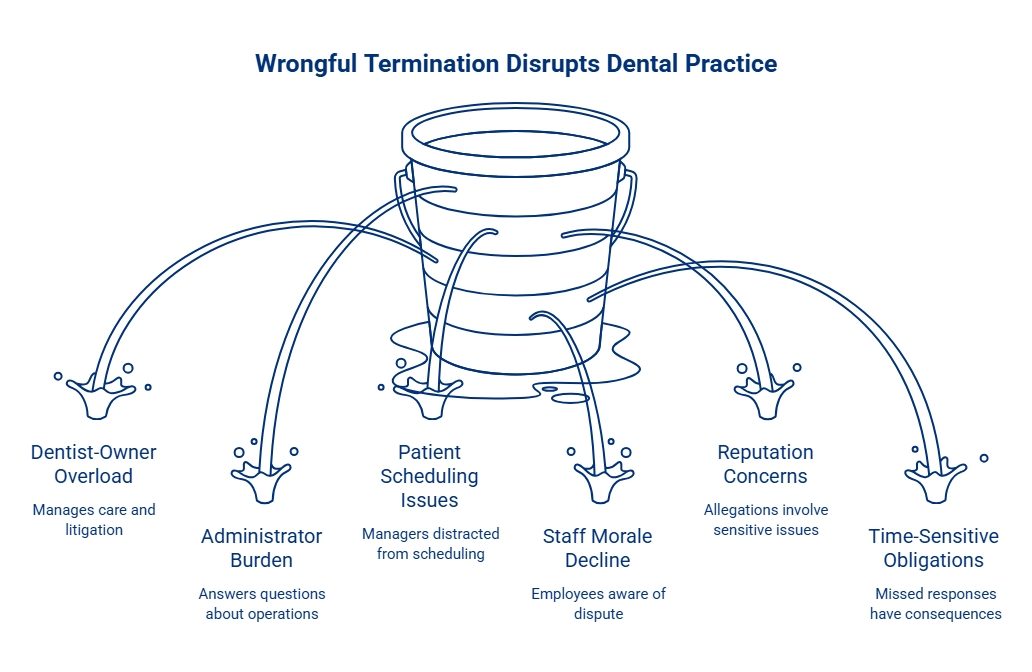
Employment litigation can place operational and financial pressure on an owner-operated dental practice. The dentist-owner may be managing patient care while also dealing with document review, witness issues, staff concerns, agency proceedings, or court filings. A practice administrator may face questions about schedules, payroll entries, texts, emails, and disciplinary records created during routine operations.
The impact may reach beyond legal fees. Patient scheduling can become harder when managers are distracted. Staff morale may suffer when current employees become aware of the dispute. Reputation concerns may become more sensitive when allegations involve harassment, discrimination, retaliation, or wage practices.
Lawsuits, agency complaints, letters of demand, and regulatory notices are commonly time-sensitive litigation events. In employment litigation, missed or mishandled response obligations may create serious procedural and financial consequences, including default-related issues, sanctions, waiver disputes, or expanded exposure.
Employer-Side Defense for Southern California Dental Practices
Wrongful termination claims involving dental practices may combine operational facts with legal allegations involving discipline, scheduling, protected activity, public policy, wage-and-hour issues, leave, accommodation, discrimination, harassment, or retaliation. These disputes may call for litigation judgment, careful evaluation of exposure, and familiarity with how employment claims affect small professional practices.
Employer-side defense attorneys often evaluate the pleadings, alleged protected activity, stated business reasons, records, witness issues, procedural posture, decision-maker testimony, and business impact together. Early involvement by an employer-side defense attorney can affect how allegations, records, procedural obligations, and business exposure are evaluated in an active dispute.
Disclaimer:
This content is for informational purposes only. Laws, definitions, and deadlines change. Verify current requirements through official California sources. This content is not legal advice. No attorney-client relationship is formed through this content. Please consult a qualified attorney in your jurisdiction for legal advice specific to your situation.
Protect Your Business | The Akopyan Law Firm, A.P.C. | Top Gun Employment Lawyers
Have you been sued by an employee? Are you overwhelmed by the complexities of employment law? If so, give us a call. The Akopyan Law Firm, A.P.C. assists small business owners throughout Southern California. Our seasoned employment defense lawyers stand ready to help employers quickly and efficiently resolve employment disputes. We are ready to aggressively and skillfully defend against any employment case, but understand that in most situations avoiding the expense of litigation is in the client’s best interest.
Take the First Step Protecting Your Future: Call us today to speak with one of our experienced employment defense lawyers.
Contact Us Today:
- Phone: (818) 509-9975
- Office Locations in California: Los Angeles, Bakersfield, Costa Mesa, Temecula, Rancho Cucamonga, Oxnard, Culver City, and San Diego.