
📌 Key Takeaways
Wrongful termination claims involving race, national origin, accent, or language use can quickly become operationally disruptive restaurant employment disputes.
- Claims Expand Quickly: A termination dispute may grow into allegations involving manager comments, scheduling decisions, discipline, retaliation, harassment, and workplace language practices.
- Evidence Drives Exposure: Communications, records, timing, consistency, and witness credibility may shape how decision-makers evaluate the employment relationship.
- Protected Activity Matters: Retaliation allegations may arise when termination follows complaints about race, national origin, accent, language use, or related workplace treatment.
- Overlap Increases Complexity: Wrongful termination, discrimination, hostile work environment, retaliation, and wage-and-hour allegations may appear in the same restaurant workplace dispute.
Consistency, documentation, timing, and credibility often define the pressure points in race, national origin, and language-related termination litigation.
California restaurant owners and operators facing active or imminent employment claims will gain focused issue awareness here, guiding them into the restaurant-employment-defense-specific details that follow.
~ ~ ~ ~ ~ ~ ~ ~ ~ ~ ~ ~ ~ ~ ~ ~ ~ ~
A wrongful termination claim involving race, national origin, accent, or language use can place a California restaurant business under serious legal and operational pressure. The dispute may begin with a former employee’s termination, but the allegations may expand into manager comments, scheduling decisions, discipline, workplace language practices, retaliation, harassment, comparative treatment, timing, documentation, and witness credibility.
This content provides general information only. It does not provide legal advice, does not create an attorney-client relationship, and does not replace an attorney’s evaluation of the specific facts, forum, claims, documents, and procedural posture of any dispute. Employment laws are subject to change, and employment counsel can evaluate how current law applies to a specific dispute.
Why Race, National Origin, and Language-Related Termination Claims Can Disrupt Restaurant Operations
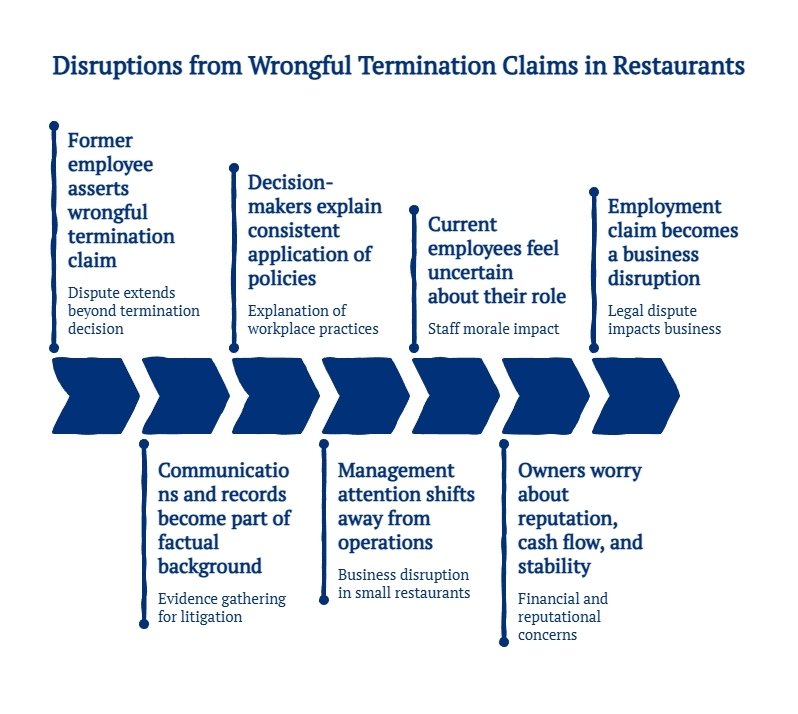
A restaurant owner often manages the business while also overseeing scheduling, payroll issues, customer service, vendors, managers, and staffing concerns. When a former employee asserts a wrongful termination claim tied to race, national origin, accent, or language use, the dispute may reach far beyond the termination decision itself.
The claim may involve owners, managing partners, general managers, shift leads, kitchen supervisors, front-of-house managers, and employees who worked with the claimant. Communications and records from the employment relationship may become part of the factual background if the dispute moves into litigation or an agency proceeding. Decision-makers may be asked to explain whether discipline, schedules, performance expectations, and workplace policies were applied consistently.
For a small or closely held restaurant, the strain can be immediate. Management attention shifts away from operations. Current employees may feel uncertain about their role in the dispute. Owners may worry about reputation, cash flow, staff stability, and the cost of defending the business. The employment claim becomes a business disruption as well as a legal dispute.
How Race, National Origin, and Language Issues Can Become Part of a Wrongful Termination Claim
Under California law, generally, wrongful termination claims may involve allegations that an employment decision violated statutory protections or public-policy principles. In restaurant workplace disputes, a former employee may allege that termination was connected to race, ethnicity, ancestry, national origin, accent, language use, or complaints about discriminatory treatment.
California’s Fair Employment and Housing Act may provide a state-law basis for discrimination, harassment, and retaliation allegations. Federal law, including Title VII of the Civil Rights Act of 1964, may also become relevant when race or national origin allegations are asserted. These laws provide general context, but the specific claims and defenses depend on the facts and the forum.
Language-related allegations often center on restrictive language policies. Under California law, any policy limiting or prohibiting the use of a language in the workplace is presumptively unlawful unless the employer can demonstrate a compelling ‘business necessity’—such as safe and efficient operation—and show that no less restrictive alternative exists [2 CCR § 11022]. Allegations may also stem from accent-based discrimination, which California courts and the Civil Rights Department (CRD) treat as evidence of national origin discrimination unless the accent materially interferes with job performance.
Why Restaurant Workplace Evidence Often Becomes Complicated in Language and National Origin Disputes
Restaurant workplaces can be fast-moving, informal, and dependent on oral communication. A manager may discuss performance during a shift. A schedule may change through a brief message. A disciplinary concern may be addressed during a busy service period. Once litigation begins, those ordinary workplace realities may become contested evidence.
A wrongful termination claim involving race, national origin, or language use may focus on several factual themes:
- The former employee may claim that discipline or termination was inconsistent with how similarly situated employees were treated.
- The complaint may identify statements allegedly made by owners, managers, shift leads, co-workers, customers, or vendors.
- The agency notice or demand letter may refer to scheduling, hours, job assignments, write-ups, complaints, or prior workplace conflicts.
- The litigation narrative may connect language use, accent, ethnicity, national origin, or protected complaints to the termination decision.
Timing may become significant when termination follows a complaint about race, national origin, language use, accent-related treatment, or related workplace conduct. Contemporaneous and consistent records may also become relevant to how decision-makers explain the employment decision, especially where the former employee disputes the stated reason for termination.
These issues can make the dispute highly fact-specific. A judge, agency decision-maker, jury, or other trier of fact may evaluate motive, credibility, timing, consistency, and documentation. The case may not turn on the termination decision alone. It may turn on how the employment relationship appeared before the termination occurred.
The Overlap Between Wrongful Termination, Discrimination, Harassment, and Retaliation Claims
Restaurant employers may face more than one legal theory in the same dispute. A former employee may allege wrongful termination, race discrimination, national origin discrimination, language-related discrimination, hostile work environment allegations, or unlawful workplace retaliation. The complaint may also include wage-and-hour allegations if the employment relationship involved disputes about schedules, breaks, overtime, or pay practices.
The overlap matters because each theory may bring different factual questions into the case. A discrimination claim may focus on protected characteristics and comparative treatment. A retaliation claim may focus on alleged protected activity and a later employment decision that the employee characterizes as adverse. A hostile work environment claim may focus on alleged patterns of conduct. A wrongful termination claim may connect those themes to the employee’s separation from employment.
In some cases, the former employee may assert that the stated reason for termination was pretext for discrimination or retaliation. The employer may contend that the decision was based on a legitimate, nondiscriminatory reason. That dispute often places consistency, documentation, timing, credibility, and business context at the center of the litigation.
Why Small and Closely Held Restaurants Face Unique Pressure
Small and closely held restaurants may face pressure because decision-making often occurs close to ownership. The owner may approve schedules. A managing partner may participate in discipline. A general manager may communicate directly with employees about performance, hours, and workplace concerns.
In many disputes involving small or closely held restaurants, the factual record may reflect fewer layers of management review than a larger corporate employer might have. Current employees may still work with the same managers whose conduct is referenced in the claim. A public-facing restaurant may also worry about reputation within the local community.
These pressures do not determine potential exposure. They do, however, explain why employment litigation can become disruptive for restaurant businesses even before any final legal determination occurs. Disputes involving small or closely held restaurants may place added focus on whether managers applied workplace policies uniformly and whether HR or employment counsel was involved before contested employment decisions became formal claims.
Why Early Employment Defense Representation Matters After a Claim Is Made
Formal employment disputes may involve strict procedural obligations and serious consequences if mishandled. Delayed or inadequate response to a lawsuit or a California Civil Rights Department (CRD) or EEOC notice can result in the loss of affirmative defenses, default judgments, or the issuance of a ‘Right-to-Sue’ letter that fast-tracks litigation. In California, failure to respond to discovery or administrative inquiries can lead to evidentiary or monetary sanctions under the California Code of Civil Procedure [CCP § 2023.010 – 2023.040].
Wrongful termination matters involving race, national origin, and language-related allegations typically call for prompt review by employment defense counsel because the applicable obligations depend on the forum, claims asserted, facts, documents, and procedural posture. These claims may involve protected characteristics, alleged protected activity, overlapping legal theories, electronic communications, witness credibility, and restaurant-specific operational facts.
In employment disputes involving protected characteristics or protected activity, early involvement of HR and employment counsel may help clarify the factual record, legal issues, and business risks before positions harden.
Representation for Restaurant Employers Facing These Claims
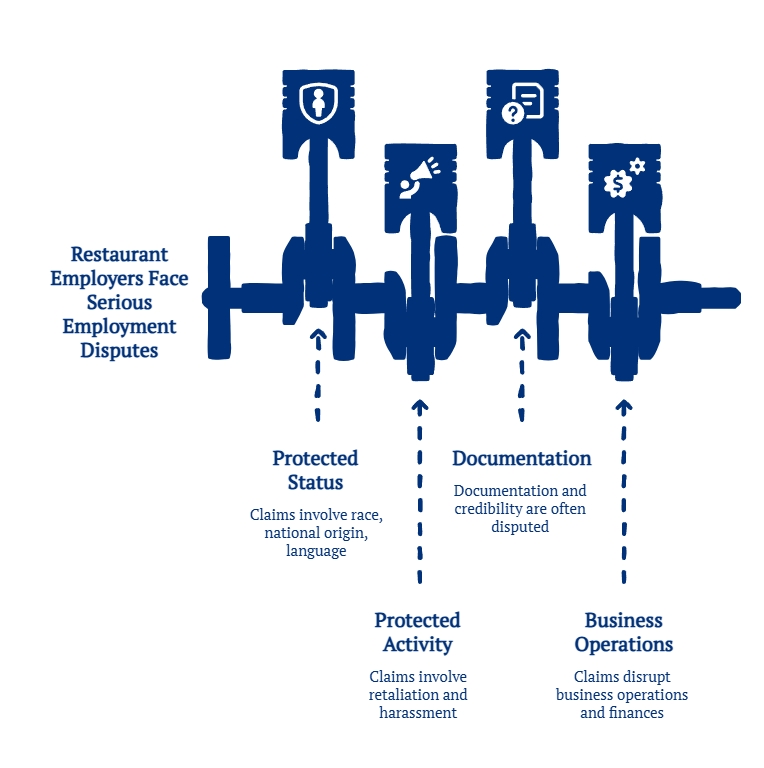
Akopyan Law Firm, A.P.C. represents businesses facing serious employment disputes where protected status, protected activity, documentation, credibility, and business operations may all be at issue. These disputes include wrongful termination claims involving race, national origin, language-related allegations, retaliation, harassment, and overlapping employment claims. The firm’s employment defense representation focuses on helping small and closely held businesses address serious workplace litigation with direct attorney involvement and attention to business realities.
Restaurant owners and operators in Los Angeles, Bakersfield, Costa Mesa, Temecula, Rancho Cucamonga, Oxnard, Culver City, San Diego, and surrounding Southern California communities facing an active or imminent claim can contact Akopyan Law Firm, A.P.C. to discuss employment defense representation.
Disclaimer:
This content is for informational purposes only. Laws, definitions, and deadlines change. Verify current requirements through official California sources. This content is not legal advice. No attorney-client relationship is formed through this content. Please consult a qualified attorney in your jurisdiction for legal advice specific to your situation.
Protect Your Business | The Akopyan Law Firm, A.P.C. | Top Gun Employment Lawyers
Have you been sued by an employee? Are you overwhelmed by the complexities of employment law? If so, give us a call. The Akopyan Law Firm, A.P.C. assists small business owners throughout Southern California. Our seasoned employment defense lawyers stand ready to help employers quickly and efficiently resolve employment disputes. We are ready to aggressively and skillfully defend against any employment case, but understand that in most situations avoiding the expense of litigation is in the client’s best interest.
Take the First Step Protecting Your Future: Call us today to speak with one of our experienced employment lawyers.
Contact Us Today:
- Phone: (818) 509-9975
- Office Locations in California: Los Angeles, Bakersfield, Costa Mesa, Temecula, Rancho Cucamonga, Oxnard, Culver City, and San Diego.