

For California family-owned employers, race-related termination claims can expand quickly from one employment decision into a broader dispute over motive, records, consistency, and credibility.
- Consistency Shapes Credibility: Alignment among the employer’s stated reason, contemporaneous records, and witness testimony may influence how competing explanations for the termination are evaluated.
- Owner Involvement Matters: Direct participation by an owner or supervisor can make that individual’s knowledge, communications, decision-making role, and testimony central to the factual dispute.
- Comparative Treatment Broadens Scope: Allegations involving similarly situated employees of another race may expand scrutiny to other employment decisions, decision-makers, performance histories, and factual differences.
- Communications Gain Evidentiary Weight: Existing emails, text messages, notes, and other communications may support, contradict, or provide context for the employer’s stated termination reason.
- Litigation Can Disrupt Operations: An active dispute may affect management time, staffing, administrative workload, employee relations, customer-facing operations, cash flow, defense expenses, and business relationships.
For California family-owned businesses, a termination dispute involving alleged race discrimination can become as much about the surrounding evidentiary record as the termination itself.
A termination dispute can become substantially more complex when a former employee alleges that race influenced the employment decision. For a California family-owned business, the dispute may extend beyond the separation itself and place the employer’s stated reason, contemporaneous records, management communications, treatment of similarly situated employees, and witness credibility under scrutiny.
The Legal Context of Race-Related Wrongful Termination Claims
California’s Fair Employment and Housing Act (FEHA) prohibits employment discrimination based on race for employers with five or more employees. A termination may create race-discrimination exposure when a former employee alleges that race influenced the adverse employment decision.
A termination claim involving alleged race discrimination may therefore encompass more than the employer’s stated reason for ending the employment relationship. The factual dispute may also involve earlier performance or disciplinary events, communications involving decision-makers, witness accounts, and allegations concerning how similarly situated employees were treated. If the business provides a legitimate, non-discriminatory reason for the termination, the employee must then attempt to prove that this stated reason is merely a ‘pretext’ or a cover-up for racial bias.
Why a Race Discrimination Allegation Can Broaden the Factual Dispute
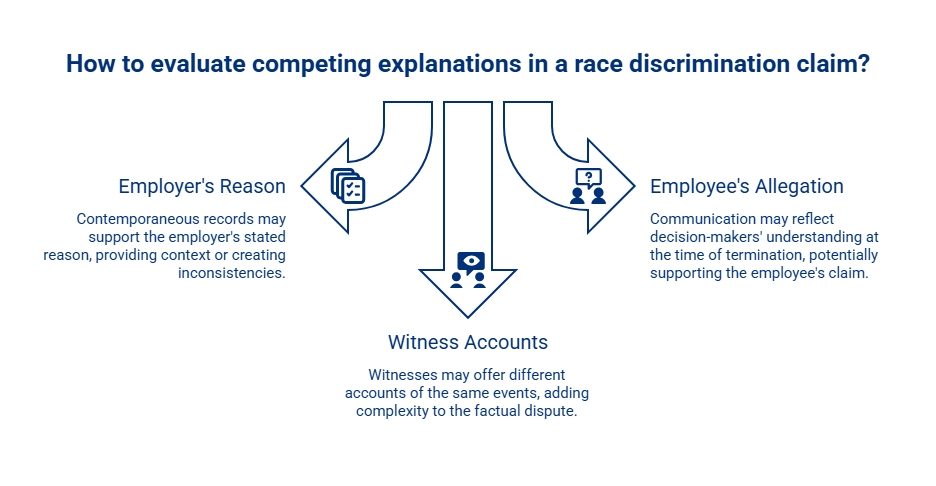
An employer may attribute a termination to performance or another nondiscriminatory business reason, while the former employee may allege that race influenced the decision.
Competing explanations can expand the evidentiary dispute. Contemporaneous records may support the employer’s stated reason, provide additional context, or create factual inconsistencies. Communication may reflect what decision-makers understood when the termination occurred. Witnesses may offer different accounts of the same events. None of those circumstances determines the outcome by itself, but each may affect how the competing explanations are evaluated.
Direct Owner and Supervisor Involvement Can Increase Evidentiary Scrutiny
Family ownership itself does not create employment-law liability. Direct participation by an owner or supervisor can, however, make that person’s knowledge, communications, and testimony particularly relevant when the termination is challenged.
An owner who supervised the employee, participated in discipline, discussed performance, or made the termination decision may become a central fact witness. The parties may then dispute what information the owner possessed, what circumstances informed the decision, and whether the owner’s explanation corresponds with records created during the employment relationship.
How Existing Records and Communications May Affect the Employer’s Stated Reason
Existing employment records may become significant when testimony about a termination differs from information recorded before the dispute arose. Depending on the allegations, relevant materials may include performance records, disciplinary records, scheduling information, payroll or timekeeping materials, emails, text messages, supervisor notes, and termination-related communications.
Contemporaneous records that correspond with the employer’s stated reason may support that account. Material inconsistencies among existing records, the stated reason, and witness testimony may instead create additional factual questions. The significance of any particular record depends on its content, context, and relationship to the challenged decision.
Consistency Among the Employer’s Explanation, Records, and Testimony May Affect Credibility
Credibility can become important when the employer and former employee present competing accounts of why the termination occurred.
A supervisor may remember a performance discussion differently from another participant. A document may support part of an account while providing different context for another part. The parties may also disagree about whether an established employment practice was applied consistently to similarly situated employees. These differences do not establish discrimination or prove a defense, but they may broaden the factual dispute surrounding motive and consistency.
Alleged Treatment of Similarly Situated Employees May Expand the Factual Record
A race discrimination allegation may include a contention that similarly situated employees of another race received different treatment.
That allegation can move the dispute beyond the former employee’s individual employment history. The parties may disagree about whether the identified employees were similarly situated, whether the same decision-makers were involved, whether their conduct or performance was comparable, and whether material factual differences existed between the employment decisions.
Illustrative Example: Performance-Based Termination Becomes a Broader Dispute
A family-owned California business states that it terminated a non-executive employee for a performance-related or other nondiscriminatory business reason. The former employee alleges that race influenced the termination and contends that similarly situated employees of another race received different treatment.
The resulting dispute could extend to contemporaneous performance records, communications involving the decision-makers, the circumstances surrounding the other employees, and witness testimony. If those sources materially differ from the explanation attributed to the decision-maker, additional factual and credibility questions could arise. Those circumstances would not, standing alone, establish whether either party’s position is correct.
Informal Communications May Become Relevant When the Decision Is Challenged
When owners, supervisors, and employees communicate through email, text messages, notes, or other direct channels, those existing communications may provide context for disputed events.
The parties may disagree about whether communication supports, contradicts, or is unrelated to the employer’s stated reason for termination. Context, timing, authorship, and the communication’s connection to the employment decision may influence its significance.
Witness Participation Can Affect Dispute and the Business
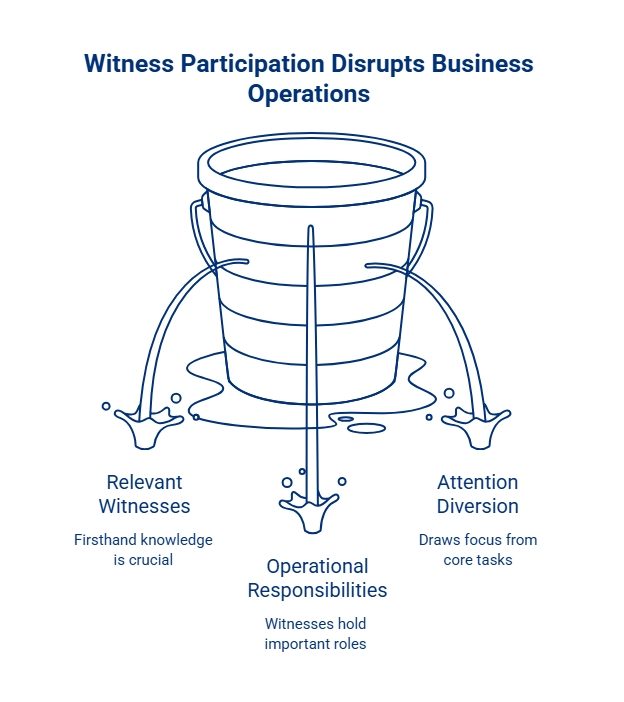
Owners, supervisors, co-workers, administrative employees, and others with firsthand knowledge may become relevant witnesses. Their testimony may concern performance, earlier workplace events, communications, treatment of similarly situated employees, or the termination decision.
In a smaller family-owned business, those same individuals may also hold important operational responsibilities. Their participation in the dispute can therefore draw attention away from staffing, customer-facing operations, administration, and ordinary management responsibilities.
Business Disruption May Extend Beyond the Employment Claim
An active termination dispute may affect management time, staffing, administrative workload, employee relations, customer-facing operations, cash flow, defense expenses, and business relationships.
The degree of disruption varies by matter. Even while liability remains contested, the factual demands associated with the dispute may place meaningful pressure on owners who continue to manage daily operations.
The Role of Employer-Side Employment Litigation Attorney
Employer-side employment litigation attorney can evaluate allegations against the evidentiary record, analyze how the wrongful termination and race discrimination theories interact, and represent the business as factual and credibility disputes develop. To mitigate these risks before a termination occurs, employers should ensure that performance issues are consistently documented in writing and that discipline is applied uniformly across the workforce.
.
Disclaimer:
This content is for informational purposes only. Laws, definitions, and deadlines change. Verify current requirements through official California sources. This content is not legal advice. No attorney-client relationship is formed through this content. Please consult a qualified attorney in your jurisdiction for legal advice specific to your situation.
Protect Your Business | The Akopyan Law Firm, A.P.C. | Top Gun Employment Lawyers
Have you been sued by an employee? Are you overwhelmed by the complexities of employment law? If so, give us a call. The Akopyan Law Firm, A.P.C. assists small business owners throughout Southern California. Our seasoned employment defense lawyers stand ready to help employers quickly and efficiently resolve employment disputes. We are ready to aggressively and skillfully defend against any employment case, but understand that in most situations avoiding the expense of litigation is in the client’s best interest.
Take the First Step Protecting Your Future: Call us today to speak with one of our experienced employment defense lawyers.
Contact Us Today:
- Phone: (818) 509-9975
- Office Locations in California: Los Angeles, Bakersfield, Costa Mesa, Temecula, Rancho Cucamonga, Oxnard, Culver City, and San Diego.