
📌 Key Takeaways
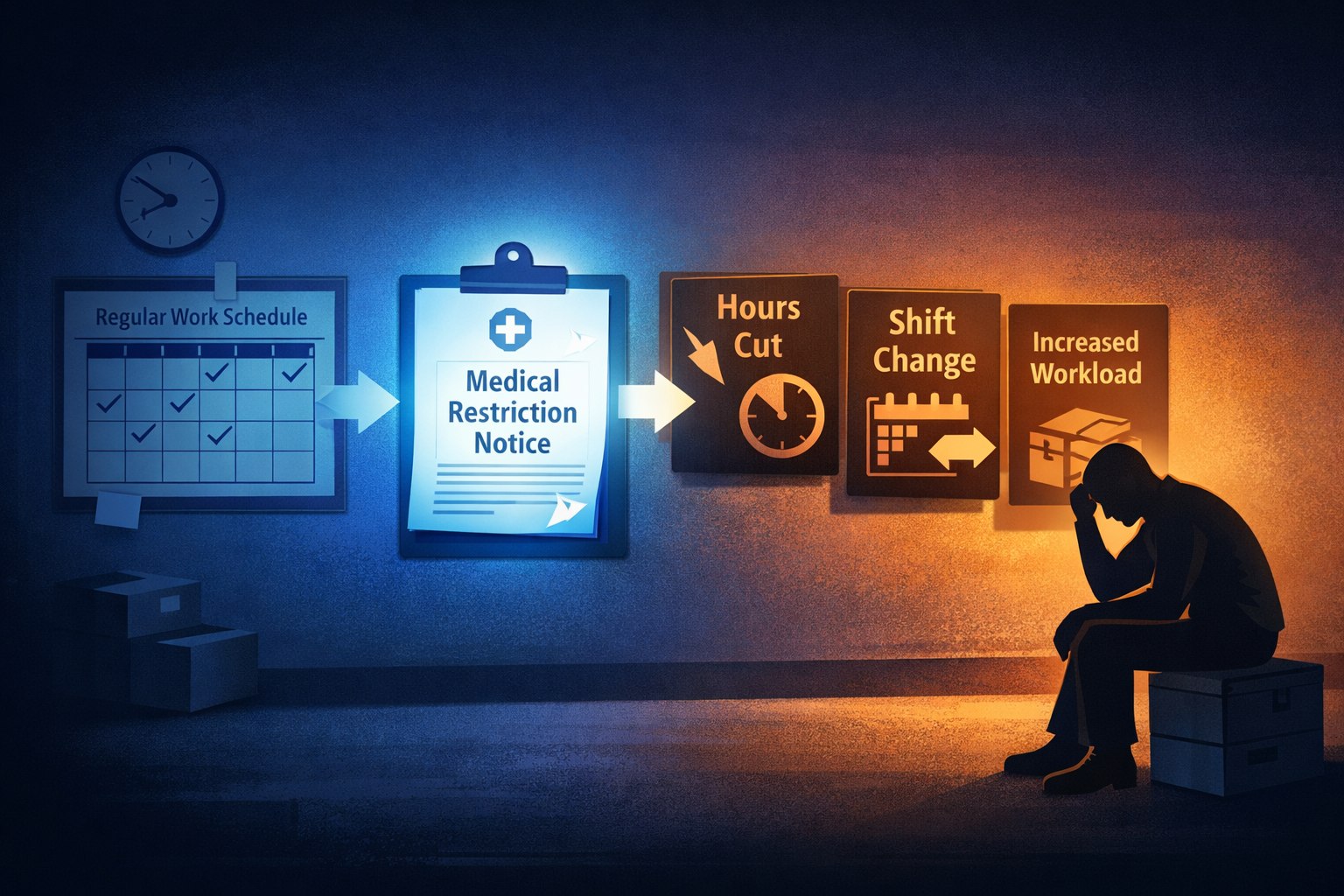
- Significant negative changes to pay, hours, schedule, or job duties—especially after an employer learns of a worker’s disability or qualifying medical condition, medical restrictions, or a request for reasonable accommodation—may support a constructive discharge analysis under California employment law, depending on the facts.
- A resignation may be treated as involuntary if an employer creates or allows working conditions that become objectively and subjectively intolerable, and the worker resigns because of those conditions.
- Sudden loss of overtime, deep hour cuts, or reassignment to a lower-paying position after medical disclosure or an accommodation request may be relevant to whether an employer applied financial pressure tied to protected status or protected activity.
- Schedule changes—such as rotating graveyard shifts, split shifts, or constantly changing start times—can matter when they interfere with treatment and recovery and begin after the employer receives medical restrictions or an accommodation request.
- Assigning duties that conflict with known medical restrictions may raise issues under disability-discrimination and reasonable-accommodation principles, including whether the employer engaged in the interactive process in good faith.
- Documentation often matters, including pay records, time sheets, job descriptions, written medical restrictions, and communications about scheduling, duties, and complaints.
~ ~ ~ ~ ~ ~ ~ ~ ~ ~ ~ ~ ~ ~ ~ ~ ~ ~
In California, resignation is not always treated as purely voluntary. In some situations, significant negative changes to pay, hours, scheduling, or job duties may be analyzed under the doctrine of constructive discharge.
In general terms, constructive discharge is alleged when an employer’s actions (or failure to act) create working conditions that are so intolerable that a reasonable person would feel compelled to resign, and the worker actually resigns because of those conditions. Courts typically evaluate constructive discharge based on the totality of circumstances, including the severity of the conditions, whether the resignation was caused by those conditions, and whether the employer caused or failed to remedy the conditions.
When Working Conditions May Support a Constructive Discharge Claim
Many workers describe resigning only after conditions changed in ways that made continued employment unrealistic. For example, a worker may return after an injury to frequent schedule changes, more physically demanding assignments, and reduced income. Another worker may provide medical restrictions and then experience increased scrutiny, disciplinary write-ups, or job reassignments shortly afterward.
A key issue is not simply whether the worker resigned. The issue is whether the employer’s conduct (or lack of corrective action) created conditions that could be argued to be intolerable and effectively left the worker with no reasonable alternative but to resign.
Major Pay Changes That May Increase Pressure to Resign
Sharp reductions in earnings may be relevant in a constructive discharge analysis, particularly when they follow an employer’s awareness of a worker’s disability or qualifying medical condition, medical restrictions, or a request for reasonable accommodation.
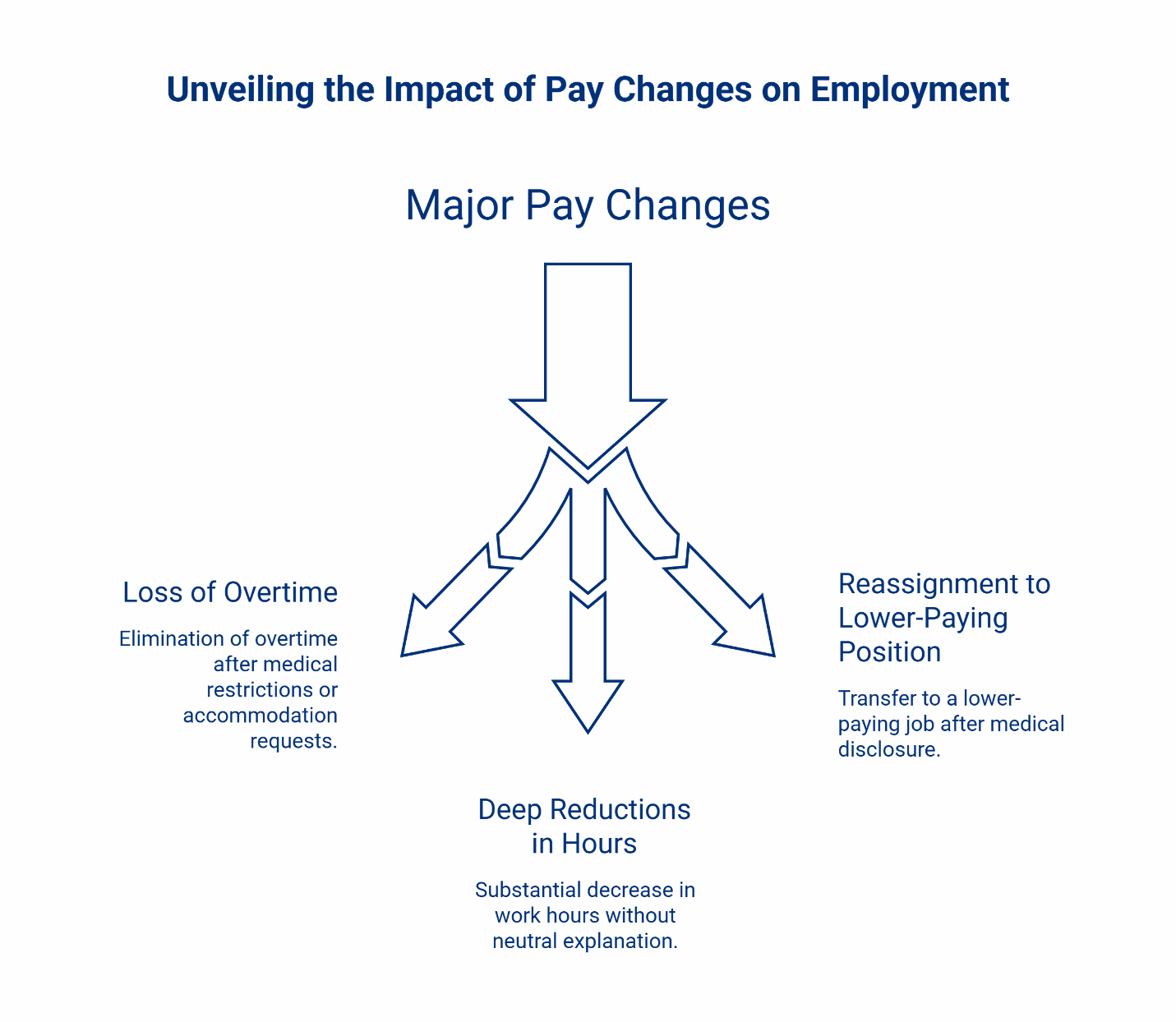
Examples may include:
- Loss of overtime that a worker previously relied on, beginning soon after the worker submits medical restrictions or requests an accommodation.
- Deep reductions in scheduled hours that significantly reduce take-home pay without a clear, neutral explanation.
- Reassignment to a lower-paying position shortly after medical disclosure or an accommodation request, especially when the worker’s prior role remains available to others.
The legal concern in these situations is whether the timing and sequence support an inference that the employer used pay or hours as leverage connected to protected status or protected activity.
Hours and Scheduling Changes That May Make Employment Unsustainable
Scheduling can be a central issue for workers who need stable hours to manage household finances and, in some cases, medical care. After an injury, diagnosis, or accommodation request, a worker may experience reduced hours or disruptive schedule changes even if the hourly rate stays the same.
Examples may include:
- Rotating graveyard shifts imposed after the employer receives medical restrictions that relate to sleep, recovery, or treatment.
- Split shifts that add commuting time and reduce the worker’s ability to attend medical appointments.
- Constantly changing start times that interfere with treatment schedules, recovery routines, or family responsibilities.
If schedule changes begin after the employer learns about medical restrictions or a need for treatment, the timing may be used to argue a causal connection. It may also matter if the employer assigns unstable or undesirable schedules to the affected worker while keeping other workers on stable schedules.
Job Duty Changes That Conflict with Medical Restrictions
Job duty changes can become legally significant when they conflict with known medical restrictions. A worker may provide documented restrictions—such as lifting limits, reduced walking, or limits on bending or climbing—and then be assigned duties that appear inconsistent with those restrictions.
Examples may include:
- Assigning a worker with documented lifting limits to heavier loads or the most physically demanding stations.
- Giving a delivery driver recovering from a leg injury routes with more stairs, hills, or walking than before.
- Reassigning a worker who requests lighter duty into tasks that are materially more strenuous, or into duties that significantly differ from the worker’s prior role without a clear business explanation.
In addition to constructive discharge principles, these facts can raise issues under disability-discrimination and reasonable-accommodation laws. Depending on the circumstances, they may also implicate an employer’s duty to engage in the interactive process in good faith to explore reasonable accommodation.
Patterns That May Signal Constructive Discharge Concerns
Employment attorneys often focus on the overall timeline rather than on a single event. Patterns that may raise concerns including but not limited to:
- A reported injury, diagnosis, or accommodation request, followed by reduced pay, shrinking hours, or more difficult duties.
- The worker communicates that the changes are interfering with medical care or recovery, and the employer does not address the issue.
- The worker experiences escalating discipline, write-ups, or unfavorable assignments that continue until the worker resigns.
These examples are not exhaustive. They illustrate how timing, sequence, and escalation can be relevant to whether a resignation may be treated more like a termination for legal analysis.
Information That May Help an Attorney Evaluate What Happened
When a worker consults an employment lawyer about job changes that preceded a resignation, the attorney often tries to reconstruct what changed and when. Helpful information may include:
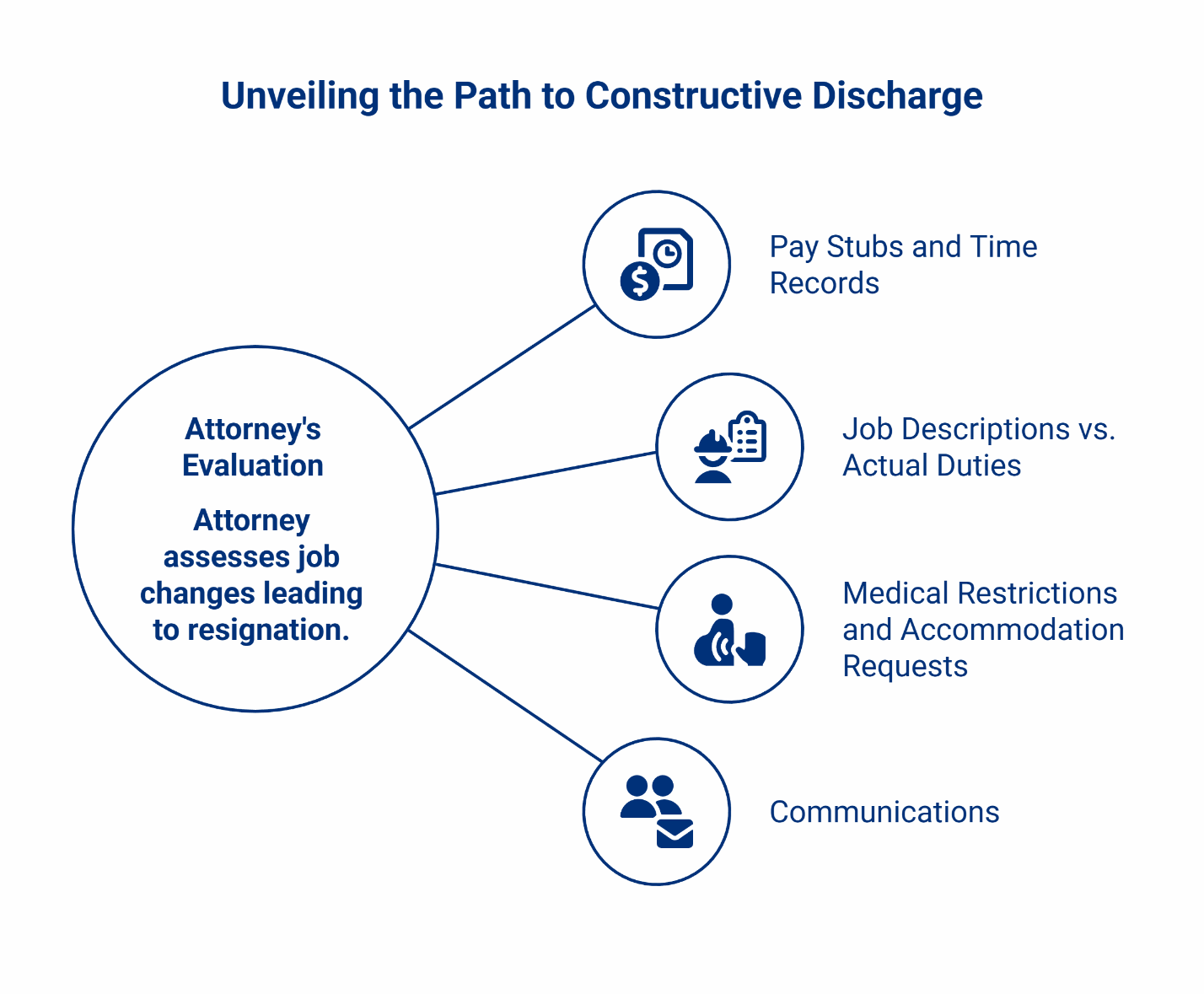
- Pay stubs and time records from before and after the changes to show changes in income and hours.
- Job descriptions compared to the actual duties assigned after medical disclosure or restrictions.
- Written medical restrictions and any accommodation requests.
- Emails, text messages, or written notes referencing restrictions, schedules, duty changes, complaints, or discipline.
This documentation can help clarify whether the changes were isolated decisions or part of a pattern that may support a constructive discharge theory.
Why Speaking with a California Employment Lawyer May Be Important
Resignations that follow major negative changes to pay, hours, scheduling, or duties often raise both legal and practical concerns, including health, income stability, and future employment. California law in this area is fact-specific, and outcomes often depend on the timeline, documentation, and the employer’s explanations for the changes.
Workers who recognize patterns like the ones described above often choose to speak with a California employment lawyer to obtain advice tailored to their circumstances. A lawyer can evaluate whether constructive discharge principles, disability-related protections, retaliation concerns, or other legal issues may apply based on the specific facts.
Disclaimer:
This content is for informational purposes only. Laws, definitions, and deadlines change. Verify current requirements through official California sources. This content is not legal advice. No attorney-client relationship is formed through this content. Please consult a qualified attorney in your jurisdiction for legal advice specific to your situation.
Protect Your Rights | The Akopyan Law Firm, A.P.C. | Top Gun Employment Lawyers
Have you been wrongfully terminated from your job? Have you suffered discrimination, harassment, or retaliation in the workplace? Has your employer violated wage and hour laws? If so, we can help. The Akopyan Law Firm, A.P.C. is dedicated to protecting and enforcing employees’ rights throughout Southern California. With a 97% success rate and millions recovered for our clients, our team of experienced and talented employment lawyers can fight to secure the justice you deserve.
Take the First Step Towards Securing Justice: Call us today to speak with one of our experienced employment lawyers. The firm offers case evaluations free of charge.
Contact Us Today:
- Phone: (818) 509-9975
- Office Locations: Los Angeles, Bakersfield, Costa Mesa, Temecula, Rancho Cucamonga, Oxnard, Culver City, and San Diego in California.
Important: Contacting the Akopyan Law Firm, A.P.C. does not create an attorney-client relationship, but all communications will remain private and confidential. Each case is unique. The Akopyan Law Firm, A.P.C., does not guarantee any outcome.