

📌 Key Takeaways
When workplace hostility, job-protected family or medical leave (FMLA/CFRA), if eligible, and termination cluster in time, the sequence may raise concerns under California and federal employment laws that require a fact-specific review.
- Hostile Work Environment Standard: A hostile work environment claim typically turns on whether harassment was sufficiently severe or pervasive and tied to a protected characteristic (for example, disability), not merely a single workplace conflict or “rough” supervision.
- Job-Protected Leave: Employers generally may not retaliate against an employee for requesting, asking about, or taking job-protected leave under the FMLA or CFRA (if eligible), and generally may not interfere with the exercise of those rights.
- Timing + Adverse Action: If an employer’s negative comments, disciplinary write-ups, schedule cuts, or termination closely follow a job-protected leave request, leave use, or return from leave, the sequence may support a retaliation or interference theory depending on the facts.
- Disability-Related Overlap: Retaliation, disability discrimination, failure to accommodate, and wrongful termination can overlap where adverse treatment escalates after an employee discloses a medical condition, requests accommodation, or complains about discrimination or harassment.
- Documentation Matters: Claim evaluation can hinge on the timeline, decision-makers, and wording in disciplinary records, internal communications, and termination paperwork—making attorney review especially important in close cases.
In many cases, the timing of events and the content of written documentation drive how potential claims are evaluated.
~ ~ ~ ~ ~ ~ ~ ~ ~ ~ ~ ~ ~ ~ ~ ~ ~ ~
Workplace issues can overlap. An employee may experience escalating hostility at work, request or take job-protected leave for a serious health condition (or to care for a family member) and then face discipline or termination soon after. When adverse action follows protected leave activity or disability-related disclosures, the sequence may raise concerns under California and federal employment laws, depending on the facts.
When a Difficult Workplace May Become a Hostile Work Environment
In California, a hostile work environment claim generally focuses on whether harassment was severe or pervasive and because of a protected characteristic (for example, disability), such that it altered the conditions of employment. A difficult manager, isolated conflict, or unfair criticism may be a workplace problem without meeting the legal threshold for a hostile work environment claim.
Examples that may point toward hostile work environment dynamics include but are not limited to:
- A supervisor repeatedly uses insults or mocking comments tied to an employee’s disability, medical needs, or need for time off.
- After an employee discloses a medical condition or requests leave or accommodation, the supervisor escalates disciplinary write-ups, isolates the employee, or humiliates the employee in front of others.
- Coworkers repeatedly make demeaning comments about an employee “always being out,” and the employee reports it to a supervisor or HR, but the employer does not take reasonable corrective steps.
Hypothetical example: An employee discloses a qualifying medical condition and mentions upcoming treatment. After the disclosure, the supervisor increases scrutiny and assigns more undesirable tasks, and the employer then terminates the employee after an unusually short period of heightened discipline—raising a question about whether adverse action was tied to disability-related information or protected leave activity.
Why it matters: If the conduct is tied to a protected characteristic and becomes severe or pervasive, it may support a harassment theory—and the employer’s response (or lack of response) often becomes key evidence.
Job-Protected Family and Medical Leave Issues That May Raise Concerns
Family and medical leave issues sometimes start with a simple conversation and then shift into workplace tension. In California, the FMLA and CFRA may provide job-protected leave for eligible employees in specified circumstances.
Employers may not retaliate against an employee for requesting, asking about, or using job-protected leave, and generally may not interfere with an employee’s exercise of job-protected leave rights.
Patterns that may raise concerns include but are not limited:
- A supervisor responds to a job-protected leave request by criticizing the employee’s commitment or reliability.
- Written warnings, attendance points, or heightened discipline appear soon after job-protected leave becomes part of the discussion.
- The employer terminates the employee shortly after a job-protected leave request, leave use, or return from leave.
Hypothetical example: A delivery driver asks about job-protected leave to care for a parent with a serious health condition. Soon afterward, the employer issues written discipline and then terminates the employee after an incident that had previously been handled informally raising a question about whether the stated reason was a pretext for retaliation or interference.
Why it matters: When discipline or termination closely follows job-protected leave activity, the timeline can become central to whether a leave-related claim is realistically supported.
How Workplace Hostility, Job-Protected Leave, and Termination Can Collide
Overlap often becomes clearer when the same decision-makers are involved and adverse action follows shortly after job-protected leave activity, disability disclosure, accommodation requests, or workplace complaints. The sequence may look like this:
- The workplace becomes increasingly hostile or punitive.
- A medical condition, caregiving responsibility, or request for job-protected leave enters the picture.
- Discipline escalates (write-ups, performance warnings, schedule reductions, undesirable assignments).
- Termination follows, or the employee resigns under pressure.
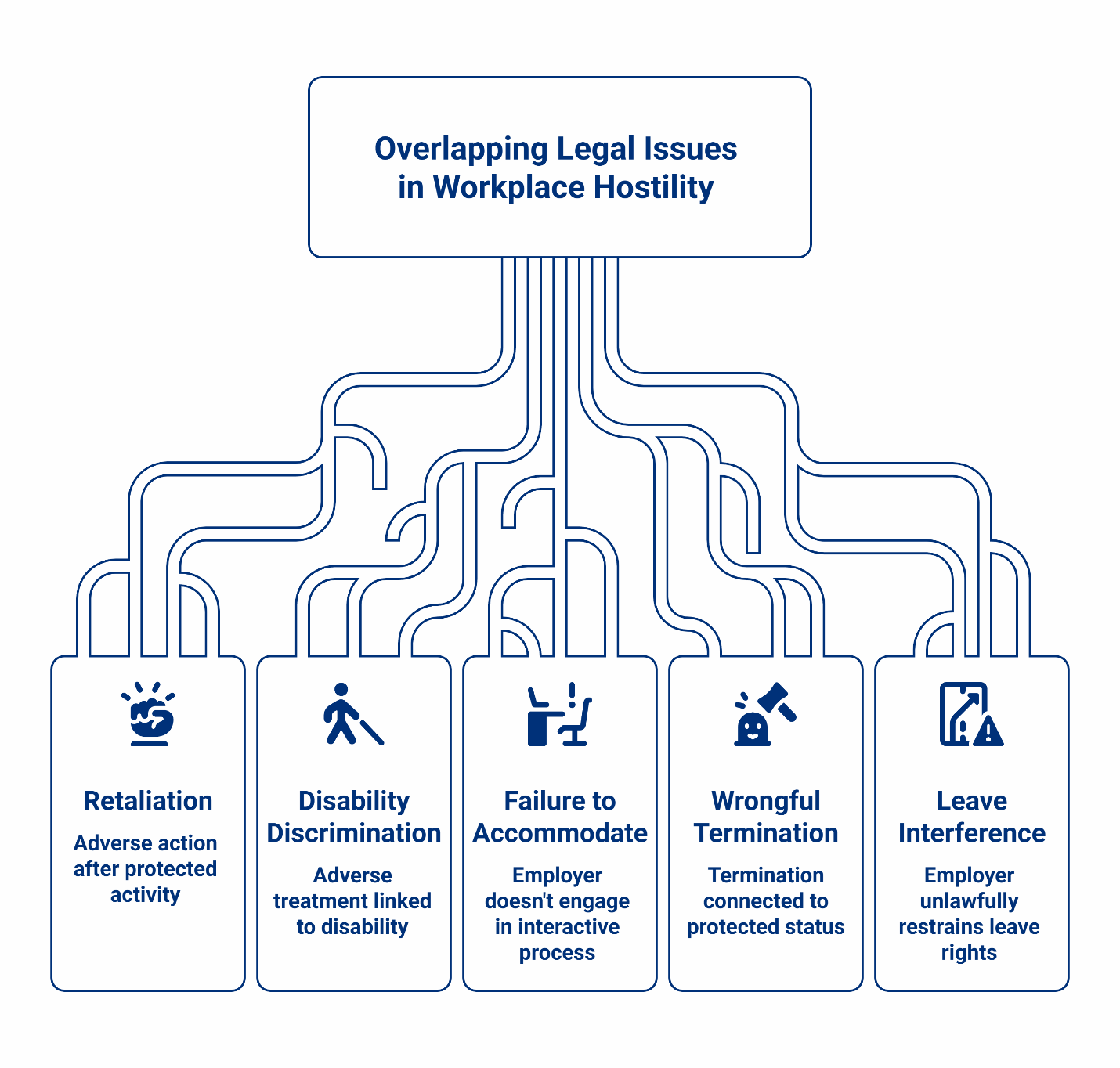
That type of sequence can implicate several well-established legal concepts:
- Retaliation: A concern when an employer takes adverse action (for example, write-ups, reduced hours, termination) because an employee engaged in protected activity, such as requesting job-protected leave or complaining about unlawful harassment or discrimination.
- Disability discrimination: A concern when adverse treatment is connected to an actual or perceived disability.
- Failure to accommodate / interactive process: A concern when an employer does not engage in a good-faith interactive process or does not consider reasonable accommodation when disability-related limitations are known or disclosed.
- Wrongful termination: A concern when termination appears connected to job-protected leave, disability-related status, or protected complaints.
- Leave interference: A concern when an employer unlawfully restrains, denies, or discourages an employee from exercising job-protected leave rights.
Constructive Discharge
California law also recognizes constructive discharge in some situations. In general terms, constructive discharge requires working conditions that are so intolerable that a reasonable person would feel compelled to resign, and the employee actually resigns because of those conditions. Whether that standard is met is highly fact-specific.
Why it matters: When these issues cluster, the timeline, documentation, and stated reasons for discipline or termination often determine which legal theories are realistically supported.
Why Physically Demanding Jobs and Rigid Scheduling Can Intensify Leave and Discipline Conflicts
Some workplaces have strict attendance expectations, physically demanding duties, or limited flexibility in scheduling. Those realities can create friction between an employee’s health needs or caregiving responsibilities and an employer’s operational demands.
Where a medical condition affects an employee’s ability to work, additional duties may arise—such as the employer’s duty to engage in a good-faith interactive process and consider reasonable accommodation where required by law.
Why it matters: When health limitations, job-protected leave, and strict scheduling collide, documentation and decision-making around discipline, accommodation, and termination become especially important to evaluate.
Why Employment Lawyers Often Need the Full Story
Employment disputes rarely turn on a single event. The order of events, the decision-makers involved, and the language used in disciplinary write-ups, attendance warnings, performance improvement plans, internal emails, and termination paperwork can materially affect how the situation is evaluated.
A licensed employment attorney can review the full timeline and documents and assess whether the facts may support theories such as retaliation, disability discrimination, failure to accommodate, leave interference, harassment, or wrongful termination.
Employment claims often involve strict administrative or court deadlines, and the applicable time limits can depend on the claim type and forum.
Workplace problems can stack up. A worker in Southern California may face escalating mistreatment, then need time away for serious health condition (or to care for a close family member) and then lose a job soon after. When those events connect, they can raise legal concerns under California employment protections involving protected leave, retaliation, and disability discrimination.
When a Difficult Workplace Becomes a Hostile Environment
A hostile work environment is often described as more than a single conflict or a supervisor with a rough style. It commonly involves a pattern of degrading or intimidating conduct that interferes with the ability to work. The concern can deepen when the pattern appears connected to disability or other protected factors.
A worker may recognize hostile work environment dynamics through facts such as these:
- A supervisor repeatedly uses insults or mocking comments tied to an employee’s disability, medical needs, or need for time off.
- Management escalates write-ups, public humiliation, or isolation after learning about a medical condition or a request for leave.
- Coworkers engage in repeated demeaning comments about “being a problem” or “always out,” and management allows the pattern to continue.
Hypothetical example: A warehouse employee discloses a qualifying medical condition and mentions upcoming treatment. After that disclosure, scrutiny intensifies, undesirable assignments increase, and termination follows after a short period of unusually harsh discipline.
Family Medical Leave Problems That Signal Something Is Wrong
Family and medical leave issues can begin with a simple conversation and then shift into workplace tension. In California, FMLA and CFRA can provide job-protected leave for eligible employees in certain circumstances, and these frameworks can change over time.
At a high level, employers generally are not permitted to punish employees for requesting, asking about, or using protected family and medical leave.
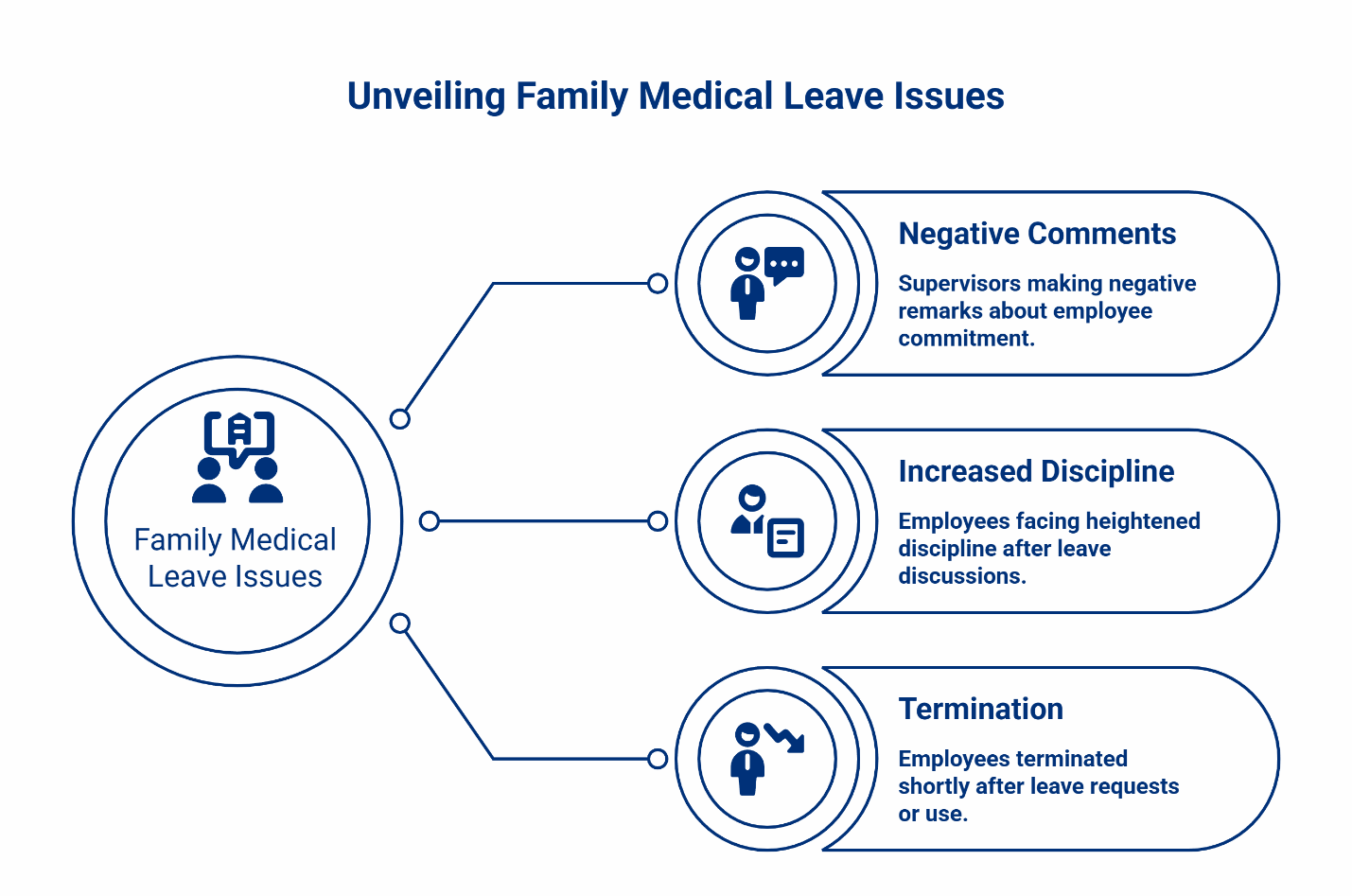
Patterns that may raise concerns include:
- A supervisor responds to a leave request with negative comments about commitment or reliability.
- Written warnings or heightened discipline appear soon after leave becomes part of the discussion.
- A termination occurs shortly after a leave request, leave use, or return from leave.
Hypothetical example: A delivery driver asks about leave to care for a parent with a serious health condition. Soon afterward, discipline increases and termination follows after an incident that previously would have been handled with coaching.
How Hostility, Medical Leave, and Firing Can Collide
Overlap often becomes clearer when timing and decision-making line up. The workplace becomes increasingly hostile. A medical condition, caregiving responsibility, or leave request enters the picture. Discipline escalates. Termination follows, or the worker may feel pressure to resign.
That sequence can implicate several well-established concepts:
- Retaliation can be a concern when adverse action appears linked to protected activity, such as requesting protected leave or complaining about unlawful harassment or discrimination.
- Disability discrimination can be a concern when adverse treatment appears connected to an actual or perceived disability.
- Wrongful termination can be a concern when termination appears connected to protected leave, disability-related status, or protected complaints.
California law also recognizes constructive discharge in some situations, where working conditions become so intolerable that resignation functions like termination. Whether that concept applies depends on detailed facts and current law.
Why Employment Lawyers Need the Full Story
Employment disputes rarely turn on one event. The order of events, the decision-makers involved, and the language used in warnings or termination paperwork can affect how the situation is evaluated under California protections.
An employment lawyer can review the situation and identify whether the facts suggest retaliation, disability discrimination, leave interference, or wrongful termination.
Strict deadlines can apply to employment matters, and time limits can vary. A licensed California employment attorney can evaluate which deadlines may apply in a specific situation and it recommended to contact an employment lawyer for a case evaluation.
Disclaimer:
This content is for informational purposes only. Laws, definitions, and deadlines change. Verify current requirements through official California sources. This content is not legal advice. No attorney-client relationship is formed through this content. Please consult a qualified attorney in your jurisdiction for legal advice specific to your situation.
Protect Your Rights | The Akopyan Law Firm, A.P.C. | Top Gun Employment Lawyers
Have you been wrongfully terminated from your job? Have you suffered discrimination, harassment, or retaliation in the workplace? Has your employer violated wage and hour laws? If so, we can help. The Akopyan Law Firm, A.P.C. is dedicated to protecting and enforcing employees’ rights throughout Southern California. With a 97% success rate and millions recovered for our clients, our team of experienced and talented employment lawyers can fight to secure the justice you deserve.
Take the First Step Towards Securing Justice: Call us today to speak with one of our experienced employment lawyers. The firm offers case evaluations free of charge.
Contact Us Today:
- Phone: (818) 509-9975
- Office Locations: Los Angeles, Bakersfield, Costa Mesa, Temecula, Rancho Cucamonga, Oxnard, Culver City, and San Diego in California.
Important: Contacting the Akopyan Law Firm, A.P.C. does not create an attorney-client relationship, but all communications will remain private and confidential. Each case is unique. The Akopyan Law Firm, A.P.C., does not guarantee any outcome.