
For small Los Angeles retail employers, active wrongful termination litigation may affect daily operations as deeply as it affects the underlying employment dispute.
- Small Teams Magnify Disruption: Limited management depth may force the same owners and managers to balance litigation demands with staffing, inventory, sales, and customer service.
- Factual Scrutiny Can Expand: A disputed termination may involve schedules, payroll information, workplace communications, prior complaints, disciplinary history, and other parts of the employment relationship.
- Routine Records Gain Significance: Emails, text messages, time records, and payroll information may enter the factual record when they relate to contested events.
- Staff Involvement Affects Operations: Employees and managers with relevant knowledge may remain responsible for shift coverage, supervision, stockroom activity, fulfillment, and customer-facing work.
- Business Pressure Extends Further: Legal expenses, reduced owner bandwidth, financial uncertainty, and possible reputational concerns may arise independently of the allegations’ ultimate merits or outcome.
Active termination litigation can reach the same people and systems that keep a small retail business operating.
~ ~ ~ ~ ~ ~ ~ ~ ~ ~ ~ ~ ~ ~ ~ ~ ~ ~
Active wrongful termination litigation can disrupt far more than a former employee’s separation. For a small Los Angeles retailer, a dispute may involve owners, managers, employees, business records, and workplace communications while the store continues serving customers.
The people responsible for schedules, payroll coordination, inventory, sales, and customer concerns may also possess knowledge relevant to the allegations. A business with limited management depth may have little capacity to absorb these competing demands.
Concentrated Management Authority Can Magnify the Disruption
A retailer with 5 to 30 employees may depend on one owner, general manager, or operations manager to make most employment and operational decisions. That person may supervise staff, coordinate schedules, review timekeeping information, oversee deliveries, and resolve customer issues.
Litigation-related communications and proceedings may compete with work that directly supports the store. When only one or two people hold meaningful decision-making authority, ordinary responsibilities may not be transferred easily to another manager.
Customer-facing businesses also operate on immediate demands. A missed delivery, unexpected absence, or busy sales period may require a prompt management response. Concentrated authority can make litigation-related demands particularly difficult for a small retailer to absorb, even while the merits of the employee’s allegations remain contested.
The Factual Dispute May Extend Beyond the Termination
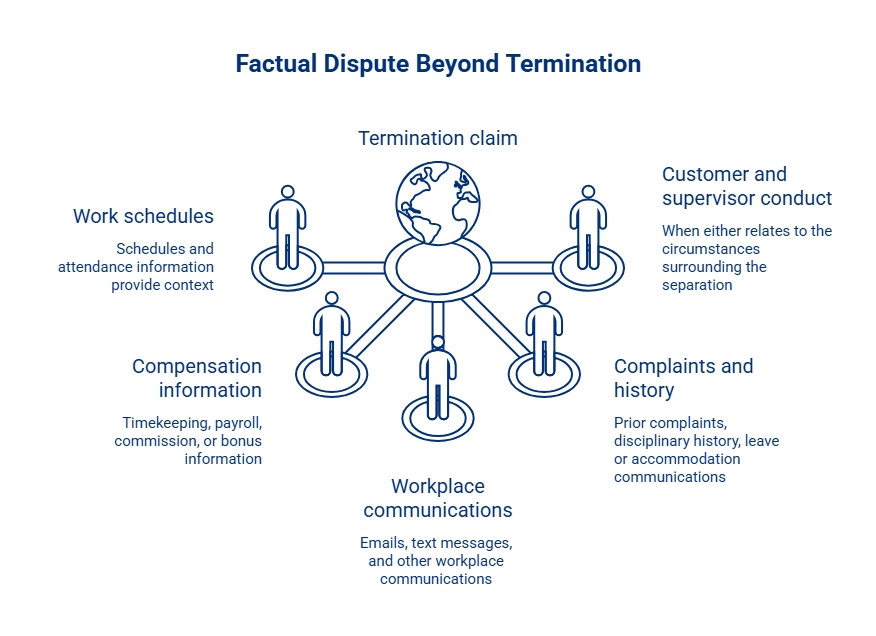
Under California’s Fair Employment and Housing Act (FEHA) or local Los Angeles ordinances, a seemingly straightforward termination can quickly expand into complex claims involving alleged discrimination or retaliation, initiating aggressive discovery processes. A termination may serve as the central event, but the parties may examine a broader portion of the employment relationship. Depending on the allegations, relevant factual areas could include:
- Work schedules and attendance information may provide context for disputed employment decisions.
- Timekeeping, payroll, commission, or bonus information may become relevant when compensation allegations accompany the termination claim.
- Emails, text messages, and other workplace communications may form part of the factual record.
- Prior complaints, disciplinary history, leave communications, or accommodation communications may receive attention when implicated by the pleadings.
- Customer complaints or supervisor conduct may become relevant when either relates to the stated circumstances surrounding the separation.
These materials usually originate in ordinary store operations. Their relevance may not have been apparent when employees and managers first created them.
Claims involving discrimination, retaliation, protected leave, disability accommodation, whistleblowing, or compensation may overlap with a termination dispute. Those allegations remain fact-dependent, and their presence does not establish either employer liability or employee misconduct.
Manager’s Participation Can Affect Daily Store Operations
Managers often possess direct knowledge of the events surrounding a disputed termination. Time spent participating in litigation-related communications or proceedings may reduce the time available for scheduling, supervision, inventory control, vendor coordination, and customer service.
Opening and closing coverage may depend on the small number of trusted employees. Weekend or holiday staffing may offer limited flexibility. Stockroom activity, fulfillment work, and e-commerce orders may still require oversight while the dispute remains active.
This pressure does not necessarily create a visible interruption. A store may remain open and continue serving customers while its owners handle additional litigation-related demands that customers do not see. Routine operational issues may nevertheless receive less immediate attention.
Employee and Manager Involvement May Strain a Small Retail Team
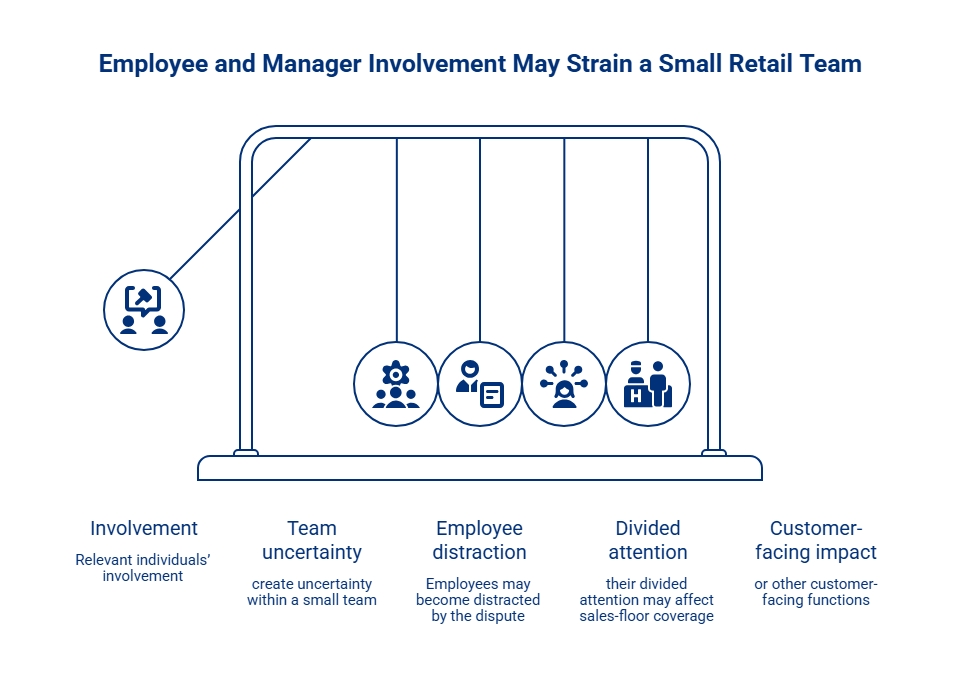
Store managers, assistant managers, shift leads, sales associates, cashiers, inventory staff, and payroll personnel may possess information relevant to the underlying events. Some may continue working together while active termination litigation proceeds.
Their involvement can create uncertainty within a small team. Employees may become distracted by the dispute while managers continue assigning shifts and supervising daily work. When several relevant individuals also perform essential operational roles, their divided attention may affect sales-floor coverage or other customer-facing functions.
An employee’s legally protected activity or status may be relevant to the allegations, but an active claim does not resolve contested facts. Legal analysis depends on the specific allegations, available evidence, and stage of the proceeding.
Ordinary Communications May Enter the Factual Record
Small retailers often rely on direct communication among owners, managers, and employees. Scheduling updates, attendance discussions, customer concerns, and operational decisions may occur through email, text messages, or other familiar workplace channels.
The parties may examine communications that relate to disputed events. A brief message created for an immediate staffing purpose may be considered alongside payroll information, time records, or manager testimony. Relevant communications can broaden the factual dispute without making every workplace message evidence of wrongdoing.
For a retailer with limited administrative support, the involvement of routine business information may add another layer of operational strain.
Financial and Reputational Pressures May Develop Independently
The financial effect of litigation may extend beyond legal expenses. Owner time has economic value, particularly when the owner oversees sales, purchasing, inventory, staffing, or vendor relationships. An extended dispute may also complicate financial forecasting for a self-funded business.
Reputation can present a separate concern. A local retailer may have long-term customers, community relationships, and a recognizable identity. Owners may worry about how an employee dispute could affect those relationships. Litigation does not necessarily become public or cause reputational harm, but the possibility can add pressure.
These financial and reputational concerns may exist independently of the ultimate merits or outcome of the employee’s allegations.
Termination-Related Disputes May Progress Through Several Stages
A termination-related employment dispute may begin with an asserted claim, a demand, or an administrative matter. Some disputes proceed to a civil action involving the examination of relevant information, testimony, evidentiary proceedings, and possible resolution discussions. Other matters continue through further litigation.
Each stage may involve the same owners, managers, and employees who keep the store operating. Experienced employer-side employment counsel can evaluate the legal issues according to the allegations, evidence, and stage of the proceeding while remaining attentive to the dispute’s business consequences.
Mitigating Operational Risk Before a Dispute Arises
To reduce these operational disruptions, small retailers must establish proactive compliance measures. Implementing clear document retention protocols, maintaining strict separation between personal and professional communication channels, and securing Employment Practices Liability Insurance (EPLI) can insulate daily operations when litigation does occur.
Disclaimer:
This content is for informational purposes only. Laws, definitions, and deadlines change. Verify current requirements through official California sources. This content is not legal advice. No attorney-client relationship is formed through this content. Please consult a qualified attorney in your jurisdiction for legal advice specific to your situation.
Protect Your Business | The Akopyan Law Firm, A.P.C. | Top Gun Employment Defense Lawyers
Have you been sued by an employee? Are you overwhelmed by the complexities of employment law? If so, give us a call. The Akopyan Law Firm, A.P.C. assists small business owners throughout Southern California. Our seasoned employment defense lawyers stand ready to help employers quickly and efficiently resolve employment disputes. We are ready to aggressively and skillfully defend against any employment case, but understand that in most situations avoiding the expense of litigation is in the client’s best interest.
Take the First Step Protecting Your Future: Call us today to speak with one of our experienced employment lawyers.
Contact Us Today:
- Phone: (818) 509-9975
- Office Locations in California: Los Angeles, Bakersfield, Costa Mesa, Temecula, Rancho Cucamonga, Oxnard, Culver City, and San Diego.