

For small Los Angeles retailers, a customer complaint may become one factual component of wrongful termination litigation rather than a complete explanation for the termination decision.
- Complaint Does Not Decide: A customer complaint may be relevant to the termination decision, but its existence does not necessarily resolve the broader employment dispute.
- Accounts May Conflict: Customers, employees, supervisors, and managers may describe the same interaction differently, increasing the number of contested factual issues.
- Motivation Remains Separate: The employer’s stated reason for termination and the former employee’s alleged explanation for the decision may become distinct factual questions.
- Communications May Matter: Existing management communications and business records may reflect what different decision-makers understood about the customer complaint when the termination occurred.
- Other Claims May Overlap: Discrimination, retaliation, whistleblower activity, disability, protected leave, accommodation, or wage-and-hour allegations may broaden the employment-law issues in dispute.
For small retail employers facing active wrongful termination litigation, the central issue may extend from the customer complaint to the surrounding termination decision and its factual context.
Customer complaint + termination decision + competing accounts = a broader factual dispute.
~ ~ ~ ~ ~ ~ ~ ~ ~ ~ ~ ~ ~ ~ ~ ~ ~ ~
A customer complaint may become a significant factual component of wrongful termination litigation when the complaint is connected to an employee’s termination. For a small Los Angeles retailer, the dispute may extend beyond customer interaction itself. Management’s understanding of the incident, the stated reason for the termination decision, existing communications, and the former employee’s competing allegations may all become contested factual subjects.
The customer complaint may therefore constitute one factual component of a broader wrongful termination dispute rather than a complete explanation for why the employment relationship ended.
Why Customer Complaints May Become Significant in Wrongful Termination Litigation
Customer-facing employees routinely interact with shoppers in stores, boutiques, specialty retailers, convenience businesses, and other retail settings. A customer complaint may later become relevant when the employer connects the complaint, in whole or in part, to a termination decision.
The significance of the complaint may depend on the surrounding circumstances. A customer may describe the interaction one way, while the employee may provide a different account. A supervisor may have observed only part of the interaction. An owner or manager may have learned about the complaint after other employees or supervisors had already discussed it.
When the former employee later challenges the termination, the customer complaint may become significant because the parties disagree about what occurred or about the role the complaint played in the termination decision.
A Customer Complaint and the Reason for Termination Are Separate Factual Questions
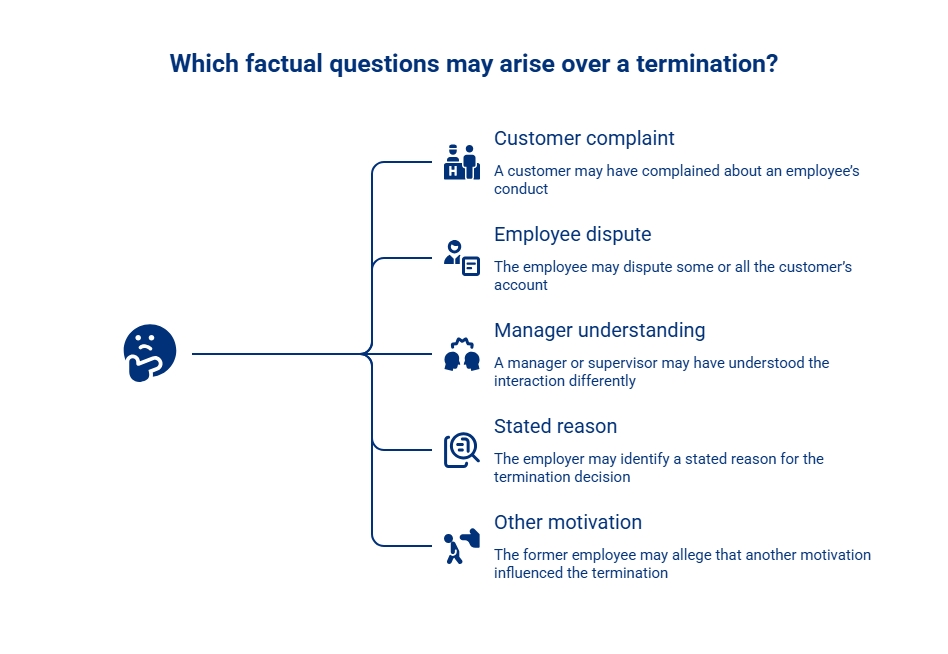
The existence of a customer complaint does not necessarily resolve the dispute over the alleged motivation for a termination. Several distinct factual questions may arise:
- A customer may have complained about an employee’s conduct.
- The employee may dispute some or all the customer’s account.
- A manager or supervisor may have understood the interaction differently from either participant.
- The employer may identify a stated reason for the termination decision.
- The former employee may allege that another motivation influenced the termination.
These issues may coexist without any single fact necessarily resolving the broader dispute. A customer’s allegation does not establish misconduct merely because the complaint was made. An employee’s disagreement with the complaint likewise does not establish unlawful conduct by the employer.
For a small retailer, this distinction may expand the factual scope of the litigation beyond the original customer interaction.
Conflicting Accounts of Customer Interaction May Increase Factual Complexity
A retail incident may involve several people with different levels of knowledge. A customer may remember an exchange differently from the employee. A supervisor may recall only part of what occurred. Managers may disagree about how serious the interaction appeared at the time or about what information was available when the termination decision was made.
Depending on the circumstances, those differences may create disputes over the meaning and significance of the customer complaint rather than merely its existence.
These factual disagreements may become especially significant in a small retail business because owners, managers, supervisors, and employees often work in close proximity. The same people connected to the disputed events may also remain responsible for staffing, inventory, sales, customer relations, and other daily operations.
Existing Management Communications May Become Relevant to the Factual Record
Existing communications and business records concerning the customer complaint or termination decision may later become relevant to the factual dispute.
Those materials may include communications among owners, store managers, supervisors, or other personnel, as well as existing records concerning the customer interaction or the employee’s separation. Their significance may arise from what they reflect about the information available to management at the time.
Existing communications may reflect different accounts provided by managers or supervisors, different levels of knowledge, or different descriptions of customer interaction. For a small retailer, these differences may increase the number of factual issues that become contested in the litigation.
Other Employment-Law Allegations May Overlap with the Termination Dispute
A former employee may allege that the customer complaint was not the only issue connected to the termination decision. Depending on the circumstances, the dispute may also involve allegations concerning discrimination, retaliation, whistleblower activity, disability, a request for reasonable accommodation, protected leave where applicable, wage-and-hour concerns, or other protected workplace activity.
Those allegations do not establish that the employer acted unlawfully. They may, however, broaden the factual context surrounding the termination decision and increase the number of employment-law issues placed in dispute.
Store-Level Decision-Making May Receive Broader Scrutiny
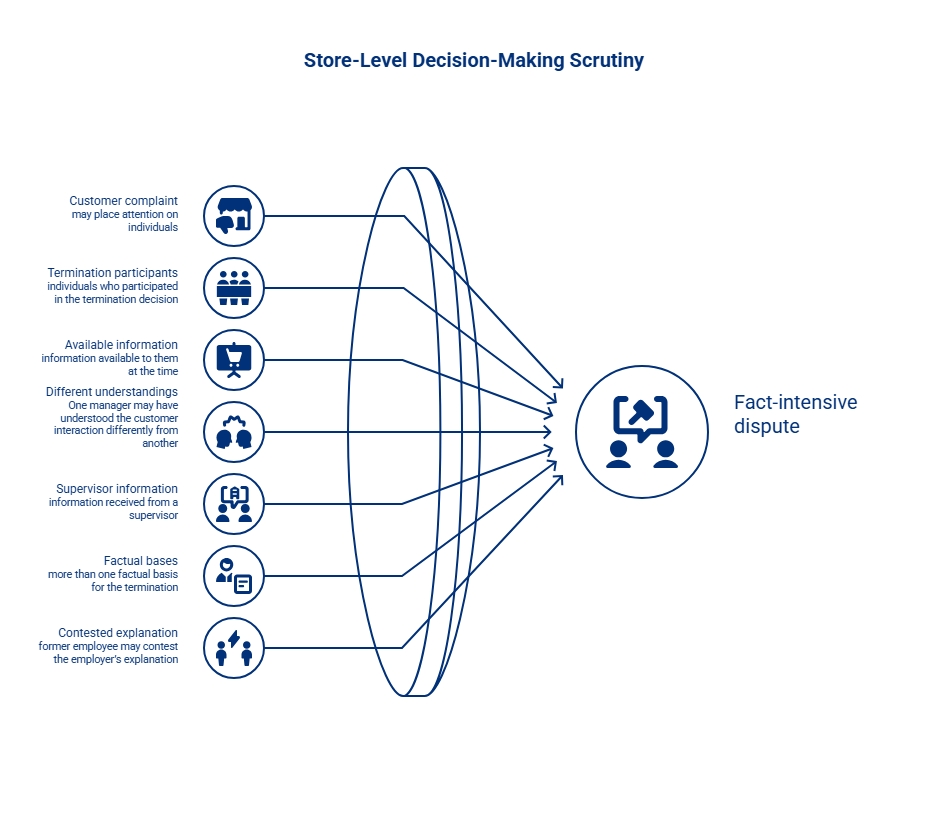
A customer complaint may place attention on the individuals who participated in the termination decision and on the information available to them at the time.
One manager may have understood the customer interaction differently from another. An owner may have relied on information received from a supervisor. The employer may have identified more than one factual basis for the termination, while the former employee may contest the employer’s explanation.
These circumstances may make the dispute fact-intensive because several aspects of the termination decision may become contested at the same time. The result may be a dispute focused not only on the customer complaint, but also on how different decision-makers understood and relied on it.
Wrongful Termination Litigation May Disrupt Daily Operations in a Small Retail Business
Wrongful termination litigation may create practical burdens that extend beyond the disputed separation itself.
Owners and managers may have to divide their attention between the litigation and ordinary store operations. Those operations may include staffing, sales, inventory, customer relations, and vendor relationships.
Employees with relevant knowledge may become involved in the dispute while continuing to work within a small team. A customer-facing incident may also create reputational concerns if the underlying allegations become known outside the workplace.
Legal expense and management demands may place additional pressure on a business with limited internal resources. These effects are not inevitable, but they may increase the operational burden associated with an unresolved employment dispute.
Employer-Side Employment Litigation Representation in an Active Dispute
Customer-complaint wrongful termination litigation may involve competing factual accounts, management communications, overlapping employment-law allegations, witness issues, business disruption, and employer-side wrongful termination exposure.
Active wrongful termination disputes involving these issues may require individualized legal assessment by qualified employment counsel.
Disclaimer:
This content is for informational purposes only. Laws, definitions, and deadlines change. Verify current requirements through official California sources. This content is not legal advice. No attorney-client relationship is formed through this content. Please consult a qualified attorney in your jurisdiction for legal advice specific to your situation.
Protect Your Business | The Akopyan Law Firm, A.P.C. | Top Gun Employment Defense Lawyers
Have you been sued by an employee? Are you overwhelmed by the complexities of employment law? If so, give us a call. The Akopyan Law Firm, A.P.C. assists small business owners throughout Southern California. Our seasoned employment defense lawyers stand ready to help employers quickly and efficiently resolve employment disputes. We are ready to aggressively and skillfully defend against any employment case, but understand that in most situations avoiding the expense of litigation is in the client’s best interest.
Take the First Step Protecting Your Future: Call us today to speak with one of our experienced employment lawyers.
Contact Us Today:
- Phone: (818) 509-9975
- Office Locations in California: Los Angeles, Bakersfield, Costa Mesa, Temecula, Rancho Cucamonga, Oxnard, Culver City, and San Diego.