

Small retailers in Los Angeles without in-house legal departments may face both litigation demands and operational strain when a wrongful discharge dispute arises.
- Management Capacity Gets Tested: Owners and managers may need to address litigation while continuing to oversee staffing, inventory, payroll, vendors, and customer-facing operations.
- Retail Facts May Matter: Scheduling, supervision, timekeeping, performance records, customer complaints, and workplace communications may become relevant depending on the allegations and circumstances.
- Claims May Expand: A wrongful discharge lawsuit may also include allegations involving retaliation, discrimination, harassment, whistleblower retaliation, disability-related issues, protected leave, or wage-and-hour matters.
- Litigation Demands Can Persist: Discovery, depositions, mediation, motion practice, and other procedural stages may require continuing participation from managers already responsible for operating the business.
- Outside Counsel Fills a Distinct Role: Employer-side litigation counsel may evaluate allegations, address procedural developments, represent the retailer, and communicate material developments to authorized decision-makers.
For small Los Angeles retail employers, wrongful discharge litigation may affect legal exposure, management attention, financial oversight, employee relations, and day-to-day store operations simultaneously.
~ ~ ~ ~ ~ ~ ~ ~ ~ ~ ~ ~ ~ ~ ~ ~ ~ ~
A wrongful discharge claim can create significant demands for a small Los Angeles retailer because the people responsible for operating the business may also become directly involved in the litigation. An owner who ordinarily oversees staffing, sales, inventory, payroll coordination, vendors, and customer service may also need to communicate with outside litigation counsel and address issues arising from the disputed employment decision.
For a retailer without an internal legal department, the dispute can therefore affect management capacity as well as legal exposure. Litigation may place the employer’s stated reasons for the termination, management communications, employment records, and surrounding workplace circumstances under scrutiny.
Why a Wrongful Discharge Claim Can Create Significant Pressure for a Small Retail Business
A disputed termination may draw attention to the employer’s stated reasons for the decision, communications concerning the employee, management conduct, and other facts connected with the employment relationship.
That scrutiny can carry particular operational significance in a small retail business. Owners may participate personally in employment decisions. Store managers and shift supervisors may also oversee scheduling, employee performance, customer service, sales-floor coverage, and inventory functions. Communications about employees may occur through the same ordinary workplace channels used to operate the store.
These characteristics do not make informal management practices unlawful. They can, however, mean that facts relevant to a wrongful termination dispute are closely connected with everyday retail operations.
The Absence of an In-House Legal Department Changes the Business Impact
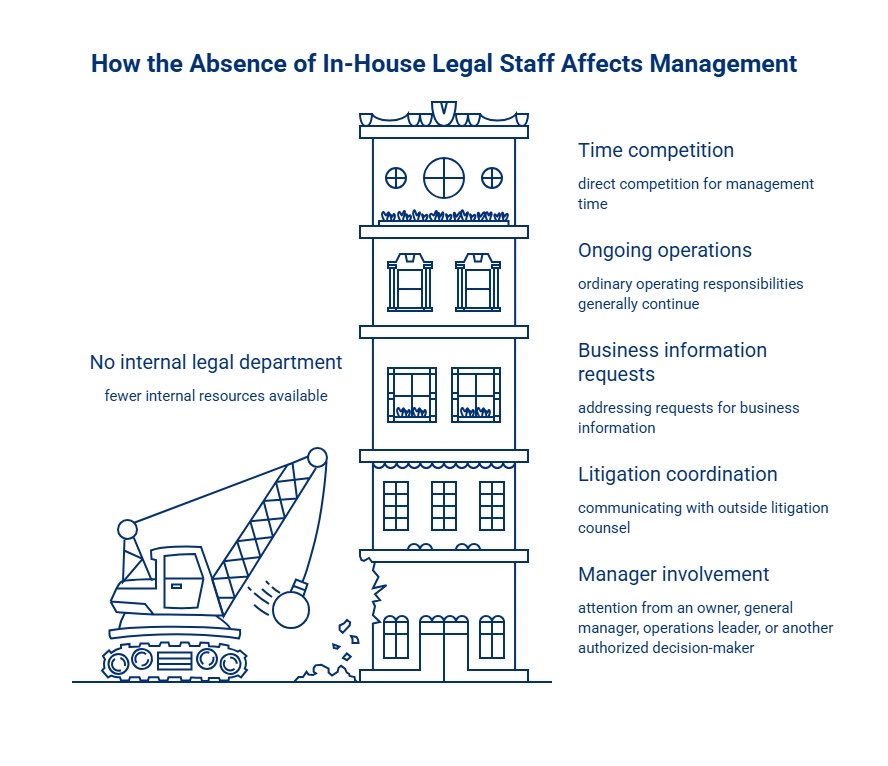
A retailer without an internal legal department may have fewer internal resources available to separate litigation coordination from ordinary management responsibilities. Functions that might otherwise involve internal legal personnel may instead require attention from an owner, general manager, operations leader, or another authorized decision-maker.
That involvement may include communicating with outside litigation counsel, addressing requests for business information, following developments in the case, and coordinating the availability of managers or employees whose knowledge may become relevant.
Meanwhile, ordinary operating responsibilities generally continue while the dispute remains pending. Staffing decisions, inventory oversight, customer-facing management, vendor coordination, payroll administration, and financial supervision may still require ongoing attention.
The result can be direct competition for management time between the lawsuit and the business’s day-to-day needs.
Retail Operations May Become Part of the Factual Context
Wrongful discharge litigation may place ordinary retail activities within the factual record when those activities relate to the allegations.
Depending on the dispute, relevant subjects may include:
- Shift schedules, opening and closing coverage, and weekend or holiday staffing.
- Sales-floor, stockroom, inventory, or fulfillment responsibilities.
- Communications among owners, managers, supervisors, and the former employee.
- Payroll or timekeeping information when those records relate to pleaded allegations.
- Performance, attendance, disciplinary, customer-complaint, commission, or bonus information when those subjects are already part of the case.
The significance of any particular communication, record, or operational fact depends on the allegations and surrounding circumstances. Those facts provide context but do not, by themselves, determine the merits of a claim or defense.
A Discharge Dispute May Include Several Employment Allegations
The same lawsuit may include allegations beyond wrongful discharge. Depending on the circumstances, related claims may involve retaliation, discrimination, harassment, whistleblower retaliation, disability-related issues, protected leave, or wage-and-hour matters. Because California heavily regulates the employment relationship, Los Angeles retail workers frequently attach claims under the Fair Employment and Housing Act (FEHA) or the Private Attorneys General Act (PAGA) to a standard wrongful termination complaint.
Several allegations may therefore arise from the same employment relationship and challenged termination. Their presence can expand the factual scope of the litigation without establishing whether any particular allegation has merit.
Management Communications May Become Disputed Evidence
Once litigation begins, communications and business records that originally served ordinary workplace purposes may acquire evidentiary significance.
Messages among owners and managers, communications with the former employee, scheduling information, performance records, customer complaints, and communications concerning leave or accommodation may become disputed evidence when connected to the claims or defenses.
This dynamic may be especially significant in a small retail business because the same manager can hold supervisory responsibility, operational knowledge, and firsthand information concerning the events in dispute.
When litigation becomes reasonably anticipated, managers should immediately secure relevant electronic and physical records. This includes halting routine auto-deletion of manager emails, preserving time punch records, and securing handwritten shift-change notes or disciplinary files.
Litigation Can Compete with Store Operations for Management Attention
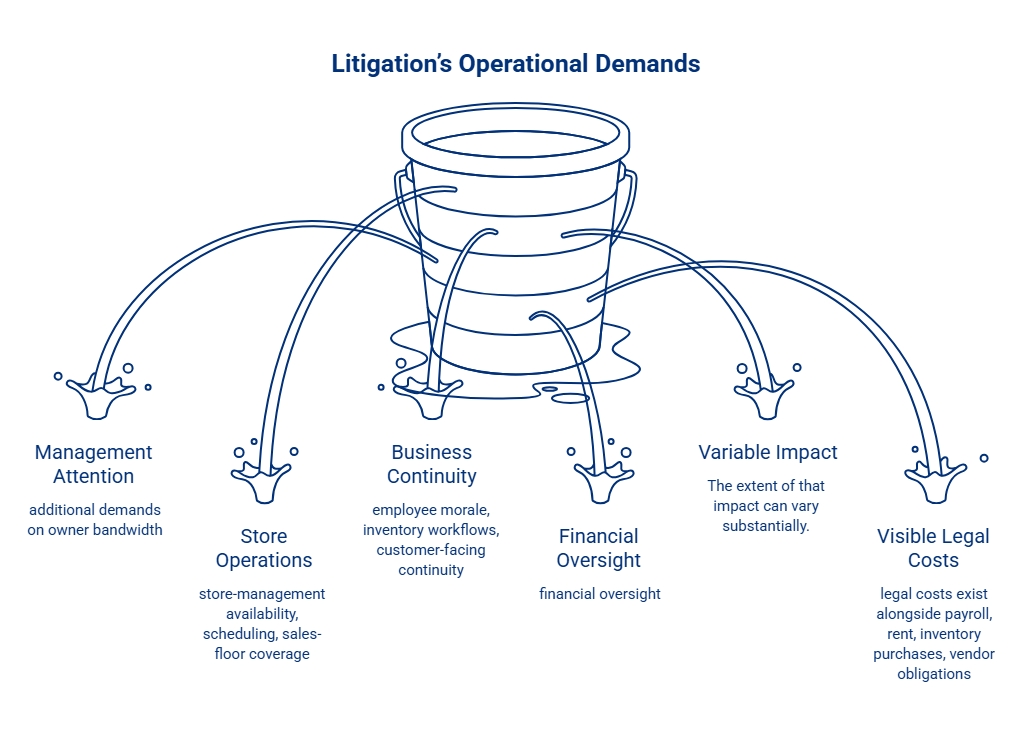
Employment litigation may affect more than legal decision-making. Depending on the circumstances, a pending dispute can place additional demands on owner bandwidth, store-management availability, scheduling, sales-floor coverage, employee morale, inventory workflows, customer-facing continuity, and financial oversight.
The extent of that impact can vary substantially. A dispute involving a small management team may affect operations differently from litigation involving a retailer with greater administrative capacity.
Litigation expenses may also be more visible within a closely held business because legal costs exist alongside payroll, rent, inventory purchases, vendor obligations, and other continuing operating expenses.
Employment Litigation May Require Attention Across Several Procedural Stages
An employment dispute may progress through several stages. A matter can begin with an asserted claim or demand, involve an administrative proceeding where applicable, proceed to a civil complaint, and later include discovery, depositions or other testimony, mediation, motion practice, or trial if the dispute is not otherwise resolved.
Each phase may place different demands on management participation. For a retailer without internal legal personnel, those demands can arise while owners and managers remain responsible for operating the business.
Outside Litigation Counsel Has a Distinct Role in an Active Wrongful Discharge Matter
When a retailer lacks an internal legal department, outside employment litigation counsel may serve a distinct role in the active wrongful discharge dispute and directly related proceedings.
That role may include evaluating the allegations considering the facts and governing law, understanding the procedural posture, representing the employer in the lawsuit or related proceeding, and communicating material litigation developments to authorized business decision-makers.
Familiarity with retail operations can also help an attorney understand the factual environment in which the dispute arose. Shift-based staffing, customer-facing supervision, variable schedules, inventory responsibilities, timekeeping systems, and close interaction among owners, managers, and frontline employees may all shape the factual context of the case.
For a small Los Angeles retailer without in-house legal counsel, the significance of wrongful discharge litigation often lies in the overlap between the legal dispute and the continuing demands of operating the business. The case may involve legal exposure, management time, financial pressure, employee relations, and customer-facing operations at the same time.
Disclaimer:
This content is for informational purposes only. Laws, definitions, and deadlines change. Verify current requirements through official California sources. This content is not legal advice. No attorney-client relationship is formed through this content. Please consult a qualified attorney in your jurisdiction for legal advice specific to your situation.
Protect Your Business | The Akopyan Law Firm, A.P.C. | Top Gun Employment Defense Lawyers
Have you been sued by an employee? Are you overwhelmed by the complexities of employment law? If so, give us a call. The Akopyan Law Firm, A.P.C. assists small business owners throughout Southern California. Our seasoned employment defense lawyers stand ready to help employers quickly and efficiently resolve employment disputes. We are ready to aggressively and skillfully defend against any employment case, but understand that in most situations avoiding the expense of litigation is in the client’s best interest.
Take the First Step Protecting Your Future: Call us today to speak with one of our experienced employment lawyers.
Contact Us Today:
- Phone: (818) 509-9975
- Office Locations in California: Los Angeles, Bakersfield, Costa Mesa, Temecula, Rancho Cucamonga, Oxnard, Culver City, and San Diego.