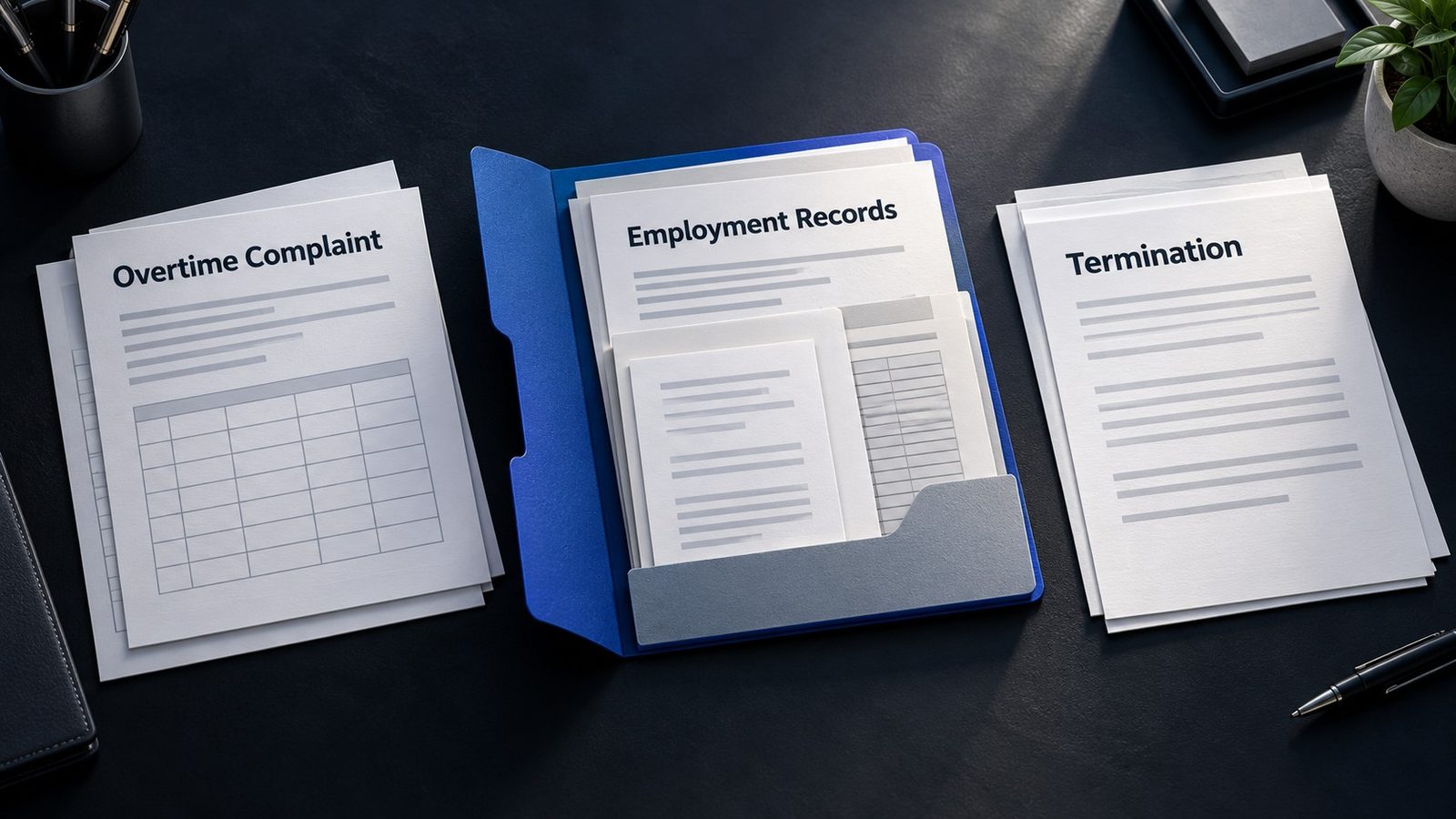
For Southern California family-owned employers, an overtime complaint can make a later termination dispute turn on timing, management knowledge, and consistency across existing records.
- Claims Remain Legally Distinct: An overtime dispute does not establish retaliation or wrongful termination, even when the employee alleges that the events were connected.
- Timing Can Shape Exposure: Close timing between protected wage-related activity and termination may become relevant to an alleged causal connection, depending on the surrounding facts.
- Records Influence Defensibility: Material inconsistencies between contemporaneous records and a later termination explanation may be used to challenge the employer’s stated business reason.
- Management Knowledge Matters: Owners or managers involved in scheduling, payroll discussions, performance management, and termination may possess information relevant to several disputed issues.
- Overlap Increases Business Strain: Combined overtime and termination allegations may affect staffing, payroll administration, customer-facing operations, employee relations, cash-flow planning, and management capacity.
An overtime complaint does not determine the outcome of a later termination dispute, but it can substantially broaden the factual and operational issues under scrutiny.
An overtime complaint can change the character of a later termination dispute when an employee alleges that the two events were connected. What began as a disagreement about recorded or compensated hours may place management knowledge, the employer’s stated reason for termination, workplace communications, payroll information, and the sequence of employment events under closer scrutiny.
An overtime complaint does not establish that a later termination was retaliatory or wrongful. The alleged connection between protected wage-related activity and subsequent termination, however, can create additional potential exposure for a Southern California employer.
Overtime Complaints Can Implicate Separate Retaliation and Wrongful Termination Theories
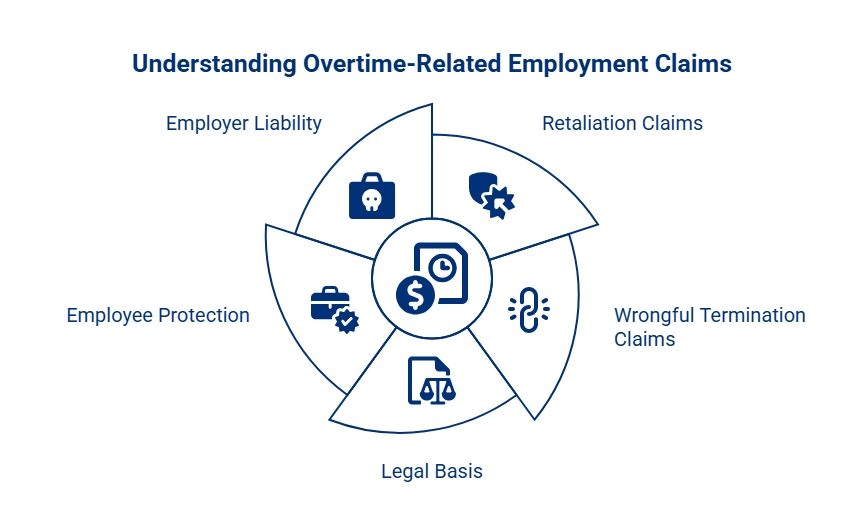
California employers are subject to state overtime compensation requirements. California law also protects certain wage-related complaints and other qualifying conduct from retaliation.
Whether a particular employee communication constitutes protected activity depends on the governing law and the facts. When an employee alleges that qualifying protected activity caused or contributed to a later adverse action under an applicable retaliation law, the employee may assert an unlawful workplace retaliation claim.
A wrongful termination in violation of public policy claim is a separate legal theory. Such a claim generally depends on whether the employee alleges that the termination contravened a fundamental public policy recognized under California law. The existence of an overtime dispute does not automatically establish either statutory retaliation or wrongful termination in violation of public policy.
Timing and Management Knowledge Can Affect Potential Exposure
The sequence of events can become legally significant when the managers or owners involved in the termination decision knew about a qualifying overtime complaint before the termination occurred.
Temporal proximity refers to the closeness in time between protected activity and an adverse action. Under California law, an adverse action taken within 90 days of a protected wage complaint creates a statutory rebuttable presumption of retaliation. This rule, grounded in California Labor Code Section 98.6, means courts will initially assume the termination was retaliatory unless the employer can prove otherwise. While this presumption shifts the initial burden of proof to the employer, timing alone does not ultimately determine whether retaliation occurred if the employer can articulate a legitimate, non-retaliatory reason. Other facts may include when the employer’s stated reason for termination arose, what the relevant decision-makers knew, and whether the surrounding circumstances support competing explanations for the employment decision.
For a family-owned business, these issues may become particularly intertwined because an owner or manager can participate in scheduling, payroll discussions, performance management, and the ultimate termination decision.
Contemporaneous Records Can Affect How a Termination Decision Is Evaluated
Because these disputes are often investigated by the California Labor Commissioner’s Office or the Civil Rights Department (CRD) before ever reaching a courtroom, internal documentation serves as the first line of defense. A combined overtime and termination dispute may involve different categories of existing records. Time entries, schedules, payroll data, wage statements, communications concerning hours or pay, prior employment records, and documents addressing the termination may each relate to a different factual issue.
A material inconsistency between contemporaneous records and a later explanation for the termination may be cited to challenge the employer’s stated reason. By contrast, records that consistently reflect the same underlying business reason may present a different factual picture. Neither circumstance, standing alone, proves or defeats a retaliation or wrongful termination claim.
The significance of those records depends on the particular legal theory, the complete factual context, and the credibility of the individuals involved.
Overtime and Termination Allegations Remain Distinct Even When They Overlap
An overtime allegation may concern whether particular hours were recorded or compensated. A retaliation allegation may concern protected activity, an adverse action, and the required causal relationship between the two. A wrongful termination in violation of public policy theory raises a separate question about whether the termination allegedly contravened a recognized public policy.
An employee may also dispute whether the employer’s stated reason was the actual reason for the termination. That dispute can place the employer’s explanation, timing, prior records, and decision-maker accounts into the same factual analysis without establishing that either party’s account is correct.
One Overtime Complaint May Reveal Broader Timekeeping Issues
An allegation involving one employee may raise questions about whether the disputed timekeeping circumstances were isolated or reflected a recurring practice. That possibility does not establish a broader violation.
Depending on the allegations, similar scheduling methods, time-recording practices, or compensation circumstances involving other employees may become relevant to the potential scope of a wage-and-hour dispute. The significance of those circumstances remains fact specific.
Small Businesses Can Experience Operational Strain from Overlapping Employment Issues
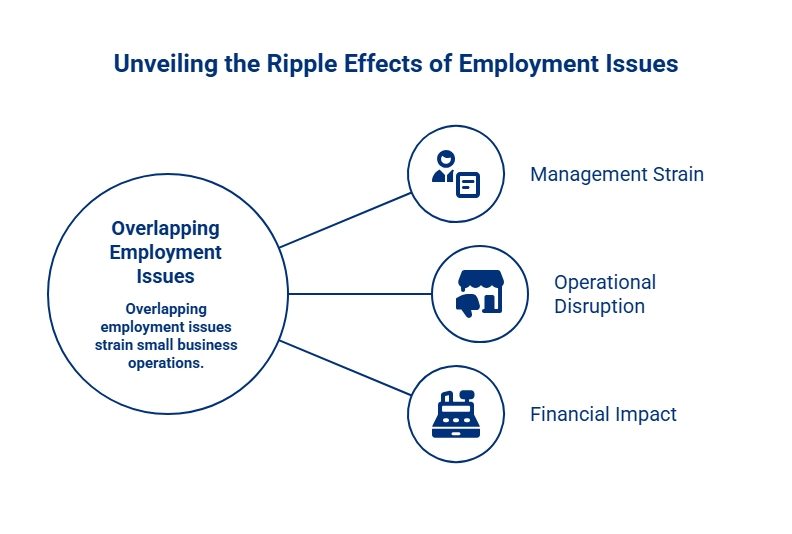
Family-owned businesses often operate with limited management layers. Owners may participate directly in employment decisions, supervisors may oversee schedules, and payroll personnel may possess information about recorded and compensated hours.
When the same individuals are involved in an overtime dispute and a termination decision, their participation can divert attention from ordinary responsibilities. Staff coverage, payroll administration, customer-facing operations, employee relations, cash-flow planning, and management capacity may all be affected even while the underlying allegations remain disputed.
Illustrative Example: An Overtime Concern Followed by Termination
A family-owned Southern California service business employs an hourly employee who raises concern about recorded overtime. The business later terminates the employee and identifies a performance-related reason for the decision. Existing records, however, contain differing accounts of when the performance concern first arose.
If the former employee alleges that the overtime complaint influenced the termination, the timing of the events and the inconsistency within the existing record may become relevant to the competing explanations. Those circumstances do not establish retaliation, wrongful termination, or the validity of the overtime allegation.
Consistent Application of Established Policies Can Affect Defensibility
A termination decision may receive additional scrutiny when the employee alleges that it followed protected activity. Whether established employment policies were applied consistently can therefore become relevant to the factual assessment of the employer’s stated reason.
Consistency does not create a safe harbor, and deviation from a policy does not automatically establish unlawful motive. The surrounding facts determine the significance of any departure from ordinary practice.
Early involvement of appropriate HR personnel and employment defense counsel before a sensitive termination decision can also affect how legal issues are identified and evaluated, particularly when an existing wage complaint and a contemplated adverse action intersect.
Employers dealing with a contemplated termination involving an existing overtime complaint, or an active wrongful termination or retaliation dispute, may consult employment defense counsel regarding the specific facts and applicable law.
Disclaimer:
This content is for informational purposes only. Laws, definitions, and deadlines change. Verify current requirements through official California sources. This content is not legal advice. No attorney-client relationship is formed through this content. Please consult a qualified attorney in your jurisdiction for legal advice specific to your situation.
Protect Your Business | The Akopyan Law Firm, A.P.C. | Top Gun Employment Lawyers
Have you been sued by an employee? Are you overwhelmed by the complexities of employment law? If so, give us a call. The Akopyan Law Firm, A.P.C. assists small business owners throughout Southern California. Our seasoned employment defense lawyers stand ready to help employers quickly and efficiently resolve employment disputes. We are ready to aggressively and skillfully defend against any employment case, but understand that in most situations avoiding the expense of litigation is in the client’s best interest.
Take the First Step Protecting Your Future: Call us today to speak with one of our experienced employment defense lawyers.
Contact Us Today:
- Phone: (818) 509-9975
- Office Locations in California: Los Angeles, Bakersfield, Costa Mesa, Temecula, Rancho Cucamonga, Oxnard, Culver City, and San Diego.