📌 Key Takeaways
Wrongful termination claims against California dental practices may expand quickly when the former employee alleges overlapping retaliation, discrimination, leave, accommodation, or wage-and-hour issues.
- Claims Can Expand: A termination dispute may grow beyond the separation decision when protected activity, protected status, wage complaints, or workplace communications enter the record.
- Timing Drives Scrutiny: Close proximity between alleged protected activity and adverse employment action may create causation disputes involving motive, consistency, and decision-maker knowledge.
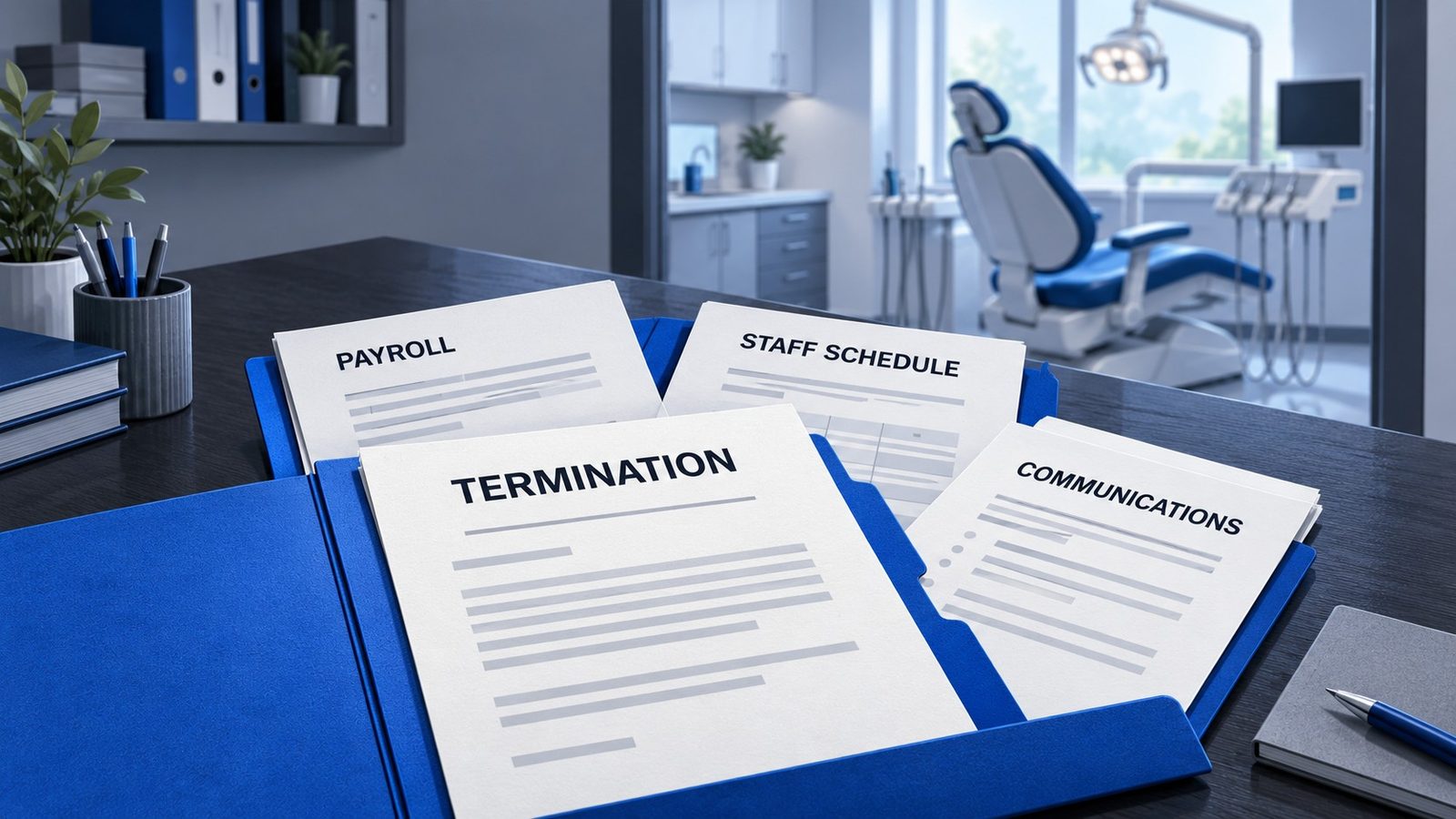
- Records Shape Exposure: Payroll records, schedules, emails, text messages, and manager statements may affect how the dental practice’s stated reason for termination is evaluated.
- Small Teams Feel Disruption: Owner-operated dental practices may face operational strain when supervisors, managers, dental assistants, hygienists, or front-office employees become witnesses.
- Overlapping Claims Raise Stakes: Retaliation, disability accommodation, job-protected medical leave, and wage-and-hour allegations may broaden discovery, testimony, settlement pressure, and business disruption.
One employment separation can become a wider litigation record when timing, documentation, testimony, and overlapping allegations converge.
Southern California dental practice owners facing employee claims will gain a clearer view of litigation exposure, preparing them for the detailed overview that follows.
A wrongful termination claim against a Southern California dental practice may create litigation exposure beyond the final separation decision when the former employee also alleges:
- retaliation
- discrimination
- harassment
- disability accommodation issues
- job-protected medical leave concerns
- pregnancy-related issues
- wage-and-hour violations
- or disputed workplace communications
For a small dental practice, one employment separation may place payroll records, schedules, text messages, emails, supervisor testimony, front-office communications, dental assistant coverage, hygienist staffing, and practice administrator decisions into dispute.
Defendants in employment lawsuits and agency proceedings may face strict response obligations, and failure to respond appropriately may result in serious consequences, including default judgment, sanctions, or expanded liability.
Why a Dental Practice Termination Claim May Expand Beyond the Separation Decision
A California dental practice facing a wrongful termination claim may need to address the broader employment relationship, not only the termination event. A plaintiff may allege that the practice terminated employment because of protected activity, a protected characteristic, a wage complaint, an accommodation discussion, a harassment complaint, or a leave-related issue.
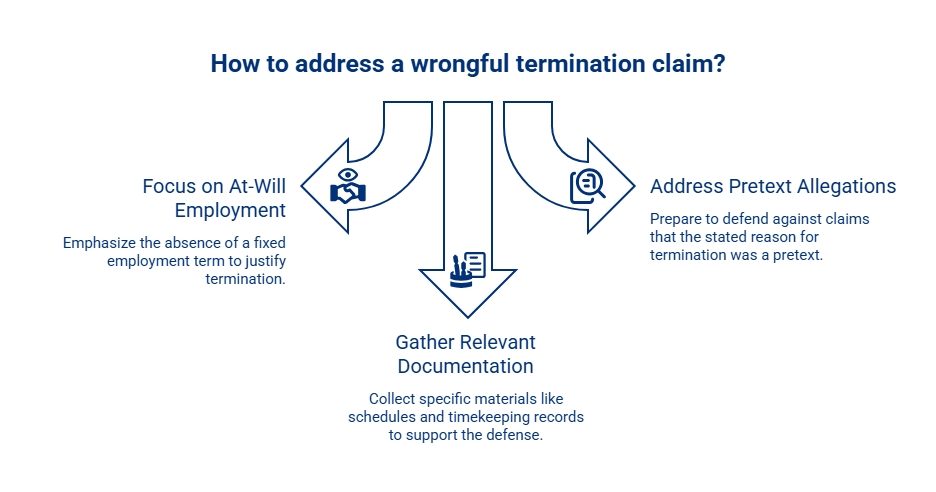
California’s at-will employment rule does not end the litigation inquiry. Although an employment relationship with no specified term may generally be terminated at will, a former employee may still allege that the stated reason for termination was a pretext for retaliation, discrimination, whistleblower retaliation, or another unlawful motive. In overlapping-claim litigation, the dispute may focus less on whether the dental practice had discretion to end employment and more on whether the stated reason aligns with timing, documentation, supervisor communications, prior treatment of employees, and decision-maker knowledge of protected activity. For a small dental practice, the at-will concept may explain the absence of a fixed employment term, while the pretext issue may drive the wrongful termination claim.
The litigation record may focus on timing, causation, decision-maker knowledge, contemporaneous documentation, consistency across employment records, and communications between owners, managers, supervisors, and employees. A departure from established employment practices may become part of a plaintiff’s theory of pretext. Consistent records may affect how the stated reason for termination is evaluated.
For dental practices, the relevant materials may be practical and highly specific. Hygienist schedules, treatment-room coverage records, front-desk staffing notes, timekeeping entries, payroll communications, manager texts, and informal performance comments may all become part of the factual dispute.
Retaliation Allegations Can Change the Litigation Focus
A former employee may assert retaliation claims when the employee alleges that termination followed protected activity. Under California law, protected activity may include discrimination complaints, wage complaints, whistleblower-related concerns, job-protected medical leave requests, or workplace safety concerns.
A dental assistant may allege retaliation after raising concerns about missed breaks. A billing coordinator may claim that termination followed questions about payroll entries. A hygienist may allege that an adverse employment action followed a request for medical leave. In each situation, the dispute may involve whether the decision-maker knew about the alleged protected activity and whether timing supports a claimed causal connection.
Even ordinary workplace communications may receive scrutiny. A short scheduling message, a brief explanation of staffing changes, or an informal comment about performance may later appear in a dispute over motive, consistency, or credibility.
In a small dental practice, one front-desk administrator or office manager may handle scheduling, payroll communications, staffing coverage, and employee relations at the same time. That overlap can make routine communications more significant in litigation. A manager’s text about a missed break, a payroll question, a schedule change, and a later termination decision may appear in the same factual timeline. When the same decision-maker participates in several areas of practice administration, a former employee may argue that wage complaints, staffing disputes, or protected activity were connected to the adverse employment action. The issue may then become whether the records, messages, and testimony support the practice’s stated reason for termination or suggest pretext.
Discrimination, Harassment, Leave, and Accommodation Allegations May Add Legal Theories
Wrongful termination litigation may overlap with allegations involving disability, pregnancy, age, race, sex, national origin, religion, medical condition, or another protected characteristic. Harassment allegations may also arise when a former employee claims that supervisor conduct, staff interactions, or workplace communications created a hostile work environment due to a protected characteristic.
Disability and leave-related allegations may add another layer of complexity. A former employee may allege failure to provide reasonable accommodation, failure to engage in the interactive process, disability discrimination, retaliation, Pregnancy Disability Leave violations, CFRA issues (applicable to employers with 5 or more employees under Cal. Gov. Code § 12945.2), FMLA-related concerns (applicable if employing 50 or more employees within 75 miles under 29 U.S.C. § 2611), or reinstatement disputes. Once a disability-related request or job-protected medical leave issue appears in the factual record, the litigation may examine communications about job duties, schedules, chairside responsibilities, medical information, time away from work, and return-to-work interactions.
The presence of a medical condition, pregnancy-related issue, or accommodation discussion does not determine liability by itself. It may, however, affect the scope of discovery, witness testimony, causation disputes, and settlement pressure.
Wage-and-Hour Allegations May Transform the Scope of the Case
A termination lawsuit may expand when a former employee alleges that the separation followed complaints about meal periods, rest periods, overtime, minimum wage, off-the-clock work, payroll practices, timekeeping, or worker classification. In that situation, wage-and-hour allegations may shift attention from the termination decision to payroll practices and scheduling records.
Dental practices may face allegations tied to lunch coverage, patient appointments running late, front-desk opening or closing tasks, dental assistant coverage, hygienist schedules, or time entries. The dispute may then involve evidence about the termination decision and evidence about pay practices.
Meal and rest break issues, overtime claims, and off-the-clock work allegations may affect litigation economics. Depending on the claims asserted, the dispute may involve statutory penalties, attorney’s fees, emotional distress allegations, reinstatement-related issues, and reputational concerns. An allegation is not valid merely because it is asserted, but overlapping claims may increase factual complexity and business disruption.
Small Dental Practices in Southern California May Experience Disproportionate Disruption
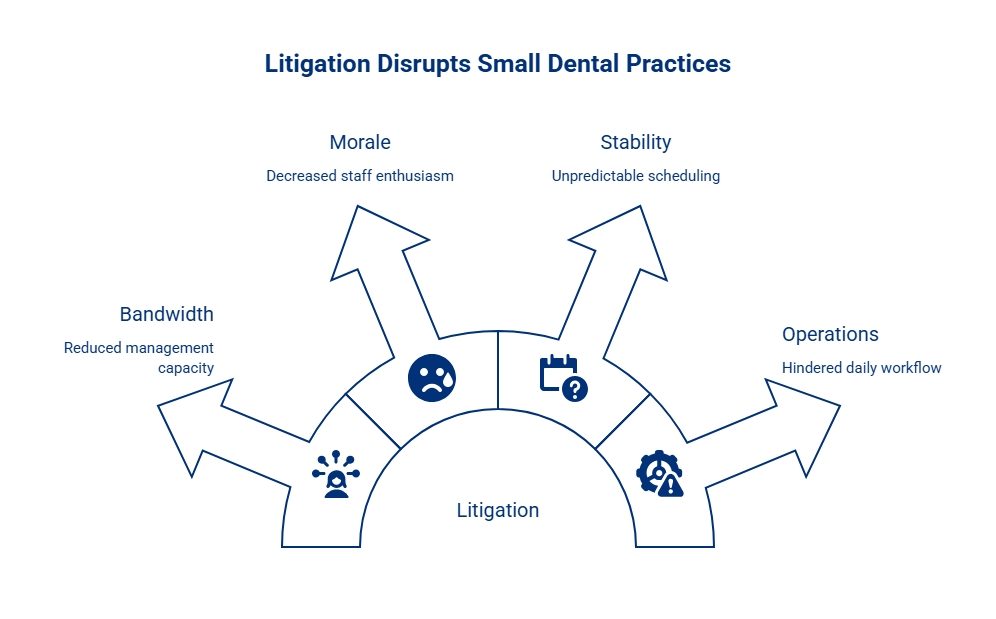
An owner-operated dental practice may have one or two locations, a small management team, and limited administrative depth. The same people who supervise employees may also treat patients, manage schedules, communicate with payroll providers, respond to vendors, and protect patient-facing relationships. When those people become witnesses, litigation can affect management bandwidth, staff morale, scheduling stability, and daily operations.
Active litigation may involve employment files, payroll data, text messages, emails, internal notes, leave communications, accommodation-related records, electronically stored information, and witness testimony. These materials may implicate evidence preservation, attorney-client privilege, work product protection, litigation holds, and discoverable communications. In active disputes involving harassment, discrimination, retaliation, disability, pregnancy, medical leave, wage complaints, whistleblower allegations, workplace safety concerns, or other sensitive allegations, owner, manager, and supervisor communications may influence how the dispute is framed.
Illustrative Example: Termination After Break and Schedule Complaints
A dental assistant alleges that the practice terminated employment shortly after the assistant complained about missed rest breaks and late-day overtime caused by treatment running behind schedule. The practice views the separation as performance-related, while the former employee claims that the timing shows retaliation.
This scenario illustrates how a dental practice termination dispute may expand into overlapping issues. The wrongful termination claim may involve the stated reason for separation, while the wage-and-hour allegations may place schedules, time records, payroll communications, and manager statements into the litigation record. Proximity between alleged protected activity and adverse employment action may create a causation dispute, and inconsistent documentation or conflicting communications may affect how the facts are evaluated.
Why an Experienced Employer-Side Employment Litigation Attorney Matters
Dental practice owners facing overlapping employee claims may need representation from an attorney familiar with California employer-defense litigation, wrongful termination, retaliation, discrimination, harassment, disability accommodation, job-protected medical leave, wage-and-hour claims, agency proceedings, and the operational pressure on closely held practices. In active litigation, defensibility may depend on how timing, records, testimony, and communications fit together.
Akopyan Law Firm, A.P.C. represents employers in employment litigation involving small businesses and closely held companies. Dental practice owners who have received a lawsuit, demand letter, agency notice, administrative charge, or legal filing may speak with an employer-side employment defense attorney about the employment claim affecting their practice.
Disclaimer:
This content is for informational purposes only. Laws, definitions, and deadlines change. Verify current requirements through official California sources. This content is not legal advice. No attorney-client relationship is formed through this content. Please consult a qualified attorney in your jurisdiction for legal advice specific to your situation.
Protect Your Business | The Akopyan Law Firm, A.P.C. | Top Gun Employment Lawyers
Have you been sued by an employee? Are you overwhelmed by the complexities of employment law? If so, give us a call. The Akopyan Law Firm, A.P.C. assists small business owners throughout Southern California. Our seasoned employment defense lawyers stand ready to help employers quickly and efficiently resolve employment disputes. We are ready to aggressively and skillfully defend against any employment case, but understand that in most situations avoiding the expense of litigation is in the client’s best interest.
Take the First Step Protecting Your Future: Call us today to speak with one of our experienced employment defense lawyers.
Contact Us Today:
- Phone: (818) 509-9975
- Office Locations in California: Los Angeles, Bakersfield, Costa Mesa, Temecula, Rancho Cucamonga, Oxnard, Culver City, and San Diego.