📌 Key Takeaways
Performance-based terminations can become wrongful termination claims when a former dental practice employee connects the decision to protected activity, protected status, leave, accommodation, wages, or public policy.
- Timing Drives Scrutiny: Close proximity between protected activity and termination may shift attention toward causation, pretext, and inconsistent explanations.
- Records Shape Exposure: Contemporaneous documentation, internal communications, schedules, payroll entries, and prior performance records may influence how the employment decision is evaluated.
- Small Practices Feel Pressure: Direct owner involvement, informal communications, and limited HR infrastructure can make dental practice employment disputes especially disruptive.
- At-Will Is Limited: At-will employment may matter, but it does not bar claims based on alleged retaliation, discrimination, leave interference, or public policy violations.
- Counsel Clarifies Risk: Employment defense counsel may help evaluate legal theories, factual records, witness credibility, litigation cost, and business impact.
Performance disputes become legal risk when timing, records, and alleged protected rights collide.
A performance-based termination can become a wrongful termination claim when a former employee connects the decision to protected activity, protected status, job-protected medical leave, reasonable accommodation, interactive process issues, wage complaints, or alleged public policy violations. For a small California dental practice, the dispute may begin with attendance, chairside performance, treatment-room responsibilities, patient communication, scheduling, billing accuracy, or front-office work. Once a claim is asserted, plaintiffs’ counsel, an agency, a judge, a jury, or another trier of fact may examine timing, motive, consistency, contemporaneous documentation, policy application, internal communications, and witness credibility.
Small dental practices often experience this pressure acutely. A dentist-owner may supervise employees directly. A practice administrator may handle scheduling, payroll questions, discipline, and daily workplace disputes without a formal HR department. A dental assistant, hygienist, billing coordinator, treatment coordinator, office manager, or front-desk employee may later allege that the stated performance reason was not the actual motivation for the termination.
Why a Performance Dispute May Become a Legal Claim
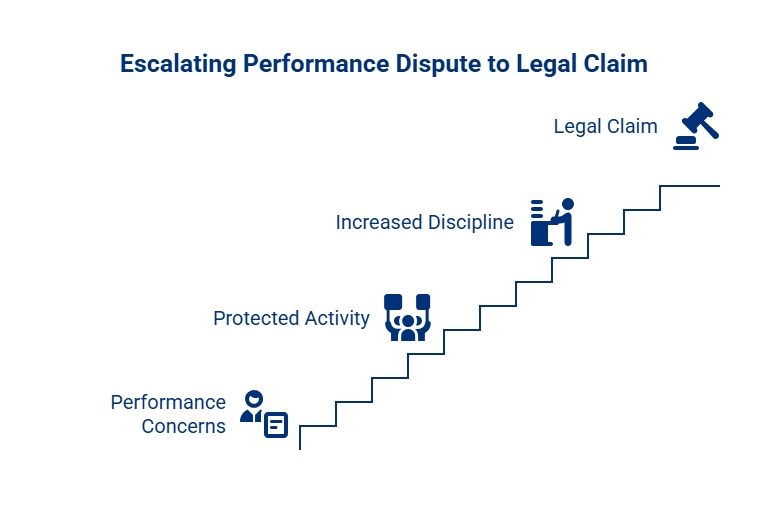
California law generally permits employment decisions based on legitimate, nondiscriminatory performance concerns. A wrongful termination claim may arise when the employee alleges that the performance explanation conceals retaliation, discrimination, interference with job-protected leave, failure to accommodate, or another allegedly unlawful motivation.
In a dental practice, the challenged conduct may involve patient-facing behavior, sterilization responsibilities, hygiene schedules, charting support, billing workflows, staff conflict, attendance, or productivity. Those facts may become legally significant when they overlap with protected activity or protected status. A former employee may contend that discipline increased after a workplace complaint, a disability-related concern, a pregnancy-related disclosure, an accommodation request, or a wage concern.
The claim may depend less on one isolated document and more on how the factual record aligns with the employer’s stated reason. Plaintiffs may compare the stated reason for termination with prior performance records, text messages, emails, schedules, payroll entries, written policies, internal notes, and the way similar issues were handled with similarly situated employees. That is why wrongful termination claims often expand beyond the final employment decision.
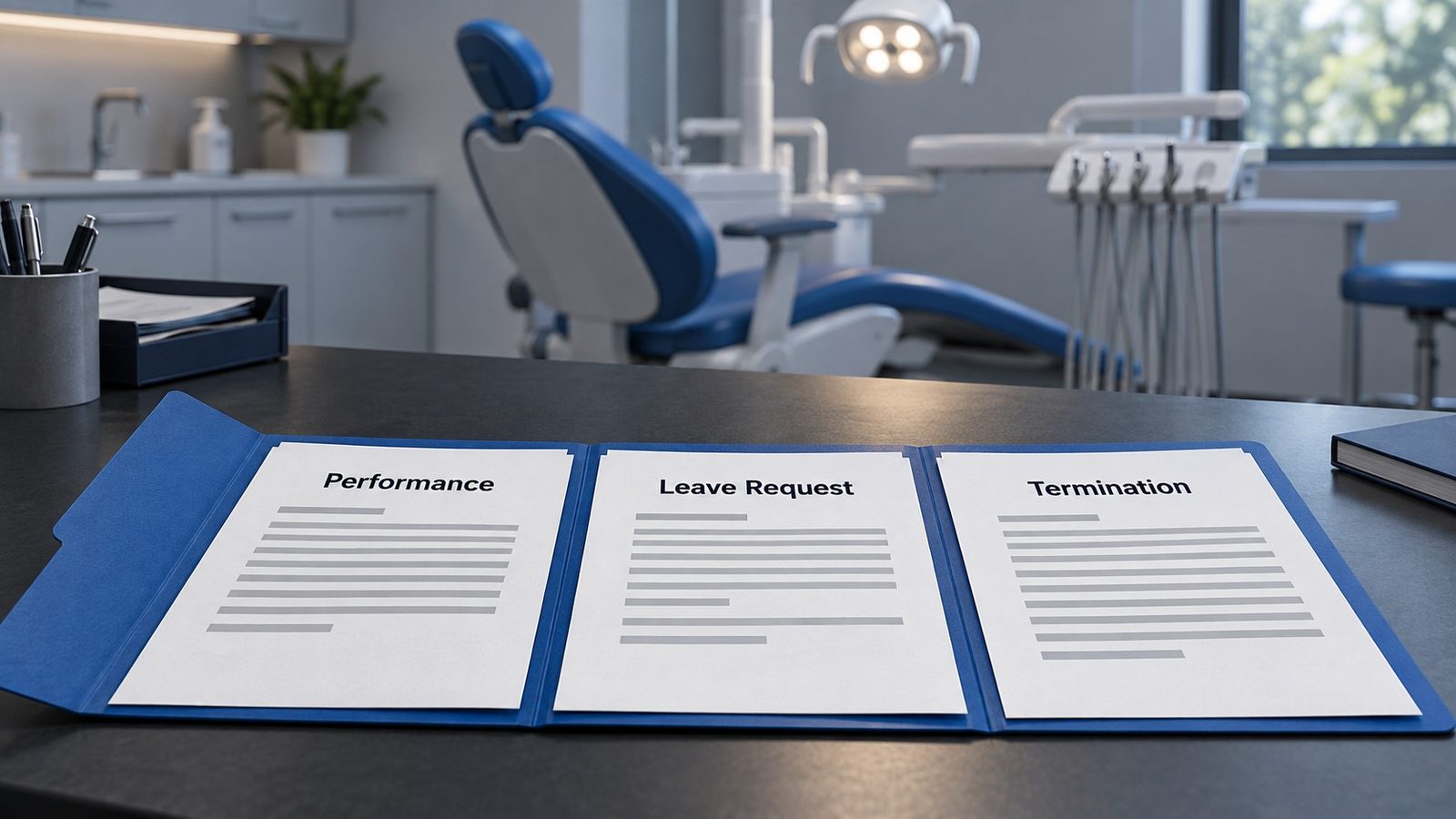
Effective documentation should be objective, dated, and specific. Rather than writing ’employee had a bad attitude,’ a proper record should state ’employee refused to assist with sterilization protocols at 2:00 PM on Tuesday after being directly asked.’ Furthermore, these notes must be written on the day the incident occurs, not backdated weeks later when a termination is being planned.
Allegations That May Follow a Dental Practice Termination
A former employee may assert several legal theories in the same lawsuit, demand letter, administrative charge, or agency complaint. These allegations may include, but are not limited to, the following:
- The employee alleges retaliation after raising concerns about wages, breaks, patient-care compliance, harassment, or discrimination.
- The employee alleges discrimination based on disability, pregnancy, sex, age, race, national origin, religion, medical condition, or another protected characteristic.
- The employee alleges failure to provide a reasonable accommodation or failure to engage in the interactive process after a disability-related or pregnancy-related request. (Interactive process refers to the mandatory, good-faith dialogue between an employer and an employee to determine if a workplace adjustment can allow the employee to perform their essential job functions.)
- The employee alleges interference or retaliation connected to family, medical, pregnancy, or disability-related leave.
- The employee alleges whistleblower retaliation after reporting suspected legal or regulatory noncompliance.
- The employee alleges wage-and-hour retaliation after questioning pay, meal periods, rest breaks, overtime, reimbursements, or time records.
These allegations do not establish liability. They do, however, broaden the dispute. A performance-based termination may become employment litigation involving retaliation, disability discrimination, family and medical leave, reasonable accommodation, or wage-and-hour issues. Once those theories appear, decision timing, policy consistency, contemporaneous records, and witness testimony may receive close scrutiny.
Why Timing Often Shapes the Dispute
Timing often affects how a wrongful termination claim is framed. A dental practice may contend that the termination followed documented performance concerns. The employee may assert that the termination followed protected activity, protected status, or legally protected leave. The shorter the interval between those events, the more likely the dispute may focus on causation, pretext, and inconsistent explanations.
A hygienist may have received criticism for productivity after requesting job-protected medical leave. A dental assistant may have been disciplined after raising concerns about unpaid time. A treatment coordinator may have been terminated after complaining about harassment. A front-office employee may have been terminated after requesting a reasonable accommodation related to a disability. Each example depends on facts, but each illustrates why proximity between protected activity and an employment decision can become central to litigation.
Illustrative Example: When Tardiness Becomes a Retaliation Narrative
Consider a small dental practice where a dentist-owner terminates a hygienist for repeated tardiness. The employer may view the decision as a straightforward performance issue. The former employee, however, may allege retaliation if the termination occurs shortly after the hygienist requested job-protected medical leave or a reasonable accommodation related to a disability.
The dispute may become more difficult for the practice if the employer has no contemporaneous records showing prior tardiness concerns, no consistent documentation of attendance issues, and no clear evidence that similarly situated employees were treated the same way. In that setting, plaintiffs’ counsel may argue that the timing of the termination, the absence of written records, and the employee’s recent protected activity support a claim that the stated performance reason was pretextual.
This example does not establish unlawful conduct. Instead, it illustrates how a termination that appears performance-based inside a small dental office may later become a wrongful termination or retaliation claim once timing, documentation, protected activity, and consistency are examined together.
California dental employers may face claims under California laws such as the Fair Employment and Housing Act, the California Family Rights Act, California Pregnancy Disability Leave protections, California Labor Code retaliation provisions, or California Labor Code section 1102.5. Federal laws may also appear when federal discrimination, leave, wage, or retaliation theories overlap with California claims. Statutory references are provided for general context and depend on current official legal sources and attorney-approved review.
Why Small Dental Practices Face Distinct Litigation Pressure
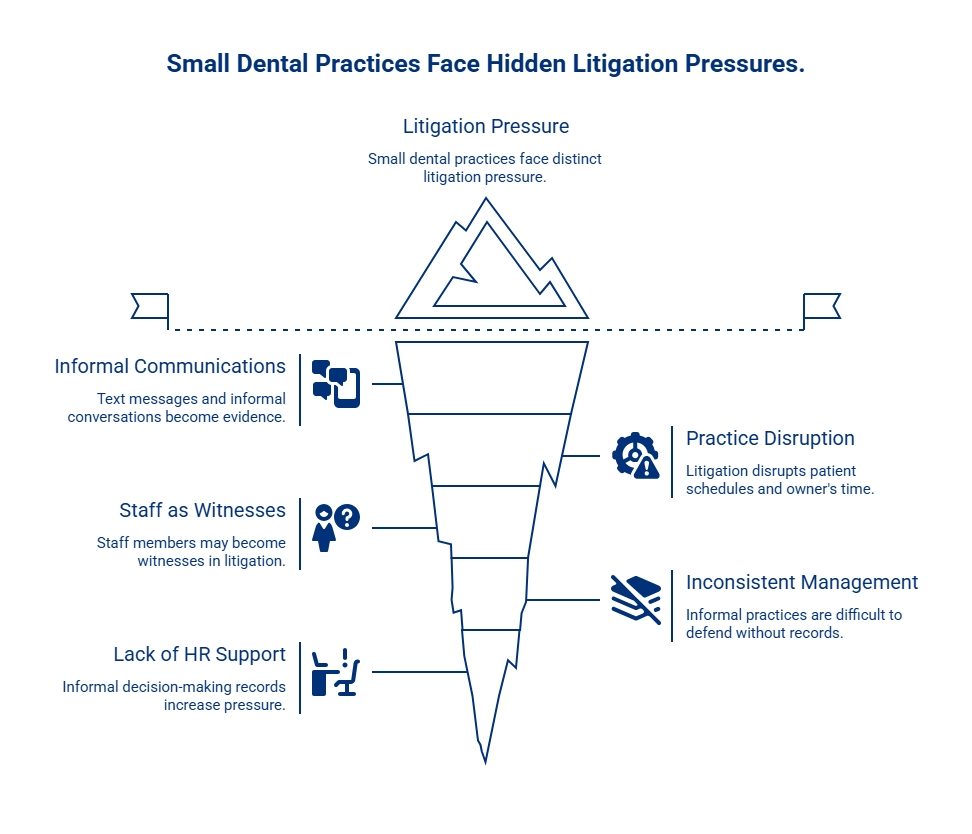
A small dental office operates differently from a large corporate employer. Owners and managers often communicate directly with staff. Text messages may carry scheduling decisions. Informal conversations may address performance, attendance, patient flow, and workplace conflict. Those same communications may later become evidence.
Litigation may also disrupt the practice itself. Patient schedules may continue while the owner responds to attorney communications, document review, witness issues, and agency or judicial proceedings. Staff members may become witnesses. Former employees may possess screenshots, text messages, social media posts, or informal communications. Payroll records, schedules, timekeeping entries, treatment-room assignments, and internal notes may receive detailed review.
Informal management practices may become difficult to defend when records do not show consistent treatment, contemporaneous reasoning, or clear separation between performance concerns and protected activity. Uniform application of established policies may matter because plaintiffs often challenge whether the employer treated similar performance concerns involving similarly situated employees differently. Practices without formal HR support may face added pressure when decision-making records are informal, incomplete, or scattered across texts, emails, payroll systems, and scheduling records.
Why At-Will Employment Does Not Resolve Every Claim
At-will employment may be relevant in California termination disputes, but it does not bar claims based on alleged unlawful motivation. A former employee may acknowledge at-will status and still allege wrongful termination in violation of public policy, retaliation, discrimination, interference with job-protected leave, failure to accommodate, or whistleblower retaliation.
The dispute may therefore turn on whether the dental practice’s stated reason is supported by contemporaneous documentation, consistent communications, established policies, and the surrounding timeline. Performance concerns may remain central to the employer’s position. However, similar conduct by similarly situated employees, changes in the stated reason, informal comments by supervisors or managers, and proximity to protected activity may affect how the termination decision is challenged.
Why an Experienced Employment Defense Attorney Matters After a Claim
Wrongful termination claims against dental practices can involve competing accounts, incomplete records, emotional testimony, and legally significant timing disputes. These disputes often require evaluation by an employment defense attorney familiar with California employment law and the operational realities of a closely held dental office. An employment defense attorney may evaluate potential exposure, evidentiary strengths, witness credibility, litigation cost, and the practical effect of the claim on the business.
When a lawsuit, demand letter, administrative charge, agency complaint, or regulatory notice is involved, early case evaluation may help clarify the legal theories, factual record, and business risk before the dispute expands. These matters are fact-specific and often require legal evaluation of the record, applicable law, and practical consequences for the practice.
Disclaimer:
This content is for informational purposes only. Laws, definitions, and deadlines change. Verify current requirements through official California sources. This content is not legal advice. No attorney-client relationship is formed through this content. Please consult a qualified attorney in your jurisdiction for legal advice specific to your situation.
Protect Your Business | The Akopyan Law Firm, A.P.C. | Top Gun Employment Lawyers
Have you been sued by an employee? Are you overwhelmed by the complexities of employment law? If so, give us a call. The Akopyan Law Firm, A.P.C. assists small business owners throughout Southern California. Our seasoned employment defense lawyers stand ready to help employers quickly and efficiently resolve employment disputes. We are ready to aggressively and skillfully defend against any employment case, but understand that in most situations avoiding the expense of litigation is in the client’s best interest.
Take the First Step Protecting Your Future: Call us today to speak with one of our experienced employment defense lawyers.
Contact Us Today:
- Phone: (818) 509-9975
- Office Locations in California: Los Angeles, Bakersfield, Costa Mesa, Temecula, Rancho Cucamonga, Oxnard, Culver City, and San Diego.