📌 Key Takeaways
Pregnancy Disability Leave (PDL) in California can affect whether an employee keeps their position while complying with pregnancy-related medical restrictions.
- Coverage affects protection. PDL protections generally depend on whether the employer is a covered employer and whether the employee is disabled by pregnancy, childbirth, or a related medical condition.
- Many “small” employers are covered. Employers with five or more employees are covered under California’s Fair Employment and Housing Act (FEHA), even when the workforce is spread across shifts, sites, or related operations.
- Eligibility focuses on disability status, not tenure. PDL eligibility generally depends on a health care provider’s certification that pregnancy-related conditions make job duties unsafe, not length of service.
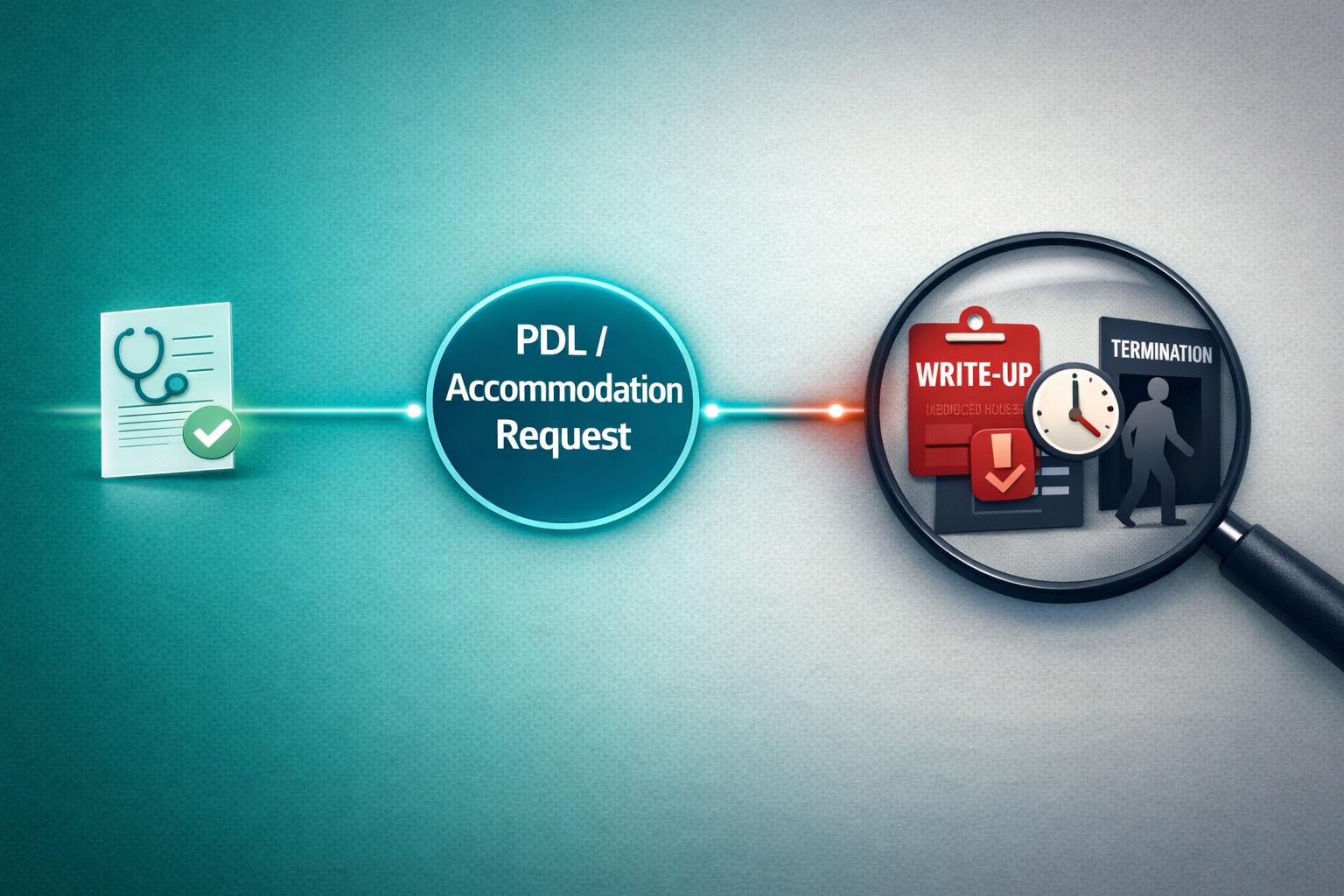
- Timing and patterns can matter. Coverage disputes followed by write-ups, schedule cuts, or job loss after pregnancy-related leave or accommodation requests may raise potential pregnancy discrimination, disability discrimination, or retaliation concerns under California law.
~ ~ ~ ~ ~ ~ ~ ~ ~ ~ ~ ~ ~ ~ ~ ~ ~ ~
For many employees in physically demanding roles in California—such as warehouse, construction, retail, and delivery work—Pregnancy Disability Leave (PDL) coverage can affect whether they can follow pregnancy-related medical restrictions without losing their job. When a health care provider determines that pregnancy, childbirth, or a related medical condition makes work unsafe or unworkable, the employer’s handling of coverage and eligibility can shape what happens next.
Under California’s PDL rules, protections often turn on two issues: (1) whether the employer is a covered employer, and (2) whether the employee is disabled by pregnancy, childbirth, or a related medical condition. These terms may sound technical, but they often show up through everyday workplace decisions—how schedules are assigned, how restrictions are handled, and whether the employer treats leave or accommodations as protected.
Why PDL Coverage Matters When Job Security Is at Stake
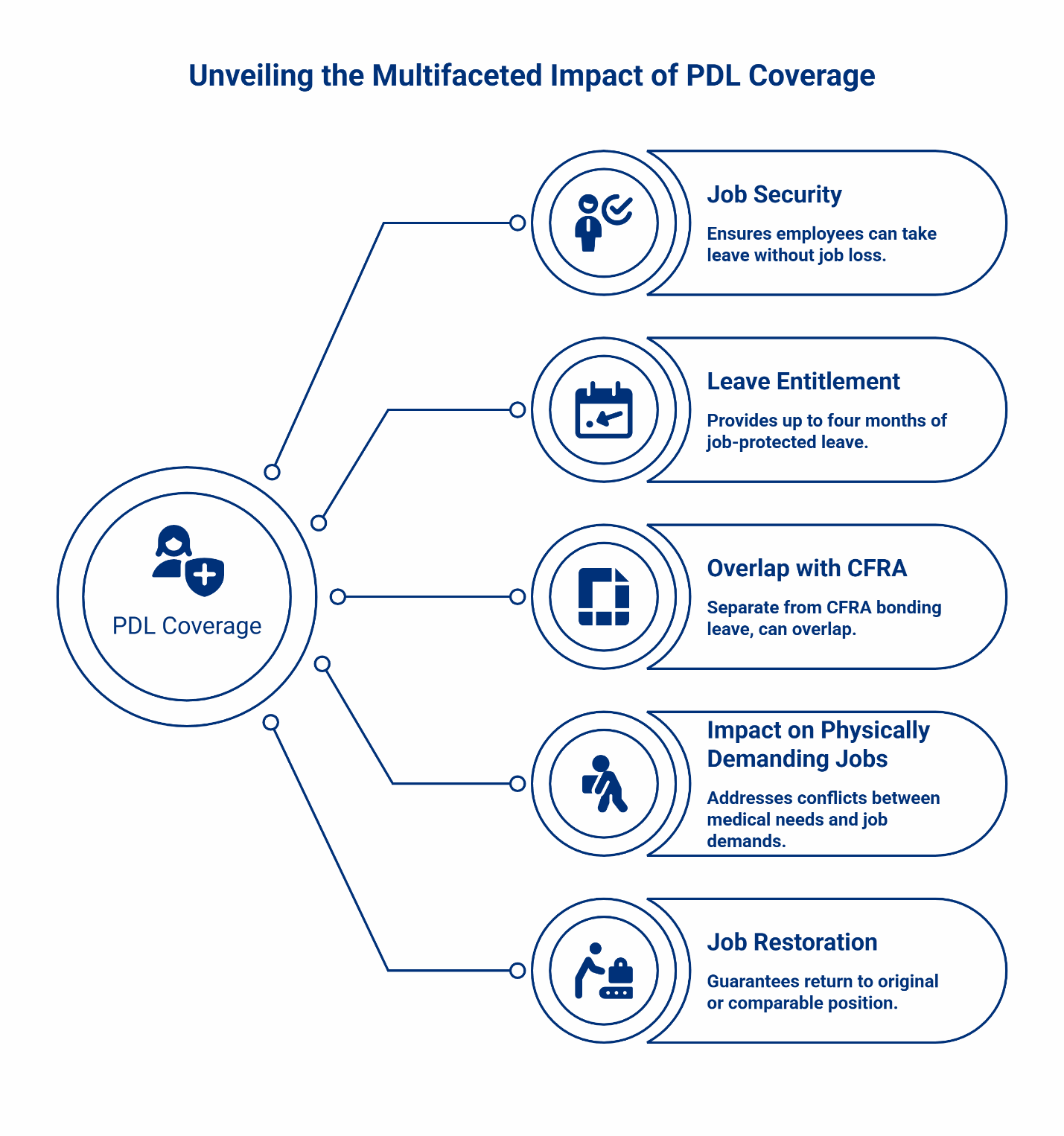
When pregnancy affects an employee’s ability to perform a physically demanding job, PDL coverage concerns whether the employee can take job-protected leave during a medically recognized disability period. Under California’s Pregnancy Disability Leave Law (PDLL), employees who are disabled by pregnancy, childbirth, or related medical conditions are entitled to up to four months of job-protected leave per pregnancy. This leave is available for the duration of the actual disability. [2 CCR § 11042].
PDL is separate from, and may be taken in addition to, the 12 weeks of bonding leave under the California Family Rights Act (CFRA), if the employee meets CFRA eligibility requirements. [Cal. Gov. Code § 12945.2]. Because these laws can overlap, mislabeling leave or misunderstanding eligibility can create avoidable disputes.
In physically demanding jobs, restrictions like lifting limits, bed rest, reduced standing, or time away for prenatal care may conflict with strict schedules and production expectations. If an employer misunderstands or misapplies PDL coverage, an employee may feel pressured to choose between complying with medical advice and maintaining income.
PDL also matters because it is closely tied to job restoration. In general, PDL protections focus on maintaining the employee’s position (or a comparable position) during the period of pregnancy-related disability, rather than treating the leave period as a reason to reduce hours, change shifts, or end employment.
When an Employer May Be a “Covered Employer” Under PDL and FEHA
A common threshold issue is whether the employer is covered under FEHA and related pregnancy disability protections. In many situations, employers with five or more employees are treated as covered for pregnancy disability and pregnancy discrimination protections.
Workplace size can be confusing in practice. An employee may work on a single shift or at one site, but the employer’s total employee count may include multiple shifts, multiple locations, or related operations. Coverage disputes may arise when an employer appears “small” in day-to-day operations but may meet coverage thresholds when the total workforce is considered.
Coverage-related concerns may arise when:
- An employer that appears to employ five or more employees states it is “too small” for PDL protections to apply.
- One supervisor tells the employee the employer is not covered, while another manager gives a different explanation.
- A supervisor or HR representative refuses to confirm the employer’s total employee count while denying PDL protections.
Signs You May Be Eligible for Pregnancy Disability Leave
When an employer is covered, PDL eligibility generally focuses less on tenure and more on whether the employee is disabled by pregnancy as determined by a health care provider. Under PDLL, there is generally no minimum length of service or hours-worked requirement for eligibility.
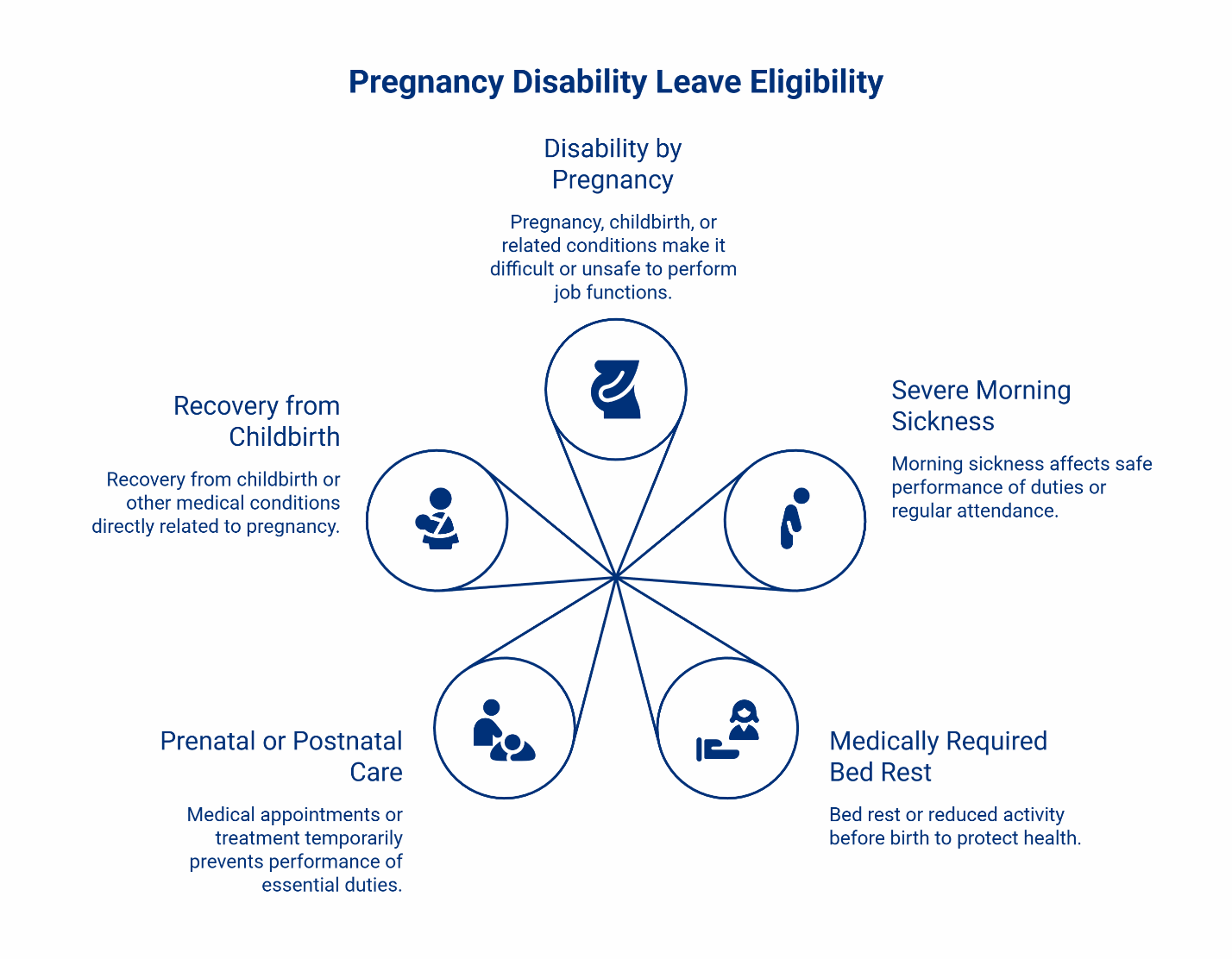
An employee may be considered disabled by pregnancy when a health care provider concludes that pregnancy, childbirth, or a related medical condition makes it difficult or unsafe to perform essential job functions. Examples of pregnancy-related conditions that may qualify include:
- Severe morning sickness that affects safe performance of duties or regular attendance.
- Medically required bed rest or reduced activity before birth to protect health.
- Prenatal or postnatal care, including medical appointments or treatment that temporarily prevents performance of essential duties.
- Recovery from childbirth or other medical conditions directly related to pregnancy.
A licensed health care provider determines the medical necessity of leave or restrictions. Separately, when restrictions impact essential job functions, workplace accommodations may be addressed through FEHA. Once the employer is aware of a pregnancy-related disability, FEHA generally requires the employer to engage in a timely, good-faith interactive process to identify reasonable accommodations. [Cal. Gov. Code § 12940(n); 2 CCR § 11040]. The employer is not required to provide the specific accommodation requested if another effective option exists, but the employer generally must work with the employee to identify an effective accommodation that allows performance of essential job functions when feasible.
How Coverage Disputes Can Lead to Discipline, Reduced Hours, or Job Loss
Coverage and eligibility disputes do not always appear in formal legal language. They often appear in workplace communications and decisions—who the employee is told to speak with, whether medical notes are accepted, and how schedules and discipline change after a protected request.
Hypothetical example: grocery employee
A grocery employee experiences severe morning sickness and provides a note from her health care provider restricting prolonged standing. She asks for temporary changes such as additional seated breaks, shorter shifts, and time off for medical appointments.
A manager tells the employee she is “not protected” because she is part-time and has not worked for a year. After the employee continues requesting accommodation or leave tied to her pregnancy-related disability, the employer issues write-ups for minor issues and later tells her that her position has been eliminated.
When protected requests are followed by discipline and job loss, the sequence may be relevant to causation and may raise questions about whether the employer’s stated reasons are legitimate or whether they may be pretext for discrimination or retaliation.
In scenarios like these, the combination of questionable statements about coverage or eligibility and adverse actions—reduced hours, increased discipline, or termination—may raise concerns involving pregnancy disability leave, disability discrimination, pregnancy discrimination, or retaliation under California law.
When Coverage Disputes May Indicate a Larger Legal Issue
Coverage discussions can raise broader legal concerns when they accompany serious negative changes to the employee’s job shortly after pregnancy-related restrictions, leave requests, or accommodation requests. A pattern in which an employer disputes coverage or eligibility while also imposing discipline, cutting shifts, or ending employment may, in some circumstances, support questions about discrimination or retaliation related to pregnancy disability leave status.
Warning patterns may include:
- A strong work record followed by sudden write-ups soon after pregnancy-related restrictions, medical notes, or leave requests.
- Termination or pressured resignation shortly after the employee discloses a pregnancy-related disability or provides a health care provider’s certification.
- Statements such as “we do not have to follow those pregnancy leave laws” used to justify denying leave or accommodations and then taking adverse employment action.
These issues are often fact-specific. Key details may include the employer’s workforce size, the employee’s job duties, the medical restrictions, the timing of protected requests, the employer’s documentation, and the stated reasons given for discipline or job loss.
Speaking with an Employment Lawyer About Pregnancy Disability Leave and Job Loss
When an employee faces discipline, reduced hours, termination, or pressure to resign after requesting pregnancy disability leave or pregnancy-related accommodations, an employment lawyer may evaluate whether PDL coverage and eligibility rules may have been misapplied. That evaluation often includes reviewing the employer’s workforce size, the essential job functions, the health care provider’s restrictions, the timing of protected requests, and the employer’s stated reasons for adverse actions.
Because pregnancy disability leave can interact with FEHA disability protections and, in some cases, CFRA leave, many employees choose to speak with counsel to evaluate how these laws apply to their specific facts. Counsel can also assess whether the timing and pattern of discipline or schedule changes supports a retaliation or discrimination theory, including whether the employer’s explanation may be pretext for an unlawful motive.
Disclaimer:
This content is for informational purposes only. Laws, definitions, and deadlines change. Verify current requirements through official California sources. This content is not legal advice. No attorney-client relationship is formed through this content. Please consult a qualified attorney in your jurisdiction for legal advice specific to your situation.
Protect Your Rights | The Akopyan Law Firm, A.P.C. | Top Gun Employment Lawyers
Have you been wrongfully terminated from your job? Have you suffered discrimination, harassment, or retaliation in the workplace? Has your employer violated wage and hour laws? If so, we can help. The Akopyan Law Firm, A.P.C. is dedicated to protecting and enforcing employees’ rights throughout Southern California. With a 97% success rate and millions recovered for our clients, our team of experienced and talented employment lawyers can fight to secure the justice you deserve.
Take the First Step Towards Securing Justice: Call us today to speak with one of our experienced employment lawyers. The firm offers case evaluations free of charge.
Contact Us Today:
- Phone: (818) 509-9975
- Office Locations: Los Angeles, Bakersfield, Costa Mesa, Temecula, Rancho Cucamonga, Oxnard, Culver City, and San Diego in California.
Important: Contacting the Akopyan Law Firm, A.P.C. does not create an attorney-client relationship, but all communications will remain private and confidential. Each case is unique. The Akopyan Law Firm, A.P.C., does not guarantee any outcome.