
📌 Key Takeaways
Pressure to resign can sometimes align with legal concepts such as constructive discharge or retaliation, particularly when workplace conditions deteriorate after a worker engages in protected activity (like complaining about discrimination, harassment, wage issues, or safety concerns) or requests help related to a disability or qualifying medical condition.
- Pressure without a formal termination may show up as reduced shifts, heightened scrutiny, or constant criticism that gradually makes continued employment feel untenable.
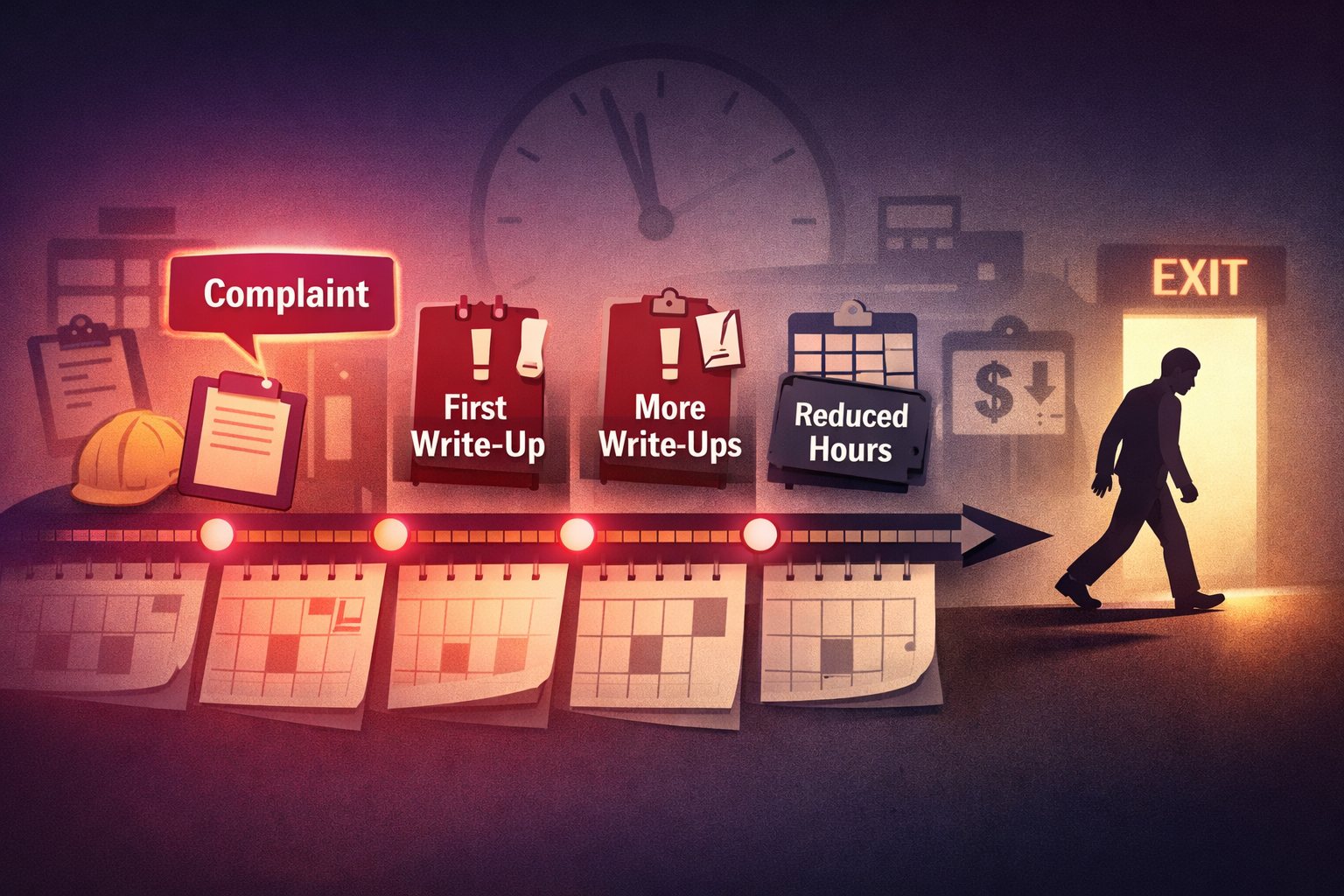
- Discipline that follows protected activity—such as sudden write-ups, performance improvement plans, reduced hours, or loss of preferred routes after a complaint—may raise questions about retaliatory motivation.
- Punitive work assignments—such as being assigned to the hottest area, the dirtiest tasks, or constant heavy lifting soon after a complaint—may be cited as part of a pattern intended to push a worker out.
- Pressure tied to disability or a medical condition may include silence after a reasonable accommodation request, delayed responses, or scheduling/assignment changes that conflict with documented restrictions.
- Hostility and selective enforcement—including exclusion, targeted jokes, public criticism, or rule enforcement applied only to the worker who complained—may strengthen concerns that the conduct is not ordinary supervision.
These patterns do not automatically mean the law was violated. They can, however, be meaningful “sequence and timing” facts that an employment lawyer may evaluate in context.
~ ~ ~ ~ ~ ~ ~ ~ ~ ~ ~ ~ ~ ~ ~ ~ ~ ~
In many workplaces, an employer does not announce a termination. Instead, an employer may change schedules, increase discipline, or allow hostility to build until a worker feels they have no realistic choice but to resign.
That dynamic can be especially destabilizing when a worker is trying to maintain rent payments, manage medical expenses, or support family members while also facing reduced income or escalating pressure at work.
The legal significance often turns on what changed, when it changed, and why it changed—especially after protected activity or after a request tied to disability or a qualifying medical condition.
Constructive Discharge and Retaliation
Constructive discharge
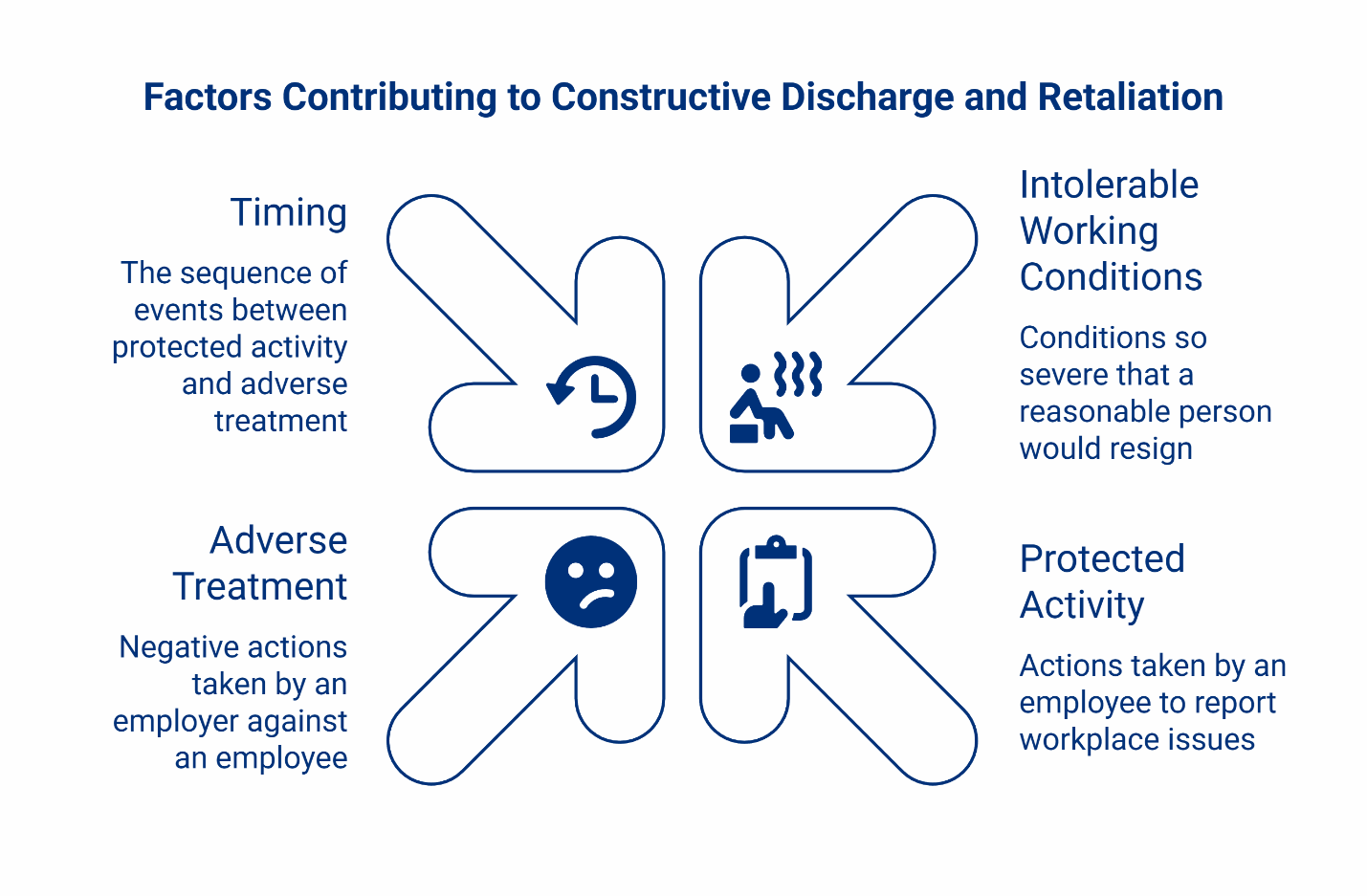
Constructive discharge is a legal concept used when an employer’s conduct effectively forces a resignation. While the precise standard is fact-specific, the core idea is that working conditions may become so intolerable that a reasonable person would feel compelled to resign—and the worker resigns because of those conditions.
A constructive discharge theory is often analyzed alongside other claims, such as discrimination, harassment, or unlawful retaliation, because the same conduct that makes conditions intolerable may also reflect an unlawful motive.
Retaliation
Retaliation generally refers to adverse treatment that follows protected activity, such as:
- complaining about discrimination or harassment,
- reporting wage issues,
- raising workplace safety concerns,
- making a whistleblower report, or
- requesting reasonable accommodation related to a disability or qualifying medical condition.
In retaliation analysis, timing alone is rarely the whole story. But when protected activity is followed by adverse actions—like write-ups, reduced hours, or undesirable assignments—those sequences may become important in evaluating whether the employer’s stated reasons are credible.
Workplace Patterns That May Look Like “Pressure to Quit” After Protected Activity
The examples below are illustrative and non-exhaustive. They are intended to show how concerns may arise when protected activity is followed by a meaningful change in treatment.
Sudden discipline and escalating write-ups after a complaint
A worker may have a history of positive evaluations and routine supervision. After the worker submits a written complaint—such as reporting racial slurs, sexual comments, or unsafe equipment—the employer may begin documenting minor issues that were previously ignored.
If the employer places the worker on a performance improvement plan that is unusually strict or difficult to satisfy shortly after the complaint, a lawyer may examine whether the plan reflects ordinary performance management or whether it may function as a tool to justify future discipline or separation.
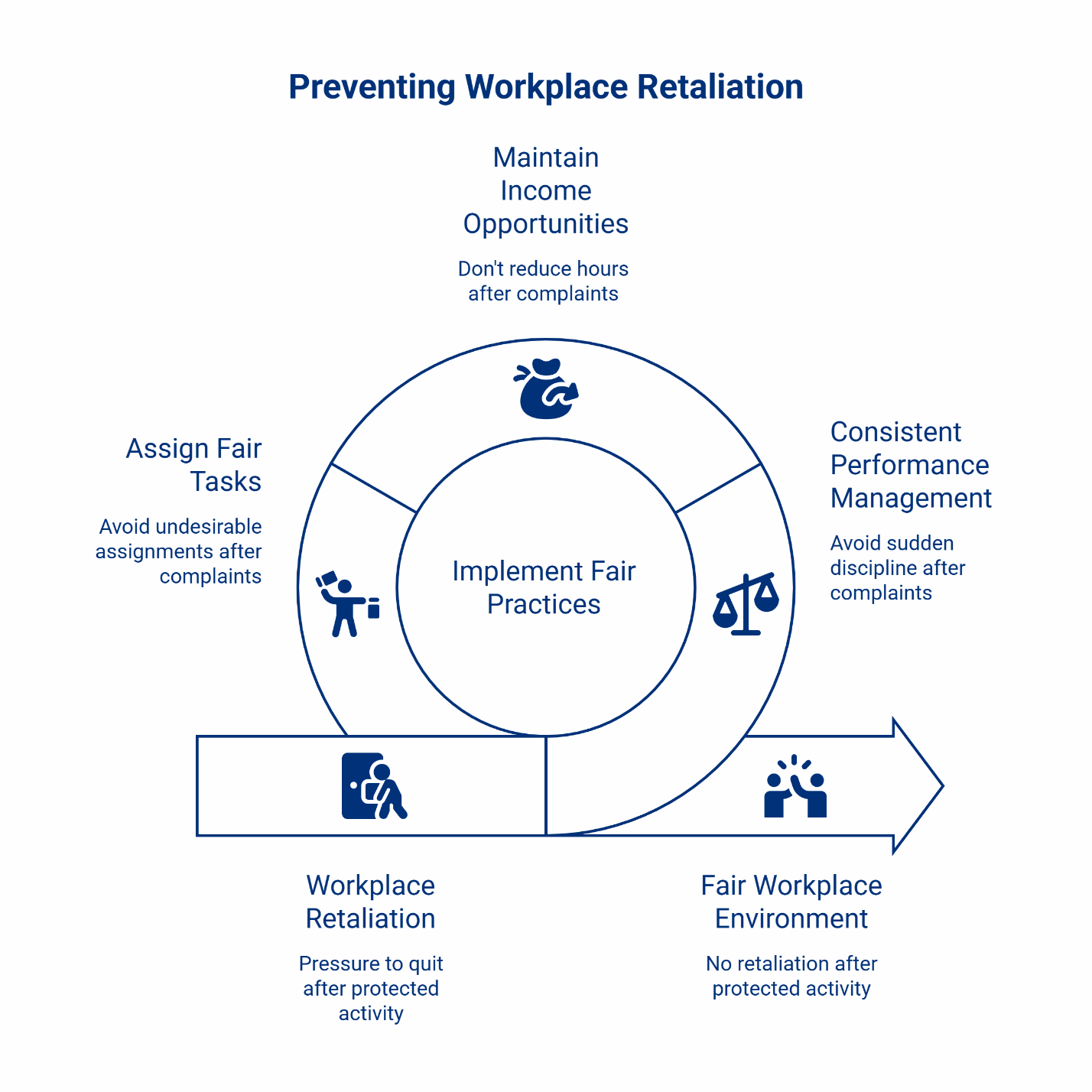
Why it matters: A sharp change in discipline after protected activity may help support an argument that the employer’s actions were motivated, at least in part, by the complaint rather than by performance.
Reducing hours or income-producing opportunities after protected activity
Some employers apply pressure by shrinking paychecks rather than issuing a termination notice. After a report of harassment or a safety complaint, an employer may reduce a worker’s scheduled shifts, eliminate overtime, or transfer a worker away from higher-earning routes or assignments.
Why it matters: When protected activity is followed by a significant loss of hours or earnings, the sequence may be relevant to whether the employer took an adverse action connected to the protected activity.
Reassignment to undesirable or physically punishing work after a complaint
A worker who complained about harassment may be transferred from a normal rotation of duties to constant heavy lifting. A worker who raised safety concerns may be assigned to the hottest area of the facility or the least desirable tasks every shift.
To evaluate whether this suggests retaliation, the key questions often include whether the assignment change was a real business need applied consistently, or whether it was targeted and timed to follow the protected activity.
Why it matters: A pattern of undesirable assignments after protected activity may be used to argue that the employer intentionally made the job harder to keep.
Pressure Connected to Disability or a Qualifying Medical Condition
When disability or medical issues are involved, the analysis often overlaps with an employer’s duties under laws such as the California Fair Employment and Housing Act (FEHA) and, in some circumstances, the Americans with Disabilities Act (ADA). Those laws can trigger duties related to reasonable accommodation and the interactive process—a good-faith exchange to explore effective accommodations.
Silence or delay after a reasonable accommodation request
A worker may provide medical documentation requesting limits on lifting, standing, repetitive motion, or long shifts. In response, an employer may delay, avoid follow-up questions, or give vague assurances without making a decision, while simultaneously increasing the worker’s physical workload or discouraging co-worker assistance.
Why it matters: If a reasonable accommodation request is met with inaction—and working conditions become more difficult—an attorney may examine whether the employer failed to engage in the interactive process or failed to reasonably accommodate a disability.
Comments suggesting the worker should leave after medical needs are raised
Sometimes the pressure is more direct. A supervisor might tell a worker, “This job may not be a fit anymore,” or suggest the worker would be “happier somewhere else,” particularly after the worker raises medical restrictions or requests modified duties.
If those comments occur alongside reduced hours, harder assignments, or ignored accommodation requests, a lawyer may analyze whether the employer was steering the worker toward resignation rather than addressing legal duties.
Why it matters: When disability-related requests are followed by discouraging comments and adverse changes, the combined facts may support claims tied to disability discrimination, failure to accommodate, failure to engage in the interactive process, and retaliation.
Hostility and Selective Enforcement After Complaints
Increased hostility and isolation after protected activity
After a worker reports discrimination, harassment, or safety concerns, the employer or co-workers may begin excluding the worker from meetings, scheduling discussions, training opportunities, or informal communications that affect earning potential and job stability.
Hostility may also include public criticism, repeated “jokes” aimed at the worker, or micromanagement that appears directed at one person rather than applied consistently across the workforce.
Why it matters: Isolation and hostility following protected activity can be relevant to whether the workplace changed in a way that may support retaliation or constructive discharge theories.
Rules enforced against one worker but not others
Selective enforcement can also contribute to a “pressure to quit” pattern. For example, an employer might issue a write-up to the worker who complained for being two minutes late, while not disciplining other employees for the same conduct. An employer might also discipline the complaining worker for minor inspection issues, while overlooking comparable issues by other employees.
Why it matters: Uneven enforcement, especially after protected activity, may be used to argue that stated reasons for discipline were pretextual rather than genuine.
Ordinary Workplace Stress Versus Legal Concerns a Lawyer May Evaluate
Many jobs can include hard supervisors, unfair decisions, or frustrating schedule changes. Not every unpleasant workplace experience rises to a legal violation, and many disputes remain within the realm of ordinary workplace conflict.
The issues that tend to receive closer legal attention are patterns where:
- protected activity (such as a complaint) is followed by adverse actions,
- a reasonable accommodation request is met with inaction or hostility, or
- working conditions escalate to a level that may support a constructive discharge theory.
Because these analyses depend heavily on detailed facts and context, workers often benefit from consulting an employment lawyer who can assess the timeline, documents, witnesses, and employer explanations.
Speaking With a California Employment Lawyer
Constructive discharge and retaliation claims can be legally and factually complex. A lawyer typically evaluates the sequence of events—complaints, accommodation requests, discipline, schedule changes, and communications—to determine whether the pattern may support a claim under California law.
Legal claims can also involve strict and technical timing rules that vary by claim type and forum. If you are concerned about job-protected rights, it is generally wise to speak with an employment attorney promptly about any timing issues.
Disclaimer:
This content is for informational purposes only. Laws, definitions, and deadlines change. Verify current requirements through official California sources. This content is not legal advice. No attorney-client relationship is formed through this content. Please consult a qualified attorney in your jurisdiction for legal advice specific to your situation.
Protect Your Rights | The Akopyan Law Firm, A.P.C. | Top Gun Employment Lawyers
Have you been wrongfully terminated from your job? Have you suffered discrimination, harassment, or retaliation in the workplace? Has your employer violated wage and hour laws? If so, we can help. The Akopyan Law Firm, A.P.C. is dedicated to protecting and enforcing employees’ rights throughout Southern California. With a 97% success rate and millions recovered for our clients, our team of experienced and talented employment lawyers can fight to secure the justice you deserve.
Take the First Step Towards Securing Justice: Call us today to speak with one of our experienced employment lawyers. The firm offers case evaluations free of charge.
Contact Us Today:
- Phone: (818) 509-9975
- Office Locations: Los Angeles, Bakersfield, Costa Mesa, Temecula, Rancho Cucamonga, Oxnard, Culver City, and San Diego in California.
Important: Contacting the Akopyan Law Firm, A.P.C. does not create an attorney-client relationship, but all communications will remain private and confidential. Each case is unique. The Akopyan Law Firm, A.P.C., does not guarantee any outcome.