📌 Key Takeaways
Constructive discharge is typically alleged when an employee resigns because working conditions became so intolerable that a reasonable person would feel compelled to resign. Wrongful termination generally refers to an employer ending employment for a reason that is alleged to violate the law, such as discrimination, retaliation, or a violation of public policy.
- How employment ended matters: Constructive discharge focuses on a resignation that the employee alleges was compelled by objectively intolerable working conditions, usually based on more than a single dispute.
- Why employment ended matters: Wrongful termination focuses on the employer’s stated reason or motivation and whether that reason is alleged to be unlawful.
- Form versus substance: A dispute may involve an employer’s records reflecting a “resignation,” while the worker alleges the employer’s conduct effectively forced the resignation.
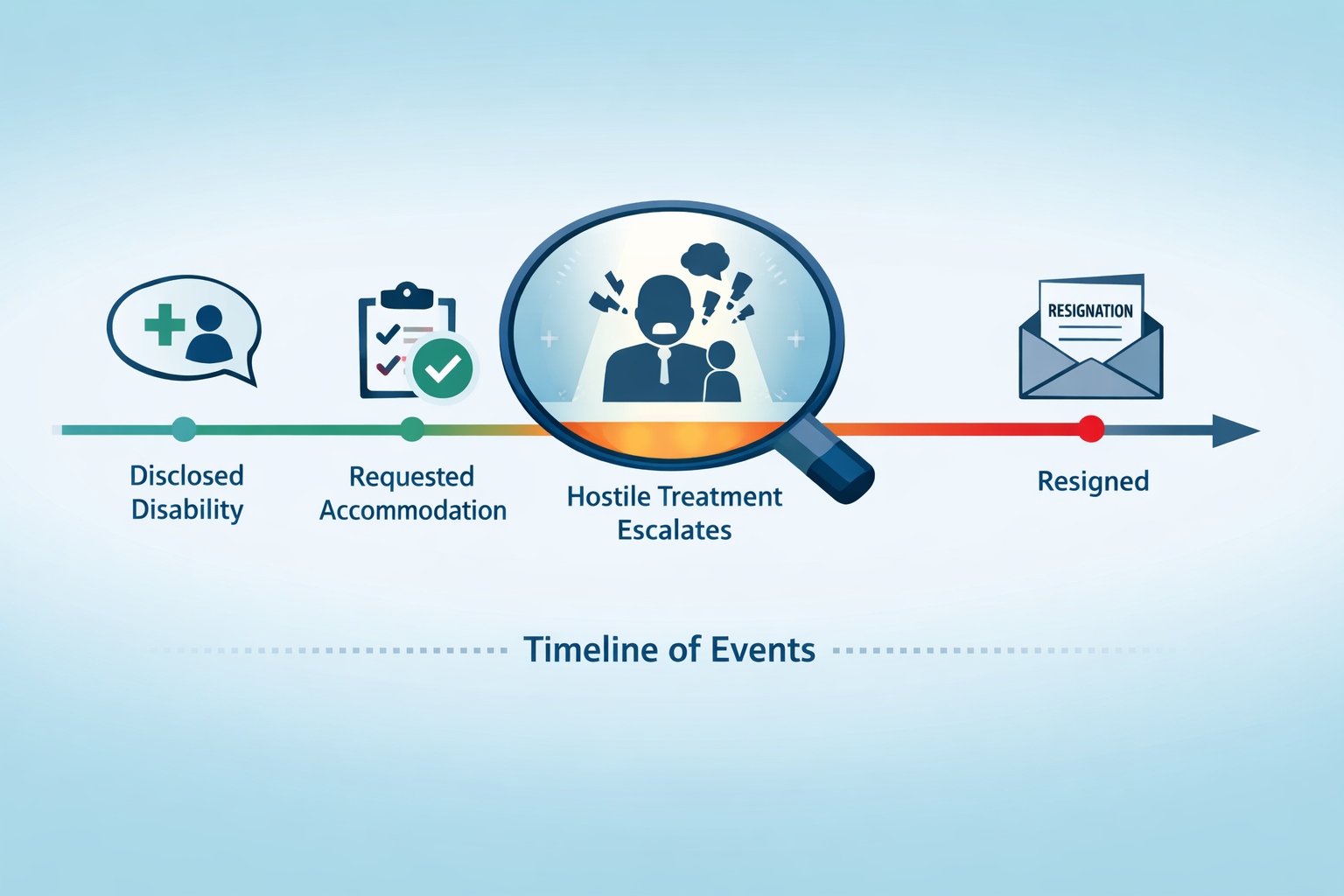
- Overlap is common: Alleged hostility after a disability disclosure, a request for reasonable accommodation, participation in the interactive process, or job-protected medical leave (FMLA/CFRA) may support both theories depending on the facts.
- Facts control the labels: Timelines, workplace communications, and the seriousness and duration of conditions typically drive how attorneys and the trier of fact evaluate the dispute.
~ ~ ~ ~ ~ ~ ~ ~ ~ ~ ~ ~ ~ ~ ~ ~ ~ ~
When a job ends in California, two terms often appear in employment disputes: constructive termination and wrongful termination. These terms address different questions.
- Constructive discharge usually addresses how employment ended—through a resignation that the employee alleges was compelled by intolerable conditions.
- Wrongful termination usually addresses why employment ended—because the employer’s reason for ending employment is alleged to violate legal protections, such as anti-discrimination or anti-retaliation laws or public policy.
Constructive Discharge in California: Alleged Forced Resignation Under Intolerable Conditions
Constructive discharge (sometimes called constructive termination) is commonly alleged when the employer’s records reflect that the worker “resigned,” but the worker contends the work environment became intolerable under the legal standard. The phrase “resignation in form, termination in substance” is often used as shorthand; the central legal question is whether the conditions were objectively severe enough that a reasonable person would have felt compelled to resign.
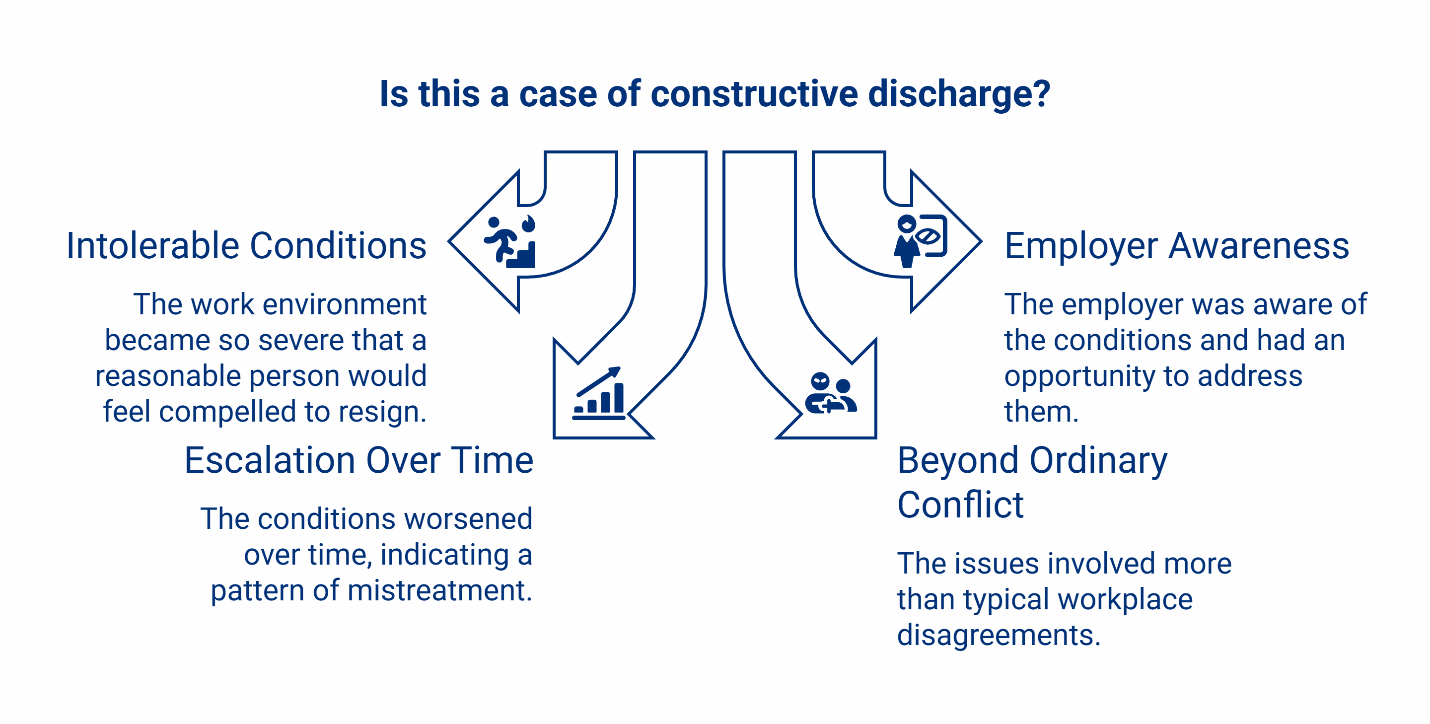
In many cases, trier of fact evaluates factors such as:
- the severity of the conditions,
- the duration or escalation over time,
- whether the employer was aware of the conditions and had an opportunity to address them, and
- whether the conditions involved more than ordinary workplace conflict or a single unpleasant event.
Constructive discharge allegations often arise after events such as disability disclosure, a request for reasonable accommodation, participation in the interactive process, or taking job-protected medical leave.
Examples of Fact Patterns Often Alleged in Constructive Discharge Disputes (Illustrations Only)
- An employer sharply reduces duties or assigns demeaning work after an employee requests a reasonable accommodation for a disability.
- A supervisor escalates harassment or hostility after protected activity, such as requesting accommodation, participating in the interactive process, or taking job-protected medical leave.
- An employer imposes drastic negative changes—such as severe schedule disruption, reduced hours, or removal of core responsibilities—that the employee alleges were punitive.
- A manager presents an ultimatum such as “resign or be fired,” and the employee resigns under that pressure.
The practical takeaway is that constructive discharge is not just a label for a difficult workplace. The analysis typically turns on whether the conditions were sufficiently severe and sustained to meet the constructive discharge standard.
For additional background on accommodation disputes that sometimes appear in constructive discharge narratives, see denied workplace accommodations after bodily injury? California employers have specific obligations and interactive process violations in California: recognizing possible employer violations after bodily injuries.
Wrongful Termination in California: Unlawful Motivation for Ending Employment
Wrongful termination generally refers to an employer ending employment for a reason that is alleged to violate legal protections. The focus is not on whether the worker resigned or was fired, but on whether the employer’s decision-making is alleged to be unlawful.
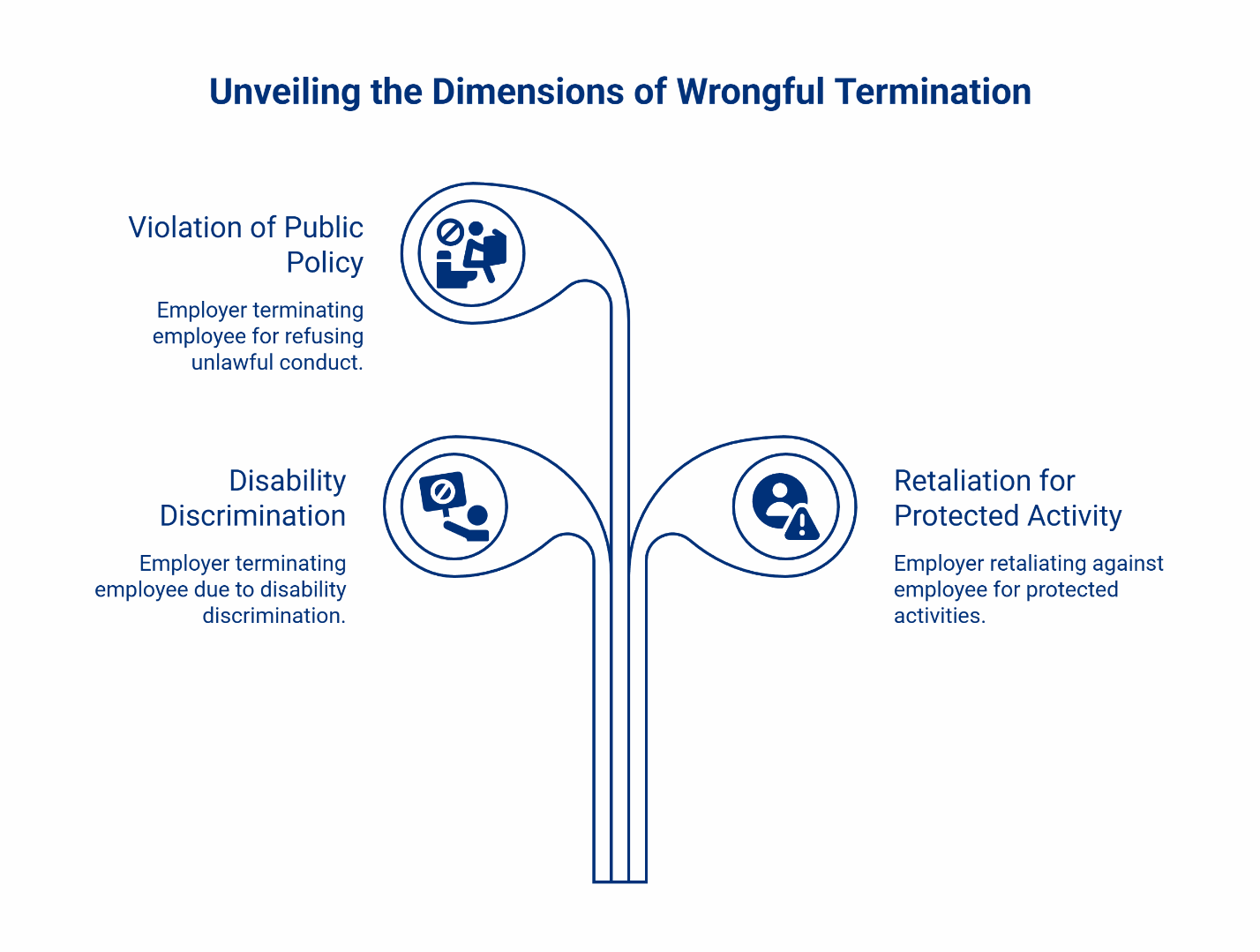
Common categories that appear in California disputes include:
- Disability discrimination (often discussed under FEHA and sometimes alongside the ADA).
- Retaliation for protected activity, such as requesting a reasonable accommodation, complaining about discrimination or harassment, reporting suspected legal violations, or taking job-protected medical leave.
- Termination alleged to violate a clearly established public policy (for example, discipline for refusing to engage in unlawful conduct).
A termination may appear unfair and still not be unlawful. That is why attorneys often focus on the timeline, workplace communications, performance history, and whether the employer’s stated reason is consistent with the documented record.
In litigated cases, the trier of fact evaluates credibility and evidence. The term “wrongful termination” does not, by itself, establish liability or predict an outcome. An employment attorney can evaluate whether the available facts may support a wrongful termination claim under applicable law.
For related reading in the disability context, see wrongful termination after bodily injury in California: key FEHA protections and wrongful termination vs. lawful discharge: identifying illegal firing after back injury in California.
Overlap: When the Same Facts May Support Both Theories
Constructive discharge and wrongful termination can appear in the same dispute, but they do different work.
- Constructive discharge focuses on whether the employer’s conduct created working conditions so intolerable that a reasonable person would resign.
- Wrongful termination focuses on whether the employer’s actions were motivated by an unlawful reason or violated legal protections, such as anti-discrimination or anti-retaliation laws.
Example 1 (illustration only)
A warehouse worker discloses a disability and requests a reasonable accommodation. The worker alleges that management responds by stripping normal duties, assigning degrading tasks, and escalating hostility over several weeks. The worker then resigns.
This scenario may be framed as constructive discharge if the worker contends conditions became objectively intolerable and compelled resignation. The same facts may also be framed as wrongful termination if the worker alleges the employer’s conduct was driven by disability discrimination or retaliation for the accommodation request or participation in the interactive process.
Example 2 (illustration only)
A construction worker takes job-protected medical leave. After returning, the employer terminates the worker and provides an explanation the worker alleges did not appear until after the leave.
This scenario may be framed as wrongful termination if the timing and record are cited as circumstantial evidence of retaliation for protected leave, depending on the full context. If, instead of terminating the worker, the employer pressures the worker to resign by making continued work intolerable, the dispute may also involve a constructive discharge theory—again depending on the facts.
These examples remain general because outcomes typically depend on the full record, including documents, witnesses, credibility findings, and the legal standard applied.
Why These Labels Matter When a Worker Talks to an Attorney
Workers often face a practical uncertainty: “Was this a resignation, or was I effectively pushed out?” That uncertainty can be significant, particularly when income stops and deadlines may apply.
In many California consultations, attorneys focus on:
- the sequence of events involving disability-related issues, requests for reasonable accommodation, the interactive process, job-protected medical leave, discipline, and the final separation,
- the seriousness, duration, and escalation of the conditions the worker describes,
- the employer’s stated reason for the separation and whether it aligns with the timeline and documentation; and
- the legal standards and statutory protections that may apply, including FEHA and anti-retaliation protections under California and federal law.
The practical point is that labels do not decide cases by themselves—timelines, communications, and other evidence usually carry the most weight.
Next Steps: Talking With a California Employment Lawyer
Many California workers choose to speak with an employment lawyer when the end of employment involves alleged intolerable working conditions, disability-related conflict, an accommodation dispute or interactive-process breakdown, or retaliation concerns tied to job-protected family medical leave or other protected activity. A consultation may help evaluate whether the facts support a constructive discharge theory, a wrongful termination claim, both, or neither.
Disclaimer:
This content is for informational purposes only. Laws, definitions, and deadlines change. Verify current requirements through official California sources. This content is not legal advice. No attorney-client relationship is formed through this content. Please consult a qualified attorney in your jurisdiction for legal advice specific to your situation.
Protect Your Rights | The Akopyan Law Firm, A.P.C. | Top Gun Employment Lawyers
Have you been wrongfully terminated from your job? Have you suffered discrimination, harassment, or retaliation in the workplace? Has your employer violated wage and hour laws? If so, we can help. The Akopyan Law Firm, A.P.C. is dedicated to protecting and enforcing employees’ rights throughout Southern California. With a 97% success rate and millions recovered for our clients, our team of experienced and talented employment lawyers can fight to secure the justice you deserve.
Take the First Step Towards Securing Justice: Call us today to speak with one of our experienced employment lawyers. The firm offers case evaluations free of charge.
Contact Us Today:
- Phone: (818) 509-9975
- Office Locations: Los Angeles, Bakersfield, Costa Mesa, Temecula, Rancho Cucamonga, Oxnard, Culver City, and San Diego in California.
Important: Contacting the Akopyan Law Firm, A.P.C. does not create an attorney-client relationship, but all communications will remain private and confidential. Each case is unique. The Akopyan Law Firm, A.P.C., does not guarantee any outcome.