
📌 Key Takeaways
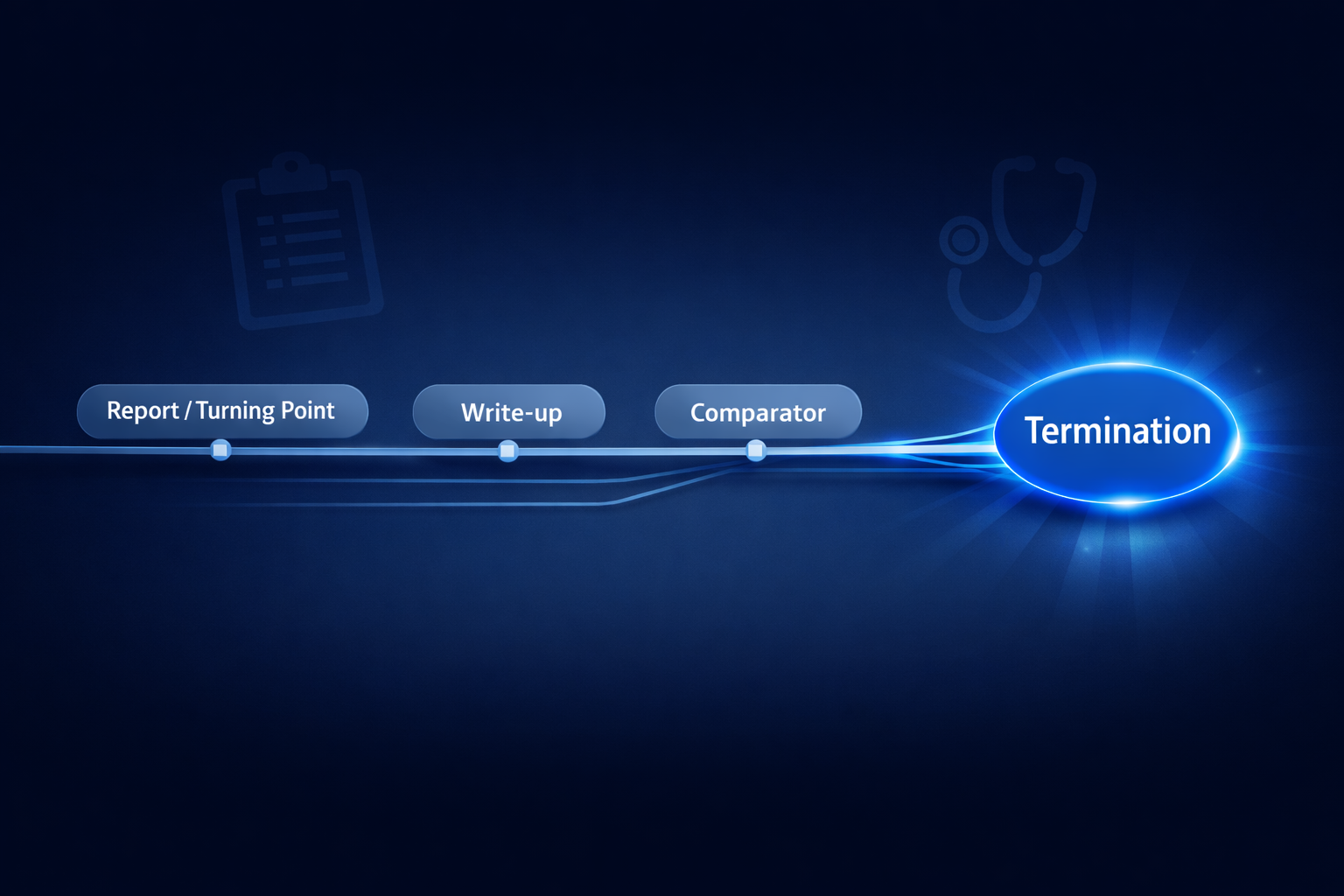
California medical practice termination lawsuits typically plead multiple legal theories around a single firing event, framing termination as the culmination of alleged retaliation, discrimination, or whistleblowing rather than a standalone performance dispute.
- Multiple Theories, Same Event: Complaints routinely plead overlapping causes of action—public policy violations, statutory retaliation, discrimination—all anchored to the same termination timeline to maximize alleged liability exposure.
- Causation Through Proximity: Allegations emphasize tight timing between a turning point (internal report, disability disclosure, compliance objection) and termination to support inferences of unlawful motivation.
- Pretext Allegations Target Documentation: Complaints challenge performance explanations by alleging inconsistent write-ups, shifting rationales, comparator evidence, or deviations from stated policy to frame the employer’s reason as cover for retaliation or bias.
- Patient Safety Amplifies Motive Narratives: Healthcare-specific allegations frame quality-of-care reporting or compliance concerns as protected activity, then connect termination to alleged reputational or internal conflict motives within the medical practice.
Termination complaints treat performance management as the vehicle for discriminatory or retaliatory intent, not as neutral business judgment.
~ ~ ~ ~ ~ ~ ~ ~ ~ ~ ~ ~ ~ ~ ~ ~ ~ ~
A wrongful termination complaint against a California medical practice often treats termination as the “final adverse employment action” in a broader liability narrative. The complaint typically connects the termination decision to alleged retaliation, discrimination, or whistleblowing — and it may plead multiple causes of action based on the same core events. In small, patient-facing practices, complaints also tend to describe close supervision, overlapping roles, and reputational sensitivity as context that may amplify alleged motive and damages themes. The complaint often reads less like a single dispute about performance and more like a narrative that links timing, motive, and decision-making to legal exposure.
Why complaints against California medical practices often plead multiple theories in one lawsuit
A single set of alleged facts can support multiple legal labels, so a complaint may plead alternative or overlapping theories to describe the same termination event. Plaintiffs may allege wrongful termination in violation of public policy as a public-policy termination claim that is often labeled a “Tameny” claim in pleadings. Plaintiffs may also plead statutory theories when the allegations involve protected status, protected activity, or alleged harassment. These overlapping labels often reflect an effort to plead the same timeline under multiple legal theories rather than to describe separate termination decisions.
How a complaint builds a causal narrative around termination
A complaint usually identifies the employee’s position and the practice setting to establish the decision-making structure, the timeline, and the claimed turning point. The allegations commonly center on non-executive roles found in medical practices, such as medical assistants, front office staff, billers/coders, technicians, nurses, schedulers, and administrative support staff. When supervisors or managers appear in the narrative, the complaint typically attributes to them a role in discipline, performance evaluations, scheduling decisions, or the termination decision.
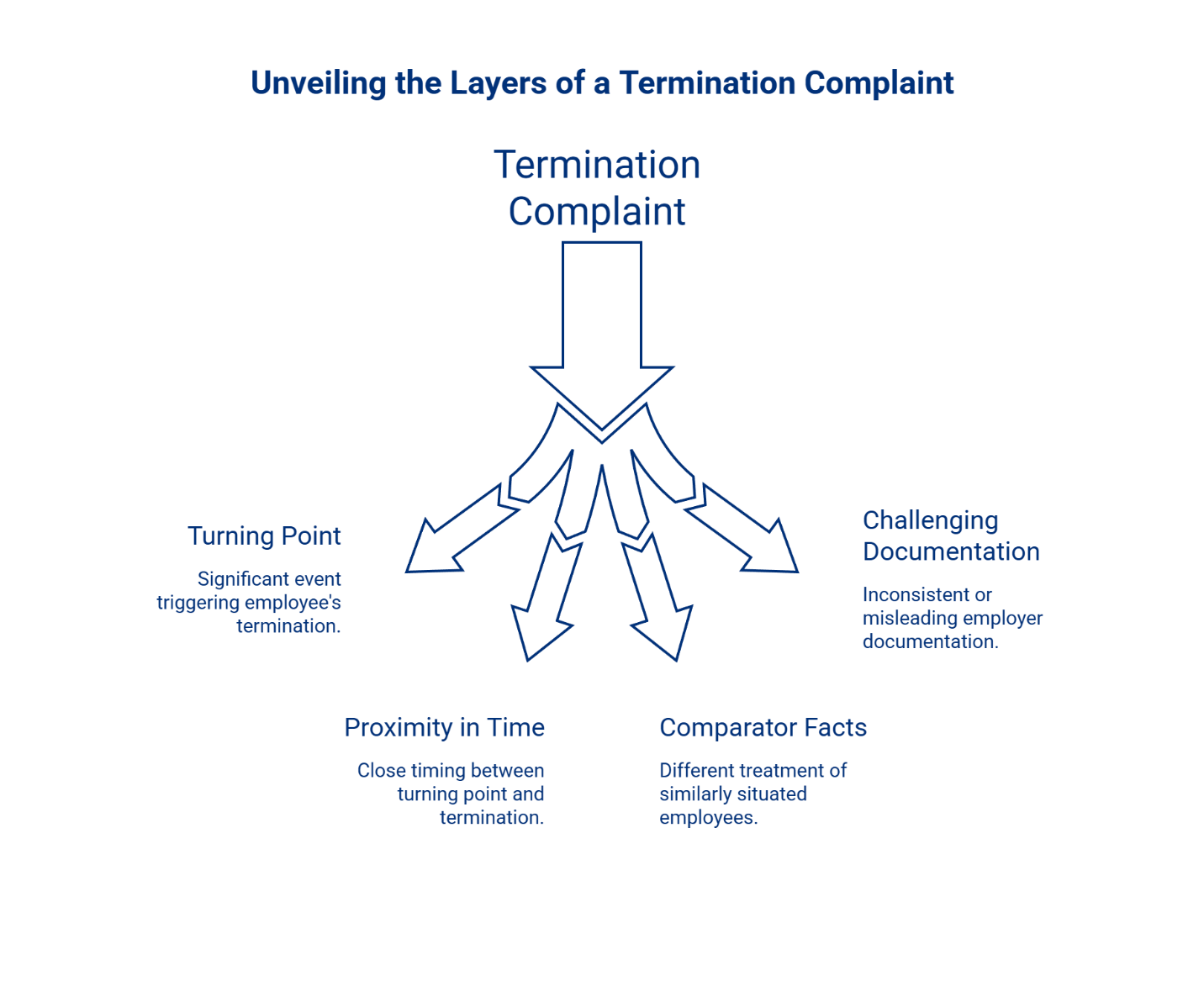
A complaint often uses the following building blocks to plead causation and unlawful motivation:
- Describes a turning point, including but not limited to an internal report, an objection to practices the employee characterizes as unlawful, a medical disclosure, or a conflict involving a supervisor.
- Emphasizes proximity in time between the turning point and termination to support an inference of retaliation or discriminatory motivation.
- Alleges comparator facts by asserting that similarly situated employees were treated differently under similar circumstances.
- Challenges contemporaneous documentation by alleging inconsistent write-ups, shifting explanations, or deviations from the employer’s stated policy or past practice.
These allegations are commonly pleaded to support an inference that the stated reason for termination was pretext and that the termination may create liability exposure under the causes of action asserted.
How retaliation allegations are commonly pleaded alongside termination allegations
Retaliation causes of action often frame termination as the adverse employment action that follows protected activity. Complaints commonly identify protected activity such as reporting, opposing, or refusing conduct the employee characterizes as unlawful. In healthcare settings, complaints may also allege that patient care concerns, compliance objections, or internal quality-of-care reporting constituted protected activity that preceded termination.
Complaints may refer to the Government Code § 12940 (FEHA) when alleging retaliation connected to FEHA-protected activity or protected status. Complaints may reference Labor Code § 1102.5 when alleging whistleblower retaliation based on disclosures or opposition activity. In healthcare cases, complaints may refer to Health & Safety Code § 1278.5 when the allegations tie the employment action to patient safety reporting. As pleaded, these claims often rely on timing, disciplinary write-ups that allegedly follow the report, or alleged reductions in hours to support the causal connection between protected activity and termination.
How disability discrimination and related theories are pleaded in medical practice termination cases
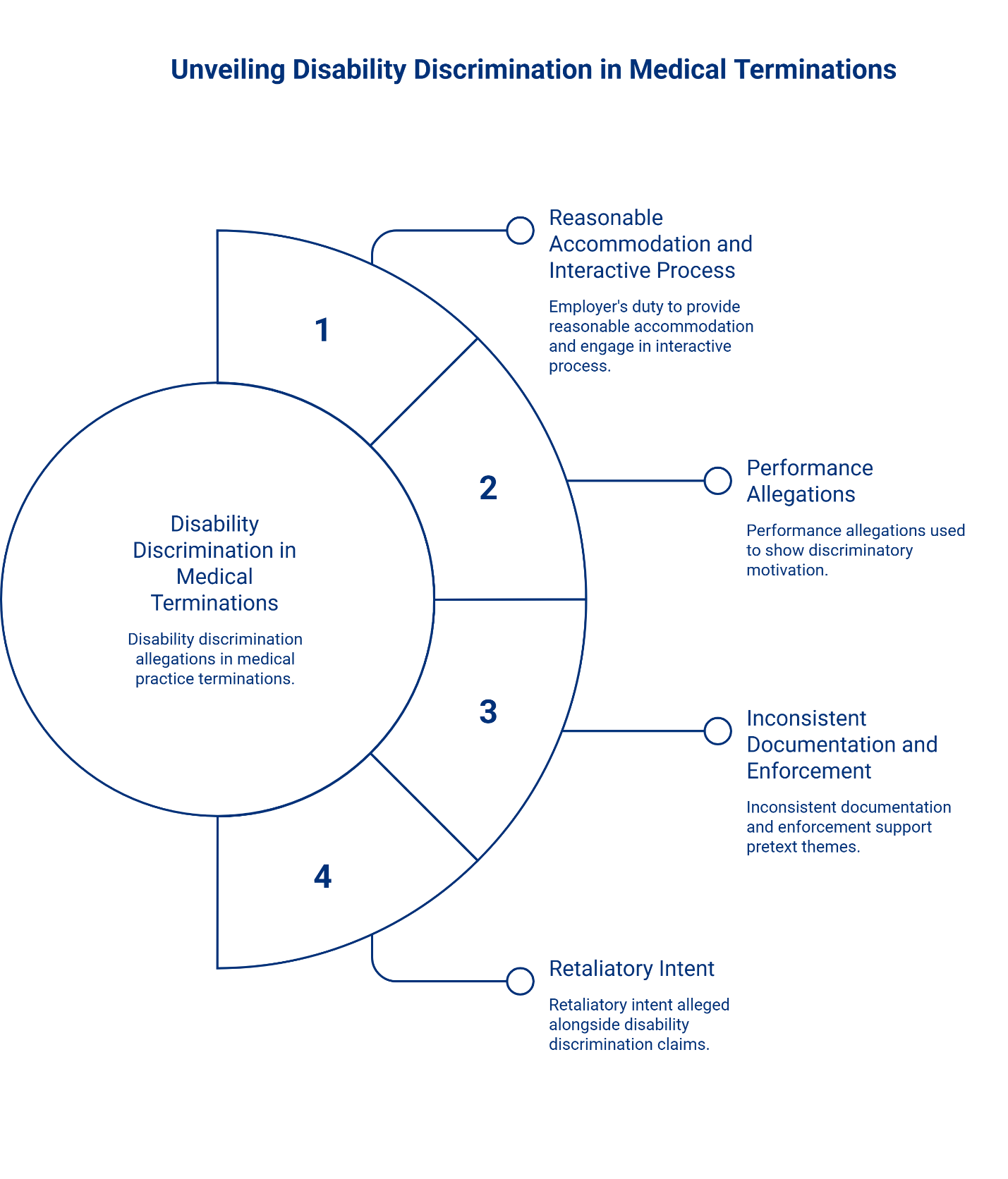
Disability-related allegations often appear when a complaint ties a disability to scheduling, attendance expectations, task assignments, or performance discussions in a clinical environment. FEHA pleadings in this area often describe the employer’s obligations through doctrines commonly labeled reasonable accommodation and the interactive process, and a complaint may allege that termination followed a breakdown in those obligations.
A complaint frequently pairs disability allegations with performance allegations because pleadings often treat performance narratives as the vehicle for discriminatory motivation or retaliatory intent. Complaints in small practices may also emphasize inconsistent documentation, uneven enforcement of rules, disciplinary write-ups that allegedly escalate after disability-related communications, or alleged reductions in hours to support causation and pretext themes. These allegations are typically pleaded to support an inference that the termination decision was motivated by disability-related bias or retaliation rather than the stated reason.
How whistleblower narratives are pleaded in healthcare employment cases involving termination
Whistleblower allegations often present a sequence: a disclosure, an alleged management reaction, and a later termination. Complaints commonly describe disclosures involving billing or coding concerns, documentation integrity, infection-control practices, or other compliance issues tied to regulated care.
In this setting, complaints often plead Labor Code § 1102.5 to allege retaliation for protected disclosures, and healthcare-specific pleadings may also plead Health & Safety Code § 1278.5 when the allegations focus on patient safety reporting. Whistleblower pleadings frequently rely on timing, alleged deviations from stated policy, comparator allegations, and alleged inconsistencies in contemporaneous documentation to support causation. These allegations are commonly pleaded to frame termination as retaliation for protected reporting rather than as a neutral business decision.
How performance management becomes a central allegation cluster in termination pleadings
Performance management is often central because the employer’s stated reason for termination frequently relies on performance or conduct explanations. A complaint may allege that a supervisor’s discipline was inconsistent, that performance feedback changed abruptly near the claimed turning point, or that similarly situated employees were treated differently. A complaint may also allege that contemporaneous documentation does not align with the stated reason for termination or that the employer deviated from its stated policy.
These allegations are commonly pleaded to support the inference of pretext, meaning the complaint alleges the stated reason did not reflect the motivation for the termination decision. In medical practice settings, complaints may also emphasize staffing constraints, fast-paced patient-facing demands, and close supervision to explain why documentation and consistency disputes become focal points in the narrative.
How patient safety framing can influence motive and public-policy narratives in pleadings
Patient safety context can shape how a complaint frames motive, credibility, and public-policy themes. A complaint may describe an employee as raising concerns about infection control, documentation integrity affecting patient care, or other quality-of-care issues. The pleading may then contend that termination followed because the report created internal conflict or reputational risk for the medical practice employer.
In that framing, patient safety allegations may be used to support retaliation theories, whistleblower theories, or public-policy termination theories, depending on the causes of action pleaded. These allegations are typically pleaded to connect a patient-care report to the claimed motivation for termination.
What the initial civil complaint in a termination lawsuit usually contains
A civil complaint typically identifies the parties, alleges background facts, states causes of action, and requests categories of relief. Relief requests may include lost wages, lost benefits, emotional distress damages, attorneys’ fees where authorized, and punitive damages where permitted. A complaint may also plead employer liability theories that tie the medical practice to alleged supervisor conduct. These structural components often shape what the employer must respond to and why multiple theories appear in a single filing.
FAQs
What does “wrongful termination” mean in a court complaint against a California medical practice?
A complaint uses “wrongful termination” to label a termination that the plaintiff alleges violated law or public policy. A complaint often pleads the public-policy theory as a public-policy termination claim and may pair it with statutory causes of action based on the same alleged events, which can expand the scope of alleged liability beyond a single narrative about performance.
Why do complaints against medical practices often allege both retaliation and wrongful termination?
A complaint may treat termination as the adverse employment action that completes a retaliation narrative and may also label the same termination as wrongful based on the alleged motivation. Pleadings often use proximity in time, comparator allegations, and documentation disputes to support causation and pretext themes.
How do disability-related allegations commonly appear in medical practice termination lawsuits?
Complaints often link disability-related communications to performance narratives, scheduling, or attendance expectations. A pleading may describe doctrines such as reasonable accommodation and the interactive process and may allege that termination followed a breakdown in those obligations.
What is a whistleblower retaliation allegation in a healthcare employment lawsuit?
A whistleblower retaliation allegation asserts that an employee made a protected disclosure or engaged in protected opposition activity and that termination followed because of that activity. Complaints commonly plead Labor Code § 1102.5, and healthcare pleadings may plead Health & Safety Code § 1278.5 when the allegations focus on patient safety reporting.
Why do performance-related allegations receive so much attention in termination complaints?
Performance explanations are frequently pleaded as the stated reason for termination, and complaints often challenge those explanations. Pleadings commonly emphasize contemporaneous documentation disputes, uneven enforcement, comparator allegations, and timing to support an inference of pretext.
Disclaimer:
This content is for informational purposes only. Laws, definitions, and deadlines change. Verify current requirements through official California sources. This content is not legal advice. No attorney-client relationship is formed through this content. Please consult a qualified attorney in your jurisdiction for legal advice specific to your situation.
Protect Your Business | The Akopyan Law Firm, A.P.C. | Top Gun Employment Lawyers
Have you been sued by an employee? Are you overwhelmed by the complexities of employment law? If so, give us a call. The Akopyan Law Firm, A.P.C. assists small business owners throughout Southern California. Our seasoned employment defense lawyers stand ready to help employers quickly and efficiently resolve employment disputes. We are ready to aggressively and skillfully defend against any employment case, but understand that in most situations avoiding the expense of litigation is in the client’s best interest.
Take the First Step Protecting Your Future: Call us today to speak with one of our experienced employment lawyers.
Contact Us Today:
- Phone: (818) 509-9975
- Office Locations in California: Los Angeles, Bakersfield, Costa Mesa, Temecula, Rancho Cucamonga, Oxnard, Culver City, and San Diego.