📌 Key Takeaways
Performance-based wrongful termination claims often turn on credibility and consistency.
- Consistency in Documentation is Critical: Inconsistent performance records can lead to credibility disputes and increase liability exposure.
- Plaintiffs May Argue Pretext: Employees often claim that their termination was based on pretext, suggesting unlawful motives such as discrimination or retaliation.
- Internal Communications Can Shape the Narrative: Casual or informal messages may contradict formal performance records, weakening the employer’s defense.
- Selective Discipline Increases Risk: Allegations of selective or inconsistent enforcement of workplace policies can fuel wrongful termination claims.
- Comparisons to Other Employees Are Common: Plaintiffs often use comparisons to colleagues to argue that they were unfairly treated.
Clear documentation and consistent practices reduce litigation risks.
Small medical practices facing wrongful termination disputes will benefit from understanding common plaintiff arguments, guiding them into proactive measures that follow.
~ ~ ~ ~ ~ ~ ~ ~ ~ ~ ~ ~ ~ ~ ~ ~ ~ ~
In California, wrongful termination claims arising from performance management issues are a significant risk for medical practices, particularly small, owner-operated ones. These claims often stem from employees who dispute the reasons for their termination, especially when performance-related factors are cited. Understanding how these disputes unfold and the common challenges raised by plaintiffs can help medical practices navigate these complex matters.
Why “Performance Issues” Often Turn Into Credibility Battles
When a medical practice fires an employee for poor performance, the real reason for the decision is often put under a microscope. In California, courts use a specific three-step test (known as the McDonnell Douglas framework) to see if an employer is hiding an unlawful motive.
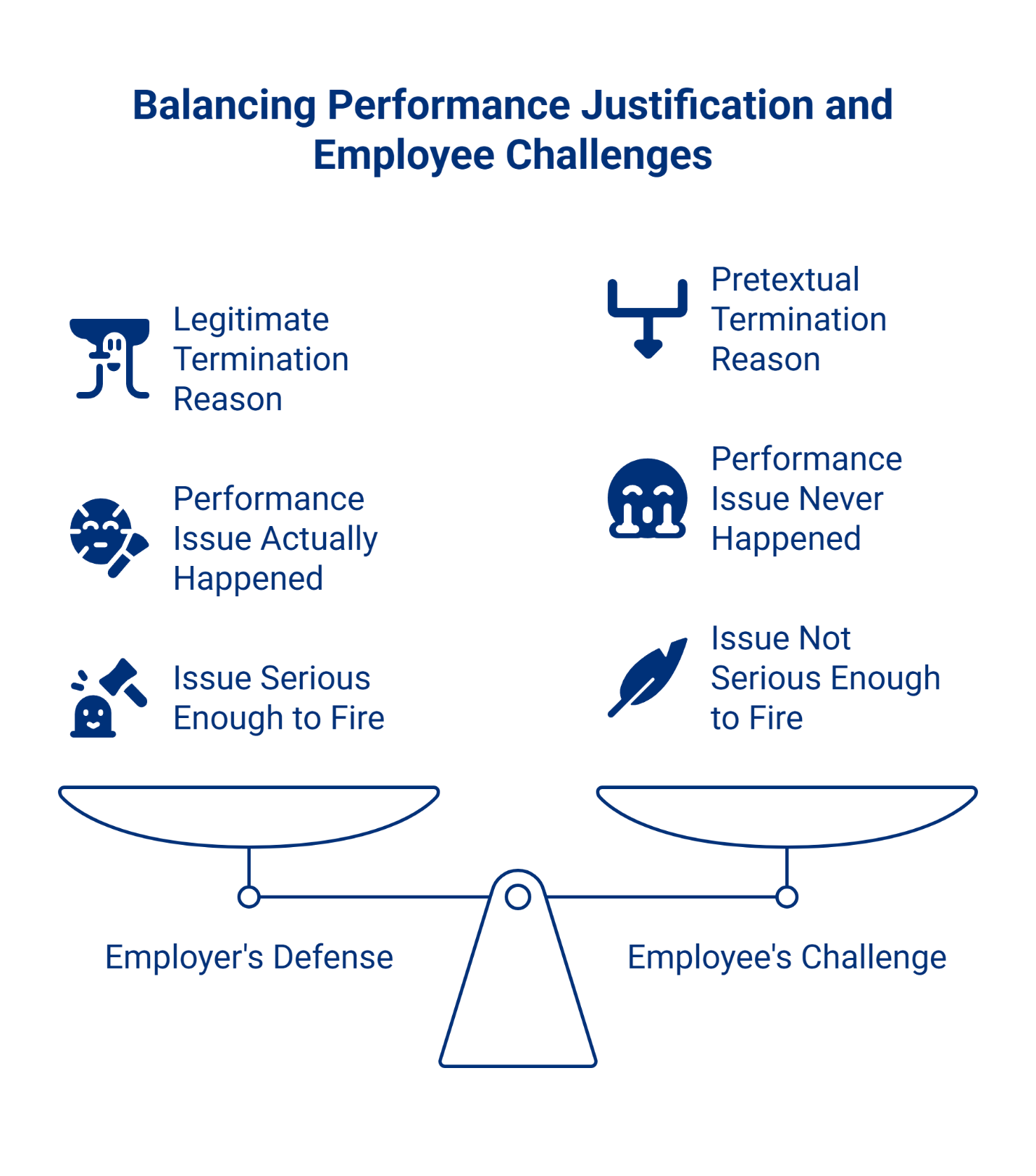
Under this rule, if an employee can show they were doing their job reasonably well but were still fired, the “burden” shifts to you to prove the termination was legitimate. The employee will then try to show that your stated reason was a “pretext”—essentially a legal cover story.
To win a “pretext” argument, an employee doesn’t just have to say you were wrong; they try to prove that:
- The performance issue you cited never actually happened.
- The issue wasn’t the real reason they were let go.
- The issue wasn’t serious enough to warrant firing them.
This turns a simple HR decision into a debate over your honesty. For example, if a doctor cites a single negative review to fire someone who had five years of “Exceeds Expectations” ratings, a jury may suspect the real motive was something else—like discrimination or retaliation for a recent medical leave. Inconsistent records don’t just look messy; they look like cover-up.
How Plaintiffs Commonly Challenge Performance Feedback and the Written Record
Performance evaluations and written records are central to wrongful termination claims. Employees often challenge the accuracy of performance feedback or claim that the evaluations were inconsistent with their prior performance reviews. Plaintiffs may argue that feedback provided informally or verbally differs from what appears in their official performance record, raising doubts about the legitimacy of the termination.
For example, an employee may argue that despite receiving positive evaluations for six months, they were abruptly terminated after a single, less favorable review. If performance feedback is inconsistent or lacks adequate documentation, it could potentially support the plaintiff’s claim that the termination was not related to performance, but rather to discriminatory or retaliatory reasons.
To mitigate these risks, medical practices should ensure that performance evaluations are documented thoroughly and consistently. Written records should be clear, objective, and supported by specific examples of the employee’s performance.
Why Consistent Discipline is Your Best Defense
Consistency isn’t just about fairness; it’s about legal protection. Plaintiffs often look for “selective enforcement”—instances where they were punished for something that other employees got away with.
If your employee handbook promises a “progressive discipline” path (such as a verbal warning, then a written warning, then a PIP), but you skip straight to termination for a minor performance issue, you have created a legal opening. California courts often view a departure from your own policy as evidence of a “hidden motive” (Villanueva v. City of Colton).
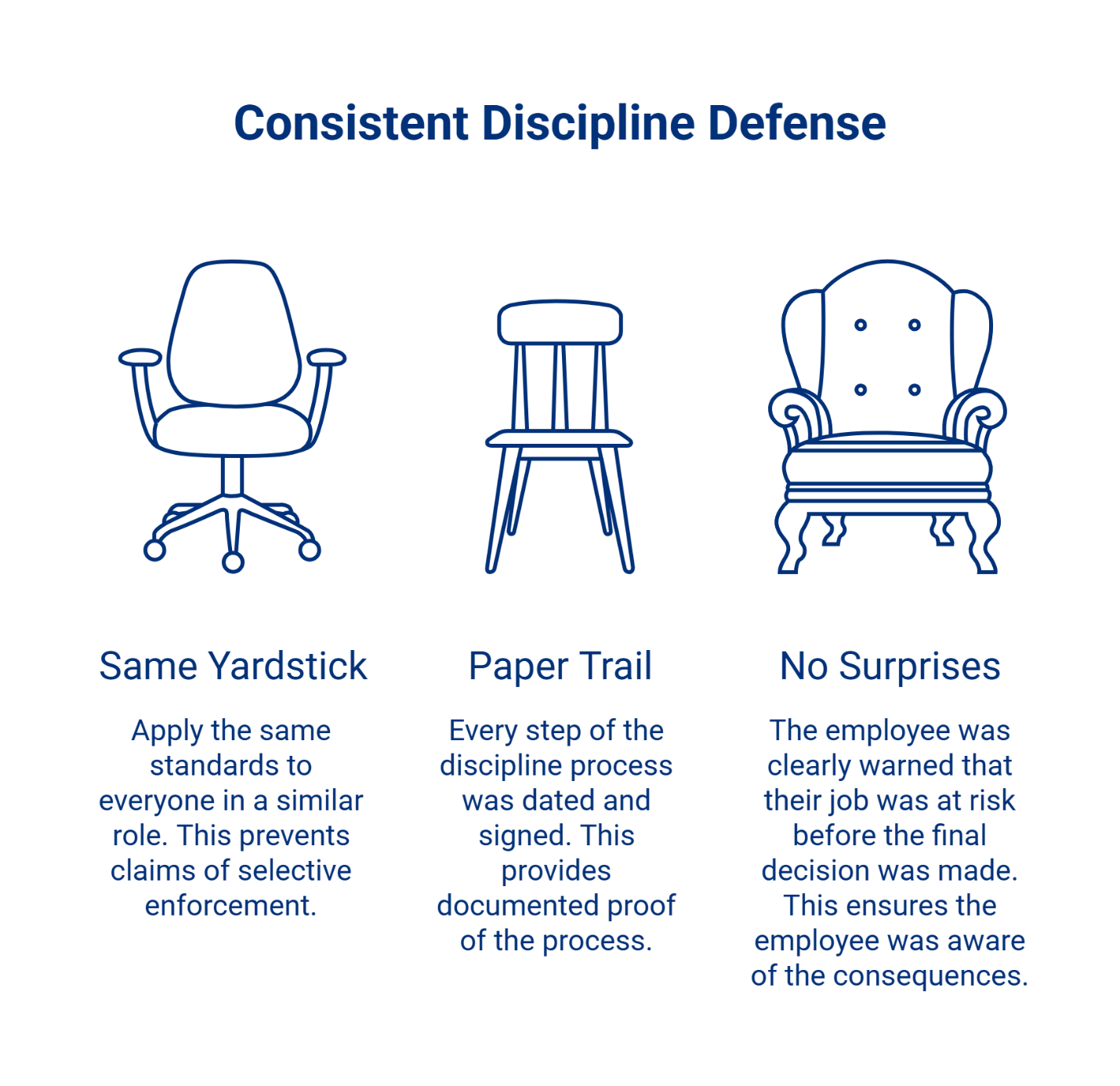
To protect the practice, you must be able to prove:
- The “Same Yardstick” Rule: You applied the same standards to everyone in a similar role.
- The Paper Trail: Every step of the discipline process was dated and signed.
- The “No Surprises” Factor: The employee was clearly warned that their job was at risk before the final decision was made.
How “Casual” Messages Can Sink a Strong Case
In a legal dispute, your internal communications—emails, Slack messages, and even text messages—become “Exhibit A.” Plaintiffs search these records for a shift in tone that suggests personal bias or frustration rather than professional concern.
A single informal comment can reshape the entire narrative. For example:
- The Risk: An email from a manager saying, “I’m tired of dealing with [Employee’s] appointments,” could be used to prove retaliation for a medical disability.
- The Contradiction: If your formal review says “Performance is the issue,” but your private messages say “We need someone younger in the front office,” your formal record loses all credibility.
The Golden Rule: Treat every internal message as if a judge or a jury will eventually read it. Ensure all written communication is professional, objective, and matches your formal performance files.
Why Comparisons with Other Employees Frequently Appear in Complaints
A common allegation in wrongful termination claims is that the plaintiff was treated unfairly compared to similarly situated employees. For example, a plaintiff might argue that they were terminated for performance issues while other employees who had similar or worse performance were not subjected to the same consequences. These comparisons can be powerful tools for plaintiffs, especially when there is a perception of unequal treatment.
Employers must be prepared to show that they applied performance management policies consistently across the board. For example, if other employees received opportunities to improve their performance or were subjected to lesser disciplinary action, it is important for the employer to demonstrate the differences in circumstances that justified the different treatment.
To defend against these types of claims, employers should maintain clear and consistent records of performance evaluations and disciplinary actions for all employees. This documentation should reflect the employer’s efforts to treat employees fairly and in accordance with company policies.
What These Disputes Can Mean for Small Medical Practices Facing Active Claims
For small medical practices in Southern California, the risks associated with wrongful termination claims related to performance management can be significant. In addition to the potential financial and reputational costs of defending such claims, these disputes can disrupt daily operations and divert valuable time and resources away from patient care.
The credibility of an employer’s performance documentation and internal practices will be central to the dispute. Medical practice owners must ensure that their performance management policies are clear, consistently applied, and well-documented to defend against claims effectively. Small practices may also consider consulting with legal counsel early in the process to mitigate the risk of costly and disruptive litigation.
Wrongful termination claims involving performance management often evolve into broader credibility disputes, especially when employees challenge the consistency of performance feedback, disciplinary actions, and the treatment of similarly situated colleagues. Medical practices must be diligent in maintaining clear, consistent, and well-documented performance records. By applying policies fairly and thoroughly documenting performance issues, employers can reduce the risk of wrongful termination claims. Early consultation with experienced employment attorneys is crucial to navigating these complex legal challenges and protecting the practice from potential exposure.
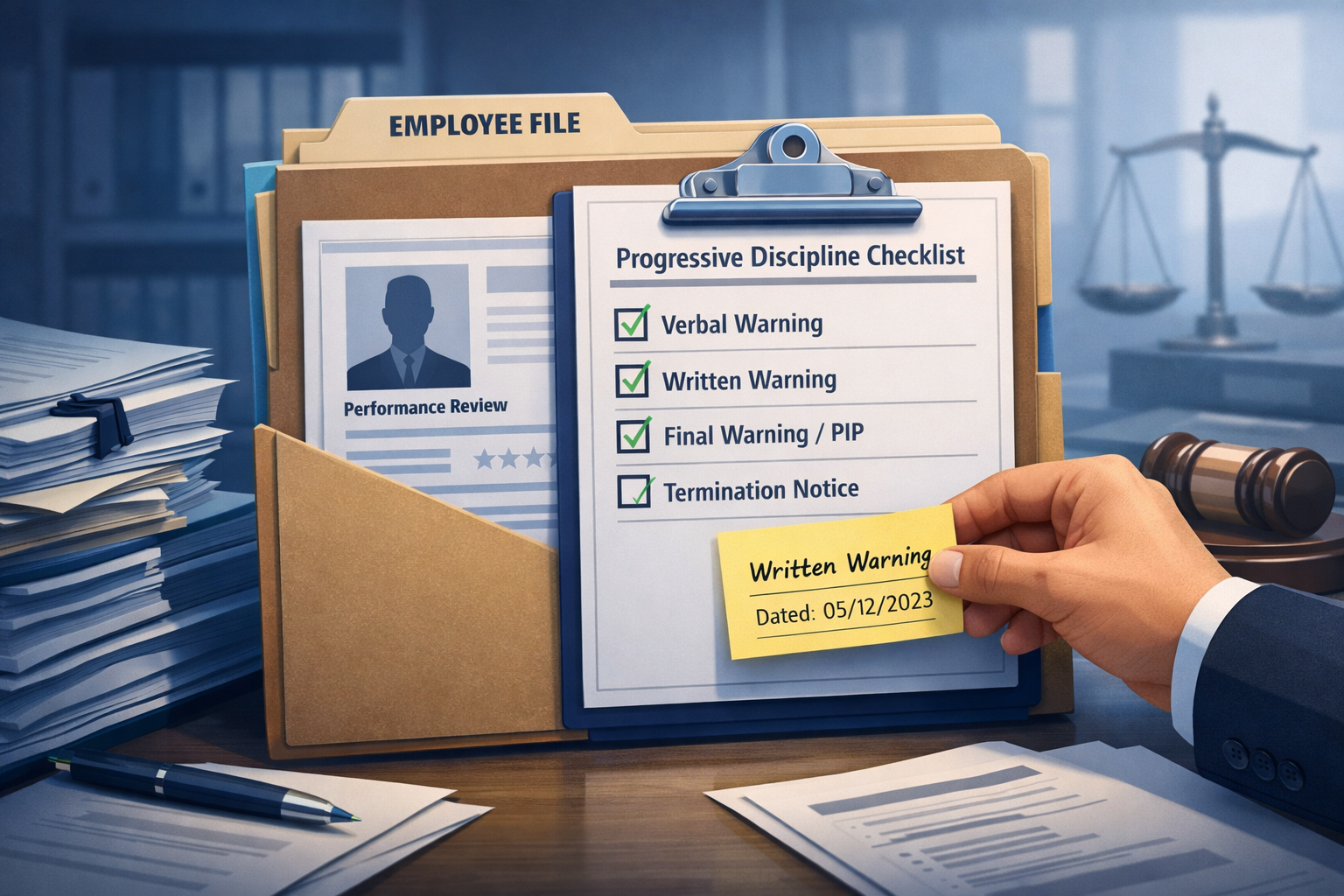
Progressive Discipline Checklist for California Medical Practices
To minimize the risk of a “Pretext” or “Wrongful Termination” claim, small medical practices must bridge the gap between informal feedback and a defensible legal record. Below is a structured checklist based on California labor law standards and the McDonnell Douglas framework.
- Policy Foundation & Notification
- [ ] Handbook Acknowledgement: Does the employee have a signed acknowledgement of the current Employee Handbook (updated within the last 24 months)?
- [ ] At-Will Clarification: Does the handbook explicitly state that employment is “At-Will” while also outlining that the practice generally follows progressive discipline?
- [ ] Notice of Standards: Has the employee been provided with a clear job description and the specific “Performance Standards” they are accused of failing?
- The Investigation & Documentation Phase
- [ ] Objective Evidence: Instead of “Bad Attitude,” does the file list specific dates, times, and patient/colleague complaints? (e.g., “Arrived 15 minutes late on 10/12, 10/14, and 10/15”).
- [ ] The “Similarly Situated” Check: Have other employees committed the same infraction? If so, were they disciplined identically?
Note: Inconsistent enforcement is the #1 trigger for discrimination claims.
- [ ] Internal Communication Audit: Review recent emails or Slack messages regarding this employee. Ensure no “casual” comments exist that could be interpreted as bias regarding age, disability, or pregnancy.
- The Progressive Step-Ladder
- [ ] Verbal Warning: Documented in the personnel file (even if informal).
- [ ] Written Warning #1: Clearly labels the behavior, the policy violated, and the required correction.
- [ ] Final Written Warning / PIP: Includes a “Performance Improvement Plan” (PIP) with a specific timeframe (e.g., 30, 60, or 90 days).
- Crucial: The PIP must state: “Failure to show immediate and sustained improvement may lead to further disciplinary action, up to and including termination.”
- Final Review Before Termination
- [ ] The “But-For” Test: If the employee’s protected status (e.g., they recently filed a Workers’ Comp claim) were removed from the equation, would you still fire them today based solely on this record?
- [ ] Opportunity to Respond: Did the employee have a chance to provide their version of events? (This bolsters “Procedural Fairness”).
- [ ] Final Paycheck Readiness: In California, a terminated employee must be paid all earned wages, including accrued vacation/PTO, at the time of termination.
Disclaimer:
This content is for informational purposes only. Laws, definitions, and deadlines change. Verify current requirements through official California sources. This content is not legal advice. No attorney-client relationship is formed through this content. Please consult a qualified attorney in your jurisdiction for legal advice specific to your situation.
Protect Your Business | The Akopyan Law Firm, A.P.C. | Top Gun Employment Lawyers
Have you been sued by an employee? Are you overwhelmed by the complexities of employment law? If so, give us a call. The Akopyan Law Firm, A.P.C. assists small business owners throughout Southern California. Our seasoned employment lawyers stand ready to help employers quickly and efficiently resolve employment disputes. We are ready to aggressively and skillfully defend against any employment case, but understand that in most situations avoiding the expense of litigation is in the client’s best interest.
Take the First Step Protecting Your Future: Call us today to speak with one of our experienced employment lawyers.
Contact Us Today:
- Phone: (818) 509-9975
- Office Locations in California: Los Angeles, Bakersfield, Costa Mesa, Temecula, Rancho Cucamonga, Oxnard, Culver City, and San Diego.