
📌 Key Takeaways
Wrongful termination claims can disrupt small California restaurants because one employment decision may trigger broader scrutiny of records, communications, timing, and overlapping allegations.
- Scrutiny Extends Widely: A termination dispute may involve schedules, payroll records, text messages, disciplinary notes, manager communications, and prior employee complaints.
- Timing Matters: When termination follows complaints, leave requests, accommodation discussions, or wage concerns, the former employee may frame the decision differently.
- Overlap Increases Exposure: Wrongful termination claims may connect with retaliation, discrimination, whistleblower activity, harassment, reasonable accommodation, leave, or wage-and-hour allegations.
- Restaurant Records Matter: Payroll data, break records, timekeeping entries, shift communications, and scheduling practices may become part of the factual context.
- Operations Still Continue: Owners and managers may face litigation pressure while still managing staffing, service quality, vendors, payroll, morale, and daily revenue.
One former employee’s claim can become a business-wide test of consistency, documentation, timing, and management judgment.
Small restaurant owners facing wrongful termination claims will gain a clearer view of litigation pressure, guiding them into the California employer-defense details that follow.
~ ~ ~ ~ ~ ~ ~ ~ ~ ~ ~ ~ ~ ~ ~ ~ ~ ~
A wrongful termination claim can disrupt a small California restaurant because the dispute may reach far beyond one former employee’s separation. The claim may place schedules, payroll records, timekeeping data, disciplinary notes, manager communications, text messages, and prior employee complaints under close review. For an owner-operated restaurant, that review can affect cash flow, staff morale, public reputation, and daily operations while the business still has to serve customers, manage employees, and control costs.
Under California employment law, generally, a wrongful termination claim may overlap with allegations involving retaliation, discrimination, whistleblower activity, medical leave, pregnancy-related concerns, disability-related issues, reasonable accommodation, harassment, or wage-and-hour disputes. The timing between protected activity and a later employment decision may also affect how the former employee frames the claim. When termination follows a protected complaint, leave request, accommodation discussion, or wage-related concern, the dispute may involve more than the restaurant’s stated business reason.
Small restaurants face a distinct challenge because the people with the most knowledge are often the same people responsible for keeping the business open. Owners and general managers may handle hiring, scheduling, discipline, payroll coordination, customer complaints, and termination decisions. A lawsuit, demand letter, or agency complaint can therefore pull key decision-makers away from the restaurant’s daily needs.
Why Small Restaurants Face Distinct Litigation Pressure
Small restaurants often operate through direct and informal management. A manager may adjust a schedule by text message. An owner may address attendance concerns during a busy shift. A supervisor may record performance concerns inconsistently because the restaurant is short-staffed. These facts do not, by themselves, determine the outcome of a claim. They may, however, affect how the employment decision is later characterized.
Larger employers may have human resources departments, in-house counsel, and multiple levels of review before an employment decision is made. While small restaurants often operate with lean management, the 2024 PAGA (Private Attorneys General Act) reforms have introduced a critical defense mechanism for these businesses. Employers who can demonstrate they took ‘all reasonable steps’ to comply—such as conducting periodic payroll audits and disseminating lawful written policies—can reduce potential PAGA penalties. This shift means that while informal systems remain a risk, proactive compliance now offers a statutory ‘safe harbor’ that can significantly mitigate litigation pressure.
Contemporaneous and consistent documentation may become significant because it helps explain the business context in which the decision occurred. Uniform application of established policies may also affect how the restaurant’s stated reason is evaluated. When similarly situated employees appear to have been treated differently, a former employee may use that comparison to challenge the restaurant’s explanation.
Wrongful Termination Claims Often Involve Overlapping Allegations
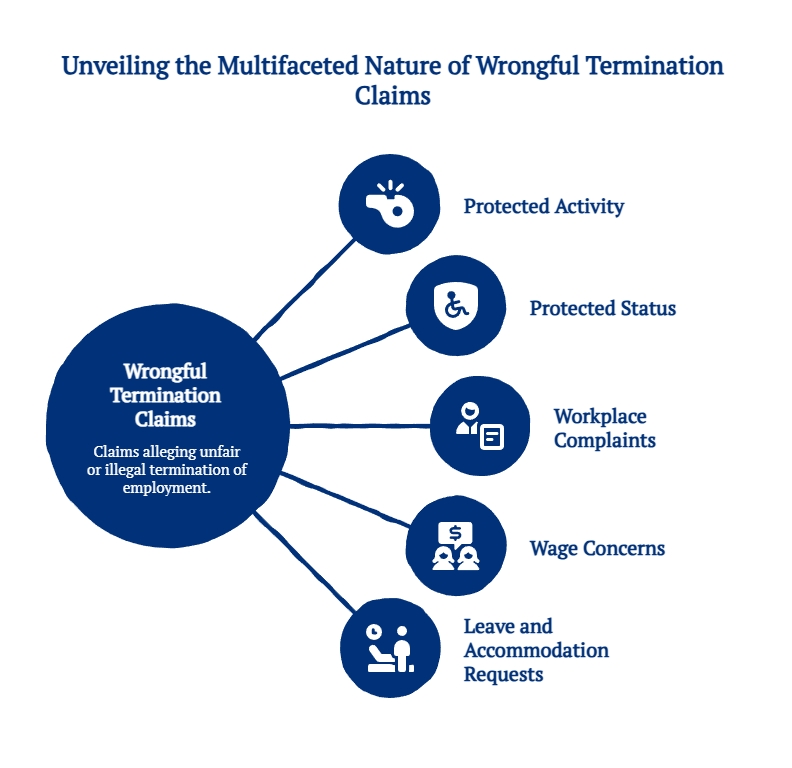
A wrongful termination claim may not remain limited to the final employment decision. A former employee may assert that termination followed protected activity, a protected status, a workplace complaint, a wage concern, or a request involving leave or accommodation. Protected activity may include workplace complaints, wage-related concerns, participation in an investigation, or reports about allegedly unlawful conduct, depending on the law and the facts involved.
The overlap may include, but is not limited to, allegations such as:
- A former employee alleges that termination followed complaints about wages, schedules, tips, overtime, or meal and rest periods.
- A former employee asserts that management reacted negatively after an illegal harassment, discrimination, or retaliation complaint.
- A former employee claims that termination occurred after medical leave, pregnancy-related concerns, disability-related communications, or a request for reasonable accommodation.
- A former employee contends that the restaurant punished internal complaints about workplace safety, legal compliance, or management conduct.
These allegations may expand the scope of the dispute. A case that begins with one termination decision may lead to review of payroll systems, break records, attendance notes, shift assignments, manager statements, and prior disciplinary practices.
Wage, Break, and Scheduling Records May Become Part of the Factual Context
Restaurant work depends on variable schedules. Employees may trade shifts, cover for coworkers, stay late during rush periods, leave early when business is slow, or communicate through scheduling platforms. Those ordinary workplace realities may become significant when a termination claim includes wage-related allegations.
A former employee may allege that termination was retaliatory following complaints regarding meal breaks, unpaid overtime, or minimum wage concerns—which, as of January 1, 2026, stands at $16.90 per hour or more depending on the size of the California employers. In the restaurant context, where fast-food workers may see even higher industry-specific rates, the intersection of wage-and-hour compliance and termination timing remains a primary focal point for litigation.
Payroll records, timekeeping data, break records, schedules, and shift communications may become part of the factual context because they reflect how the restaurant operated. The restaurant may describe the termination as based on attendance, performance, misconduct, restructuring, or business needs. The former employee may describe the same decision as retaliatory, discriminatory, or connected to complaints about workplace practices.
Management Communications May Receive Close Review
Small restaurants often rely on quick communication. Owners, general managers, kitchen managers, and shift leads may use text messages, handwritten notes, group chats, or verbal conversations to manage immediate staffing issues. Those communications may later be reviewed in connection with the timing, motivation, and consistency of an employment decision.
The wording of a manager’s message may affect how the communication is later characterized. A gap between a verbal warning and a written record may receive attention. A difference between one supervisor’s recollection and another supervisor’s message may become part of the dispute.
This is one reason unlawful workplace retaliation claims can increase the complexity of a termination dispute. Retaliation allegations often involve protected activity, timing, an employment decision, and the employer’s stated motivation. In a restaurant environment, those issues may intersect with shift coverage, complaints about working conditions, supervisor discretion, and fast-moving operational demands.
Leave, Accommodation, and Harassment Issues Can Add Complexity
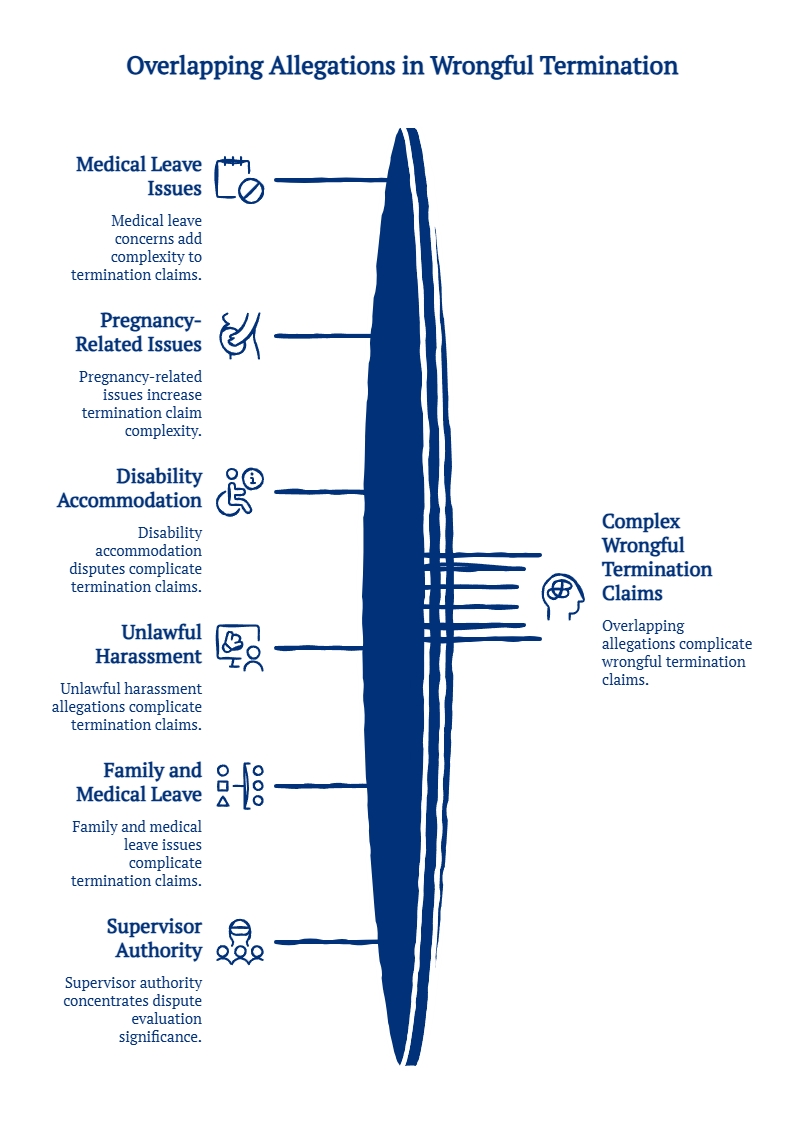
Wrongful termination claims may become more complex when the former employee raised concerns involving medical leave, pregnancy-related issues, disability, reasonable accommodation, or unlawful harassment before separation. Allegations involving reasonable accommodation disputes may focus on communications, timing, essential job functions, disability-related restrictions, and the interactive process. Disability-related communications and reasonable accommodation issues may implicate whether the interactive process was handled in good faith, depending on the specific facts.
Claims involving family and medical leave issues may place attendance decisions and return-to-work communications under closer review. Harassment allegations may also change the posture of a case. A former employee may allege that termination followed a complaint about supervisor conduct, coworker behavior, or a hostile work environment. In that context, sexual harassment claims may overlap with retaliation or wrongful termination theories.
For a small restaurant, overlapping allegations can be difficult because one manager may appear in several parts of the factual narrative. The same supervisor may have handled scheduling, discipline, complaints, and the termination decision. That concentration of authority may become significant when the dispute is evaluated.
Business Disruption Is Part of the Risk
A wrongful termination claim may affect more than potential legal exposure. A restaurant owner may worry about attorney fees, management time, employee morale, public reputation, and the possibility that one claim will invite broader scrutiny of restaurant practices.
The business must still operate. Customers still arrive. Employees still need schedules. Payroll still runs. Vendors still expect payment. When a legal dispute develops, ordinary business decisions may feel heavier because the owner is managing both the restaurant and the uncertainty created by the claim.
For closely held restaurants, that strain can be substantial. A lawsuit or agency complaint may require attention from the same owners and managers who are responsible for food quality, staffing, customer service, inventory, and daily revenue. Employment counsel and, where available, HR professionals can help evaluate the dispute while accounting for both legal exposure and operational disruption.
A small restaurant facing a lawsuit, demand letter, or agency complaint often requires case-specific legal evaluation. General information cannot determine the restaurant’s potential exposure, defenses, procedural posture, or litigation risk. Those issues depend on the allegations, documents, witnesses, timing, business records, and applicable California and federal employment laws.
Disclaimer:
This content is for informational purposes only. Laws, definitions, and deadlines change. Verify current requirements through official California sources. This content is not legal advice. No attorney-client relationship is formed through this content. Please consult a qualified attorney in your jurisdiction for legal advice specific to your situation.
Protect Your Business | The Akopyan Law Firm, A.P.C. | Top Gun Employment Lawyers
Have you been sued by an employee? Are you overwhelmed by the complexities of employment law? If so, give us a call. The Akopyan Law Firm, A.P.C. assists small business owners throughout Southern California. Our seasoned employment defense lawyers stand ready to help employers quickly and efficiently resolve employment disputes. We are ready to aggressively and skillfully defend against any employment case, but understand that in most situations avoiding the expense of litigation is in the client’s best interest.
Take the First Step Protecting Your Future: Call us today to speak with one of our experienced employment lawyers.
Contact Us Today:
- Phone: (818) 509-9975
- Office Locations in California: Los Angeles, Bakersfield, Costa Mesa, Temecula, Rancho Cucamonga, Oxnard, Culver City, and San Diego.