
📌 Key Takeaways
A restaurant wage complaint can become serious employment litigation when a former employee alleges a causal connection between protected activity and termination.
- Wage Complaints Escalate: A payroll dispute may become wrongful termination litigation when termination is alleged to follow wage-related protected activity.
- Timing Shapes Disputes: Proximity between a wage complaint and an employment decision may influence how retaliation allegations develop.
- Records Carry Context: Payroll records, schedules, time entries, tip records, and manager communications may be interpreted differently once litigation begins.
- Consistency Affects Credibility: Different treatment of similarly situated employees or deviations from established practices may create additional factual disputes.
- Small Restaurants Face Pressure: Owner-operated restaurants may experience legal exposure, management distraction, staff anxiety, reputational concerns, and operational strain.
When payroll, timing, and termination overlap, the dispute becomes larger than a wage issue.
California restaurant employers facing wage-and-hour-related wrongful termination claims will gain practical issue-spotting clarity here, guiding them into the claim-specific details that follow.
~ ~ ~ ~ ~ ~ ~ ~ ~ ~ ~ ~ ~ ~ ~ ~ ~ ~
A wage-and-hour complaint can become a wrongful termination lawsuit when a former restaurant employee alleges that termination, discipline, reduced hours, schedule changes, or another employment decision occurred because the employee raised concerns about wages, breaks, overtime, tips, or timekeeping. For California restaurant employers, that shift can turn what first appears to be a payroll dispute into broader employment litigation involving alleged retaliation, disputed motive, business records, witness credibility, and operational disruption.
When a Wage Complaint Becomes a Termination Dispute
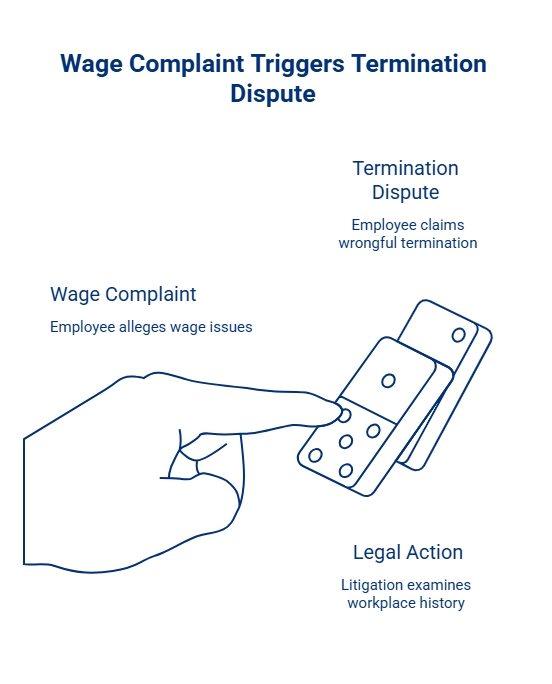
Restaurant employment disputes often begin with practical workplace issues. A former employee may allege missed meal periods, interrupted rest breaks, unpaid overtime, off-the-clock work, tip-related concerns, or inaccurate timekeeping. The dispute becomes more serious when the same employee also claims that the restaurant responded with termination or another negative employment decision.
Under California law, generally, wrongful termination claims may involve allegations that an employee was terminated for a legally prohibited reason. When wage-related complaints are involved, the former employee may characterize the complaint as protected activity and may allege a causal connection between that protected activity and the later termination. The restaurant may dispute that allegation and may contend that the employment decision was based on a legitimate business reason, such as performance, attendance, misconduct, restructuring, staffing needs, or other operational concerns.
That conflict often moves the case beyond payroll. The litigation may examine timing, communications, consistency, workplace history, and the credibility of the people involved.
Why These Claims Can Escalate Quickly in Restaurants
Restaurants operate in a fast-moving environment. Managers adjust schedules, servers trade shifts, kitchen employees cover gaps, owners step into daily staffing decisions, and managers and employees often communicate through quick texts or informal conversations. Those ordinary business realities may become part of the factual dispute once litigation begins.
For small restaurants, the pressure can be immediate. A claim may affect management time, employee morale, payroll administration, scheduling, and customer-facing operations. Owners may feel that routine decisions are being portrayed negatively after the fact. That concern is understandable, especially in closely held or family-operated restaurants where the owner often knows the employees personally and manages the business directly.
A claim involving one former employee may also raise broader questions if the allegations involve pay practices, break practices, time records, or treatment of other employees. That does not mean broader exposure exists in every case. It does mean that a wrongful termination claim tied to a wage complaint may require careful evaluation as an employment litigation matter.
How Wage-and-Hour Allegations Can Overlap with Retaliation Theories
A former employee’s wage complaint may involve alleged unpaid wages, overtime, meal periods, rest periods, tip practices, or timekeeping issues. Those allegations may overlap with wage and hour disputes, meal and rest break disputes, or overtime compensation claims.
The wrongful termination component adds another layer. The former employee may allege that the restaurant did not merely make a payroll error but instead took action because the employee complained. That allegation may bring protected activity, causal connection, and unlawful workplace retaliation into the dispute.
The restaurant may deny retaliatory motive. The litigation focus has shifted from the traditional ‘pretext’ analysis to the ‘contributing factor’ standard. Under Labor Code Section 1102.5, a plaintiff only needs to demonstrate by a preponderance of the evidence that their wage complaint was a contributing factor—not the sole or primary reason—for the termination. Once this is shown, the restaurant must meet a heightened ‘clear and convincing’ evidence standard to prove that the termination would have occurred even if the employee had never engaged in the protected activity.
Why Timing, Consistency, and Credibility May Matter
Timing receives rigorous scrutiny under California law. Pursuant to SB 497 (The Equal Pay and Anti-Retaliation Protection Act), effective January 1, 2024, there is a rebuttable presumption of retaliation if an employer takes adverse action—such as termination or discipline—against an employee within 90 days of a protected activity. This statutory presumption means that timing alone can establish a prima facie case of retaliation, shifting the burden to the restaurant to provide clear and convincing evidence that the decision was made for legitimate, non-retaliatory reasons.
Consistency may also matter. If similarly situated employees were treated differently, the former employee may attempt to use that difference to challenge the restaurant’s stated reason. If management communications vary from one explanation to another, credibility may become a central issue. If an employment decision appears to deviate from established policies or usual practices, that deviation may create additional factual disputes.
Common litigation themes may include the following:
- The employee may allege that a wage, break, overtime, tip, or timekeeping complaint occurred before the termination.
- The restaurant may dispute the complaint, the timing, the decision-maker’s knowledge, or the alleged connection between the complaint and the employment decision.
- Payroll records, schedules, time entries, tip records, disciplinary records, and manager communications may become relevant depending on the allegations.
- The parties may disagree about whether the termination reflected a legitimate business reason or an unlawful retaliatory motive.
These issues are often fact specific. They also explain why restaurant employers may view these claims as both legally serious and operationally disruptive.
Restaurant Records and Communications May Shape the Dispute
Wrongful termination claims involving wage-and-hour complaints often place restaurant records and communications under scrutiny. Payroll records, schedules, and manager messages remain central to these disputes. However, as of February 1, 2026, litigation will also scrutinize compliance with the Workplace Know Your Rights Act (SB 294). Employers are now required to provide an annual written notice to all employees—in their primary language—detailing their rights regarding retaliation, wage theft, and emergency contacts. In a retaliation claim, the presence or absence of this documented annual notice may be used to challenge the restaurant’s ‘good faith’ efforts to comply with California Labor laws. Contemporaneous and consistent documentation may become important when the parties present competing accounts of the same employment decision. Uniform application of established policies may also become relevant when the former employee alleges retaliatory motive or inconsistent treatment.
A record may appear routine to the restaurant but may be interpreted differently in litigation. A casual text message may be read without the urgency of a busy shift. A schedule change may be described as ordinary staffing management by the restaurant and as retaliation by the former employee.
This is one reason small restaurants can feel exposed. Informal systems may work operationally, but litigation often examines those systems through a more formal lens.
Why Small Restaurant Employers Face Distinct Business Pressure
A small restaurant with 5 to 30 employees may not have in-house employment counsel, a human resources department, or multiple management layers. Owners may handle hiring, scheduling, discipline, payroll questions, customer issues, and vendor problems in the same day. Managers may make daily staffing decisions while also supervising service, handling customer concerns, and coordinating with kitchen staff.
When a former employee brings a wrongful termination claim tied to a wage complaint, the business impact may extend beyond legal exposure. The restaurant may face management distraction, staff anxiety, reputational concerns, and financial pressure. For an owner-operated restaurant, the lawsuit may compete with the daily work of keeping the business functioning.
That business reality does not change legal standards. It does, however, explain why early involvement of employment defense attorney may matter when a claim raises alleged protected activity, disputed motive, timing, and wage-and-hour issues.
Employment Defense Representation for Restaurant Employers
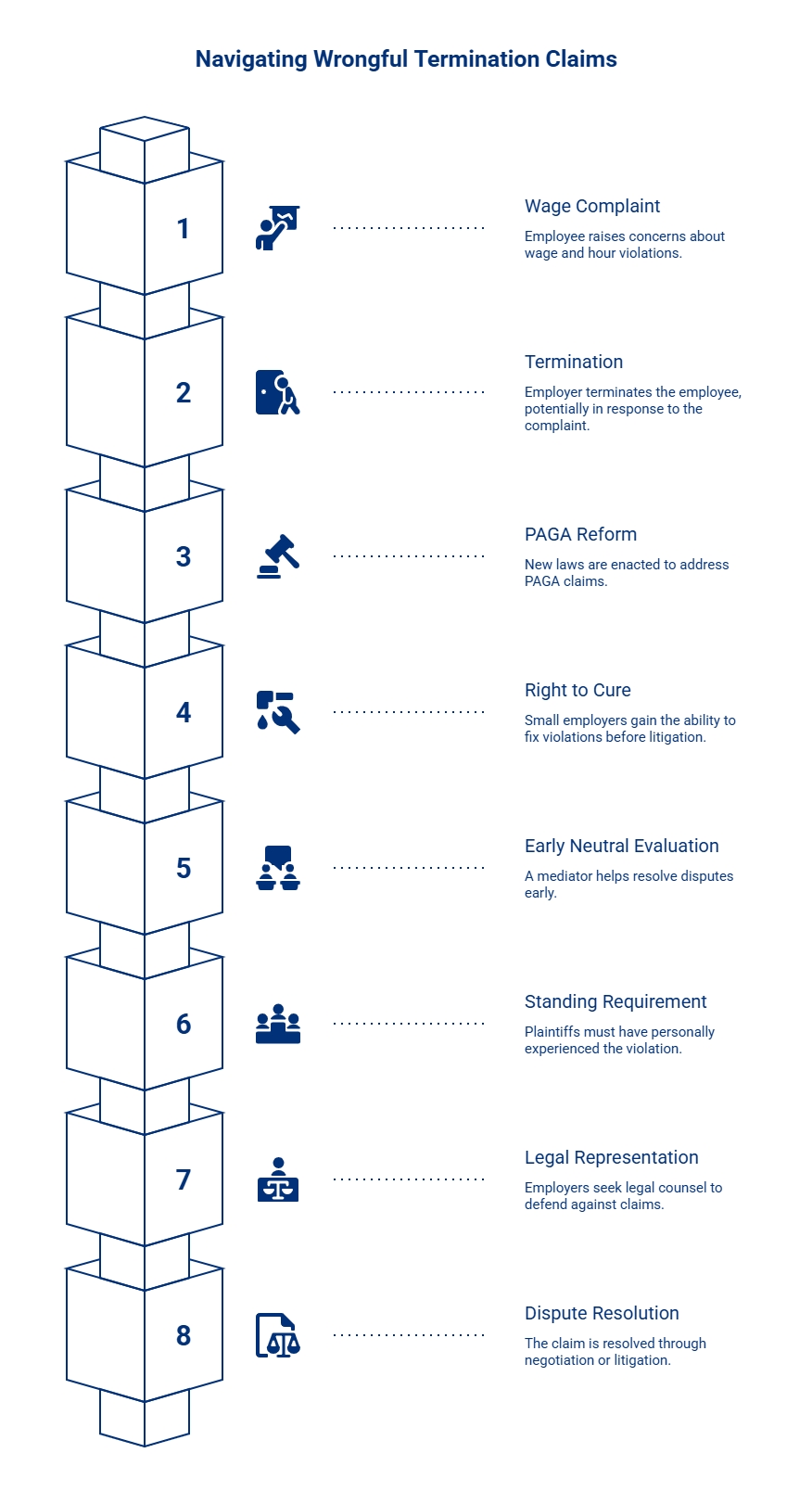
A wrongful termination claim tied to a wage-and-hour complaint may involve termination law, retaliation theories, and complex discovery. For California restaurant employers, representative actions under the Private Attorneys General Act (PAGA) add a significant layer of risk. Under the 2024 PAGA Reform (SB 92 and AB 2288), small employers now have expanded ‘Right to Cure’ provisions and may request an Early Neutral Evaluation to resolve certain violations before they escalate into high-stakes litigation. Furthermore, a plaintiff must now have personally experienced the alleged Labor Code violation within the statute of limitations to maintain standing for a representative claim.
Akopyan Law Firm, A.P.C. represents California employers in employment disputes, including wrongful termination claims involving overlapping wage-and-hour and retaliation allegations. For small restaurant owners, focused employment defense representation can help assess the legal and factual issues raised by the claim, evaluate potential exposure, and account for the operational pressure that litigation places on the business.
Disclaimer:
This content is for informational purposes only. Laws, definitions, and deadlines change. Verify current requirements through official California sources. This content is not legal advice. No attorney-client relationship is formed through this content. Please consult a qualified attorney in your jurisdiction for legal advice specific to your situation.
Protect Your Business | The Akopyan Law Firm, A.P.C. | Top Gun Employment Lawyers
Have you been sued by an employee? Are you overwhelmed by the complexities of employment law? If so, give us a call. The Akopyan Law Firm, A.P.C. assists small business owners throughout Southern California. Our seasoned employment defense lawyers stand ready to help employers quickly and efficiently resolve employment disputes. We are ready to aggressively and skillfully defend against any employment case, but understand that in most situations avoiding the expense of litigation is in the client’s best interest.
Take the First Step Protecting Your Future: Call us today to speak with one of our experienced employment lawyers.
Contact Us Today:
- Phone: (818) 509-9975
- Office Locations in California: Los Angeles, Bakersfield, Costa Mesa, Temecula, Rancho Cucamonga, Oxnard, Culver City, and San Diego.