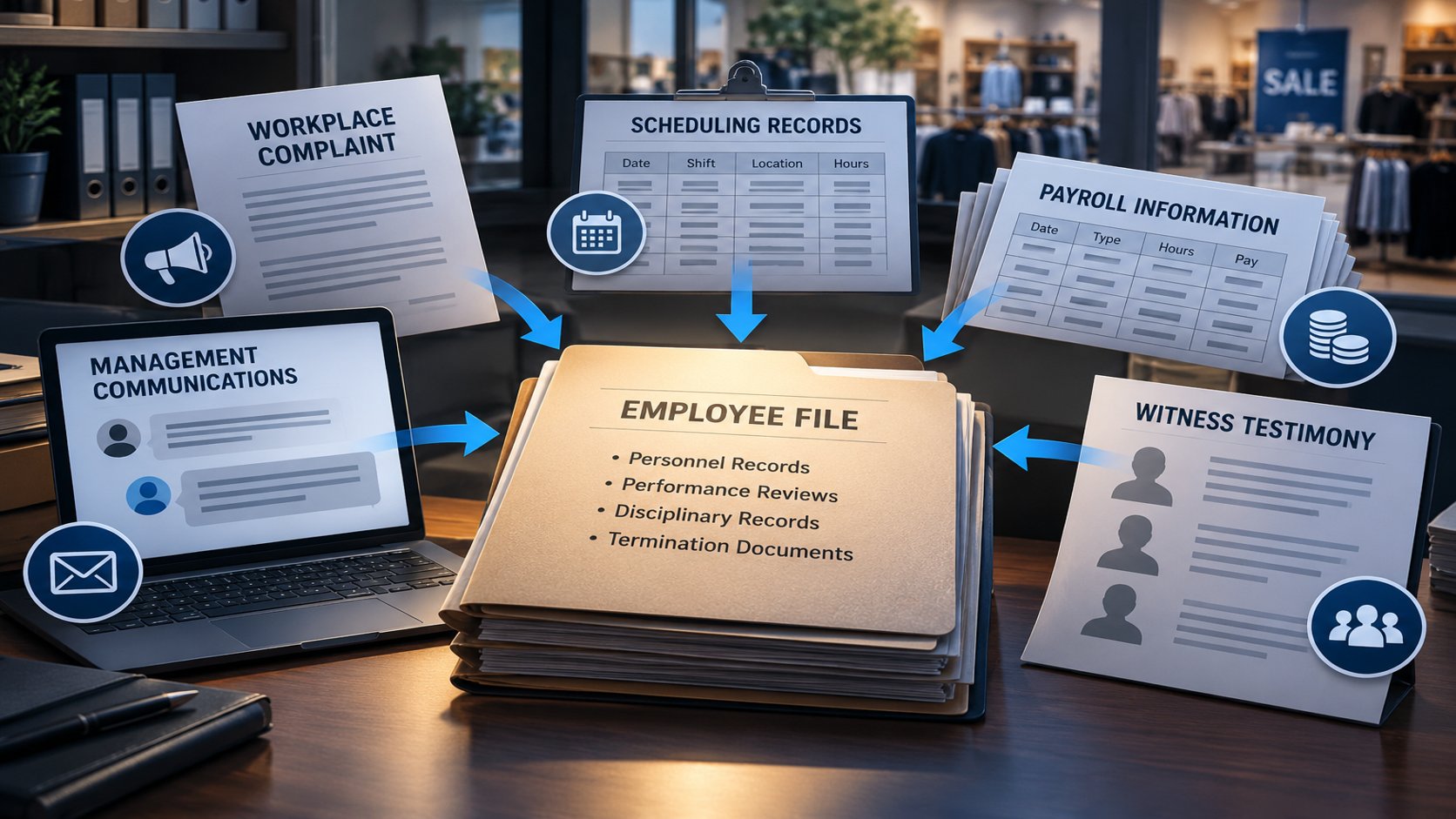
A workplace complaint followed by a disputed termination may connect causation, management communications, employment records, witness testimony, and business operations in one litigation record.
For Los Angeles retail employers facing active or imminent disputes, the discussion ahead focuses on how these factual and operational issues may intersect as litigation develops.
- Causation Can Become Central: A former employee may allege protected activity influenced a later challenged employment action while the employer asserts separate legitimate business reasons.
- Evidence Extends Beyond Termination: Scheduling records, payroll information, emails, text messages, personnel records, and witness testimony may become part of the disputed evidentiary record.
- Credibility May Shape Disputes: Different accounts from owners, managers, supervisors, and employees may make witness credibility material to disputed questions about what occurred and why.
- Claims May Multiply: A single termination dispute may involve wrongful termination, retaliation, discrimination, whistleblower, leave-related, disability-related, or wage-and-hour allegations, depending on the circumstances.
- Litigation Can Disrupt Operations: Small retailers may face management distraction, employee involvement, legal expenses, staffing pressure, and reduced attention to everyday customer-facing responsibilities.
One disputed employment decision can place the complaint, the employer’s rationale, the evidentiary record, and the business itself under simultaneous scrutiny.
~ ~ ~ ~ ~ ~ ~ ~ ~ ~ ~ ~ ~ ~ ~ ~ ~ ~
A workplace complaint followed by a disputed termination or other challenged employment action may place several factual issues under scrutiny at the same time. In litigation, a Los Angeles retail employer may face competing accounts concerning the employee’s complaint, the employer’s stated legitimate business reasons, management communications, existing employment records, and witness testimony.
For a small retailer without in-house legal counsel, those disputes may develop while owners and managers continue operating the store, supervising employees, serving customers, managing inventory, and overseeing payroll.
Why a Workplace Complaint and a Later Employment Decision May Become Connected
A former employee may allege that an earlier workplace complaint constituted protected activity and influenced a later challenged employment action. The employer may contend that the decision arose from separate performance, attendance, conduct, staffing, operational, or other legitimate business considerations.
Those competing accounts may place causation at issue in wrongful termination and retaliation litigation.
The parties may dispute what the employee reported, what relevant decision-makers knew, why the employer took the challenged employment action, and whether contemporaneous records correspond with later testimony. The sequence of events may receive scrutiny, but sequence alone does not determine whether retaliation or wrongful termination occurred.
Employment-Related Complaints May Become Relevant to Alleged Protected Activity
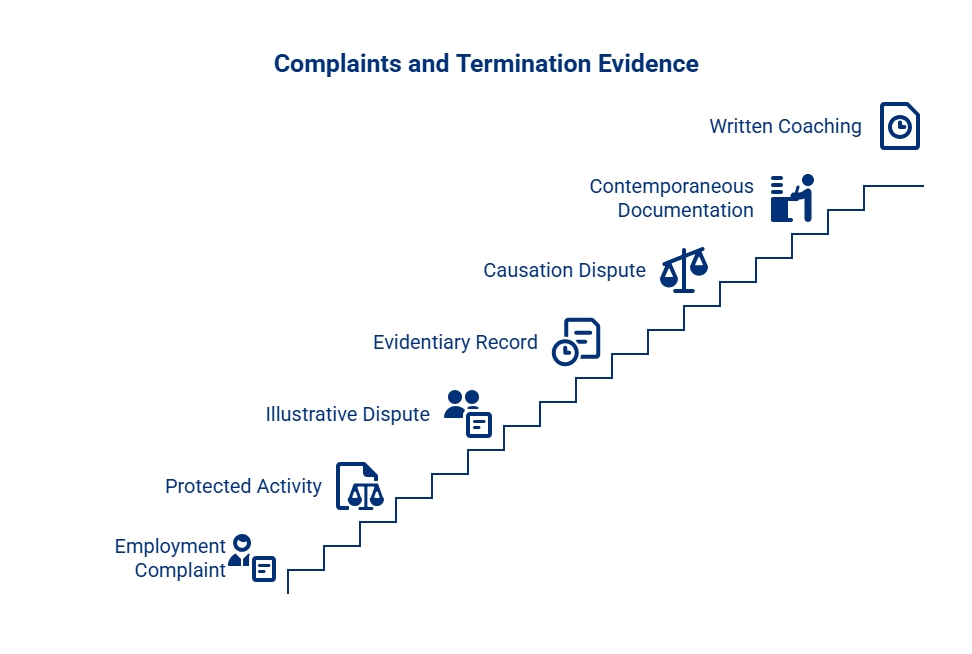
The underlying complaint may concern discrimination, harassment, compensation, working time, meal or rest periods, disability, pregnancy, medical or family leave, overtime, or other employment-related matters. These examples are not exhaustive, and whether a particular complaint constitutes protected activity depends on the applicable law and circumstances.
An illustrative dispute may involve a sales associate who raises a concern about unpaid meal breaks and is later terminated for reasons the employer attributes to separate performance or operational issues. If the former employee alleges that the complaint constituted protected activity and influenced the termination, the evidentiary record may include the complaint, the challenged employment action, management communications, and the sequence of events.
Neither the existence of a complaint nor the employer’s stated legitimate business reason independently resolves the disputed issue of causation. To protect the business, retail employers must ensure that routine performance or attendance issues are documented contemporaneously. If a manager addresses a scheduling violation with a sales associate, generating a written record of that coaching before any protected complaint occurs can serve as critical evidence that the employer’s legitimate business reason existed independently of the protected activity.
The Employer’s Stated Legitimate Business Reason May Become a Central Factual Issue
Retail employment decisions may involve performance concerns, attendance issues, customer-service problems, workplace conduct, staffing changes, scheduling difficulties, or operational needs. When a termination becomes disputed, the employer’s stated legitimate business reason may be compared with the surrounding evidence.
The parties may disagree about:
- Whether relevant concerns existed before the adverse employment action.
- Which managers participated in or understood the decision.
- Whether contemporaneous communications are consistent with later testimony.
- Whether different witnesses understood the same events differently.
Small retailers may operate through compact management structures in which owners, store managers, assistant managers, shift leads, and operations personnel communicate directly. Once litigation begins, those communications may become part of the evidentiary record concerning the reason for the challenged employment action.
Existing Retail Records May Become Part of the Evidentiary Record
Routine business records may become disputed evidence when the parties disagree about why an employment decision occurred. Depending on the allegations, the evidentiary record may include scheduling records, timekeeping data, payroll information, commission or bonus records, existing personnel records, emails, text messages, disciplinary records, leave-related communications, accommodation-related communications, customer complaints, and other records connected with the employment relationship.
An illustrative compensation dispute may involve an employee who raises concern about unpaid overtime. The employer later takes an employment action that management attributes to an unrelated business reason. If the employee alleges retaliation or wrongful termination, payroll information, existing communications, and witness testimony may support or conflict with the parties’ competing accounts.
A record rarely resolves a disputed employment claim by itself. Its significance may depend on how it relates to other evidence, decision-maker knowledge, and witness testimony.
Management Communications and Witness Testimony May Affect Causation Disputes
Wrongful termination and retaliation litigation may involve testimony from owners, store managers, supervisors, shift leads, current employees, former employees, and other individuals with relevant knowledge.
Different witnesses may remember conversations, complaints, performance concerns, or employment decisions differently. The parties may compare existing communications with witness testimony when they dispute what occurred and why.
An illustrative workplace-conduct dispute may involve an employee who reports sexual harassment involving a supervisor and later experiences a disputed separation. The former employee may allege that the complaint constituted protected activity connected to the separation, while the employer may attribute the decision to unrelated considerations. When witnesses describe the same events differently, credibility may become part of the factual dispute over causation.
A Single Termination Dispute May Involve Multiple Employment Claims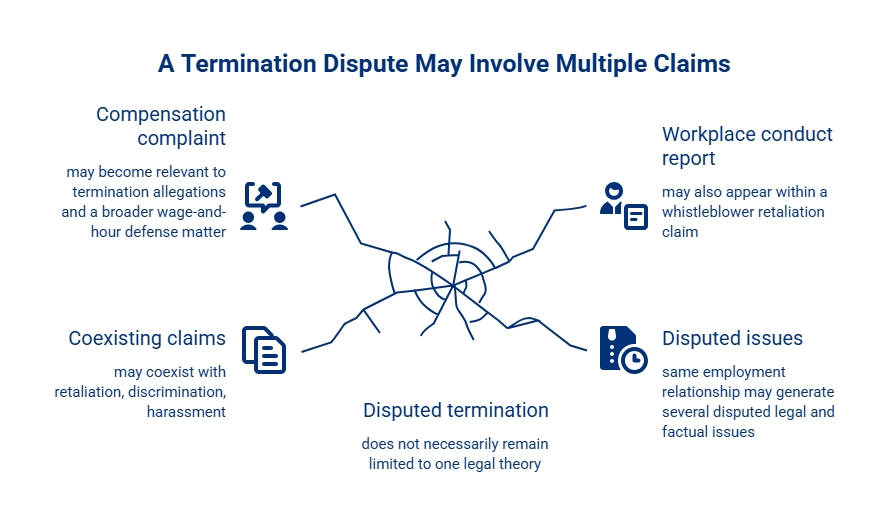
A disputed termination does not necessarily remain limited to one legal theory. Depending on the allegations, wrongful termination may coexist with retaliation, discrimination, harassment, disability-related claims, leave-related claims, whistleblower allegations, or wage-and-hour issues.
For example, a compensation complaint may become relevant to both termination allegations and a broader wage-and-hour defense matter. A report concerning allegedly unlawful workplace conduct may also appear within a whistleblower retaliation claim.
The presence of multiple claims does not establish liability. It reflects how the same employment relationship may generate several disputed legal and factual issues.
Active Litigation May Disrupt a Small Retail Business
Employment litigation may affect them more than the legal claims themselves. Owners and managers may have less time available for store operations while participating in the dispute. Current employees may become witnesses, and management attention may shift away from staffing, inventory, payroll, customer service, and other day-to-day responsibilities.
Litigation expenses may create financial pressure. Pending allegations may also affect employee relationships, management credibility, customer-facing reputation, and business-planning certainty.
For a retailer with only a few decision-makers, the litigation process may demand substantial management attention while the business continues serving customers and maintaining store operations.
How Wrongful Termination and Retaliation Litigation May Progress
An escalated employment dispute may involve a demand or formal allegation, an administrative proceeding where applicable, a civil complaint, discovery, depositions or other testimony, settlement-related proceedings, motion practice, and trial if the matter remains unresolved.
As litigation progresses, additional witnesses, records, communications, and disputed factual issues may enter the evidentiary record. The scope of the dispute may therefore expand beyond the original termination decision.
Why Employer-Side Litigation Experience May Be Relevant
Employer-side employment litigation involving a small retailer may combine wrongful termination and retaliation allegations with the practical realities of a customer-facing business.
Relevant litigation experience may encompass disputed employment records, management communications, witness testimony, scheduling information, and payroll or timekeeping records when those materials form part of the allegations. The matter may also involve discovery, depositions, motion practice, settlement-related proceedings, and other formal stages of litigation.
Defending these claims involves managing a contested employment matter that has already developed into, or is approaching, formal proceedings. It is distinct from routine personnel administration or general workplace management.
Employers facing an active or imminent dispute may consult a qualified employment attorney regarding matter-specific timing and legal issues.
Disclaimer:
This content is for informational purposes only. Laws, definitions, and deadlines change. Verify current requirements through official California sources. This content is not legal advice. No attorney-client relationship is formed through this content. Please consult a qualified attorney in your jurisdiction for legal advice specific to your situation.
Protect Your Business | The Akopyan Law Firm, A.P.C. | Top Gun Employment Defense Lawyers
Have you been sued by an employee? Are you overwhelmed by the complexities of employment law? If so, give us a call. The Akopyan Law Firm, A.P.C. assists small business owners throughout Southern California. Our seasoned employment defense lawyers stand ready to help employers quickly and efficiently resolve employment disputes. We are ready to aggressively and skillfully defend against any employment case, but understand that in most situations avoiding the expense of litigation is in the client’s best interest.
Take the First Step Protecting Your Future: Call us today to speak with one of our experienced employment lawyers.
Contact Us Today:
-
- Phone: (818) 509-9975
- Office Locations in California: Los Angeles, Bakersfield, Costa Mesa, Temecula, Rancho Cucamonga, Oxnard, Culver City, and San Diego.