

📌 Key Takeaways
Termination after family medical leave in California’s retail, restaurant, and hospitality jobs often raises serious questions about disability rights, retaliation, and job protection.
- Front-Line Workers At Risk: Workers in front-line store, restaurant, and hotel roles often face sudden termination after taking time off for serious health conditions or caregiving.
- Laws Protect Medical Leave: Federal and California laws like FMLA, CFRA, FEHA, and the ADA aim to protect eligible employees who use qualifying family medical leave.
- Red Flags After Return: Sharp schedule cuts, sudden write-ups, or claims that medical appointments are too disruptive, especially when others take similar roles, can signal retaliation concerns.
- Industry Pressures Create Vulnerability: Tight staffing, fluctuating customer demand, and pressure to keep labor costs low can push managers to sideline workers who needed legally protected time away.
- Legal Review Clarifies What Happened: A California employment attorney can review timelines, documents, and workplace behavior to assess whether termination reflects lawful business reasons or potential legal violations.
When family medical leave collides with sudden job loss, the story in schedules, comments, and timing often matters as much as the paperwork.
California retail, restaurant, and hospitality workers facing termination after family medical leave will see their own experiences reflected here, preparing them for the detailed overview that follows.
For many California retail, restaurant, and hospitality workers, family medical leave becomes necessary after a serious health condition or a major medical event affecting a close family member. When a job suddenly disappears right after that leave, the experience can feel shocking and deeply unfair. In some situations, this kind of job loss may be connected to wrongful termination, disability discrimination, or retaliation for using protected family medical leave.
Who This Happens to in Retail, Restaurant, and Hospitality Work
In Southern California, these problems often affect the people who keep stores, restaurants, and hotels running from the ground up. Cashiers, stockers, sales associates, warehouse floor workers, servers, bussers, line cooks, dishwashers, baristas, hotel housekeepers, front-desk clerks, banquet staff, and porters spend long hours on their feet, lifting, bending, and moving quickly under pressure.
A back or leg injury, surgery, chronic illness, or other serious medical condition can make that physical work extremely difficult. Many workers also carry responsibility for a spouse, child, or parent with serious health conditions. When a worker uses family medical leave or asks for time away to care for a loved one, the paycheck at stake often supports rent, food, and basic bills for the entire household.
When termination follows soon after that leave, many workers report feeling shocked, angry, and ashamed, wondering whether asking for time away was a mistake. This combination of physical strain, caregiving duties, and sudden job loss is exactly where family medical leave and disability protections often come into play.
Family Medical Leave and Serious Health Conditions – A High-Level Overview
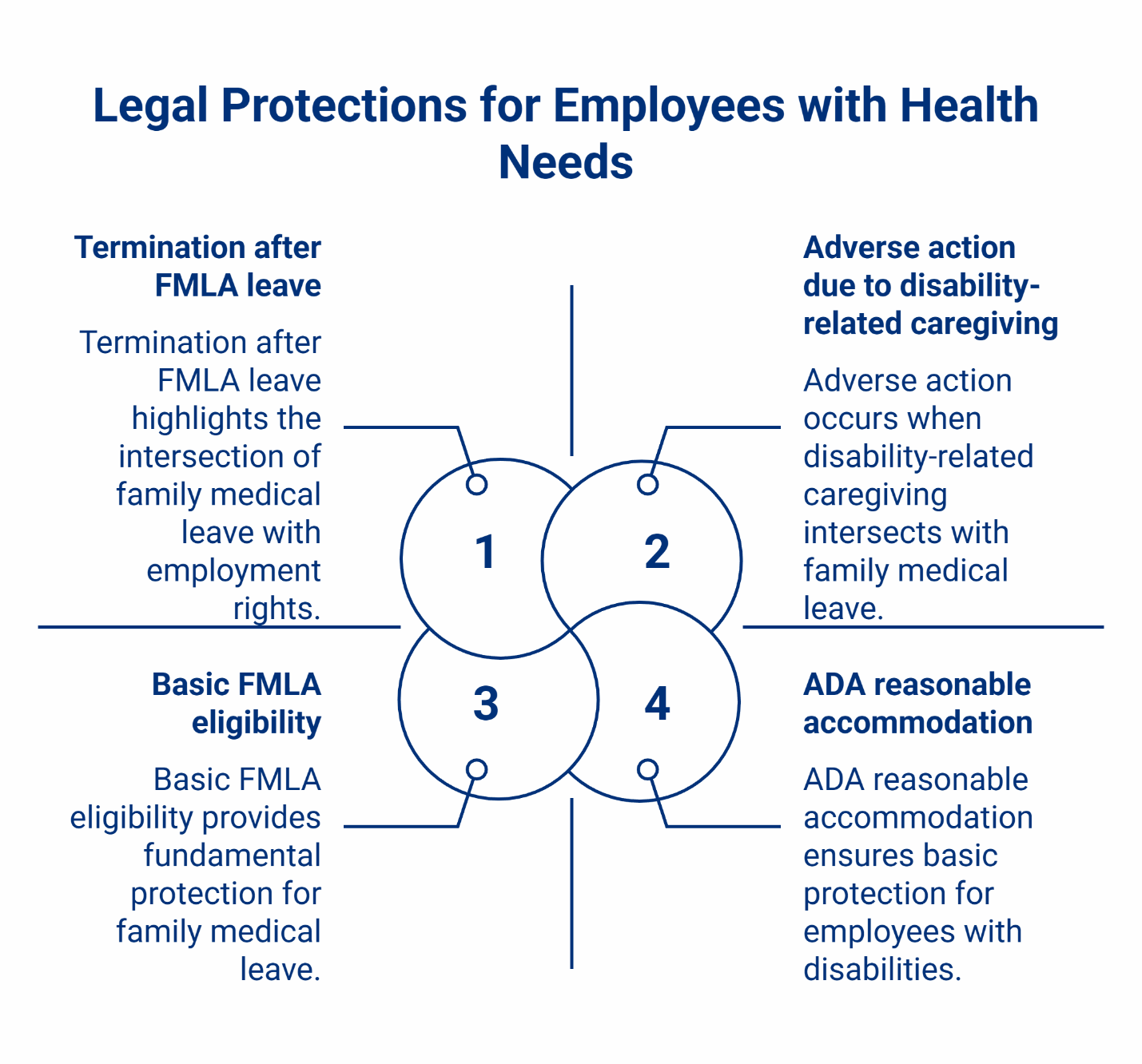
Federal and California laws, including the Family and Medical Leave Act (FMLA) and the California Family Rights Act (CFRA) aim to protect eligible employees who need time off for their own serious health condition or to care for certain close family members. These laws are designed so that qualified workers can take protected family medical leave without being terminated simply because they needed that time away.
California’s Fair Employment and Housing Act (FEHA) and the Americans with Disabilities Act (ADA) also provide protections in many situations for employees with disabilities or qualifying medical conditions. In some cases, those protections intersect with family medical leave when an employer takes adverse action tied to a worker’s health needs or caregiving responsibilities.
Eligibility, coverage, and length of leave are technical questions that depend on employer size, hours worked, job duties, and other details. Laws can change, and different sets of facts can lead to different results. For that reason, many workers consider speaking directly with a family medical leave or FMLA violation attorney to understand how these rules might apply to their own situation.
Red Flags After Family Medical Leave in Retail, Restaurant, and Hospitality Jobs
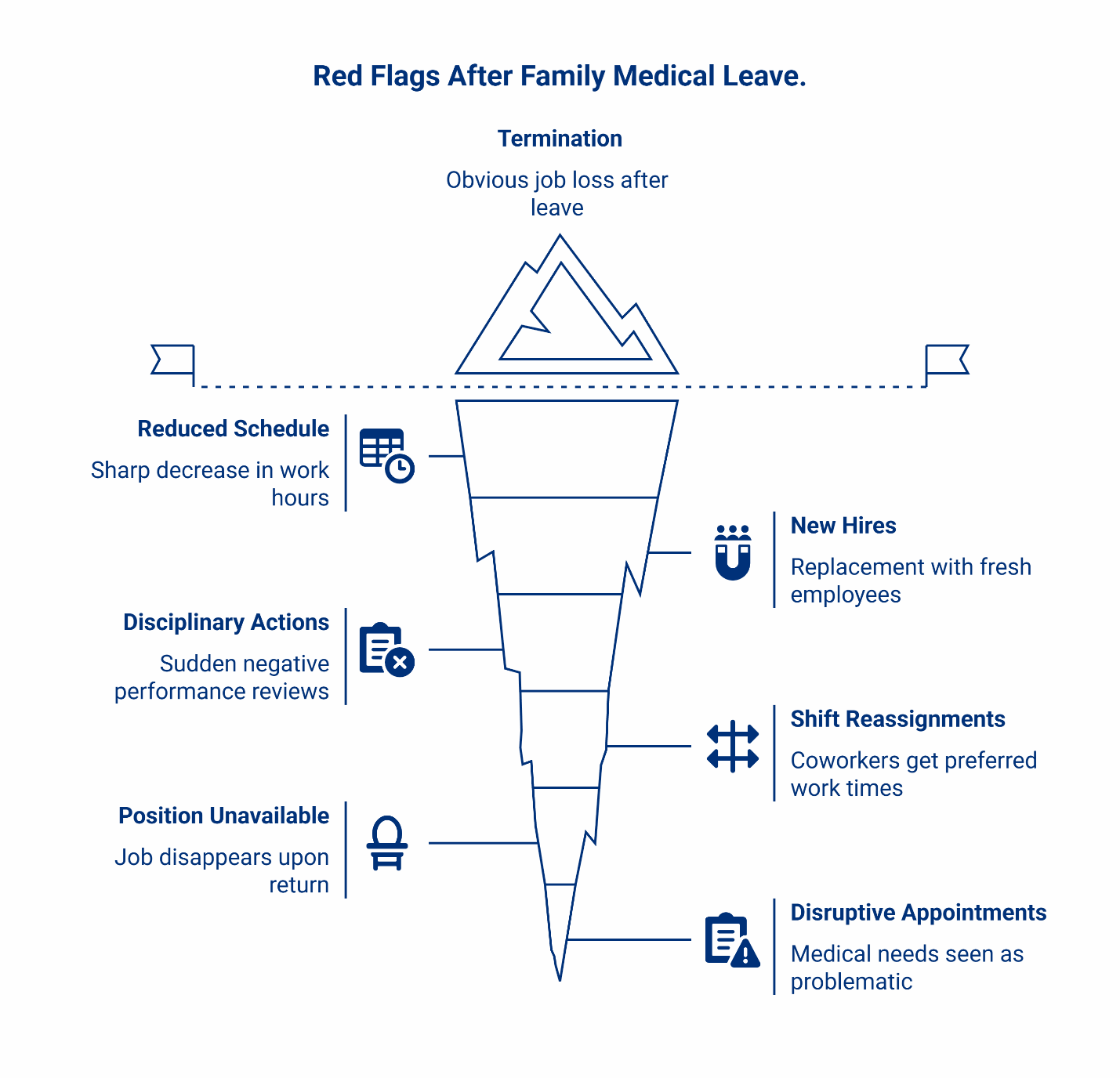
Certain patterns can signal that a termination after family medical leave may be tied to more than simple “business needs.” These patterns do not automatically prove anything on their own, but they can raise serious questions.
In a retail store, a worker might take family medical leave for surgery or a serious illness and return to find their schedule sharply reduced while new hires perform nearly identical tasks on the sales floor or in the stockroom. A supervisor may say the store needs “people who can be here all the time” around the same period that the worker is written up or terminated.
In a restaurant, a server, barista, or line cook may have a clean record for years, then suddenly face discipline only after asking for time away to care for a child, spouse, or parent with a serious medical condition. Shifts may be reassigned to coworkers who did not use leave, with comments about reliability or loyalty. A termination soon after can feel less like coincidence and more like retaliation for using protected leave.
In hotels and other hospitality settings, a housekeeper who takes protected leave for a disability or qualifying medical condition may be told there is “no position available” upon return, even while the property continues advertising similar roles. A front-desk worker may hear that medical appointments are “too disruptive for staffing” and later be terminated after relying on family medical leave.
In many situations like these, the combination of timing, comments, and changes in treatment may suggest issues involving wrongful termination due to family medical leave, disability discrimination, or retaliation, especially when the worker had been performing well before taking leave.
Why Retail, Restaurant, and Hospitality Workers Are Especially Vulnerable
Retail, restaurant, and hospitality operations often run on tight staffing and fast turnaround. Managers juggle changing schedules, fluctuating customer volume, and pressure to keep labor costs low. In that environment, any request for extended time away can be viewed as a disruption.
Some supervisors respond to these pressures by favoring employees who never ask for time off, even when a different worker’s need for leave is legally protected. Scheduling decisions, shift assignments, and staffing changes may gradually push a worker who used family medical leave to the margins. Over time, this can lead to termination that appears to be about “availability” or “performance,” even though the sequence of events points toward family medical leave retaliation in California workplaces.
None of these pressures excuses discrimination based on disability, medical condition, or protected family medical leave use. The law, rather than day-to-day managerial preferences, sets the baseline for what is permissible.
The Role of a California Employment Attorney in These Situations
A California employment attorney who regularly handles wrongful termination, disability discrimination, and retaliation claims can review what happened before, during, and after family medical leave. That review may include schedules, write-ups, text messages, emails, and internal policies to see whether the employer’s actions appear consistent with lawful business reasons or suggest unlawful motives tied to protected leave or disability.
At a general level, a wrongful termination lawyer or workplace retaliation lawyer can compare those facts with established principles under FMLA, CFRA, FEHA, and the ADA, and then explain potential options in a private consultation.
Many workers find it reassuring to have an attorney walk through the timeline with them, identify potential red flags, and explain which laws may be involved. That conversation is often the only reliable way to understand whether a termination after family medical leave may involve actionable violations.
Disclaimer:
This content is for informational purposes only. Laws, definitions, and deadlines change. Verify current requirements through official California sources. This content is not legal advice. No attorney-client relationship is formed through this content. Please consult a qualified attorney in your jurisdiction for legal advice specific to your situation.
Protect Your Rights | The Akopyan Law Firm, A.P.C. | Top Gun Employment Lawyers
Have you been wrongfully terminated from your job? Have you suffered discrimination, harassment, or retaliation in the workplace? Has your employer violated wage and hour laws? If so, we can help. The Akopyan Law Firm, A.P.C. is dedicated to protecting and enforcing employees’ rights throughout Southern California. With a 97% success rate and millions recovered for our clients, our team of experienced and talented employment lawyers can fight to secure the justice you deserve.
Take the First Step Towards Securing Justice: Call us today to speak with one of our experienced employment lawyers. The firm offers case evaluations free of charge.
Contact Us Today:
- Phone: (818) 509-9975
- Office Locations: Los Angeles, Bakersfield, Costa Mesa, Temecula, Rancho Cucamonga, Oxnard, Culver City, and San Diego in California.
Important: Contacting the Akopyan Law Firm, A.P.C. does not create an attorney-client relationship, but all communications will remain private and confidential. Each case is unique. The Akopyan Law Firm, A.P.C., does not guarantee any outcome.