
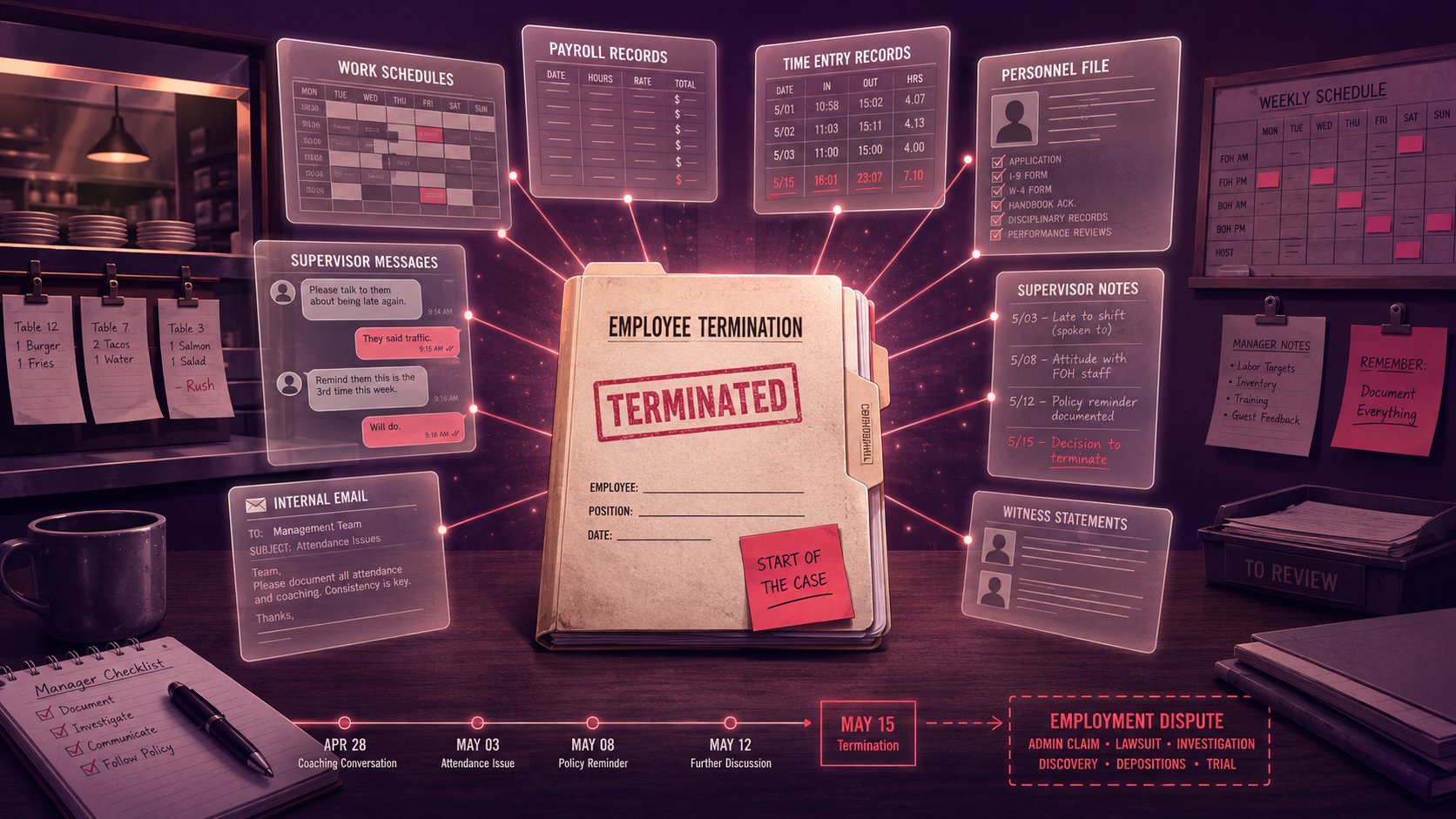
📌 Key Takeaways
A California restaurant wrongful termination claim often expands because the termination may become the final event in a much broader employment dispute.
- Claims Often Multiply: A single discharge may be pleaded alongside retaliation, discrimination, failure to accommodate, or wage-and-hour allegations arising from the same employment relationship.
- Timing Drives Scrutiny: Termination after protected activity, a legally protected complaint, or a leave-related request may intensify scrutiny of motive, causation, and management decision-making.
- Records Shape Exposure: Payroll records, schedules, time entries, personnel files, and internal messages may become central when the employer’s stated reason is challenged.
- Supervisors Create Evidence: Texts, informal remarks, inconsistent write-ups, and uneven policy enforcement may influence whether the broader record appears credible and defensible.
- Operational Strain Increases Fast: For owner-operated restaurants, expanded pleading may raise defense costs, absorb management time, and disrupt daily business operations well beyond the termination itself.
The firing may start the case, but the employment relationship often becomes the real subject of the dispute.
Southern California restaurant owners facing wrongful termination exposure will gain immediate clarity here, guiding them into the California-specific details that follow.
~ ~ ~ ~ ~ ~ ~ ~ ~ ~ ~ ~ ~ ~ ~ ~ ~ ~
This article provides general information only, not legal advice. Under California law, generally, a wrongful termination claim against a restaurant owner employer may expand beyond the discharge decision because the plaintiff may allege that the termination was tied to a larger pattern of events, communications, or workplace decisions. The specific analysis may vary with the allegations, the documentary record, and the facts developed in the case.
A wrongful termination case often becomes broader because the termination may be treated as the last event in a longer employment dispute. In many California restaurant cases, the complaint may focus not only on the employer’s stated reason for termination, but also on chronology, prior complaints, comparative treatment, payroll records, scheduling history, supervisor communications, and the consistency of the employer’s documentation. That broader focus may increase employer exposure, enlarge the documentary record, and raise defense costs in ways that small restaurant owners did not anticipate when the dispute first surfaced.
Why a Wrongful Termination Claim May Broaden Into a Larger Employment Dispute
A wrongful termination claim rarely stays confined to the final termination meeting once litigation begins. In many employment disputes, the plaintiff may allege that the discharge followed protected activity, a complaint about discrimination, harassment, an employee’s request for medical leave, a request for reasonable accommodation, or a disagreement about pay practices. When those allegations appear together, one termination decision may be pleaded under several California employment laws at the same time.
That dynamic is especially relevant in restaurant settings. Restaurant employers often make staffing decisions quickly. Managers and supervisors often communicate by text message or other informal channels. Schedules, time records, and payroll records often change week to week. For that reason, a termination decision may become only one part of a broader factual record rather than the entire case.
How Other Allegations May Attach to the Same Termination Decision
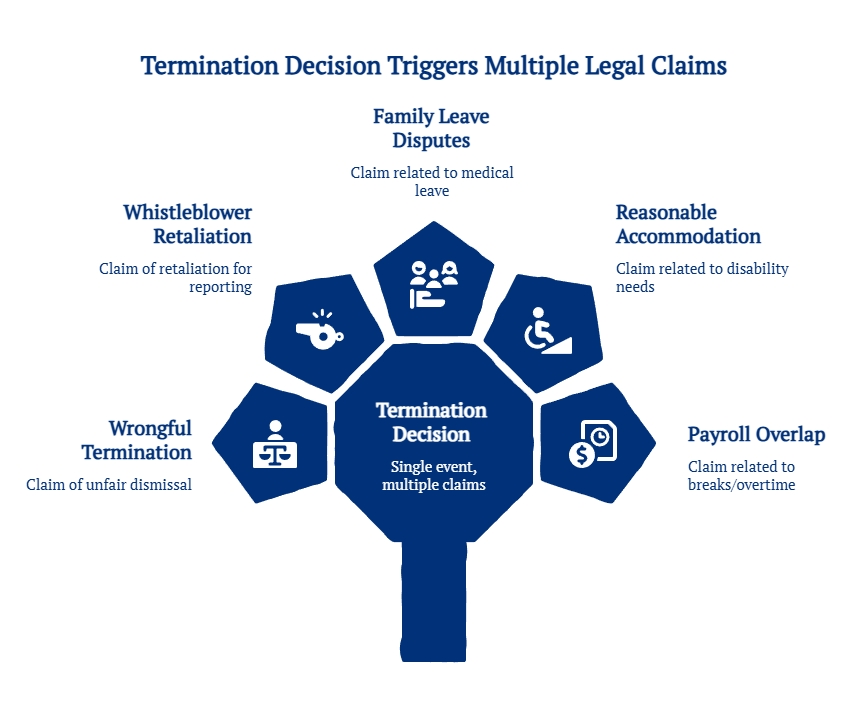
In many cases, the complaint may claim that the termination overlapped with other legal theories arising from the same employment relationship. Typical allegations may include wrongful termination, whistleblower retaliation, disputes involving family medical leave, reasonable accommodation, or payroll-related overlap involving meal and rest breaks or overtime compensation. The same factual record may therefore support several claims at once, even when management viewed the matter as a single termination dispute.
Causation often becomes central. If the plaintiff alleges that a supervisor disciplined an employee shortly after protected activity, or that management terminated an employee after a request for leave or accommodation, the employer’s decision-making process may face broader scrutiny. Under California law, generally, proximity between protected activity and adverse action, inconsistent documentation, or deviation from stated policy may increase the significance of the surrounding record.
Why Restaurant Employers Often Face a Larger Documentary Record
Restaurant operations often generate evidence in multiple places at once. A manager may send text messages about attendance. A supervisor may discuss discipline informally before a write-up appears in a personnel file. Payroll records, schedules, time entries, and staffing adjustments may all become relevant to the same dispute. As a result, litigation may draw in personnel records, payroll records, time records, schedules, internal messages, and communications among owners, managers, and supervisors.
For small, owner-operated restaurants, that expansion can be particularly disruptive. The owner, a managing partner, or an operations leader may be both a key witness and the person responsible for day-to-day business continuity. When the documentary record broadens, the dispute may place pressure on operations, staffing, and management attention at the same time.
How Timing, Documentation, and Supervisor Conduct May Shape the Case
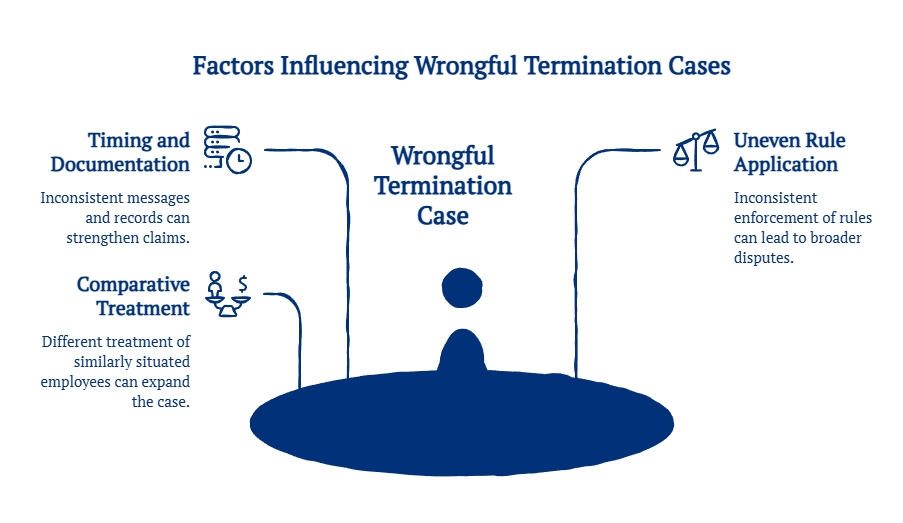
In many wrongful termination disputes, the strength of the allegations may depend heavily on timing and documentation. If a supervisor’s messages conflict with the employer’s stated reason for termination, that inconsistency may become part of the plaintiff’s theory. If management applied stated rules unevenly, or if the personnel record does not align with payroll records, schedules, or earlier communications, those gaps may affect how the case is framed. Contemporaneous, consistent documentation often matters because later explanations may be measured against what managers and supervisors recorded before litigation began.
Comparative treatment may also widen the dispute. If the plaintiff alleges that similarly situated employees received different treatment, the case may turn into a broader examination of how the employer handled discipline, scheduling, complaints, or exceptions across the workplace, not just how one employee was terminated.
Why Expanded Pleading Often Increases Cost and Business Burden
When multiple allegations travel with a wrongful termination claim, the case may become more document-intensive, more witness-intensive, and more credibility-driven. Discovery may extend into records and communications that management did not initially view as central. Motion practice may become heavier. Employer exposure may increase because the dispute is no longer about one decision alone, but about whether the broader employment record appears consistent, defensible, and aligned with the employer’s stated position.
For Southern California restaurant owners facing active litigation, a demand letter, or an agency complaint, that broader reality often matters as much as the termination itself. A wrongful termination allegation may begin with the discharge decision, but the employment relationship often becomes the real subject of the case. Strict deadlines may apply, failure to respond may carry serious consequences, including default risk, and employers facing any complaint, lawsuit, or regulatory notice should promptly involve qualified employment defense attorney.
Disclaimer:
This content is for informational purposes only. Laws, definitions, and deadlines change. Verify current requirements through official California sources. This content is not legal advice. No attorney-client relationship is formed through this content. Please consult a qualified attorney in your jurisdiction for legal advice specific to your situation.
Protect Your Business | The Akopyan Law Firm, A.P.C. | Top Gun Employment Lawyers
Have you been sued by an employee? Are you overwhelmed by the complexities of employment law? If so, give us a call. The Akopyan Law Firm, A.P.C. assists small business owners throughout Southern California. Our seasoned employment defense lawyers stand ready to help employers quickly and efficiently resolve employment disputes. We are ready to aggressively and skillfully defend against any employment case, but understand that in most situations avoiding the expense of litigation is in the client’s best interest.
Take the First Step Protecting Your Future: Call us today to speak with one of our experienced employment lawyers.
Contact Us Today:
- Phone: (818) 509-9975
- Office Locations in California: Los Angeles, Bakersfield, Costa Mesa, Temecula, Rancho Cucamonga, Oxnard, Culver City, and San Diego.