

For small California retailers facing an unlawful termination claim, earlier changes in hours, duties, or store assignments may become part of the dispute.
- Earlier Decisions May Matter: A former employee may allege that a scheduling change, duty change, or store reassignment was connected to the later termination.
- Timing Provides Factual Context: The order of employment decisions may draw scrutiny, but timing alone does not establish why the employer acted.
- Scheduling Reasons May Be Disputed: An employee and employer may give different accounts of why scheduled hours changed during an operational staffing change.
- Store Assignments Involve Both Locations: A disputed reassignment may bring the employee’s role, staffing circumstances, and managers’ communications at both stores into focus.
- Small Teams Face Competing Demands: Owners and managers may need to address a formal claim while continuing to cover shifts, serve customers, and manage inventory.
The claim’s significance depends on the particular allegations and facts, while the stores continue to operate.
~ ~ ~ ~ ~ ~ ~ ~ ~ ~ ~ ~ ~ ~ ~ ~ ~ ~
A California retail employer may face an unlawful termination claim that involves decisions made before the employee’s termination. A former employee may allege that reduced hours, changed duties, or a reassignment between stores formed part of the treatment the employee challenges. The employer may attribute those decisions to staffing or operational needs. The significance of each change depends on the facts and the allegations; the change alone does not establish why the employer terminated the employee.
For a small retailer, the dispute unfolds while owners and managers continue to cover shifts, serve customers, and manage inventory.
The Sequence of Decisions May Become Disputed
An unlawful termination claim may concern several employment decisions, not solely the final one. The former employee and employer may disagree about when a schedule, role, or store assignment changed, who made the decision, and what reason the employer gave at the time. Existing records and accounts from the people involved may shed light on those questions.
If the former employee also alleges discrimination or retaliation, the employee may claim that an earlier change was connected to the later termination. The employer may dispute that connection. The order of events provides context, but timing alone does not establish the reason for either decision.
Under California law, if an employer intentionally creates working conditions so intolerable that a reasonable person would be forced to resign—such as a drastic, punitive reduction in hours—it is considered a ‘constructive termination.’ The law treats this the same as if the employer had formally fired the employee.
Reduced Hours May Put Scheduling Decisions in Focus
Retail schedules can change with customer demand, deliveries, weekend staffing, and opening or closing coverage. In a termination dispute, the former employee may challenge the employer’s reason for changing particular hours or shifts.
In one illustrative situation, a small retailer changes a sales associate’s scheduled hours during an operational staffing change. The retailer later terminates the employee. The employee alleges that a protected characteristic or activity led to the reduction in hours leading ultimately to the unlawful termination. The dispute may bring the existing schedules, staffing circumstances, and management’s explanation into focus.
The manager who assigned the shifts may have firsthand knowledge of the scheduling decision. That manager may also need to continue overseeing daily store coverage while the claim is pending.
Changed Duties May Raise Questions About an Employee’s Role
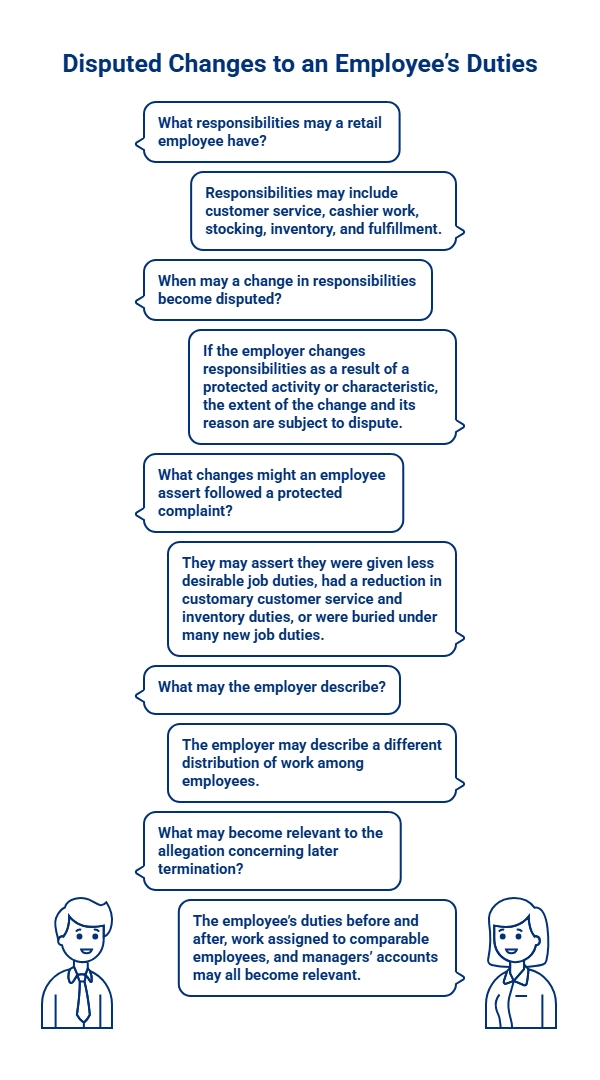
A retail employee’s responsibilities may include customer service, cashier work, stocking, inventory, and fulfillment. If the employer changes those responsibilities as a result of a protected activity or characteristic, then the extent of the change and its reason is subject to dispute.
For example, an employee may assert that after making a protected complaint, they were given less desirable job duties or there was a reduction in customary customer service and inventory duties, or that the employer buried the employee under many new job duties. The employer may describe a different distribution of work among employees. The employee’s duties before and after, the work assigned to comparable employees, and managers’ accounts may all become relevant to the allegation concerning the later termination.
A Store Reassignment May Involve Both Locations
A retailer with two storefronts may reassign an employee to address a staffing need. If the retailer later terminates the employee, the employee may challenge the reason for the reassignment or allege that it was connected to other disputed employment events.
The claim may bring attention to the employee’s role at each store, staffing circumstances at both locations, and what the managers involved communicated about the move. Managers at the two stores may have knowledge of different parts of the decision. Their involvement may affect operations at both locations while the dispute continues.
Related Allegations May Broaden the Factual Dispute
An employee may connect a change in hours, duties, or store assignment to an allegation involving discrimination, whistleblower retaliation, a request for accommodation, leave, or a wage complaint. For example, an employee who requested an accommodation may allege that a later change in duties was related to that request. The employer may give a different account of the decision.
Such allegations do not establish that a workplace change or termination violated the law. They identify the employment events and reasons that the parties may dispute. Existing schedules, assignment information, payroll records, and manager communications may bear on different parts of that history.
A Formal Claim Can Disrupt a Small Retail Business
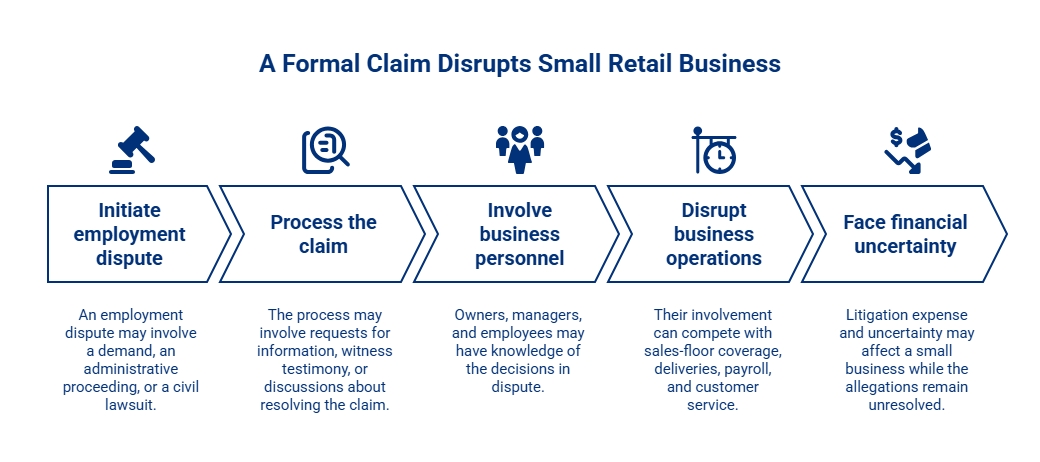
An employment dispute may involve a demand, an administrative proceeding, or a civil lawsuit. Depending on the matter, the process may later involve requests for information, witness testimony, or discussions about resolving the claim. Its course depends on the particular allegations and proceeding.
Owners, managers, and employees may have knowledge of the decisions in dispute. Their involvement can compete with sales-floor coverage, deliveries, payroll, and customer service. Litigation expense and uncertainty may also affect a small business while the allegations remain unresolved.
Employment Defense Counsel’s Role in an Active Claim
In an active wrongful termination matter, employment defense counsel may assess the former employee’s allegations, the employer’s account, the stage of the proceeding, and the existing factual record. That assessment may include the alleged connection between earlier changes in working conditions and the termination.
Disclaimer:
This content is for informational purposes only. Laws, definitions, and deadlines change. Verify current requirements through official California sources. This content is not legal advice. No attorney-client relationship is formed through this content. Please consult a qualified attorney in your jurisdiction for legal advice specific to your situation.
Protect Your Business | The Akopyan Law Firm, A.P.C. | Top Gun Employment Defense Lawyers
Have you been sued by an employee? Are you overwhelmed by the complexities of employment law? If so, give us a call. The Akopyan Law Firm, A.P.C. assists small business owners throughout Southern California. Our seasoned employment defense lawyers stand ready to help employers quickly and efficiently resolve employment disputes. We are ready to aggressively and skillfully defend against any employment case, but understand that in most situations avoiding the expense of litigation is in the client’s best interest.
Take the First Step Protecting Your Future: Call us today to speak with one of our experienced employment lawyers.
Contact Us Today:
- Phone: (818) 509-9975
- Office Locations in California: Los Angeles, Bakersfield, Costa Mesa, Temecula, Rancho Cucamonga, Oxnard, Culver City, and San Diego.