

📌 Key Takeaways
Job-security threats that appear after an employee requests job-protected family and medical leave may indicate potential retaliation or interference with leave rights.
- Threats Follow Leave: Threats tied to “attendance,” “reliability,” or replacement—especially when they follow a protected leave request—may be relevant evidence in a retaliation analysis.
- Warnings Sound Coded: New negative labels (for example, “not dependable” or “not committed”) that start after leave is discussed may function as pressure to discourage leave or to justify later discipline.
- Pressure Varies by Job: In shift-based and physically demanding roles, employers may apply pressure through scheduling changes, reduced hours, or reassignment after a protected leave discussion.
- Discipline Signals Escalation: Discipline that begins or escalates after a protected leave request—such as write-ups, final warnings, or reduced hours—may constitute an adverse employment action and can support a retaliation analysis.
- Lawyers Decode Patterns: An employment attorney may evaluate eligibility for CFRA/FMLA protections, the timeline of events, and whether the facts may support claims such as retaliation, interference, or—where conditions become intolerable—constructive discharge.
A single comment is rarely the whole story. Patterns and timing can matter. Keeping a clear record of who said what, when it was said, and what changed at work can help clarify next steps.
This article explains common ways job-security pressure may show up after a protected leave request and why the sequence of events can matter under California law.
~ ~ ~ ~ ~ ~ ~ ~ ~ ~ ~ ~ ~ ~ ~ ~ ~ ~
In California, eligible employees may have job-protected family and medical leave under the California Family Rights Act (CFRA) and, depending on eligibility and employer size, the federal Family and Medical Leave Act (FMLA). Pregnancy-related disability leave may also be job-protected under California’s Pregnancy Disability Leave (PDL) law and may run concurrently with FMLA in some situations. When job-security threats or adverse changes follow a protected leave request, the timing may be relevant to whether an employer retaliated or interfered with protected leave rights.
Some employees first notice job-security pressure after they ask for time off for their own serious health condition, to bond with a new child, or to care for a family member. The pressure may come in the form of direct threats, remarks about “attendance,” or comments about how easily someone else could take the employee’s role.
When Talking About Job-Protected Leave Suddenly Makes Your Job Feel Unsafe
For many workers, the shift starts with a straightforward conversation: the employee tells a supervisor that they need job-protected leave, time off for medical appointments, or a reduced schedule during treatment. After that disclosure, the supervisor’s tone may change. The employee may hear comments that frame leave-related absences as a “reliability problem” or as an unacceptable burden on the team.
This dynamic can be especially common in physically demanding or shift-based roles where staffing coverage is tight and supervisors closely track attendance. Even when a leave request is legally protected, an employer may treat the request as a reason to question the employee’s future at the company—particularly if the employer assumes the employee will need ongoing time away from work.
How Employers May Apply Job-Security Pressure After a Protected Leave Request
Some employees describe direct statements from supervisors, such as: “We need someone who can be here,” “If you can’t keep up, we’ll replace you,” or “Your job may not be here when you get back.” When those statements follow a protected leave request, they may be relevant to a retaliation or interference analysis.
Other employees encounter more indirect warnings. After an employee raises a protected leave need, a supervisor may suddenly label the employee as “not dependable,” “not committed,” or “not a team player.” The timing can matter because negative labels that begin after a protected leave request may be used to justify discipline or termination later.
Job-security pressure can also appear through conduct rather than words. After an employee discusses job-protected leave, an employer may exclude the employee from meetings, stop assigning preferred work, isolate the employee, or shift responsibilities away from the employee. Even without an explicit threat, these changes may communicate that the employee’s position is at risk and may support concerns about adverse action tied to protected leave.
How Job-Security Pressure Can Look in Different Work Settings
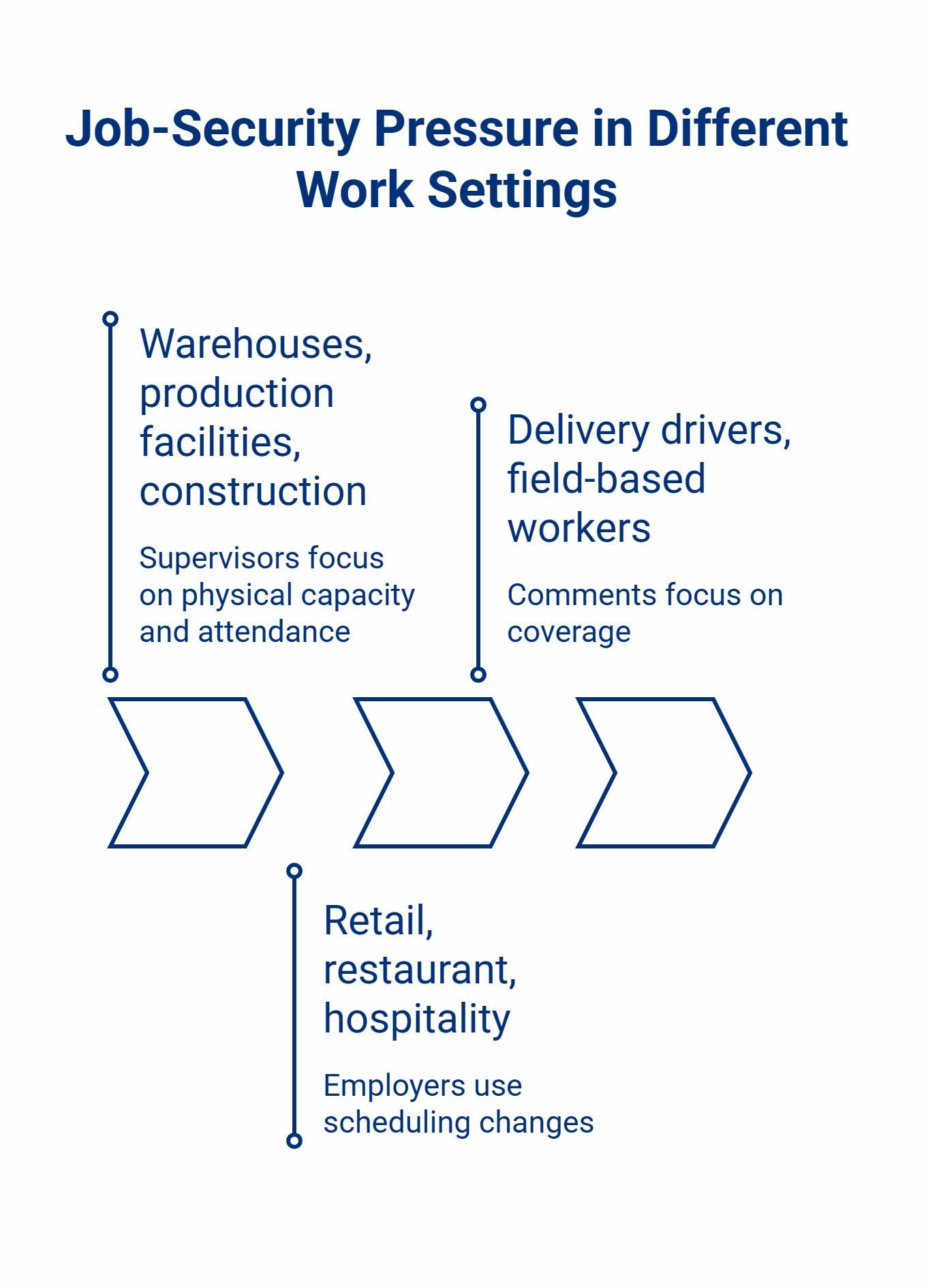
In warehouses, production facilities, construction, and similar work settings, supervisors may focus on physical capacity and attendance. After an employee requests job-protected leave, a supervisor may say the employee is “slowing the line,” “hurting productivity,” or that “someone else will do the job” if the employee needs time off for treatment or recovery.
In retail, restaurant, and hospitality work, job-security pressure may show up through scheduling. After an employee requests job-protected leave, an employer may reduce hours, split shifts into less workable blocks, move the employee to lower-tip sections, or assign less desirable days—changes that can reduce pay without formally firing the employee.
For delivery drivers and field-based workers, comments often focus on coverage. A driver who requests time off to care for a seriously ill parent may be told that routes “need consistency” and that management might have to “give the territory to someone who can be there every day.” These are not the only ways threats appear, but they are examples of patterns that many workers in Southern California describe.
From Job-Security Threats to Real-World Consequences at Work
When job-security pressure continues, some employees start to see tangible changes at work. An employer may begin documenting minor issues, issue disciplinary write-ups, or place the employee on a “final warning” shortly after the employee requests job-protected leave. Depending on the facts, these steps may constitute adverse employment actions and may be relevant evidence of retaliation.
Scheduling changes can also turn vague threats into concrete harm. Reduced hours, scattered shifts, or sudden transfers to different locations can reduce income and make it harder for an employee to attend medical appointments, complete treatment, or arrange caregiving responsibilities.
Other employees remain employed but feel sidelined after a protected leave discussion. Management may remove responsibilities, block opportunities for overtime, or shift the employee into less favorable work. Even when an employer does not immediately terminate employment, these changes can materially affect pay and working conditions.
If you notice that a protected leave request is followed by threats, negative labeling, write-ups, reduced hours, or other adverse changes, the sequence of events may matter. A clear timeline of what happened and when it happened can help evaluate whether the employer’s actions were tied to protected leave status.
Patterns That May Raise Concern About Termination or Constructive Discharge
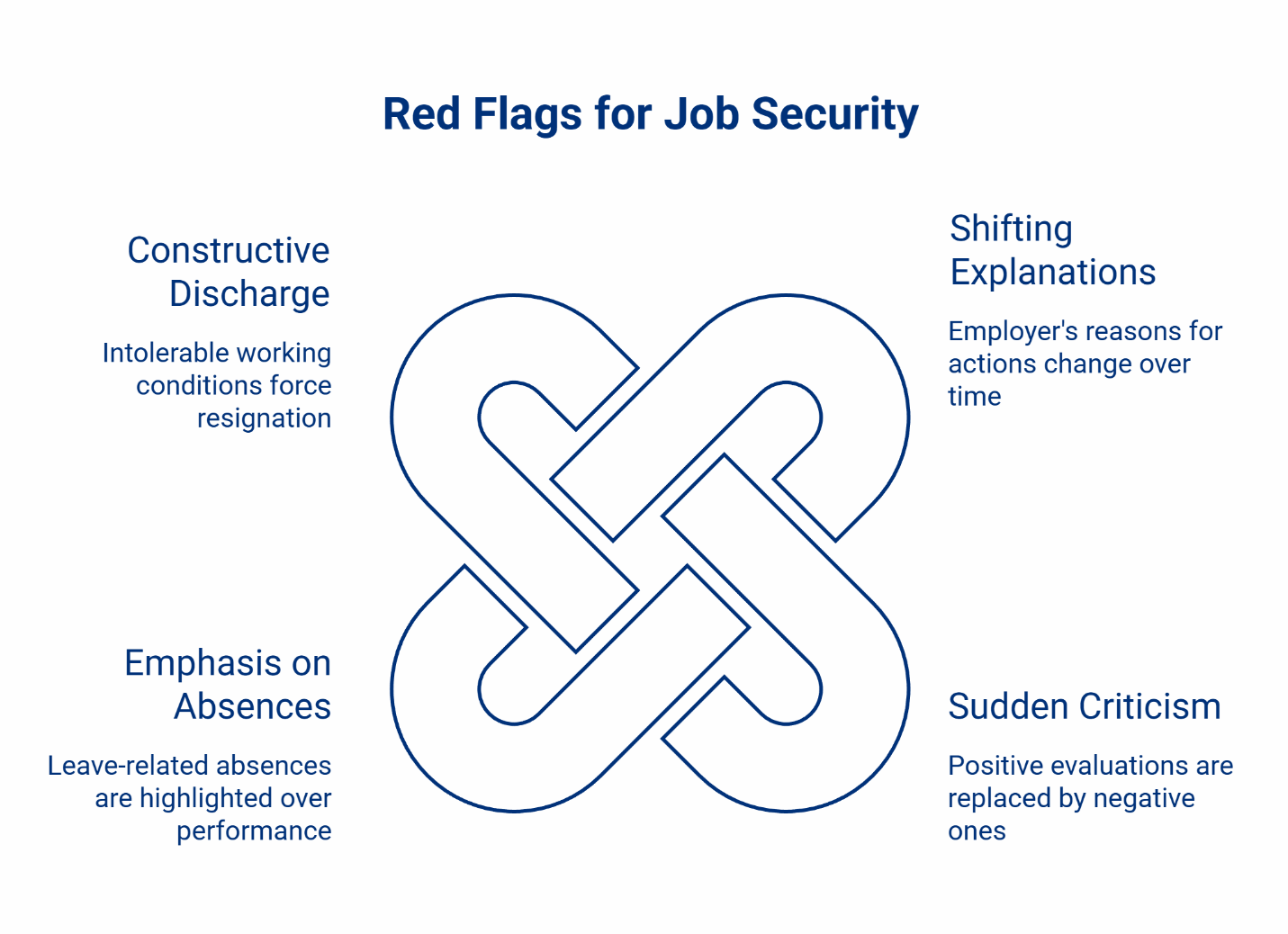
Employees often become concerned when an employer’s explanation shifts over time—for example, moving from “coverage” concerns to alleged “performance” issues after the employee requests job-protected leave. Changing rationales, especially when paired with new discipline, can be relevant to whether the stated reasons are a pretext for retaliation.
Concern may also grow when a long history of positive evaluations is followed by sudden criticism after a protected leave request. When an employer emphasizes leave-related absences while minimizing past performance, the timing and contrast may be important facts in a legal analysis.
In some situations, pressure escalates to the point that an employee resigns. “Constructive discharge” generally refers to working conditions that are so intolerable that a reasonable person would feel compelled to resign—and the employee resigns because of those conditions. Whether the facts may support a constructive discharge theory is highly fact-specific and depends on the full context.
Why Some Workers Decide to Speak with an Employment Lawyer
After experiencing threats, write-ups, reduced hours, or termination following a protected leave request, some employees contact an employment attorney to discuss whether the facts may support legal claims and what remedies may be available under California law.
An employment lawyer can help evaluate eligibility for CFRA/FMLA protections, identify what documents and witnesses may matter, and assess how the timeline of events relates to retaliation or interference standards. Legal guidance can also help an employee understand practical next steps—such as preserving written communications and documenting schedule or pay changes—without guessing at how the law applies.
Disclaimer:
This content is for informational purposes only. Laws, definitions, and deadlines change. Verify current requirements through official California sources. This content is not legal advice. No attorney-client relationship is formed through this content. Please consult a qualified attorney in your jurisdiction for legal advice specific to your situation.
Protect Your Rights | The Akopyan Law Firm, A.P.C. | Top Gun Employment Lawyers
Have you been wrongfully terminated from your job? Have you suffered discrimination, harassment, or retaliation in the workplace? Has your employer violated wage and hour laws? If so, we can help. The Akopyan Law Firm, A.P.C. is dedicated to protecting and enforcing employees’ rights throughout Southern California. With a 97% success rate and millions recovered for our clients, our team of experienced and talented employment lawyers can fight to secure the justice you deserve.
Take the First Step Towards Securing Justice: Call us today to speak with one of our experienced employment lawyers. The firm offers case evaluations free of charge.
Contact Us Today:
- Phone: (818) 509-9975
- Office Locations: Los Angeles, Bakersfield, Costa Mesa, Temecula, Rancho Cucamonga, Oxnard, Culver City, and San Diego in California.
Important: Contacting the Akopyan Law Firm, A.P.C. does not create an attorney-client relationship, but all communications will remain private and confidential. Each case is unique. The Akopyan Law Firm, A.P.C., does not guarantee any outcome.