Why Warehouse and Production Workers Are Especially Vulnerable After Family or Medical Leave
Warehouse and production jobs in Southern California typically combine heavy physical work with strict production pressure. A picker, packer, forklift operator, machine operator, or assembler may spend long shifts lifting boxes, moving pallets, and working beside conveyor belts with scanners and timeclocks tracking every minute. When a back, shoulder, leg, or similar bodily injury occurs, or when a close family member faces a serious health condition, family or medical leave can become unavoidable rather than optional.
Under California law, and under related federal legal frameworks, some workers may receive protections when they take family and medical leave for serious health conditions or qualifying family needs. Those legal frameworks typically focus on ensuring that workers are not punished simply because they needed protected time away from work. At the same time, employers in high-pressure warehouse environments often prioritize staffing levels, quotas, and speed, which can create tension between production goals and protected leave.
What Termination After Family Medical Leave Looks Like on the Warehouse Floor
Termination after family or medical leave rarely appears out of nowhere. Many warehouse and production workers describe a sequence of events that begins when they mention a surgery, medical recovery, or a family member’s serious health condition.
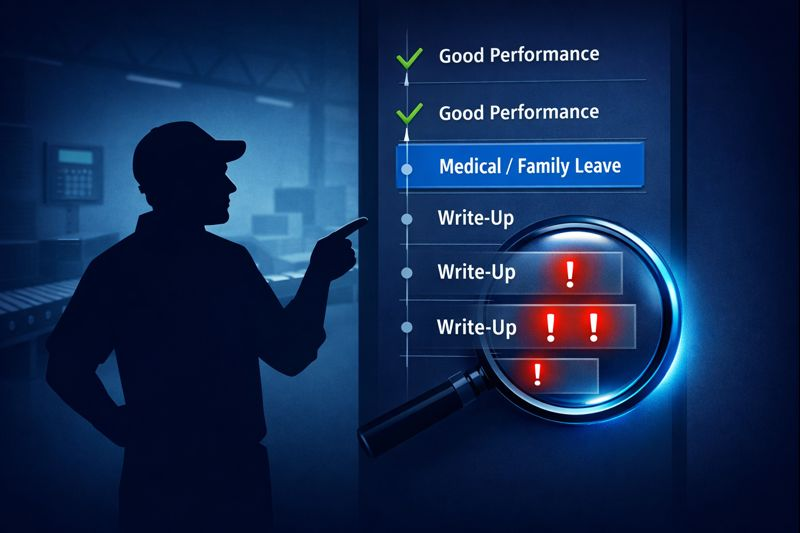
A long-time worker with a clean record may suddenly receive write-ups for minor issues shortly after requesting time away for surgery. A supervisor who once praised reliability may begin documenting attitude problems or “not being a team player” only after the worker explains that heavy lifting is unsafe for a period of time.
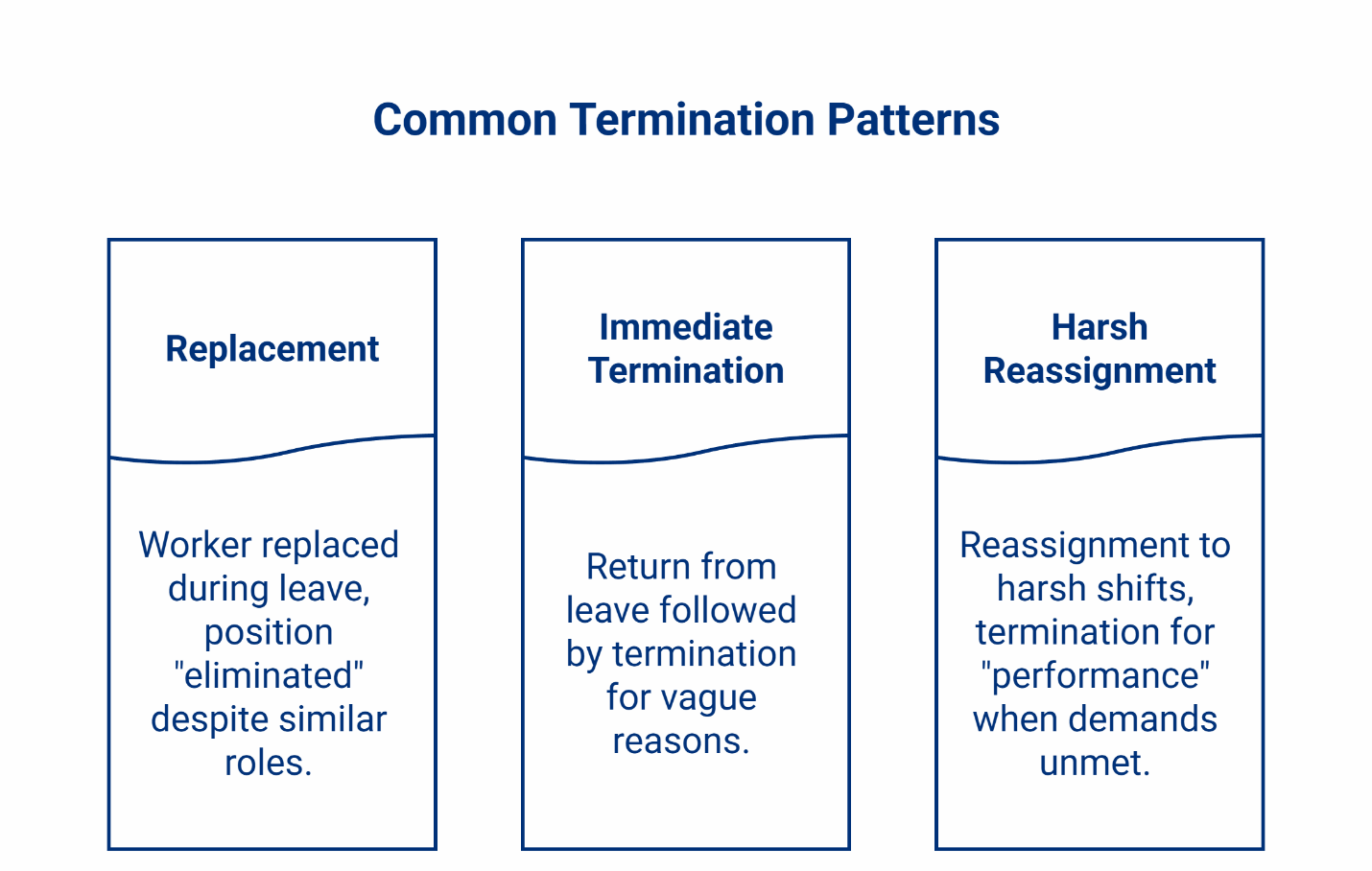
Common patterns can include:
- Replacement of the worker on the line while the worker is still on leave, with a later statement that the position has been “eliminated,” even though similar roles continue.
- A return from leave followed almost immediately by termination for vague reasons such as “not a good fit” or “business needs,” while the employer continues to hire for comparable positions.
- Reassignment on return to overwhelmingly harsh shifts or tasks that disregard disability-related restrictions, followed by termination for “performance” when the worker cannot meet those demands.
These patterns can create confusion and embarrassment, especially for workers who followed procedures, kept supervisors informed, and expected their past loyalty to count for something.
When a Firing After Family Medical Leave May Cross the Line
California employment law can, in certain circumstances, protect workers from adverse employment actions that are motivated by the worker’s need for or use of protected family or medical leave. Termination decisions can be complex, and no single fact automatically establishes that a firing is unlawful. However, particular red flags may suggest that the stated reason for termination is not the full picture of the employer’s motivation.
Examples of potential warning signs include:
- A previously strong record that is followed by a sudden wave of discipline only after leave is requested or taken.
- Comments that connect frustration directly to the worker’s absence, recovery time, or future medical appointments.
- A rigid refusal to consider temporary adjustments to duties or scheduling for a worker with a disability, even when similar flexibility is afforded to others for non-medical reasons.
Many workers who encounter these patterns choose to speak with a wrongful termination lawyer in Southern California to understand whether their circumstances may implicate wrongful termination or retaliation doctrines. Legal advice in that context depends heavily on timelines, documents, and witness accounts that cannot be evaluated through general information alone.
How Disability and Leave Issues Often Overlap
Workers who need time away from physically demanding warehouse or production roles frequently have medical conditions that may qualify as disabilities under California law. California law, including the Fair Employment and Housing Act (FEHA), may protect certain employees with disabilities from discrimination and may require reasonable accommodations when appropriate.
In real workplaces, this can surface when an employer refuses to discuss lighter duties or different assignments after an injury, or when there is no meaningful conversation about whether job duties or schedules can be adjusted. When an employer issues an adverse employment action, such as termination, shortly after a request for leave or accommodation tied to a disability, questions can arise about retaliation and disability discrimination.
Because disability law is complex and fact-specific, workers often consider consulting a disability discrimination lawyer to evaluate how disability-related issues and leave-related issues may intersect in their situation.
How a California Employment Lawyer Assists Warehouse and Production Workers
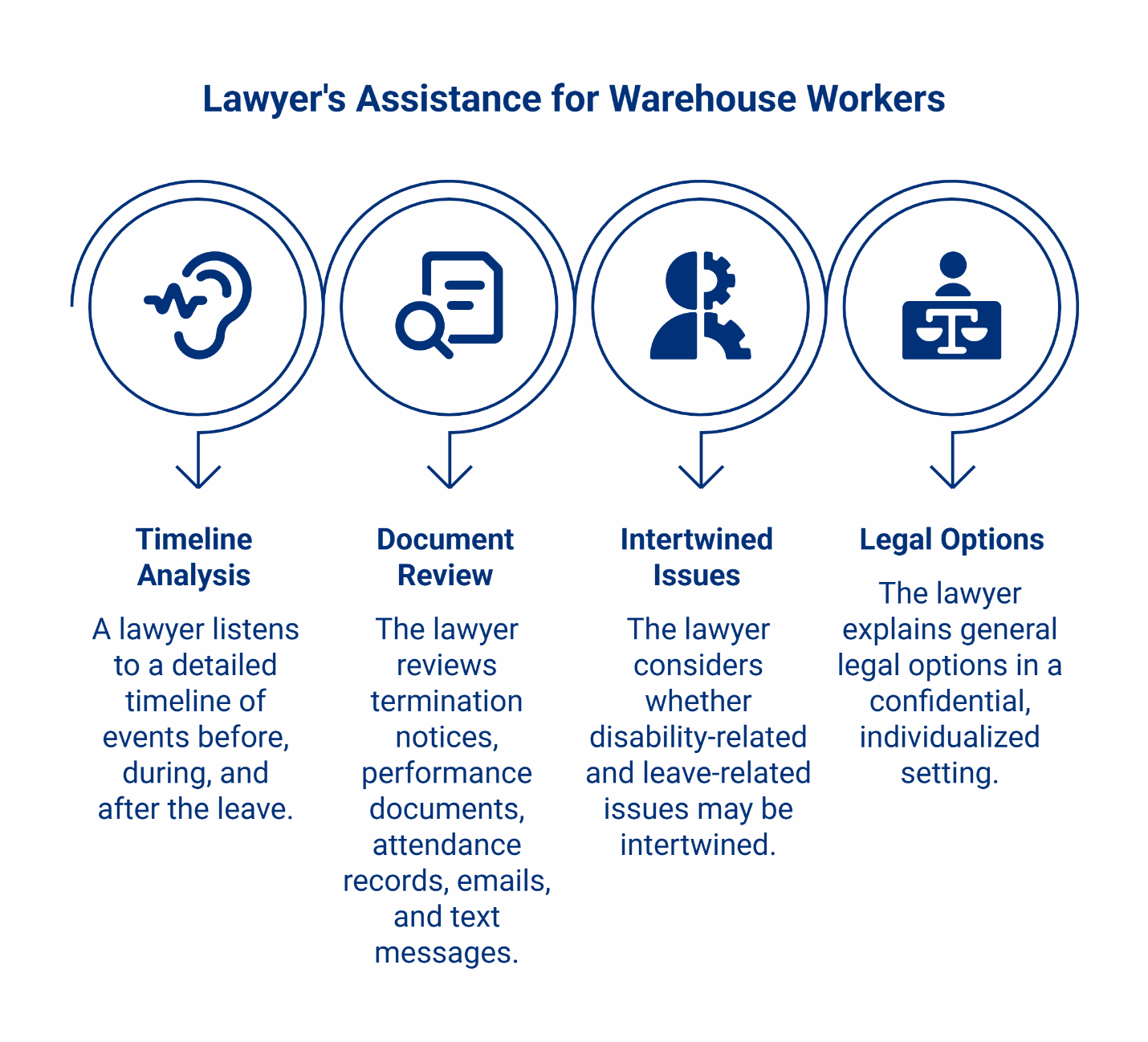
When a warehouse or production worker in Los Angeles, Orange, Riverside, San Bernardino, Kern, San Diego, or Ventura County faces termination after family or medical leave, a California employment lawyer can provide structured analysis of what happened. That role typically includes:
- Listening to a detailed timeline of events before, during, and after the leave.
- Reviewing termination notices, performance documents, attendance records, emails, and text messages to identify patterns that may indicate retaliation, wrongful termination, or discrimination.
- Considering whether disability-related issues and leave-related issues may be intertwined in a way that implicates statutes such as FEHA.
- Explaining general legal options in a confidential, individualized setting.
Many workers in this situation seek a complimentary, no-obligation evaluation from a family medical leave lawyer or wrongful termination attorney to better understand whether further steps are worth discussing. Any decision about pursuing legal action remains personal and depends on the worker’s circumstances and priorities.
Legal deadlines and procedural requirements can be strict, and a qualified attorney can explain which specific deadlines may apply in a particular matter.
Disclaimer:
This content is for informational purposes only. Laws, definitions, and deadlines change. Verify current requirements through official California sources. This content is not legal advice. No attorney-client relationship is formed through this content. Please consult a qualified attorney in your jurisdiction for legal advice specific to your situation.
Protect Your Rights | The Akopyan Law Firm, A.P.C. | Top Gun Employment Lawyers
Have you been wrongfully terminated from your job? Have you suffered discrimination, harassment, or retaliation in the workplace? Has your employer violated wage and hour laws? If so, we can help. The Akopyan Law Firm, A.P.C. is dedicated to protecting and enforcing employees’ rights throughout Southern California. With a 97% success rate and millions recovered for our clients, our team of experienced and talented employment lawyers can fight to secure the justice you deserve.
Take the First Step Towards Securing Justice: Call us today to speak with one of our experienced employment lawyers. The firm offers case evaluations free of charge.
Contact Us Today:
- Phone: (818) 509-9975
- Office Locations: Los Angeles, Bakersfield, Costa Mesa, Temecula, Rancho Cucamonga, Oxnard, Culver City, and San Diego in California.
Important: Contacting the Akopyan Law Firm, A.P.C. does not create an attorney-client relationship, but all communications will remain private and confidential. Each case is unique. The Akopyan Law Firm, A.P.C., does not guarantee any outcome.