📌 Key Takeaways
Unlock clarity on what California law may recognize after an injury-related firing so you can understand the landscape without guessing.
- Know the Remedy Map. FEHA may recognize economic and non-economic damages, with fee-shifting and distinct public civil-penalty mechanisms, all governed by statutory standards rather than guarantees.
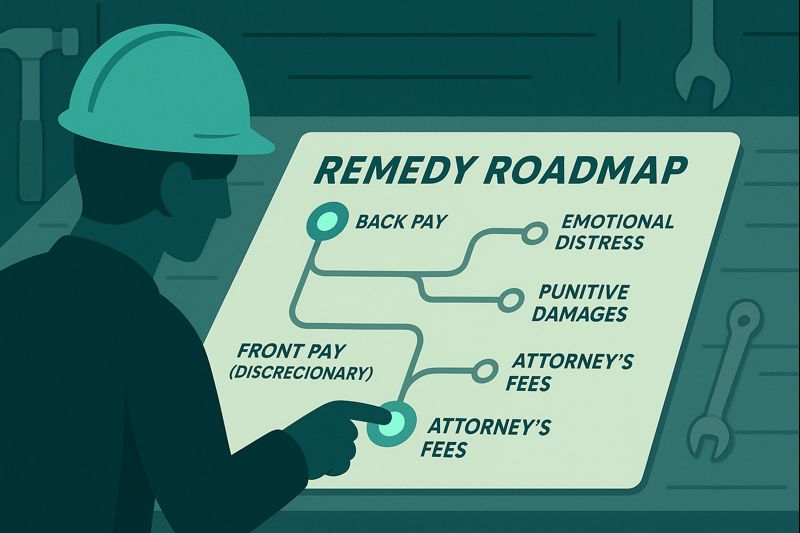
- Back Pay Comes First. Back pay may address wages and benefits lost from termination to resolution when a FEHA violation is proven under Gov. Code § 12965(b)(2).
- Front Pay Is Discretionary. Front pay may cover future earnings if the trier of fact deems it appropriate under Gov. Code § 12965(b).
- Emotional Distress Has a Legal Meaning. Emotional distress may be compensable under Gov. Code § 12965(b)(3)(A) when unlawful conduct causes harm, subject to fact-specific assessment.
- Punitive Damages Are Exceptional. Punitive damages require clear and convincing evidence of malice, oppression, or fraud under Civil Code § 3294.
It is better to be prepared than to speculate.
Under California’s Fair Employment and Housing Act (FEHA), damages arising from a wrongful termination following a bodily injury may include economic losses (back pay and, in some circumstances, front pay), non-economic losses (emotional distress), and punitive damages, with potential attorney’s fees and distinct public civil-penalty mechanisms authorized by statute.
What “Damages” Means Under California Employment Law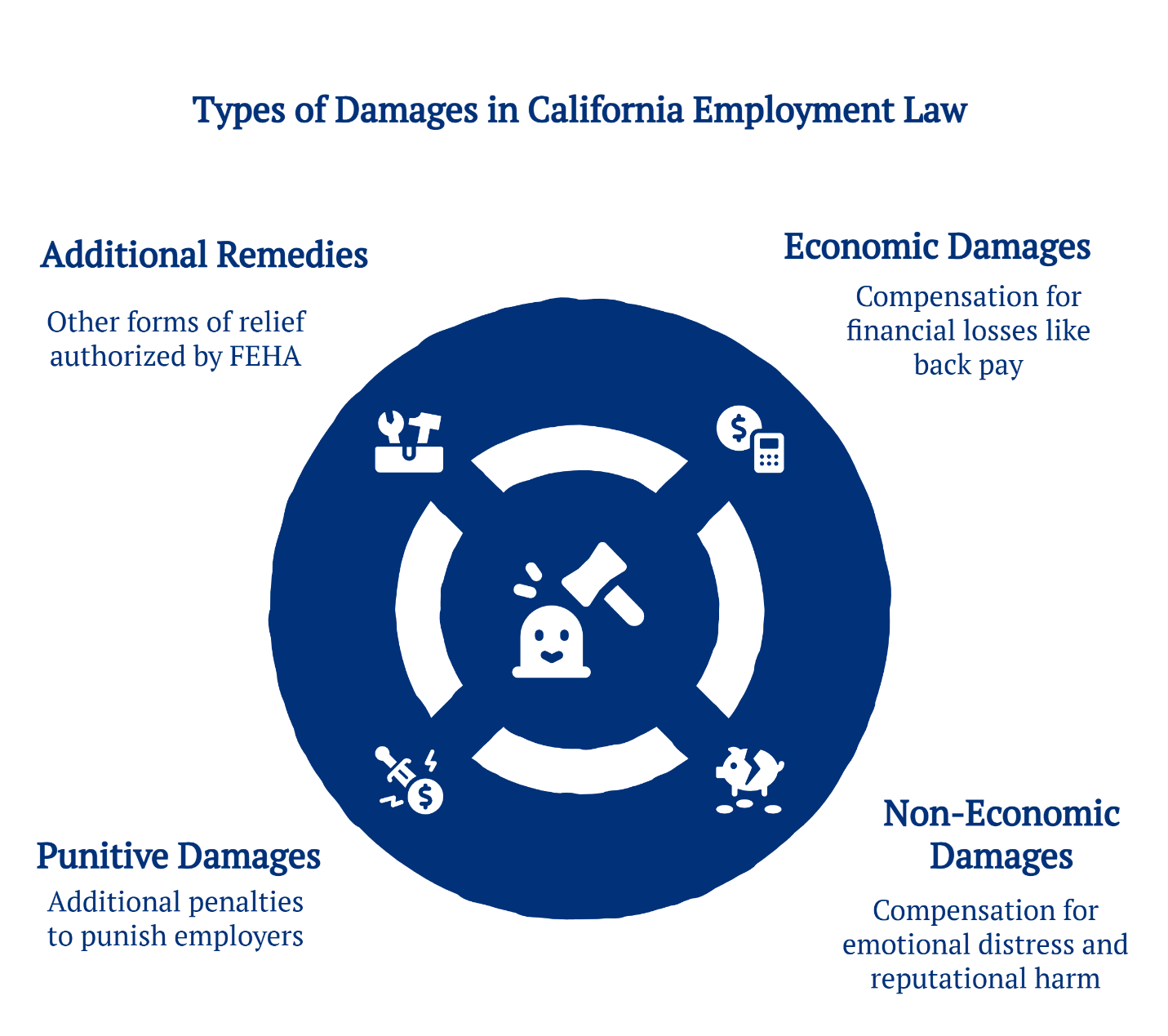
In California employment law, “damages” are civil remedies that may compensate an employee for harm caused by unlawful employment actions. FEHA prohibits, among other things, disability discrimination and retaliation (Gov. Code § 12940(a), (h)) and authorizes appropriate relief (Gov. Code § 12965(b).) These concepts describe what the law may allow; they are distinct from criminal penalties and dependent on how a trier of fact applies the statute to a particular situation.
FEHA’s remedial provisions are statutory, but because statutory language may be amended it is always best to check current law.
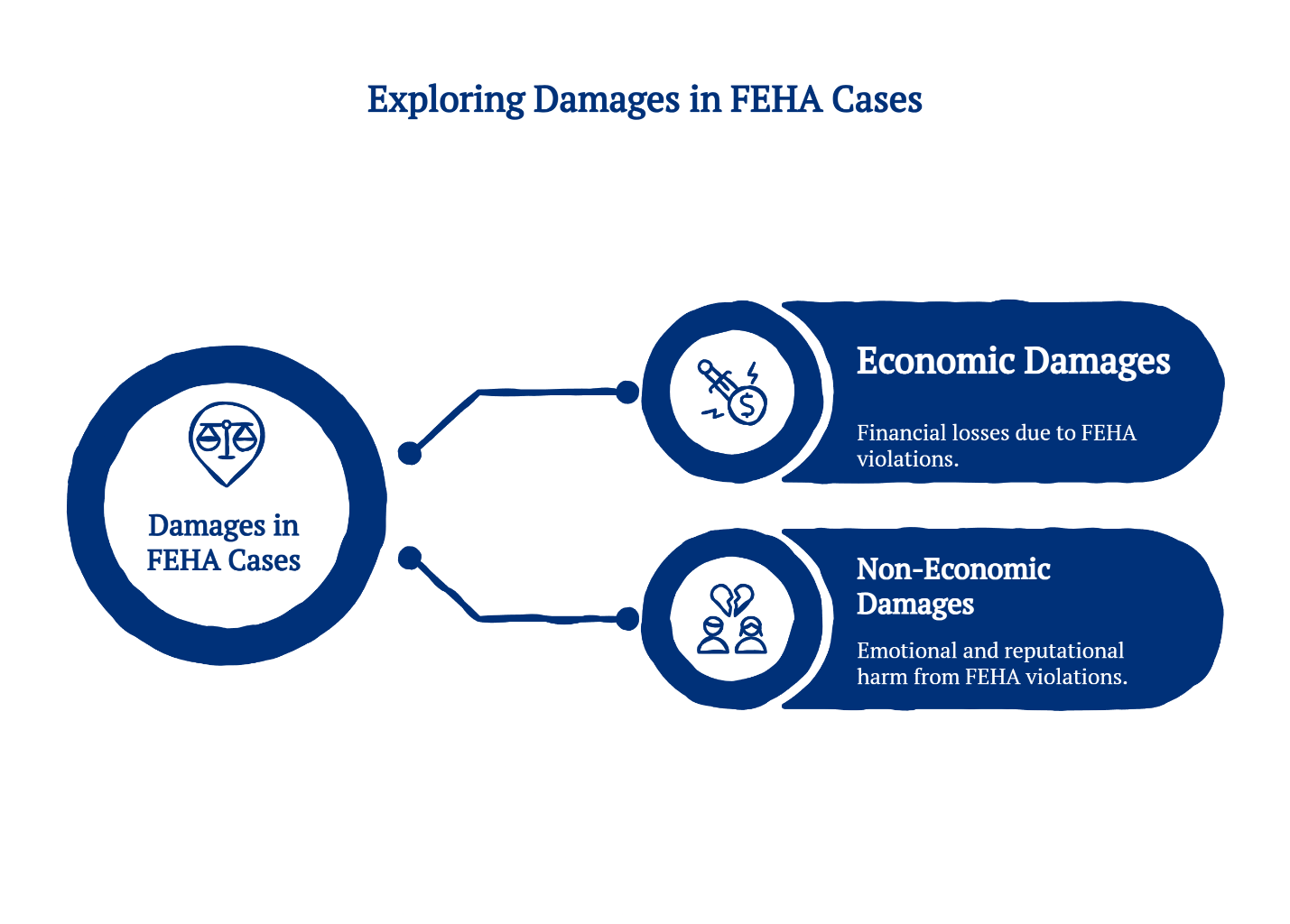
Economic Damages: Back Pay and Front Pay
Back pay. The wages and employment benefits that may have been lost during the period of time between the termination and the resolution of a matter can be available where a FEHA violation is proven (Gov. Code § 12965(b)(2)). This category may include, including but not limited to, hourly or salary earnings and associated benefits that would otherwise have accrued, subject to governing standards as applied to the evidence.
Front pay. A discretionary, forward-looking concept addressing future lost earnings when returning to the former employer is not feasible, may be considered under Gov. Code § 12965(b). Whether front pay is awarded is determined by the trier of fact.
Hypothetical example. A warehouse worker disclosed a back injury, requested temporary light duty, and was discharged. The worker’s harm may involve missed pay during the period after discharge and, where the employment relationship cannot reasonably continue, a forward-looking damages award.
Non-Economic Damages: Emotional Distress and Reputational Harm
Emotional distress. FEHA recognizes emotional distress as a compensable category where unlawful discrimination or retaliation causes emotional harm (Gov. Code § 12965(b)(3)(A)). Whether particular experiences meet the legal standard depends on the facts; the statute does not convert everyday workplace tensions into liability.
Reputational harm. Wrongful termination tied to FEHA-proscribed conduct may injure professional standing or future employment prospects.
Hypothetical example. A delivery driver reported injury-related restrictions and was later terminated; when seeking new work, the driver encounters skepticism due to the former employer’s characterization of the separation.
Punitive Damages
Punitive damages are not compensatory; they serve punishment and deterrence. FEHA authorizes punitive damages in appropriate matters (Gov. Code § 12965(b)(3)(B)). Under Civil Code § 3294, the trier of fact may award punitive damages only upon clear and convincing evidence of malice, oppression, or fraud, as those terms are defined by statute.
Additional Remedies Authorized by FEHA
Attorney’s fees and costs. FEHA includes fee-shifting provisions under which a prevailing plaintiff may, under certain circumstances, recover reasonable attorney’s fees and costs (Gov. Code § 12965(b)). Fee-shifting is designed to facilitate access to counsel where income loss follows termination; the availability and amount depend on the statute and the record.
Why This Framework Matters to Southern California Blue-Collar Workers
Physically demanding work in construction, warehousing, manufacturing, delivery, food service, and similar fields often intersects with real-world disabilities and related work restrictions. When termination follows a request for reasonable accommodation or the disclosure of restrictions, FEHA’s remedial framework may recognize multiple categories of harm, depending on the facts and the governing statutory standards. Understanding the categories clarifies the legal landscape without offering steps, strategies, or valuations.
Disclaimer:
This content is for informational purposes only. Laws, definitions, and deadlines change. Verify current requirements through official California sources. This content is not legal advice. No attorney-client relationship is formed through this content. Please consult a qualified attorney in your jurisdiction for legal advice specific to your situation.
Protect Your Rights | The Akopyan Law Firm, A.P.C. | Top Gun Employment Lawyers
Have you been wrongfully terminated from your job? Have you suffered discrimination, harassment, or retaliation in the workplace? Has your employer violated wage and hour laws? If so, we can help. The Akopyan Law Firm, A.P.C. is dedicated to protecting and enforcing employees’ rights throughout Southern California. With a 97% success rate and millions recovered for our clients, our team of experienced and talented employment lawyers can fight to secure the justice you deserve.
Take the First Step Towards Securing Justice: Call us today to speak with one of our experienced employment lawyers. The firm offers case evaluations free of charge.
Contact Us Today:
- Phone: (818) 509-9975
- Office Locations: Los Angeles, Bakersfield, Costa Mesa, Temecula, Rancho Cucamonga, Oxnard, Culver City, and San Diego in California.
Important: Contacting the Akopyan Law Firm, A.P.C. does not create an attorney-client relationship, but all communications will remain private and confidential. Each case is unique. The Akopyan Law Firm, A.P.C., does not guarantee any outcome.