

Progressive discipline may provide relevant context, but it does not automatically resolve wrongful discharge allegations against a small Culver City retailer.
For Culver City retail owners facing an active claim, the points below identify where factual disputes can create operational pressure.
- Discipline Is Not Conclusive: Prior warnings may provide factual background, but their significance depends on the allegations, surrounding circumstances, and applicable California law.
- Records May Be Contested: A disciplinary record shows what management documented, while a former employee may contest the underlying event, context, or accuracy.
- Different Accounts Expand Disputes: Owners and store managers may hold different parts of the employment history because their responsibilities, involvement, and firsthand knowledge differ.
- Proceedings Pressure Operations: Demand letters, administrative complaints, and civil lawsuits may consume management time and divert funds from payroll, inventory, and operating obligations.
- Representation Must Fit Operations: Cost awareness, clear communication, and trial readiness may matter when a small retailer evaluates employer-side representation during an active dispute.
Progressive discipline adds context; the complete record shapes the dispute.
~ ~ ~ ~ ~ ~ ~ ~ ~ ~ ~ ~ ~ ~ ~ ~ ~ ~
A small retail business can face wrongful discharge allegations even when the former employee received progressive discipline before discharge. The disciplinary history may provide relevant factual background, but it does not automatically determine whether the employer acted lawfully. For a Culver City store owner facing a lawsuit, demand letter, or administrative complaint, the dispute may require close examination of earlier disciplinary events, communications among owners and managers, and the stated reason for discharge. That examination can demand substantial attention from the people responsible for keeping the store operating.
Why Progressive Discipline May Become Central to a Wrongful Discharge Dispute
Progressive discipline usually involves a series of employment actions rather than one isolated event. When a former employee disputes a later discharge, each action may become part of the factual history surrounding the employment decision.
The employer may view prior warnings or disciplinary measures as evidence of continuing performance or conduct concerns. The former employee may dispute what occurred, how management described the events, or whether the stated reason accurately reflects the circumstances surrounding the discharge. The existence of disciplinary records does not eliminate those disagreements.
A disciplinary history also does not independently resolve an allegation that the employer acted for an unlawful reason. The significance of that history depends on the allegations, surrounding circumstances, and applicable law. A record may therefore be relevant without being legally conclusive.
In California, even an at-will employer’s documented warnings can be challenged on three common grounds:
- Pretext for discrimination or retaliation: Under the Fair Employment and Housing Act (FEHA) and California Labor Code section 1102.5, a former employee may allege that management began issuing write-ups only after the employee requested medical leave, reported a workplace safety or wage issue, or engaged in another protected activity.
- Inconsistent enforcement: If a discharged cashier or sales associate was written up for tardiness or register shortages while other employees committed the same infractions without discipline, a plaintiff’s attorney may use that disparity to challenge the employer’s stated motive.
- Deviation from handbook policies: If an employee handbook outlines a mandatory multi-step disciplinary policy without a clear at-will disclaimer, skipping a step can trigger an argument of pretext.
How Disputed Disciplinary Histories Can Broaden the Factual Issues in Litigation
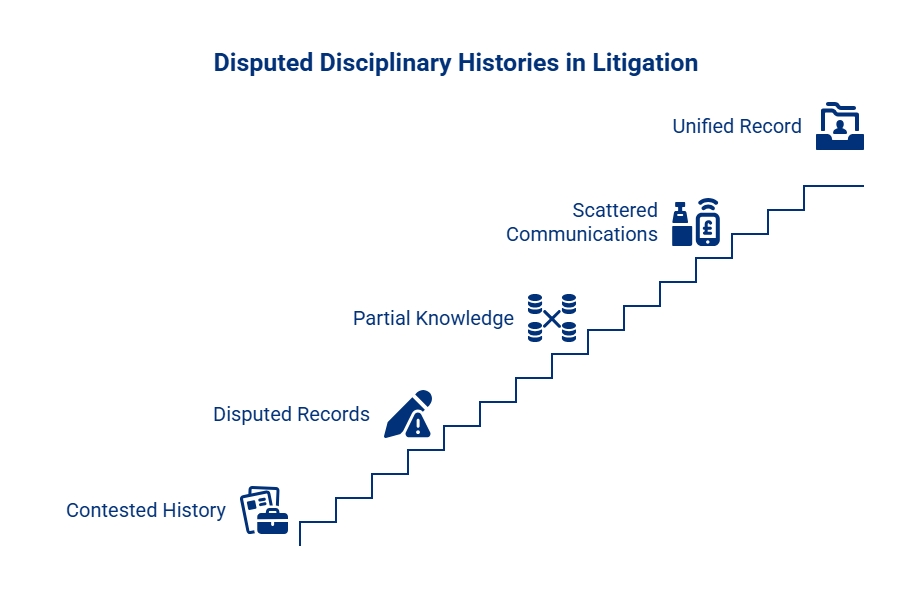
A wrongful discharge dispute may extend beyond the final employment decision. Earlier warnings, conversations, performance concerns, and communications involving supervisors, store managers, or owners may become part of the contested employment history.
A record shows what management documented, but the parties may still dispute the underlying event or the accuracy of the account. A written warning may describe management’s understanding of an incident, while the former employee may contest the conduct, context, or description. Differences between records and later recollections may create additional factual questions without independently establishing unlawful conduct.
Small retail operations often divide authority between a store manager who supervises daily work and an owner who makes the final discharge decision. When several decisionmakers participated at different stages, each person may possess only part of the relevant history. Their accounts may differ because their responsibilities, involvement, and firsthand knowledge were not identical.
In a small retail setting, those differences often surface in everyday operational records. A store manager may communicate schedule changes, attendance warnings, or performance feedback informally through text messages, shift logs, or point-of-sale (POS) notes rather than formal HR memos. Furthermore, high turnover among retail supervisors or hourly associates can leave a store owner defending a disciplinary write-up authored by a manager who no longer works at the business. Preserving and reconciling those scattered communications early in a dispute is critical to presenting a unified factual record.
How Wrongful Discharge Allegations May Arise in Different Employment Proceedings
A disputed discharge may lead to a demand letter, an administrative complaint, or a civil lawsuit. These are possible procedural settings, not universal stages that every claim follows in sequence.
The nature of the allegation and the governing law may affect the procedural path. When the dispute enters a formal proceeding, an administrative agency, judge, jury, or other trier of fact may consider the circumstances surrounding the discharge. The relevant factual record may include disciplinary events, employment records, and accounts from owners or managers.
Those individuals may participate in the proceeding while remaining responsible for operating the business. Demands on management time, business disruption, and litigation expenses can therefore arise before a dispute reaches trial.
In California, most statutory discrimination and retaliation claims begin with an administrative complaint filed with the Civil Rights Department (CRD), where the employee may either request an agency investigation or obtain an immediate right-to-sue notice to file a civil complaint in Los Angeles County Superior Court. Wage-related retaliation claims may also proceed before the California Labor Commissioner’s Office. Regardless of the forum, receiving a demand letter or agency notice triggers an immediate need to preserve personnel files, timecards, POS logs, emails, and manager text messages, and to ensure that store leadership does not discuss the dispute casually with current staff.
Owner Involvement and Management Credibility in Small Retail Employment Lawsuits
Owners of closely held retail businesses often participate directly in employee supervision. A Culver City store owner may approve discipline, discuss performance concerns with a manager, and make the final discharge decision while overseeing sales, staffing, inventory, and vendor relationships.
That direct involvement can make an owner’s knowledge relevant when the former employee challenges the disciplinary sequence or the employer’s stated rationale. Store managers may also possess firsthand knowledge because they observed daily work, delivered warnings, or reported incidents to ownership.
A judge, jury, or other trier of fact may evaluate the credibility of those accounts. The significance of any difference in wording, recollection, or interpretation depends on the complete factual record and the claims at issue. Management credibility may form one part of that record, but it does not independently determine employer liability.
The Operational Burden of Defending a Wrongful Discharge Claim
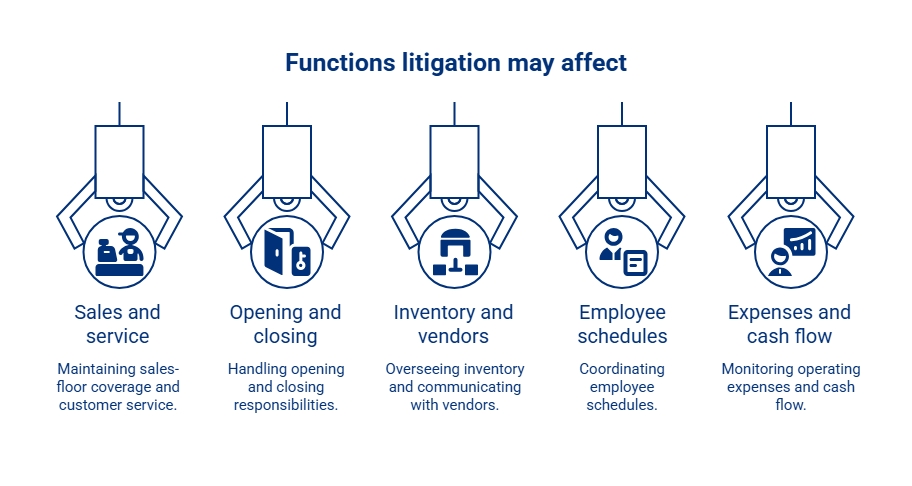
Active employment litigation can place unusual demands on a business with a small management team. The following responsibilities illustrate, but do not exhaust, the functions that litigation may affect:
- Owners and managers may remain responsible for maintaining sales-floor coverage and customer service.
- Management may continue handling opening and closing responsibilities.
- Owners may oversee inventory and communicate with vendors.
- Store managers may coordinate employee schedules.
- Decisionmakers may monitor operating expenses and cash flow.
Time devoted to the dispute may reduce the attention available for these functions. A business funding its own defense may need to allocate financial resources among litigation expenses, payroll, inventory, and other operating obligations. Continuing uncertainty may also affect employee confidence, management relationships, and business planning. These effects do not mean that one claim will threaten the retailer’s survival, but they can create meaningful pressure on daily operations.
Why Experienced Employer-Defense Representation Matters When a Retail Employee Disputes a Discharge
Claims involving progressive discipline may require consideration of several employment events, multiple management accounts, and the commercial circumstances surrounding a small retailer. Experienced wrongful termination defense representation addresses the active dispute while recognizing that management time and litigation expenses affect business continuity.
Cost awareness, clear communication, and trial readiness may matter to a small retailer evaluating employer-side representation, particularly when the business has no in-house counsel. Akopyan Law Firm, A.P.C. provides employment defense representation for employers facing active employment disputes in Southern California. The firm’s litigation focus includes the concerns of closely held businesses whose owners remain personally involved in daily operations.
Employment Defense Representation for Culver City Retail Businesses
Wrongful discharge allegations following progressive discipline can involve disputed employment records, management decisions, and discharge circumstances. For a small retailer in Culver City, the resulting litigation can also consume resources needed for ordinary operations. Retail employers facing a lawsuit, demand letter, or administrative complaint may contact Akopyan Law Firm, A.P.C. regarding employer-side employment litigation representation.
Disclaimer:
This content is for informational purposes only. Laws, definitions, and deadlines change. Verify current requirements through official California sources. This content is not legal advice. No attorney-client relationship is formed through this content. Please consult a qualified attorney in your jurisdiction for legal advice specific to your situation.
Protect Your Business | The Akopyan Law Firm, A.P.C. | Top Gun Employment Defense Lawyers
Have you been sued by an employee? Are you overwhelmed by the complexities of employment law? If so, give us a call. The Akopyan Law Firm, A.P.C. assists small business owners throughout Southern California. Our seasoned employment defense lawyers stand ready to help employers quickly and efficiently resolve employment disputes. We are ready to aggressively and skillfully defend against any employment case, but understand that in most situations avoiding the expense of litigation is in the client’s best interest.
Take the First Step Protecting Your Future: Call us today to speak with one of our experienced employment lawyers.
Contact Us Today:
- Phone: (818) 509-9975
- Office Locations in California: Los Angeles, Bakersfield, Costa Mesa, Temecula, Rancho Cucamonga, Oxnard, Culver City, and San Diego.