
Southern California family-owned businesses may face several overlapping employment claims when a former employee alleges that protected activity influenced a termination decision.
- Protected Activity Defines Scope: Earlier protected complaints, reports, leave requests, accommodation requests, or qualifying disclosures may shape the legal theories and disputed events involved.
- Chronology May Affect Causation: The timing of protected activity, decision-maker knowledge, and intervening events may influence whether the termination appears connected to that activity.
- Consistency Supports Business Reasons: Contemporaneous performance records, disciplinary notices, and communications may carry more weight than explanations developed after an employment dispute arises.
- Overlapping Claims Expand Evidence: Retaliation, discrimination, whistleblower, wage-and-hour, accommodation, or leave allegations may broaden the records, communications, and witnesses placed at issue.
- Small Businesses Face Disruption: Expanded allegations may increase management time, legal expense, cash-flow pressure, employee-relations strain, and disruption to staffing or customer service.
For owners of Southern California family-owned businesses, understanding the potential scope of protected-activity allegations may clarify why one termination can become a much broader dispute.
One termination may become the factual center of several employment claims when a former employee alleges that protected activity influenced the decision. The employer may cite performance, attendance, scheduling, misconduct, restructuring, or another business concern. A later demand, administrative complaint, or lawsuit may allege retaliation or another unlawful motive.
For an owner managing payroll, staffing, customers, and vendors, the dispute can place significant pressure on the business. Overlapping allegations do not establish liability, but they may enlarge the legal theories, events, records, and witnesses involved.
Defining the Scope of the Dispute Through Alleged Protected Activity
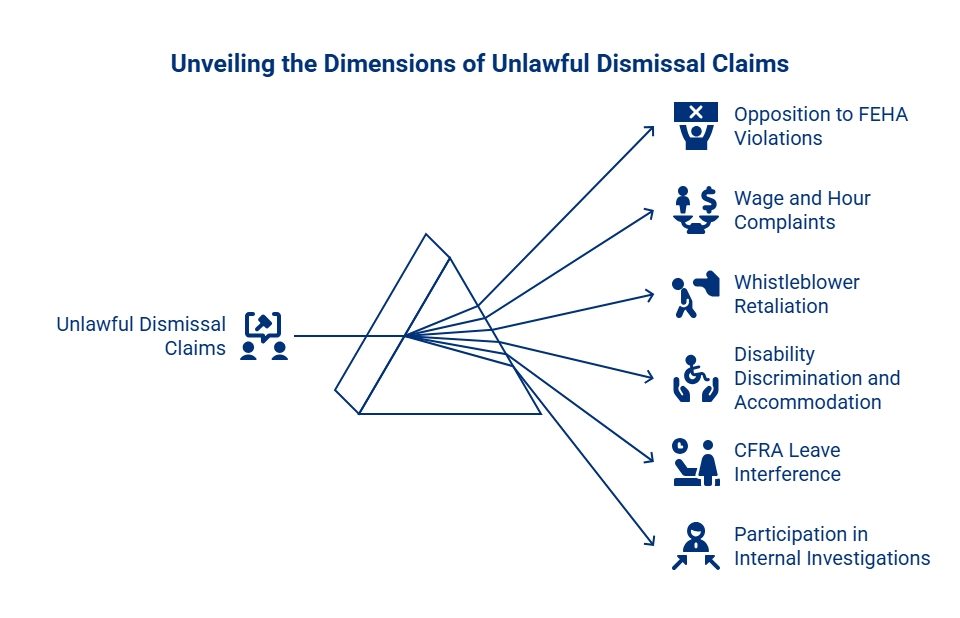
“Unlawful dismissal” is a plain-language umbrella phrase, not a standalone California cause of action. The asserted theories may include wrongful termination claims against employers, retaliation, discrimination, or whistleblower retaliation arising from the same events.
California law prohibits adverse action because an employee engaged in activity protected by applicable law. In a particular dispute, the parties may contest whether the employee’s conduct qualified for protection, whether a decision-maker knew about it, whether a causal connection existed, and whether the employer’s stated business reason was genuine.
The subject of the earlier complaint, report, request, or participation may determine how the matter expands:
- Opposition to conduct allegedly prohibited by the California Fair Employment and Housing Act (FEHA), or filing a complaint, testifying, or assisting in a FEHA proceeding, may add related allegations.
- Qualifying complaints about wages, overtime, working time, meal periods, or rest periods may connect the termination to wage-and-hour litigation and retaliation allegations.
- A qualifying disclosure of suspected unlawful conduct, or refusal to participate in conduct alleged to violate the law, may support asserted whistleblower retaliation claims, including under California Labor Code section 1102.5 when applicable.
- Under FEHA, a reasonable-accommodation request from an employee with a known physical or mental disability or medical condition may trigger a timely, good-faith interactive process. A later dispute may add disability-discrimination, accommodation, or retaliation allegations.
- A request for or use of California Family Rights Act (CFRA) leave may implicate leave-interference or retaliation allegations when employer coverage, employee eligibility, and a qualifying reason are present.
- Participation in an internal investigation may become relevant when the employee opposed conduct prohibited by applicable law. Participation in certain administrative proceedings may receive separate statutory protection under the law governing the proceeding.
These categories can overlap without resolving which party’s account is correct.
Illustrative Example: A Workplace Complaint and Medical Leave Communication
A family-owned service business ends the employment of a customer-facing employee based on stated performance and scheduling concerns. In a later employment claim, the former employee alleges that the decision was connected to an earlier workplace complaint and a communication concerning medical leave. The resulting dispute places the employer’s stated business reasons, the earlier workplace events, the knowledge of the decision-makers, and a broader range of communications and records at issue.
The legal theories would depend on each communication’s content and governing law. Temporal proximity, decision-maker knowledge, and consistency between the stated reasons and contemporaneous records may affect causation, but none alone establishes retaliation.
How Chronology, Knowledge, and Consistency Affect the Factual Dispute
An asserted protected-activity theory may extend the chronology beyond the termination. The parties may dispute when the employee raised the concern, when an owner or manager learned about it, who participated in the decision, and whether intervening events support either account.
A trier of fact may assess the employer’s stated business reason, its uniform application of established policies, and its treatment of similarly situated employees. Contemporaneous written records—such as performance reviews, disciplinary notices, or email logs generated at the time of the event—often carry significantly more weight with a trier of fact than retrospective explanations offered after a dispute arises. The significance of each consideration depends on the applicable claim and the disputed record.
How Expanded Allegations May Enlarge the Factual Record
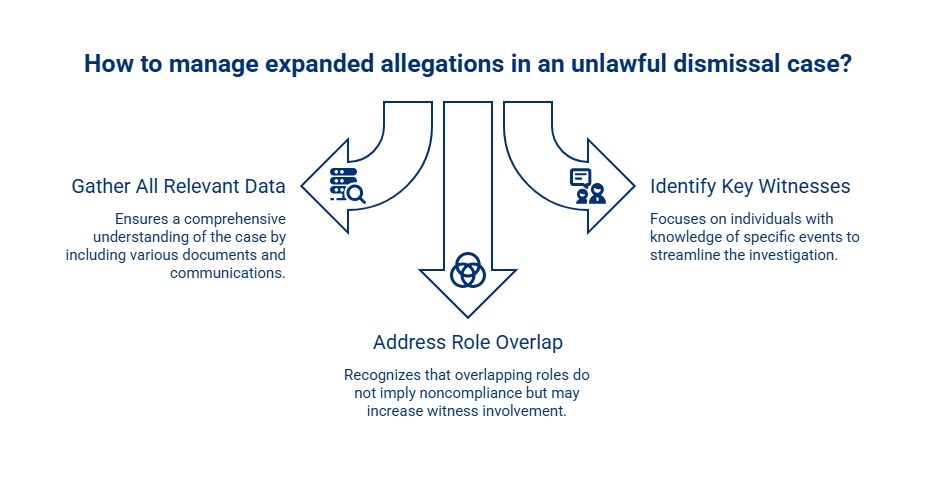
Depending on the claims, the matter may encompass earlier complaints, performance discussions, attendance records, schedules, payroll and timekeeping data, leave or accommodation communications, emails, and texts. No category necessarily proves or defeats a claim; relevance and weight depend on the disputed facts.
When owners, relatives, managers, supervisors, payroll personnel, or scheduling personnel actually hold overlapping roles, a small group may possess knowledge about several events. That structure does not imply noncompliance. It may increase witness involvement and draw decision-makers away from staffing, customer service, payroll, and other daily operations.
How the Scope May Broaden During an Employment Dispute
A former employee may assert related theories in a demand, administrative charge, or civil complaint. An agency inquiry or discovery may place additional employment records, internal communications, and witness testimony in dispute. Motion practice, settlement proceedings, and trial preparation may later clarify which claims and events remain contested without resolving liability at the outset.
The broader scope may increase management time, legal expense, employee-relations strain, pressure on cash flow, and disruption to staff coverage or customer service.
Employment laws are subject to change and may vary by jurisdiction. Strict deadlines apply to legal claims and agency proceedings, and those deadlines vary. Employers should speak with an attorney as soon as possible about any time limits that may apply to their situation.
Disclaimer:
This content is for informational purposes only. Laws, definitions, and deadlines change. Verify current requirements through official California sources. This content is not legal advice. No attorney-client relationship is formed through this content. Please consult a qualified attorney in your jurisdiction for legal advice specific to your situation.
Protect Your Business | The Akopyan Law Firm, A.P.C. | Top Gun Employment Defense Lawyers
Have you been sued by an employee? Are you overwhelmed by the complexities of employment law? If so, give us a call. The Akopyan Law Firm, A.P.C. assists small business owners throughout Southern California. Our seasoned employment defense lawyers stand ready to help employers quickly and efficiently resolve employment disputes. We are ready to aggressively and skillfully defend against any employment case, but understand that in most situations avoiding the expense of litigation is in the client’s best interest.
Take the First Step Protecting Your Future: Call us today to speak with one of our experienced employment lawyers.
Contact Us Today:
- Phone: (818) 509-9975
- Office Locations in Southern California: Los Angeles, Bakersfield, Costa Mesa, Temecula, Rancho Cucamonga, Oxnard, Culver City, and San Diego.