

For small California retailers, a wrongful termination dispute may place the employee’s entire prior disciplinary history and surrounding employment record under scrutiny.
- Prior Discipline Gains Context: Existing warnings, attendance records, customer complaints, and performance concerns may be evaluated together rather than as isolated employment events.
- Chronology Shapes the Dispute: Disciplinary events may appear alongside retaliation, discrimination, whistleblower, leave-related, wage-related, or disability-related allegations within the same factual record.
- Manager Accounts May Differ: Owners, store managers, assistant managers, and shift leads may possess different information about incidents that later become part of the dispute.
- Informal Communications Matter: Existing texts, emails, group messages, handwritten notes, and scheduling communications may add context that does not appear in formal disciplinary records.
- Litigation Can Disrupt Operations: A disputed termination may divert management attention from staffing, customer service, inventory, supervision, and other responsibilities of running a small retail business.
For California retail owners and authorized decision-makers facing an asserted claim, understanding how these existing facts interrelate can clarify the dispute’s broader context.
A termination dispute may begin with one employment decision, but the surrounding record can become the larger factual story.
When a former retail employee challenges a termination that followed progressive discipline, the prior disciplinary history may become an important part of the factual dispute. The controversy can extend beyond the final employment decision to attendance records, performance concerns, customer complaints, manager communications, schedules, workplace incidents, and differing accounts of events.
For a small California retailer, that scrutiny can create substantial operational demands. Owners and managers may continue overseeing staffing, sales, inventory, customer service, payroll, and daily store operations while an asserted employment claim draws attention to events that occurred months or years earlier.
When Prior Discipline Becomes Part of a Wrongful Termination Dispute
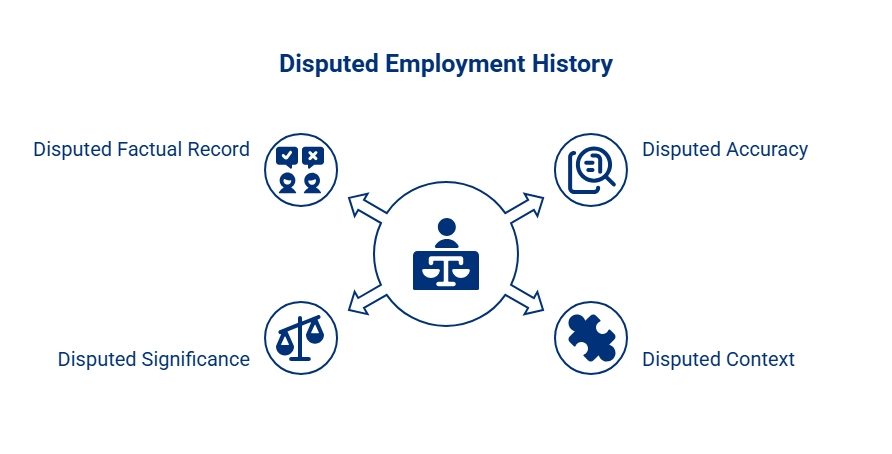
A former employee may challenge the employer’s stated reason for termination while disputing the accuracy, context, or significance of earlier disciplinary events. While California is an at-will employment state, terminations become legally ‘wrongful’ if they are motivated by discrimination against protected characteristics, or retaliation for whistleblowing. The existence of prior discipline does not, by itself, explain how the parties will characterize the complete employment history once the termination is disputed.
An existing disciplinary notice may concern one incident. Attendance records may concern another. A manager’s text message may add context to a separate event. A customer complaint may involve a different supervisor. When a wrongful termination claim arises, these materials may become part of the same disputed factual record.
Existing Employment Records May Receive Broader Scrutiny
Different supervisors in a retail workplace may possess or create different portions of an employee’s existing employment record. Those materials may include performance evaluations, manager notes, attendance information, schedules, customer complaints, workplace incident records, emails, text messages, handwritten notes, and communications involving an owner or store-level manager.
Retail operations can also generate employment disputes involving customer interactions, register or cash-handling concerns, sales-floor conduct, missed scheduled shifts, opening or closing responsibilities, stockroom events, inventory issues, or loss-prevention concerns.
A former employee may dispute what an incident meant, whether a particular account was accurate, or how the incident related to the stated reason for termination. The resulting disagreement may concern the significance of the record as a whole rather than any single document.
Chronology May Place Discipline and Other Allegations in the Same Factual Record
A disputed termination may involve allegations beyond performance or attendance. A former employee may also assert retaliation, discrimination, whistleblower activity, wage-related concerns, leave-related conduct, or disability-related issues.
Chronology may therefore place disciplinary events alongside other events from the same employment relationship. Earlier workplace concerns, employee complaints, communications concerning an employee with a disability, changes in schedules or responsibilities already implicated by the allegations, and the eventual termination may all form part of the disputed history.
Competing interpretations can coexist. An employer may point to an established disciplinary sequence, while the former employee may contend that another employment-related issue influenced the termination. The existence of either account does not determine how the complete factual record will ultimately be viewed.
Different Retail Managers May Have Different Accounts of the Employment History
Small retailers often distribute supervisory responsibility among owners, general managers, store managers, assistant managers, department managers, and shift leads. Those individuals may work different hours and observe different events.
One manager may have received a customer complaint. Another may have addressed an attendance incident. A shift lead may have witnessed a sales-floor interaction. An owner may have become involved later.
Different witnesses may therefore possess different information about the same employment relationship. Their existing communications and recollections can become significant when the dispute concerns what happened, who observed particular events, what information each manager possessed, and how separate incidents related to the eventual termination.
Illustrative Example: Customer Complaints and Differing Manager Accounts
A California retail employee receives discipline after several customer-facing incidents involving different supervisors. The employee later challenges the termination. One manager recalls receiving a customer complaint, while another manager describes the underlying interaction differently. Existing records also contain separate references to the incidents.
This scenario illustrates how a termination dispute may involve several factual perspectives rather than one definitive account. Different managers may have observed different events or possessed different information, and the significance of those accounts may depend on the allegations actually asserted.
Existing Informal Communications May Become Part of the Disputed Record
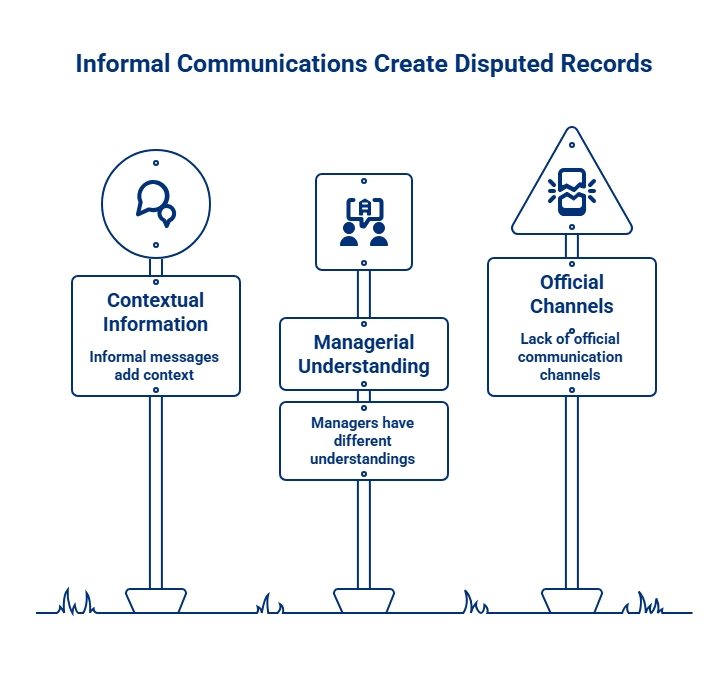
Retail managers frequently communicate through text messages, group messages, emails, handwritten notes, and shift-related exchanges. Communications that already concern the employee, scheduling, attendance, customer incidents, or management discussions may become part of the factual record considered in a termination dispute.
Informal communications can contain context that does not appear in a formal disciplinary notice. To mitigate this risk, retail owners should require all managers to use official channels for performance-related communications. Shift leads and assistant managers must be trained to immediately forward any text messages or handwritten notes concerning employee discipline to the central HR file to ensure a unified, defensible record. They may also reflect differences in what individual managers understood about an event at the time. That distinction can become relevant when the dispute focuses on the employer’s stated reason for the termination and the former employee’s competing account. To mitigate this risk, retail owners should establish clear policies requiring all disciplinary or performance-related communications to occur through official, centralized channels rather than personal text messages or informal group chats.
Wrongful Termination Claims Can Affect More Than the Final Employment Decision
As the asserted claim develops, the parties’ competing accounts, existing records, and witness recollections may receive increasing scrutiny.
For a small retailer, the effects can extend into ordinary business operations. Management attention may shift away from store coverage, customer service, sales, inventory, supervision, and administrative responsibilities. Witness participation may affect workplace relationships and employee morale. Some disputes may also create reputational concerns if allegations become visible outside the immediate management group, although publicity is not inevitable.
Why Employer-Side Litigation Experience Matters
Experienced employment defense counsel can evaluate a disputed disciplinary history within the broader factual record rather than viewing individual warnings or incidents in isolation. That analysis may involve the allegations actually asserted, existing communications, management involvement, witness accounts, and the operational consequences of the dispute.
Disclaimer:
This content is for informational purposes only. Laws, definitions, and deadlines change. Verify current requirements through official California sources. This content is not legal advice. No attorney-client relationship is formed through this content. Please consult a qualified attorney in your jurisdiction for legal advice specific to your situation.
Protect Your Business | The Akopyan Law Firm, A.P.C. | Top Gun Employment Lawyers
Have you been sued by an employee? Are you overwhelmed by the complexities of employment law? If so, give us a call. The Akopyan Law Firm, A.P.C. assists small business owners throughout Southern California. Our seasoned employment defense lawyers stand ready to help employers quickly and efficiently resolve employment disputes. We are ready to aggressively and skillfully defend against any employment case, but understand that in most situations avoiding the expense of litigation is in the client’s best interest.
Take the First Step Protecting Your Future: Call us today to speak with one of our experienced employment defense lawyers.
Contact Us Today:
- Phone: (818) 509-9975
- Office Locations in California: Los Angeles, Bakersfield, Costa Mesa, Temecula, Rancho Cucamonga, Oxnard, Culver City, and San Diego.