
📌 Key Takeaways
Wrongful termination claims against small, self-funded Southern California restaurants may become high-pressure disputes because legal exposure and operational strain often rise together.
- Exposure Expands Fast: A termination dispute may widen into retaliation, discrimination, or whistleblower allegations when the plaintiff ties the discharge to protected activity.
- Self-Funding Changes Pressure: Legal fees, management distraction, discovery burdens, and day-to-day business disruption may create outsized pressure for closely held restaurant employers.
- Restaurant Facts Get Contested: Informal communications, multiple supervisors, staffing volatility, and owner involvement may turn these matters into credibility-driven disputes about motive and timing.
- Timing Drives Scrutiny: Proximity between protected activity and termination, inconsistent explanations, and uneven treatment may support allegations of causation, pretext, and liability exposure.
- Defense Experience May Matter: These disputes often require disciplined legal framing because overlapping allegations can complicate exposure, evidence issues, and the business consequences of active litigation.
In these cases, the stated reason for termination may matter less than whether the full record appears consistent, credible, and legally defensible.
Small, self-funded restaurant employers in Southern California will gain immediate clarity about why these claims can escalate, guiding them into the wrongful-termination-specific details that follow.
~ ~ ~ ~ ~ ~ ~ ~ ~ ~ ~ ~ ~ ~ ~ ~ ~ ~
Wrongful termination claims can be unusually disruptive for small, self-funded restaurant employers in Southern California because the dispute often reaches beyond the discharge itself. In many cases, the complaint does not focus only on whether employment ended. The dispute may center on motivation, causal connection, timing, comparative treatment, internal communications, and alleged pretext. For a small restaurant business funding its own defense, that combination may create legal exposure and operational strain at the same time.
Why Wrongful Termination Claims May Escalate Quickly
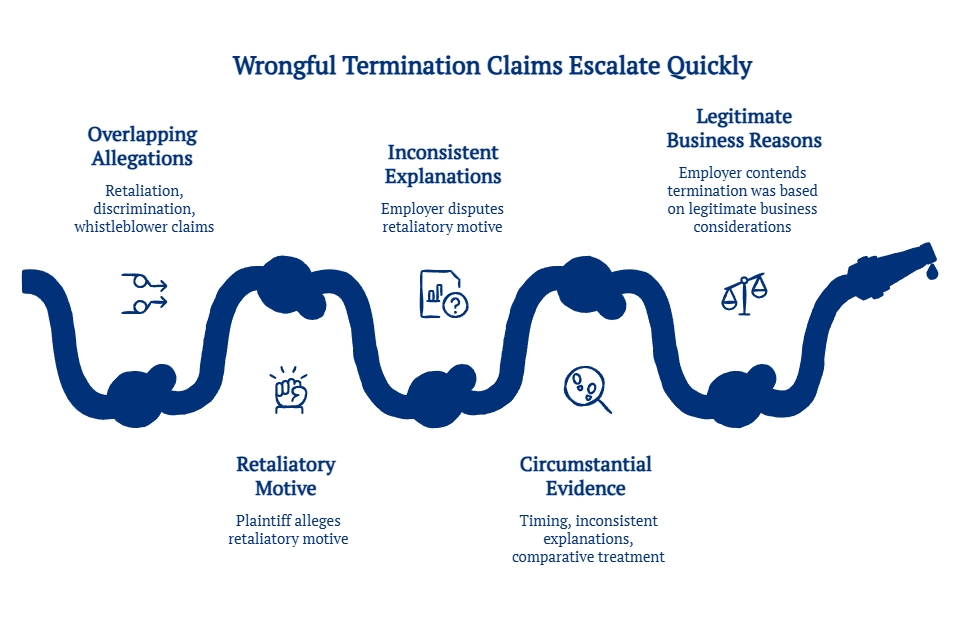
Under California law, generally, wrongful termination claims may overlap with retaliation, discrimination, or whistleblower allegations when the plaintiff contends that the discharge followed protected activity or unlawful workplace conditions. As a result, a termination dispute may become more than a disagreement about performance or management judgment. The legal question may include whether the plaintiff alleges retaliatory motive, whether the employer disputes that allegation, and whether the surrounding record appears consistent with the stated reason for the adverse employment action.
That matters because wrongful termination litigation often turns on circumstantial evidence. A plaintiff may rely on timing, inconsistent explanations, comparative treatment, or manager statements to argue that the stated reason was not the real reason. The employer may dispute that narrative and contend that the termination was based on legitimate business considerations. In that setting, the issue often becomes whether the broader record supports a defensible decision-making process rather than whether one isolated event can explain the entire dispute.
Why Small, Self-Funded Restaurants Face Different Pressure
A self-funded restaurant employer may experience a wrongful termination claim differently from a larger business with in-house legal resources. Legal fees, management distraction, operational disruption, and discovery burdens may affect the same owners and operators who are already overseeing staffing, scheduling, service, inventory, and customer-facing demands. Even where liability is disputed, the burden of defending the matter may be substantial.
Restaurant businesses also tend to operate through lean management structures. Owners, supervisors, shift leaders, and managers may all communicate about staffing and discipline in real time. In an active dispute, those communications may later be examined for consistency, tone, and timing. That scrutiny may increase where the business has one or two locations, limited administrative infrastructure, and owner-level involvement in termination decisions.
Why Restaurant Operations Often Produce Fact-Intensive Disputes
Restaurant workplaces often generate fast-moving employment decisions. Supervisors may address attendance, performance, scheduling friction, customer complaints, or interpersonal conflict under immediate operational pressure. Managers may communicate orally, by text, or in brief written notes rather than through formal memoranda. In later litigation, the plaintiff may argue that informal communications or uneven treatment support an inference of retaliatory or discriminatory motive. The employer may dispute that characterization and argue that the decision reflected ordinary business realities.
This is one reason timing and consistency can become central. If a termination follows a complaint, a report, or other protected activity, the plaintiff may allege a causal connection between the two events. If different supervisors described the reason differently, or if the record appears incomplete, the plaintiff may use those facts to support a pretext argument.
While documentation is vital, 2026 compliance requires a standalone focus on the Workplace Know Your Rights Act (SB 294). As of February 1, 2026, California employers must provide a specific annual notice to all employees regarding their labor and constitutional rights. In wrongful termination disputes, a plaintiff may now allege that a discharge was retaliatory for exercising rights disclosed in these notices—or that the employer’s failure to provide the mandated 2026 notice is evidence of a non-compliant workplace culture.
Why Overlapping Allegations Can Increase Exposure
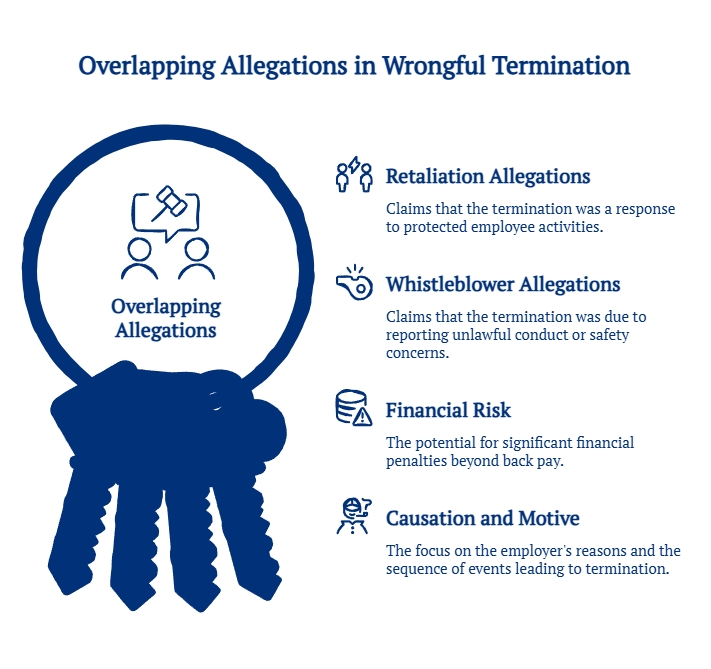
Depending on the facts, a wrongful termination claim may broaden into related allegations that increase both complexity and cost. A complaint may frame the discharge as retaliation for protected activity. It may also include whistleblower allegations where the employee claims to have reported unlawful conduct, safety concerns, or noncompliance. In California, generally, these overlap theories may materially affect the scope of the dispute because they place additional attention on causation, employer motive, and the sequence of events leading to termination.
For small restaurant employers, these overlapping claims, particularly whistleblower retaliation allegations under Labor Code section 1102.5, now carry expanded financial risk. Beyond back pay and emotional distress, a prevailing employee may be awarded a civil penalty of up to $10,000 per employee per violation, which is paid directly to the employee. In a 2026 litigation environment, these per-violation penalties can quickly dwarf the original back-pay claims, especially for small businesses lacking the cash reserves of larger corporate entities.
Why Experienced Employment Defense Lawyer May Matter
Experienced employment defense lawyer may matter in these cases because the dispute often requires disciplined legal framing at an early stage. A wrongful termination claim against a small, self-funded restaurant may involve more than a stated business reason for discharge. It may involve disputed motive, overlap allegations, inconsistent records, contested witness accounts, questions about uniform policy application, and the legal significance of proximity between protected activity and termination.
In many active disputes, the practical issue is whether company leadership, managers, supervisors, HR professionals, and counsel are viewed through a record that appears coherent and defensible or through a record the plaintiff can characterize as inconsistent. That is one reason these matters may become especially serious for closely held restaurant businesses without in-house employment counsel.
This article provides general information only. Active disputes may involve strict deadlines, significant procedural consequences, privilege concerns, and discovery burdens. Southern California restaurant employers facing wrongful termination complaints, demand letters, or agency matters should seek immediate review by qualified California employment defense lawyer because the legal analysis may depend on specific facts, procedural posture, and any overlapping retaliation, discrimination, or whistleblower allegations.
Disclaimer:
This content is for informational purposes only. Laws, definitions, and deadlines change. Verify current requirements through official California sources. This content is not legal advice. No attorney-client relationship is formed through this content. Please consult a qualified attorney in your jurisdiction for legal advice specific to your situation.
Protect Your Business | The Akopyan Law Firm, A.P.C. | Top Gun Employment Lawyers
Have you been sued by an employee? Are you overwhelmed by the complexities of employment law? If so, give us a call. The Akopyan Law Firm, A.P.C. assists small business owners throughout Southern California. Our seasoned employment defense lawyers stand ready to help employers quickly and efficiently resolve employment disputes. We are ready to aggressively and skillfully defend against any employment case, but understand that in most situations avoiding the expense of litigation is in the client’s best interest.
Take the First Step Protecting Your Future: Call us today to speak with one of our experienced employment lawyers.
Contact Us Today:
- Phone: (818) 509-9975
Office Locations in California: Los Angeles, Bakersfield, Costa Mesa, Temecula, Rancho Cucamonga, Oxnard, Culver City, and San Diego.