
📌 Key Takeaways
Patient-safety claims can turn a firing dispute into a hard fight over motive, trust, and workplace messaging.
- Safety Story Changes Focus: Patient-safety claims can shift attention from performance to motive and credibility.
- Reports May Be Protected: A worker may say a safety report was legally protected, and that the firing followed as a direct result.
- Roles Create Confusion: Mixed clinical and office leadership can create clashing stories about who knew what.
- Messages Become Evidence: Emails and texts can show tone, timing, and shifting reasons for the firing.
- Claims Often Stack Up: One safety story may support retaliation, whistleblower, or hostile-workplace claims within a single legal action.
In these cases, the story often dictates the scope of discovery.
Southern California medical practice owners facing active wrongful termination litigation will gain fast clarity here, preparing them for the detailed overview that follows.
~ ~ ~ ~ ~ ~ ~ ~ ~ ~ ~ ~ ~ ~ ~ ~ ~ ~
A patient-safety narrative can reshape a termination dispute in a medical practice. A complaint may frame the employee as engaging in protected activity by raising concerns tied to patient care, and a complaint may frame the employer as responding adversely to that activity. That framing may expand the issues in dispute, sharpen credibility contests, and increase reputational pressure for a patient-facing business.
Why “patient safety” becomes a central theme in termination disputes involving medical practices
Patient-facing work creates a distinct context for credibility disputes. Clinical operations involve public trust, and allegations connected to patient care can carry reputational consequences beyond the workplace. In that context, a plaintiff may use patient-safety language to argue that the dispute concerns more than ordinary workplace friction.
Practice structure can intensify that dynamic. Small medical practices often operate with close supervision, informal communication, and mixed clinical and administrative authority. Those features can lead supervisors, administrators, and owners to describe reporting and decision-making differently. A common point of dispute is whether practice leadership treated the report as a safety concern, a performance issue, or a conduct issue, and whether the stated reason for termination aligns with surrounding communications.
An overview of how patient safety narratives are commonly used in wrongful termination allegations
In many disputes, pleadings follow a recognizable sequence. The employee asserts a safety-related concern. The employee describes friction or changed treatment after the concern is raised. The separation occurs. The complaint alleges that retaliatory motive, rather than the stated reason, explains the termination.
That storyline can be used to support multiple theories. A complaint may allege wrongful termination in violation of public policy (often referred to as a Tameny claim). Additionally, a complaint may allege statutory retaliation under California Labor Code Section 1102.5, which protects employees who disclose information to a government agency or a person with authority over the employee if they have reasonable cause to believe the information discloses a violation of state or federal statute. Relatedly, California Health and Safety Code Section 1278.5 specifically protects healthcare workers and patients who report concerns regarding the quality of care or patient safety at healthcare facilities. In this framing, the complaint often treats the report as protected activity and treats the termination as the adverse employment action that followed it.
The narrative can also shape what becomes contested evidence. Plaintiffs commonly rely on circumstantial proof, so the timing of events, the substance of communications, and the consistency of explanations may become central disputes.
How medical practice structure can intensify credibility disputes
Medical practice settings frequently involve layered supervision. A medical practice may allocate authority across a physician-owner, a practice administrator, an office manager, and clinical leads. In that structure, witnesses may give conflicting accounts about who received the concern, whether the concern was escalated, and who recommended or approved the termination decision.
Healthcare workplaces also blend professional judgment with operational priorities. A plaintiff may characterize workload pressure, staffing levels, or scheduling practices as implicating patient safety. Management may characterize the same events as performance deficiencies, conduct concerns, or operational breakdowns. The dispute can shift from “what happened” to “what it meant,” and the trier of fact may evaluate credibility, consistency, and the plausibility of competing narratives.
Why communications and records often become central issues in medical practice employment matters
Employment disputes often turn everyday communication into evidence. Text messages can reflect tone and urgency. Emails can show how a concern moved through management and who was notified. Internal chat threads can show whether supervisors discussed the report as a safety issue or as workplace conflict. In patient-safety-framed disputes, the parties may argue over whether those communications support a causal connection between the report and the termination.
A common allegation pattern involves competing explanations. The complaint may claim the employer’s rationale changed over time. The plaintiff may assert that negative performance messaging intensified after the safety concern surfaced. The employer may dispute those characterizations and contend that the termination decision rests on legitimate, non-retaliatory reasons. In that posture, communications and records often become the contested record used to argue motive and causation. Under the framework established in Labor Code Section 1102.6, once a plaintiff demonstrates by preponderance of the evidence that retaliation for a protected activity was a contributing factor in an adverse action, the burden of proof shifts to the employer to demonstrate by clear and convincing evidence that the action would have occurred for legitimate, independent reasons even if the employee had not engaged in protected activity. [Lawson v. PPG Architectural Finishes, Inc., 12 Cal.5th 703 (2022)]. This heightened evidentiary standard for employers underscores why contemporaneous records are critical in defending the ‘what it meant’ stage of a dispute.
Related allegations that often cluster around patient safety narratives
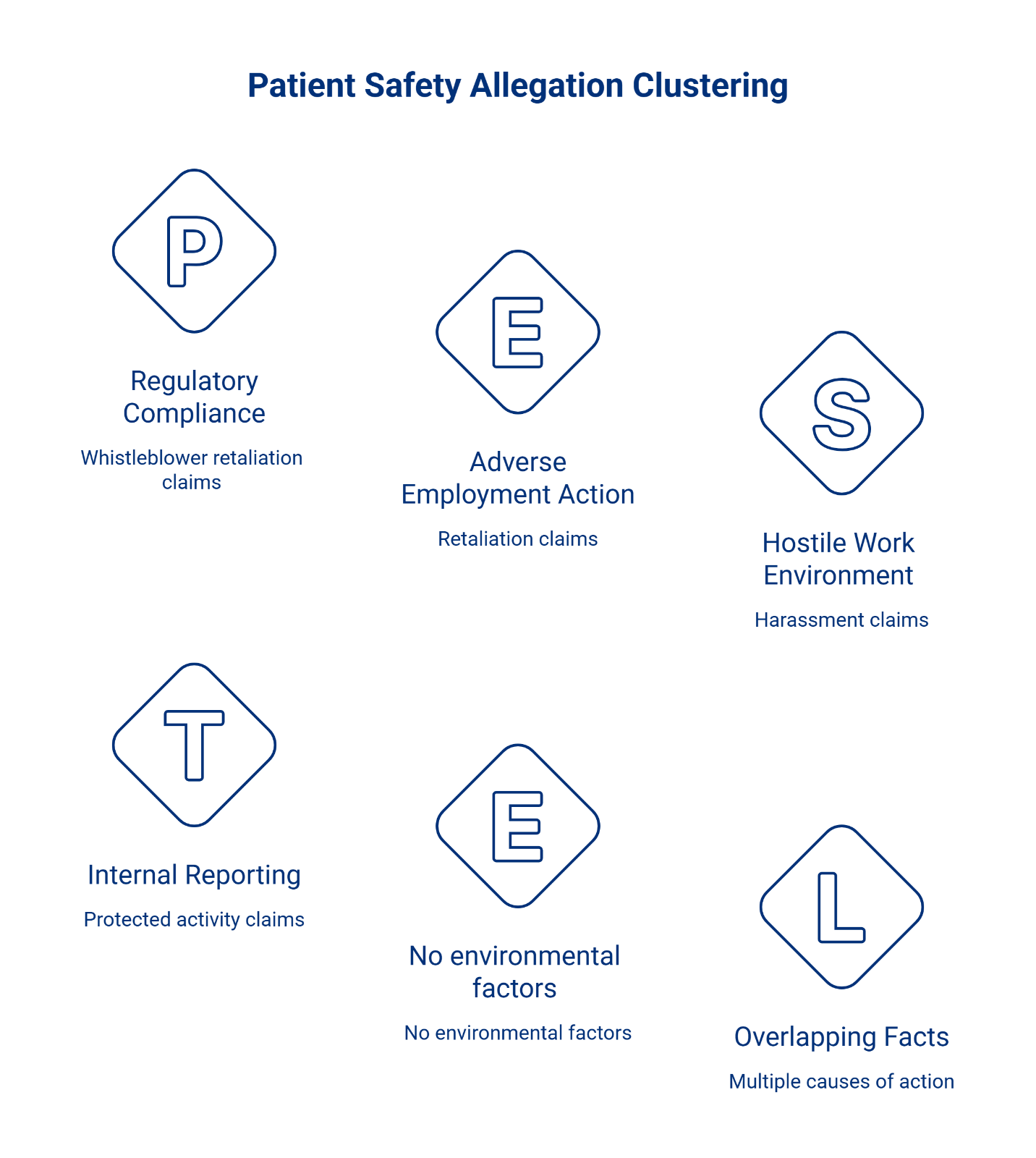
A patient-safety storyline often appears alongside other allegations. Claim clustering is common because the same asserted events can be pled as different legal theories, and pleadings may use overlapping facts to support multiple causes of action. When a complaint frames patient-safety reporting as protected activity, other claims may be pled as alternative ways to explain why the termination allegedly followed that activity.
Examples of allegations that may cluster include:
- A complaint may allege unlawful retaliation by asserting that the employee engaged in protected activity and later experienced an adverse employment action.
- A complaint may allege whistleblower retaliation by asserting that the employee disclosed suspected legal or regulatory noncompliance internally or to a government agency.
- A complaint may allege harassment or hostile work environment by asserting that the workplace response involved severe or pervasive misconduct.
Why these disputes can escalate quickly in patient-facing environments
Patient-facing businesses often experience heightened reputational sensitivity. Allegations tied to “patient safety” may affect employee morale, staffing stability, patient confidence, and referral relationships. For a medical practice with a small workforce, the operational impact of a high-conflict dispute can be significant.
Patient-safety framing can also create perceived regulatory implications. A plaintiff may describe conduct in a way that suggests a compliance concern, even when no regulator has made findings. That kind of framing may increase scrutiny and may broaden the range of issues that parties contest in the dispute.
What medical practice leadership should understand about narrative-driven exposure in active disputes
A patient-safety narrative can change what the case becomes “about.” The plaintiff’s theory often centers on motive, credibility, and workplace dynamics. The defense typically disputes those characterizations and disputes the causal connection between the alleged protected activity and the termination decision.
That dynamic does not establish liability. It does help explain why these matters often focus on disputed meaning rather than a single document or a single event. The trier of fact may evaluate witness consistency, contemporaneous communications, and whether the employer’s stated reasons appear coherent in context. For many medical practices, that means the dispute can broaden into an examination of how concerns were received, how supervision functioned, and how termination reasons were communicated.
Employers sometimes underestimate how quickly a termination dispute can broaden into allegations about reporting pathways, internal messaging, and supervisory conduct. For a broader view of employer-defense employment litigation, see: https://www.akopyanlaw.com/practice-areas/for-employers/
Illustrative examples of how allegations may be framed in medical practices
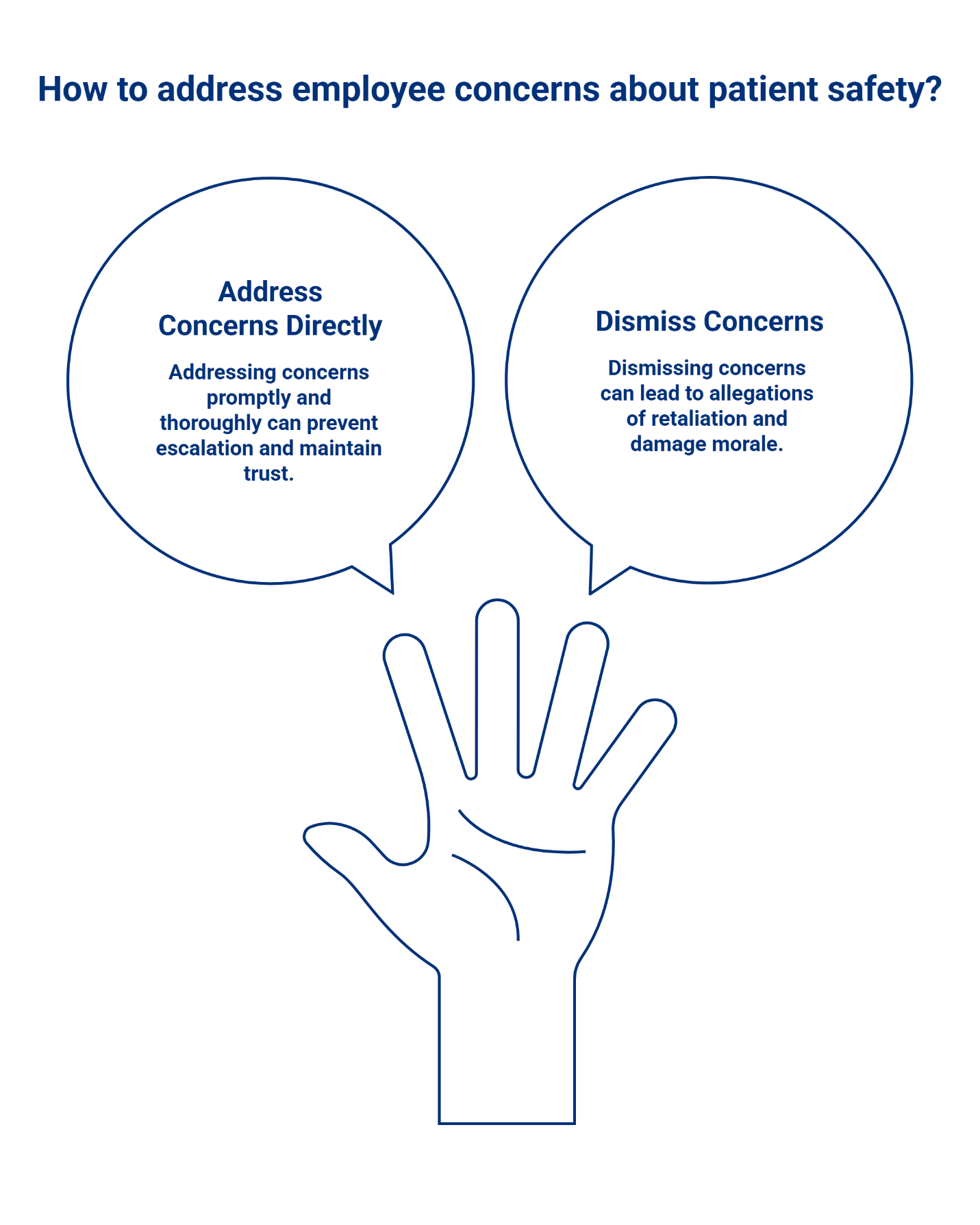
The following examples are simplified illustrations intended to show how allegations may be framed in a dispute, and they do not describe outcomes or provide legal advice.
Example 1 (clinical staff). A medical assistant reports a concern about a sterilization step during high-volume periods. A supervisor disputes the concern and characterizes the report as disruptive. The practice later terminates the employee for performance reasons, and the employee alleges the termination was retaliation tied to the patient-safety report. In that framing, the dispute often turns on whether the report is characterized as protected activity and whether communications support the alleged causal connection.
Example 2 (front office / operations). A scheduling coordinator raises concerns that rushed intake contributes to incomplete charting and follow-up risk. Management characterizes the complaint as insubordination and cites operational disruption. After discipline and termination, the employee alleges the termination was motivated by patient-safety-related reporting rather than the stated reason. In that framing, the dispute often turns on credibility disputes about reporting and escalation and on whether the employer’s stated rationale remains consistent across witnesses and records.
Disclaimer:
This content is for informational purposes only. Laws, definitions, and deadlines change. Verify current requirements through official California sources. This content is not legal advice. No attorney-client relationship is formed through this content. Please consult a qualified attorney in your jurisdiction for legal advice specific to your situation.
Protect Your Business | The Akopyan Law Firm, A.P.C. | Top Gun Employment Lawyers
Have you been sued by an employee? Are you overwhelmed by the complexities of employment law? If so, give us a call. The Akopyan Law Firm, A.P.C. assists small business owners throughout Southern California. Our seasoned employment lawyers stand ready to help employers quickly and efficiently resolve employment disputes. We are ready to aggressively and skillfully defend against any employment case, but understand that in most situations avoiding the expense of litigation is in the client’s best interest.
Take the First Step Protecting Your Future: Call us today to speak with one of our experienced employment lawyers.
Contact Us Today:
- Phone: (818) 509-9975
Office Locations in California: Los Angeles, Bakersfield, Costa Mesa, Temecula, Rancho Cucamonga, Oxnard, Culver City, and San Diego.