
📌 Key Takeaways
In California healthcare termination disputes, whistleblower allegations often shift the case from the termination reason to credibility, communications, and consistency.
- Credibility Drives Scope: Complaints often test whether the employer’s explanation stays consistent across timelines, witnesses, communications, and personnel records under scrutiny.
- Protected Disclosure Framing: A workplace concern may be pleaded as a protected disclosure, and allegations often emphasize leadership’s response more than ultimate proof.
- Multi-Claim Expansion: A protected-disclosure theory may be paired with additional causes of action, which can broaden discovery, witnesses, and disputed workplace events.
- Counsel Adds Structure: Employment defense counsel can help coordinate fact development and manage litigation demands when credibility issues drive broad, document-heavy disputes.
Consistency and credibility often determine how large these cases become.
California healthcare practice owners and administrators facing adversarial termination disputes will gain practical clarity here, preparing them for the detailed overview that follows.
~ ~ ~ ~ ~ ~ ~ ~ ~ ~ ~ ~ ~ ~ ~ ~ ~ ~
In California medical practices, wrongful termination complaints that include whistleblower allegations often turn on whether the employer’s explanation remains consistent across documents, witnesses, and timelines. The complaint may focus on credibility questions such as what leadership knew, how internal concerns were discussed, and whether the stated rationale appears stable when communications and personnel records are reviewed. The business consequence is that a dispute that started with a termination decision can quickly expand into a broader examination of motive and consistency.
Why Termination Disputes Often Become Broader Credibility Fights
Termination litigation frequently expands beyond the separation meeting because complaints often challenge credibility, not merely the employer’s conclusion. A complaint may allege that the stated reason was a pretext. A complaint may allege that performance concerns were documented unevenly. A complaint may allege that decision-makers offered different explanations at different times.
Healthcare settings can intensify that scrutiny because operations move quickly and communications may be informal. A small practice may rely on short emails, texts, or rapid scheduling changes to maintain patient coverage. In litigation, the plaintiff may point to those communications to argue that frustration with an employee’s report, rather than performance issues, drove the decision. A trier of fact may evaluate credibility using circumstantial indicators, including timing, tone, and consistency across witnesses.
Consequently, these disputes often broaden discovery, increase leadership time commitments, and elevate defense costs.
How Workplace Concerns in Healthcare Settings Are Often Reframed as Protected Disclosures
In many healthcare employment disputes, a workplace disagreement later appears in a complaint as a protected disclosure (colloquially known as “whistleblowing”). The complaint may assert that the employee reported concerns about issues that sound regulatory or patient-facing, including (but not limited to) billing and coding practices, patient safety procedures, regulatory compliance, or accounting issues. Once the protected-disclosure framing is asserted, the complaint often emphasizes how leadership responded and what occurred afterward.
Under California law, whistleblower retaliation claims are primarily governed by Labor Code section 1102.5, which protects employees who report what they reasonably believe to be a violation of a local, state, or federal rule or regulation. Notably, since the California Supreme Court’s 2022 ruling in Lawson v. PPG Architectural Finishes, Inc., these claims are evaluated under a framework that is generally more favorable to plaintiffs than the federal McDonnell Douglas standard. Once an employee demonstrates by preponderance of the evidence that retaliation was a ‘contributing factor’ in their termination, the burden shifts to the employer to demonstrate by clear and convincing evidence that the action would have occurred for legitimate, independent reasons even if the employee had not engaged in protected activity [1][2]. This high evidentiary bar for employers often centers the dispute on the internal communications and timing of the decision.
Case Spotlight: Lawson v. PPG Architectural Finishes, Inc. (2022)
This landmark California Supreme Court ruling discarded the older, employer-friendly “McDonnell Douglas” test in favor of the more rigorous standards found in Labor Code section 1102.5. The court clarified that employees no longer need to “disprove” an employer’s stated reason for termination as a total pretext to win a retaliation claim. Now, a plaintiff only needs to show that retaliation was a contributing factor in the decision, shifting the heavy burden to the employer to prove the firing would have happened anyway by “clear and convincing evidence.”
The Role of Timing, Communications, and Competing Narratives in Retaliation Allegations
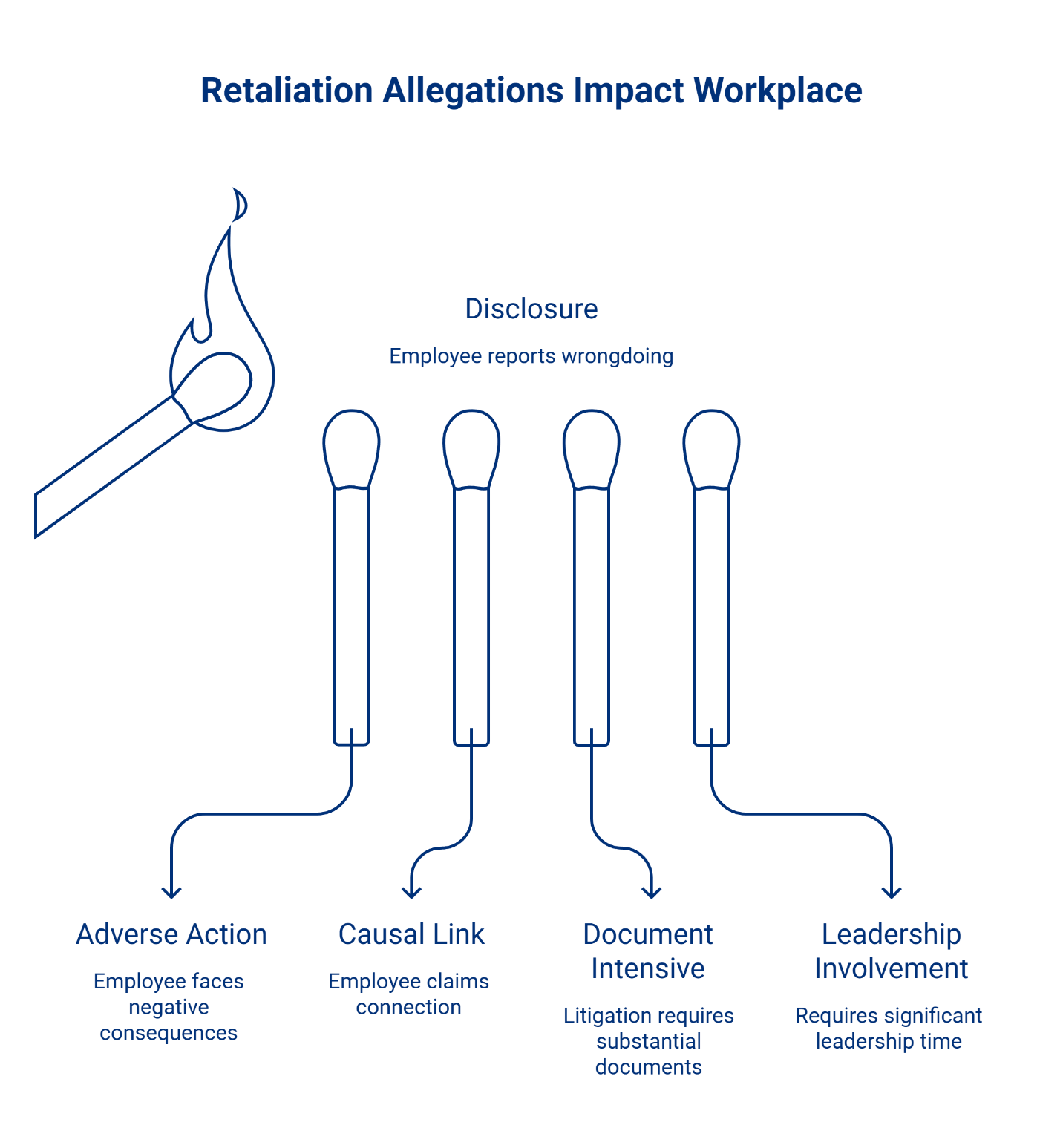
Workplace retaliation allegations often rely on an asserted sequence: the employee claims protected disclosure, the employee claims adverse action, and the employee claims a causal connection. Litigation then tends to concentrate on the timeline and on communications among supervisors, administrators, and decision-makers.
In a small medical practice, communications can carry significant evidentiary weight because the sender is often a decision-maker and the recipients are often part of a small leadership circle. The plaintiff may cite a message expressing impatience with a “compliance complaint,” a thread describing the employee as “disruptive,” or an email suggesting the practice “cannot deal with this right now.” The employer may respond that the communications reflected operational strain rather than retaliatory motivation. A trier of fact may evaluate those competing narratives by comparing the communications to performance records, scheduling changes, and witness testimony.
Credibility pressure points frequently alleged in these cases include:
- The complaint alleges that leadership treated the report as insubordination or disloyalty rather than as a workplace disclosure.
- The complaint alleges that the employer’s explanation became more detailed only after a demand letter, agency inquiry, or lawsuit.
- The complaint alleges that discipline escalated through write-ups or heightened scrutiny soon after the disclosure.
- The complaint alleges that the employee’s schedule or hours were reduced shortly after the disclosure, which is offered as circumstantial evidence of causation.
- The complaint alleges that internal communications show hostility toward the employee’s report rather than concern about the underlying issue.
The business implication is straightforward: The dispute can become document-intensive and testimony-heavy, requiring substantial leadership involvement to explain who said what, when, and why.
Why These Cases Commonly Expand Into Multi-Claim Lawsuits
Wrongful termination complaints in Southern California often plead multiple causes of action that share the same core facts. A protected-disclosure allegation may become the core retaliation theory, while other causes of action broaden the dispute into additional legal theories and additional workplace history.
In medical practice litigation, a complaint may add claims that reference discrimination concepts, leave-related disputes, or accommodation issues. Those additions can expand the scope of discovery because more categories of records become relevant, more witnesses become involved, and more employment events become disputed. The business implication is that what began as a termination dispute can turn into a multi-issue case with higher litigation costs and more operational disruption.
Business Disruption in Small Practices: Cost, Bandwidth, and Reputational Pressure Points
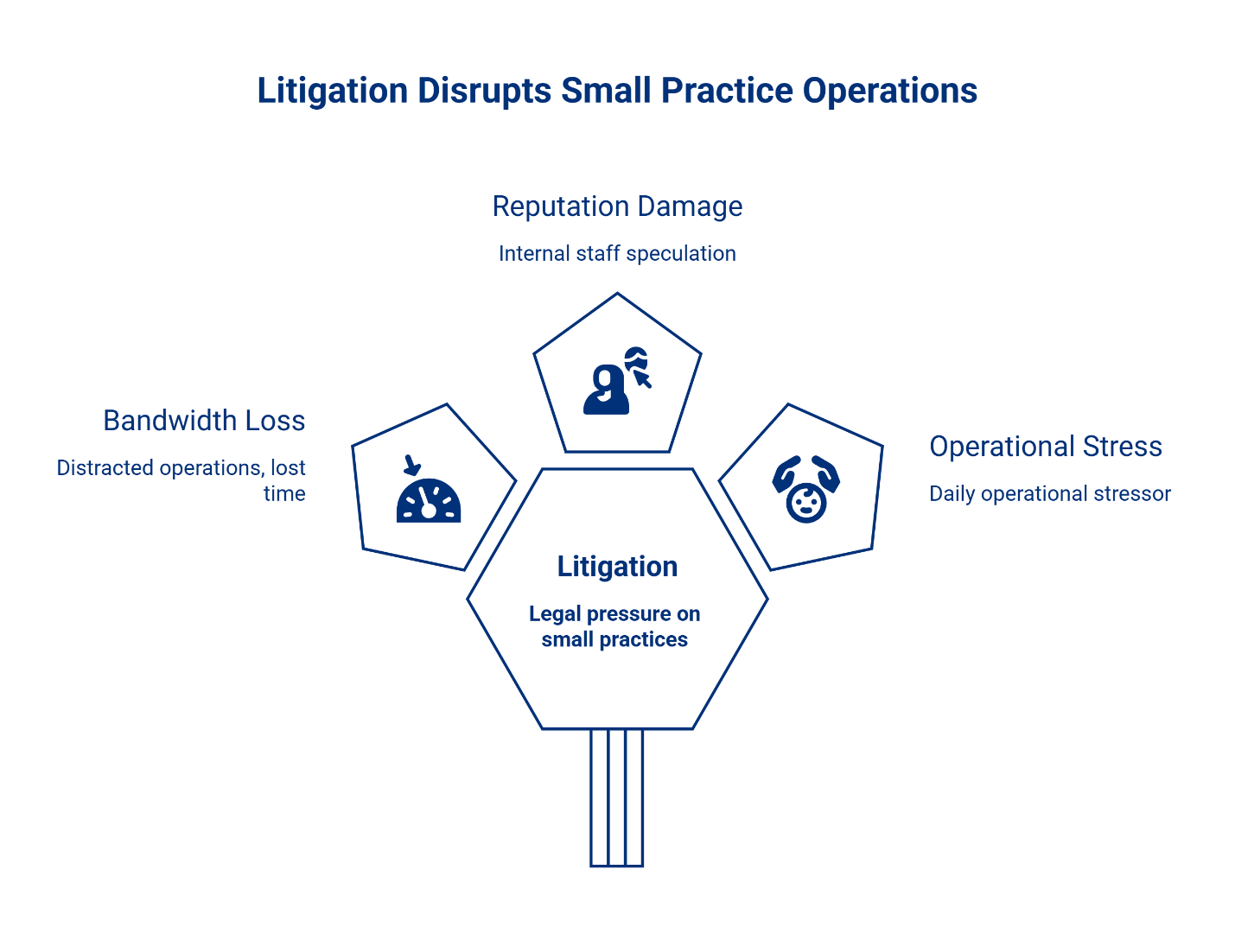
Small practices often experience litigation pressure more directly than larger organizations because key witnesses are also key operators. A physician-owner may be both a central decision-maker and the person responsible for patient care. A practice administrator may be both the document custodian and the person managing staffing and front-office operations. That overlap can make litigation a daily operational stressor rather than a contained legal project.
Protected-disclosure cases often require extensive review of communications, scheduling records, and performance materials. Depositions, interviews, and written discovery can pull leadership into time-consuming preparation and testimony. Even without public attention, internal reputation pressure may increase as staff members react to the dispute, speculate about motive, or question leadership consistency. The practical impact is often measured in lost bandwidth and distracted operations as much as in legal spend.
When an Experienced Employment Defense Lawyer Becomes Central to Managing Risk and Litigation Demands
When a termination dispute includes a protected-disclosure allegation, experienced defense representation often becomes important because the matter can expand quickly and credibility issues can drive broad discovery. Attorneys experienced in employment litigation defense can assist with coordinating fact development, managing litigation communications, and assessing how overlapping causes of action affect exposure and case posture—without decision-makers being forced to interpret legal standards in the middle of an adversarial proceeding.
That role can be particularly significant where Labor Code section 1102.5 is pleaded, because the dispute commonly focuses on protected disclosure, adverse action, and alleged causation, and because the trier of fact may evaluate motive using a broad record that includes communications, timelines, and witness testimony.
Disclaimer:
This content is for informational purposes only. Laws, definitions, and deadlines change. Verify current requirements through official California sources. This content is not legal advice. No attorney-client relationship is formed through this content. Please consult a qualified attorney in your jurisdiction for legal advice specific to your situation.
Protect Your Business | The Akopyan Law Firm, A.P.C. | Top Gun Employment Lawyers
Have you been sued by an employee? Are you overwhelmed by the complexities of employment law? If so, give us a call. The Akopyan Law Firm, A.P.C. assists small business owners throughout Southern California. Our seasoned employment lawyers stand ready to help employers quickly and efficiently resolve employment disputes. We are ready to aggressively and skillfully defend against any employment case, but understand that in most situations avoiding the expense of litigation is in the client’s best interest.
Take the First Step Protecting Your Future: Call us today to speak with one of our experienced employment lawyers.
Contact Us Today:
- Phone: (818) 509-9975
Office Locations in California: Los Angeles, Bakersfield, Costa Mesa, Temecula, Rancho Cucamonga, Oxnard, Culver City, and San Diego.