
📌 Key Takeaways
Supervisor remarks that frame an employee’s use of job-protected leave as a workplace problem, particularly when followed by discipline or termination, may be relevant when evaluating whether an adverse employment action was lawful.
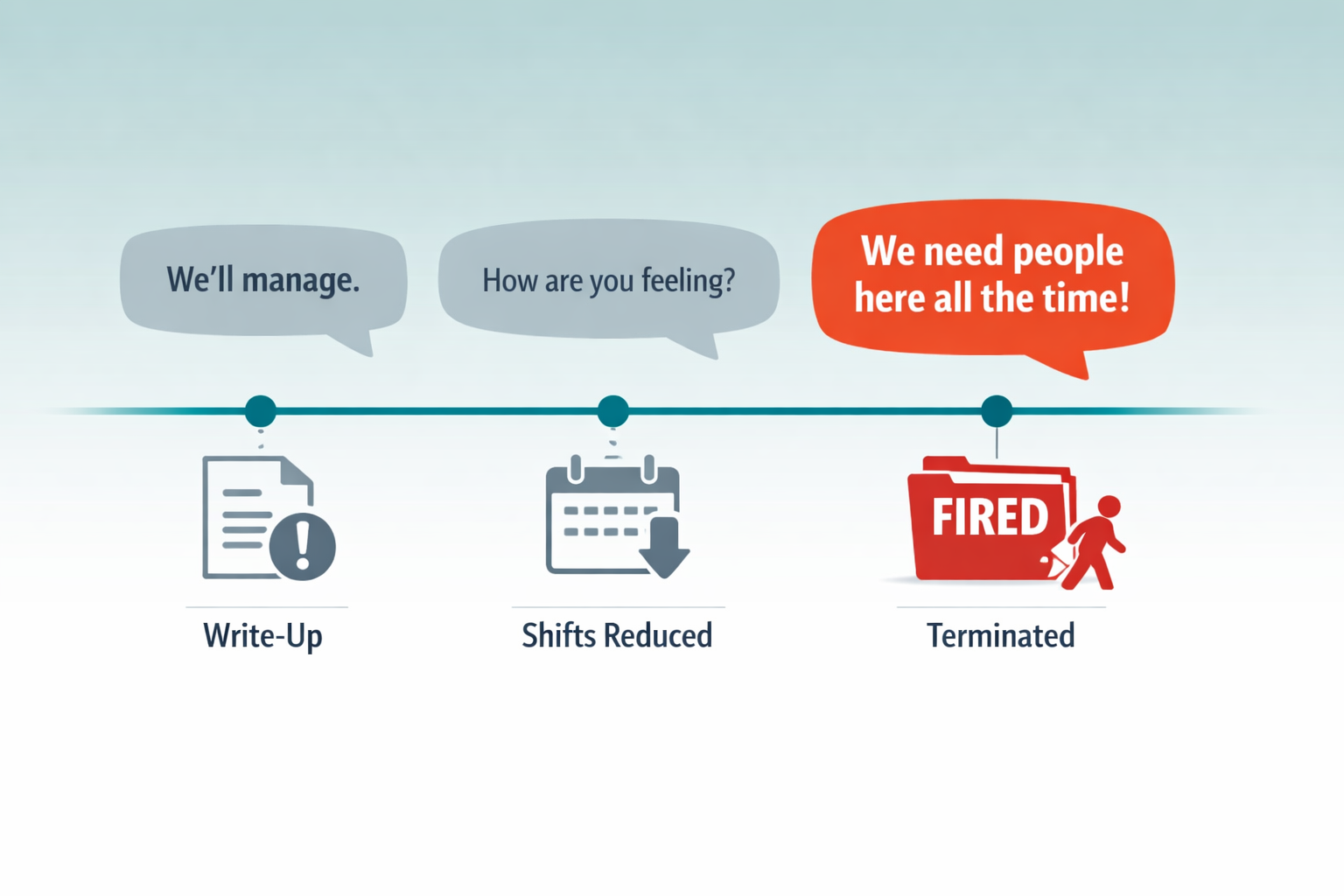
- Comments Reframing “Reliability”: Statements that the workplace needs people “here all the time” may recharacterize job-protected leave-related absences as an “attendance” issue and may later be used to justify discipline or termination.
- Job Security Threats: Statements that a job may not be there after leave, or that management wants “more available” workers, can link job-protected leave to job loss and may support an inference that leave was viewed negatively.
- Pressure on Medical Time: Questions about treatment that shift into pressure to move appointments, return early, or limit time away, including comments that trivialize medical care, may discourage the use of job-protected leave.
- Comments and Job Actions: When new criticism, write-ups, or shift cuts appear soon after a request for job-protected leave and similarly situated coworkers who did not take leave are treated differently, the sequence may warrant review.
Viewed together, what a supervisor in Southern California says about job-protected leave, and when those comments occur, can change how later discipline or termination is understood.
~ ~ ~ ~ ~ ~ ~ ~ ~ ~ ~ ~ ~ ~ ~ ~ ~ ~
Supervisor comments about family medical leave can help show whether an employer views job-protected leave as a protected workplace right or as a burden. When those remarks appear close in time to write-ups, schedule cuts, demotion, or termination, they may support concerns about retaliation or interference with protected leave rights, rather than a purely business-related decision.
Why Supervisor Comments About Family Medical Leave Matter for Job Security
For many hourly workers, the first warning sign about job security is a shift in how a supervisor talks about time away from work. When California Family Rights Act (CFRA) and/or the federal Family and Medical Leave Act (FMLA) or related laws apply, employers are prohibited from retaliating against employees for requesting or using job-protected leave. That is why patterns in how supervisors discuss leave can become significant when later job decisions are described as “attendance” or “performance” issues.
Workers Most Affected by Problematic Leave-Related Comments
These concerns may arise for workers across many roles in Southern California communities such as Los Angeles, Bakersfield, Costa Mesa, and San Diego. Construction laborers, warehouse staff, production workers, retail associates, food service workers, landscaping crews, and delivery drivers may request job-protected leave for serious health conditions or caregiving needs and then face new scrutiny, reduced hours, or termination.
Comment Patterns That May Signal Retaliation for Job-Protected Family Medical Leave
Certain recurring ways of talking about job-protected leave can raise concerns, especially when the comments appear alongside discipline, demotion, schedule cuts, or termination after an employee requests or uses job-protected leave.
Comments Linking Family Medical Leave to “Reliability” or “Commitment”
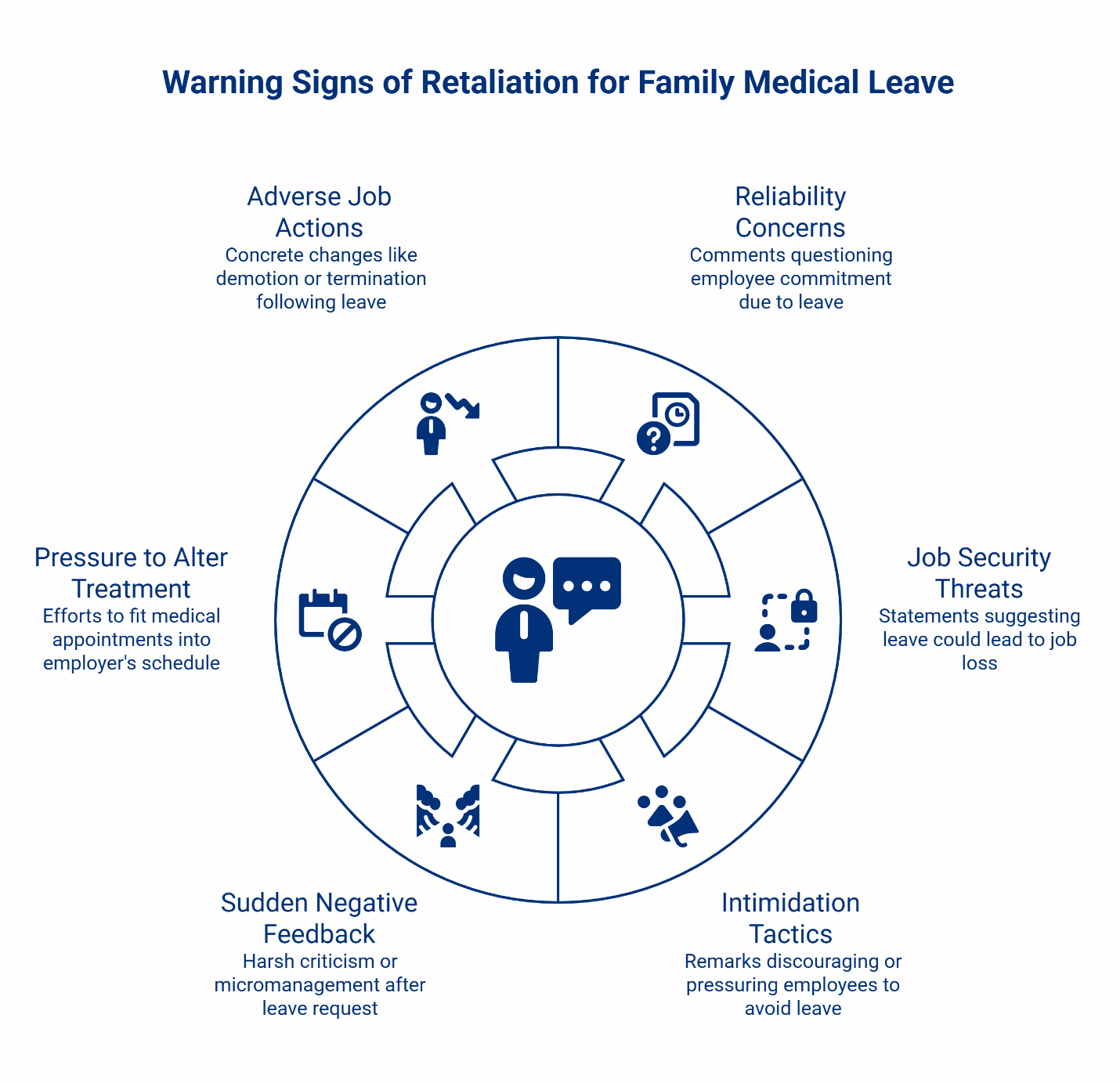
Supervisors may say the workplace needs people who are “here all the time,” or that medical visits make it “hard to count on” the worker. These remarks can reframe family medical leave-related absences as a reliability issue and may set up a later claim that discipline or termination was “just about attendance.”
Comments Suggesting Leave Will Cost the Worker Their Job
Statements that there is “no guarantee” a position will still be available if the full leave is used, or that management may “find someone more available,” can directly connect leave to job security. When comments like these are followed by reduced shifts, reassignment, or termination, the sequence may support concerns that job-protected leave influenced the employer’s decision-making.
Comments That Discourage or Intimidate Workers from Using Leave
Remarks that coworkers are “picking up the slack,” that appointments make the worker “look bad upstairs,” or that someone on leave is “on vacation” during treatment can trivialize medical needs. Over time, this type of language may pressure a worker to shorten, delay, or avoid job-protected leave and can contribute to a workplace culture that treats protected leave as a negative.
Sudden Negative Comments Following a Leave Request
A worker with a stable record may suddenly face harsh criticism, micromanagement, or new write-ups soon after requesting job-protected leave or disclosing a serious health condition. When this change in tone and documentation aligns closely with the timing of the leave request, it may be a warning sign that the request is affecting how the worker is evaluated.
Comments About Medical Details That Shift into Pressure
Questions about treatment and appointments may begin as planning but turn into pressure to move appointments, return earlier than recommended, or limit time away during busy periods. When discussions about medical details shift into efforts to fit treatment into the employer’s preferred schedule, the conduct may suggest that business convenience is being prioritized over protected leave rights.
When Leave-Related Comments Combine with Adverse Job Actions
Comments alone do not determine whether conduct is lawful, but they can take on added significance when paired with concrete job changes. If leave-related remarks appear alongside write-ups, shift reductions, transfers to less favorable assignments, demotions, or termination, and those developments occur close in time to conversations about job-protected leave, the overall pattern may warrant review by a qualified employment attorney.
Common Scenario Examples for Southern California Workers
Each scenario mentioned below is for illustration and not a prediction about any specific situation:
- A warehouse worker in Los Angeles takes job-protected leave for surgery, hears repeated comments about needing people who are “all in,” and is terminated shortly after returning with “attendance” given as the reason. This is only an example.
- A retail associate in San Diego requests intermittent job-protected leave to take a child to recurring medical appointments, is told the store “cannot keep covering” these absences and that the company expects “full availability,” and receives a written warning followed by termination. This is only an example.
- A construction laborer in Bakersfield requests job-protected leave to undergo treatment, hears jokes about “disappearing on jobs” and comments that “plenty of guys want this spot,” and is later told there is no more work while others in similar roles remain. This is only an example.
Why It Can Be Hard to Tell if Comments Reflect Unlawful Motives
Employers rarely state that job-protected leave influenced a termination decision and often rely on explanations tied to performance, business needs, restructuring, or attendance. Because informal remarks and formal documents can describe events differently, evaluating what happened usually requires looking at performance history, the timing of leave-related comments, and the sequence of disciplinary actions together rather than focusing on a single conversation.
How an Employment Lawyer Considers Situations Involving Family Medical Leave Comments
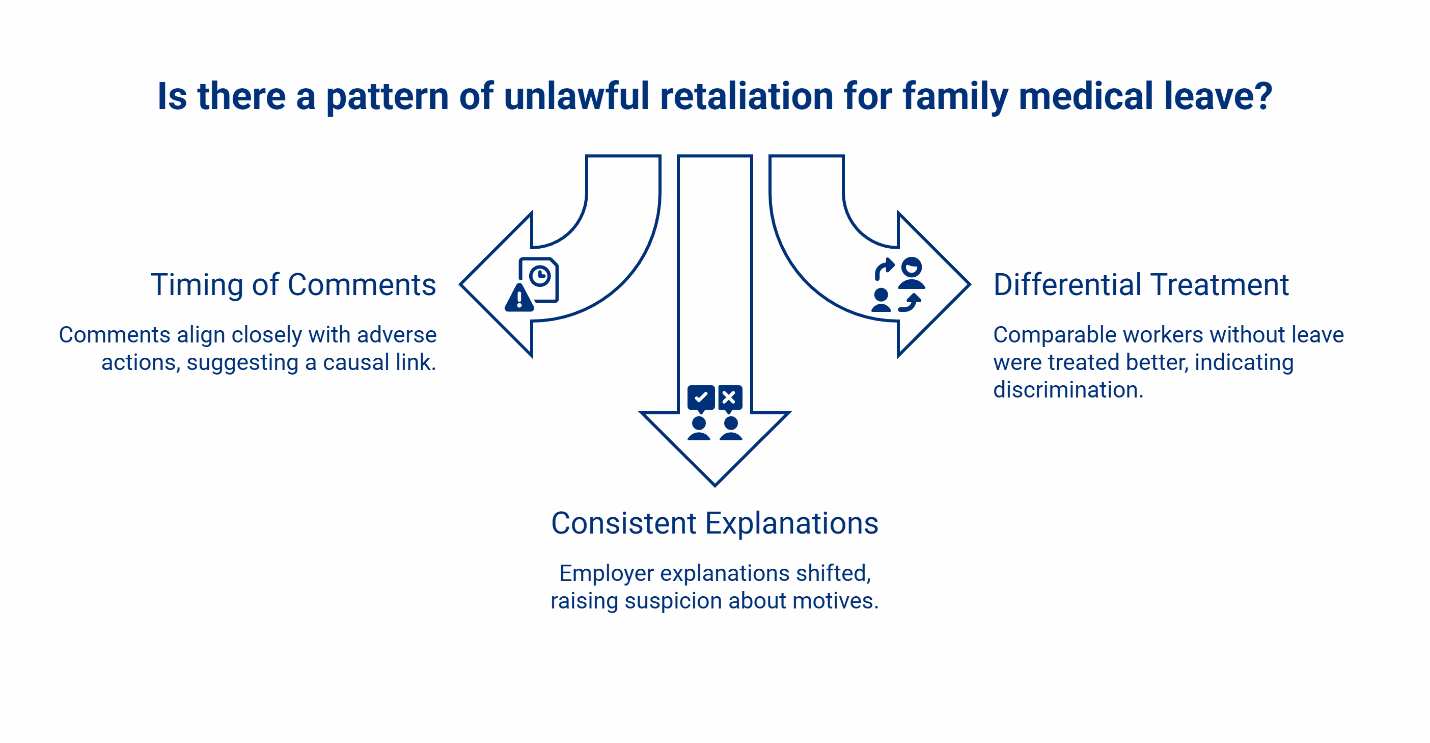
When reviewing matters involving supervisor comments and adverse employment actions tied to job-protected leave, an employment lawyer may consider factors such as:
- How closely the timing of leave-related comments aligns with discipline, demotion, schedule reductions, or termination.
- Whether comparable workers who did not request or use job-protected leave were treated differently in similar circumstances.
- Whether the employer’s explanations for the adverse employment action have remained consistent or shifted over time.
Together, these factors may help an attorney assess whether an overall pattern could raise concerns under California protections related to family medical leave and unlawful termination, while any conclusion still requires a fact-specific analysis of the individual situation.
Disclaimer:
This content is for informational purposes only. Laws, definitions, and deadlines change. Verify current requirements through official California sources. This content is not legal advice. No attorney-client relationship is formed through this content. Please consult a qualified attorney in your jurisdiction for legal advice specific to your situation.
Protect Your Rights | The Akopyan Law Firm, A.P.C. | Top Gun Employment Lawyers
Have you been wrongfully terminated from your job? Have you suffered discrimination, harassment, or retaliation in the workplace? Has your employer violated wage and hour laws? If so, we can help. The Akopyan Law Firm, A.P.C. is dedicated to protecting and enforcing employees’ rights throughout Southern California. With a 97% success rate and millions recovered for our clients, our team of experienced and talented employment lawyers can fight to secure the justice you deserve.
Take the First Step Towards Securing Justice: Call us today to speak with one of our experienced employment lawyers. The firm offers case evaluations free of charge.
Contact Us Today:
- Phone: (818) 509-9975
- Office Locations: Los Angeles, Bakersfield, Costa Mesa, Temecula, Rancho Cucamonga, Oxnard, Culver City, and San Diego in California.
Important: Contacting the Akopyan Law Firm, A.P.C. does not create an attorney-client relationship, but all communications will remain private and confidential. Each case is unique. The Akopyan Law Firm, A.P.C., does not guarantee any outcome.